 Visit Athens Guide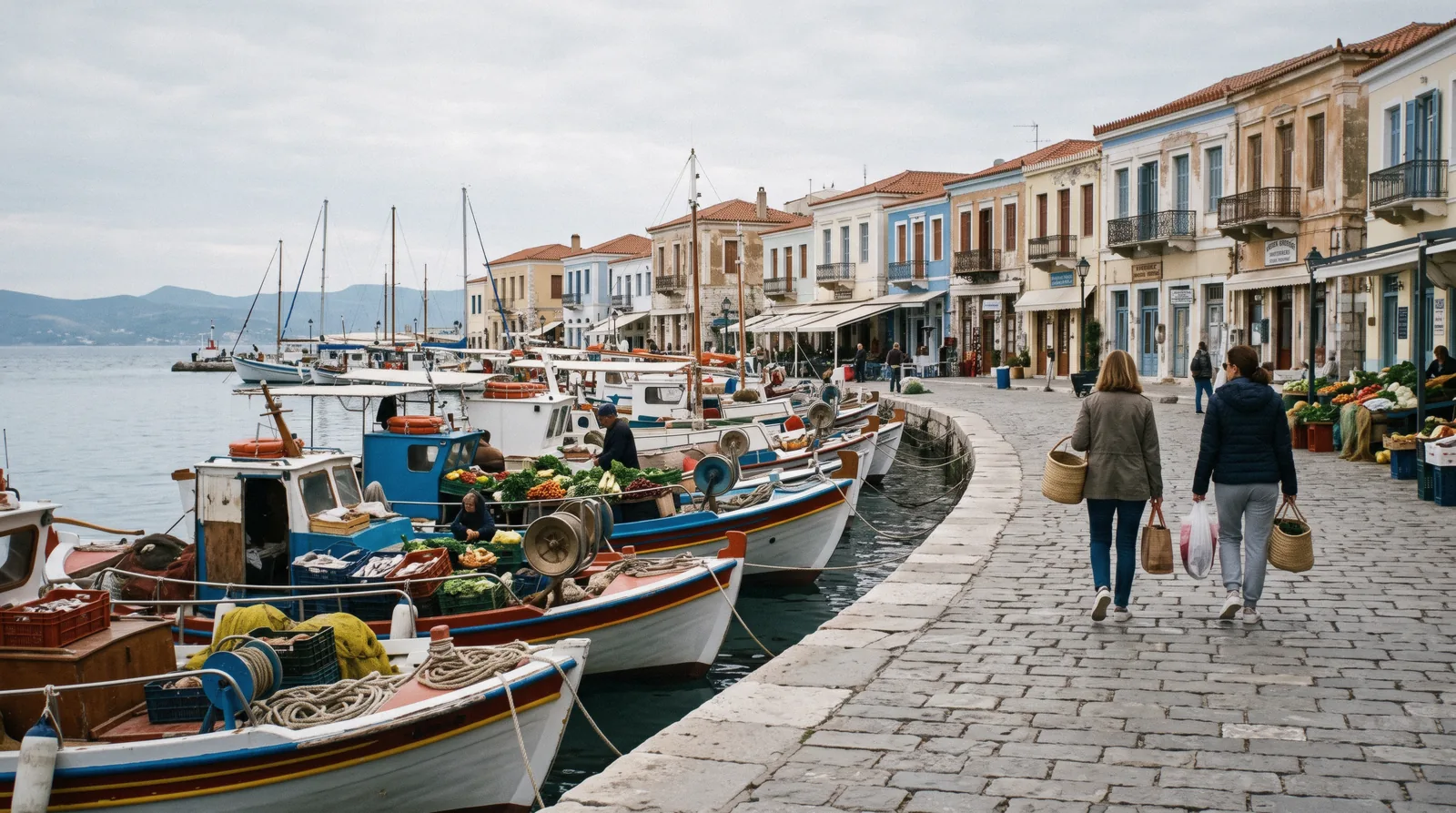
Aegina
Aegina island is the nearest one worth a day from Athens: seventy-five minutes from Piraeus on a scheduled ferry, with a fifth-century Doric temple on a pine ridge that is better preserved than anything standing in the capital. It is also the cheapest island day you can have — the boat and the temple together cost less than one Acropolis ticket. Checked in Q3 2026. The other trips are on the day trips hub, and the wider plan on things to do in Athens.
Quick answer How to get there, what it costs, and Aegina or Hydra
Aegina is seventy-five minutes from Piraeus by scheduled ferry, and the Temple of Aphaia on the island costs €10 full and €5 reduced. It is the cheapest and easiest island day from Athens, and it needs no tour.
Key takeaways
- Take the scheduled ferry, not a cruise — getting there explains why the three-island cruises give you about ninety minutes ashore.
- The Temple of Aphaia is the reason to come: a complete Doric colonnade of about 500 BC, and the pediments are in Munich.
- It costs less than an Acropolis ticket to reach and enter, which makes it the best-value day in this guide.
- Aegina or Hydra is the choice most people are making; they are very different islands.
- The temple is free on the state free-entry days — the free-entry page has them.
Key facts
Opening hours
| Temple of Aphaia, 1 Apr – 31 Oct, daily | 08:00–20:00 |
|---|---|
| Last admission | —–20 min before |
| Ferry from Piraeus | about 75–minutes |
Closed 1 January, 25 March, 1 May, Orthodox Easter Sunday, 25 and 26 December
Admission
- Adult
- Temple of Aphaia €10
- Reduced
- €5
- Free
- 6 March, 18 April, 18 May, the last weekend of September, 28 October, and the first and third Sunday from 1 November to 31 March
Planning it
- Time needed
- Not stated; our routing: a full day, or six hours at a push
- Book ahead
- Recommended — a few days
- Address
- Archaeological Site of Aphaia, 180 10 Aegina
What the day costs
The boat and the gate, priced on 1 September 2026. Ferry fares vary by operator and speed; the figure below is the listed e-ticket price on the platform.
Aegina is the one Saronic island with a real archaeological site on it, so the question is whether your day is about the temple or about the harbour.
| Item | Price | What it is | Note | Book |
|---|---|---|---|---|
| Piraeus–Aegina ferry ticketAnyone shaping their own day; 75 minutes each way, and the island is yours | Listed at €12 | 75 minutes each way, e-ticket by email | Yours to shape the day | Check Availability |
| Temple of AphaiaAnyone coming for the Temple of Aphaia, which is the reason to give Aegina a full day | €10 (€5) | The site and its scientific collection | 08:00–20:00, 1 Apr–31 Oct | Official site |
| Three-island cruiseAnyone who wants three islands and a lunch rather than one island and a plan | From €124 | Hydra, Poros and Aegina with lunch | About 90 minutes ashore at each | Check Availability |
| Metro to PiraeusEveryone; the port is 25 minutes from central Athens | €1.20 | 25 minutes from central Athens | Line 1 or Line 3 | Official site |
Add it up: €1.20 to the port, about €12 each way on the boat, €10 at the temple and a bus or a scooter on the island. That is a full island day for less than the €30 the Acropolis costs, which is the single best value in this guide. The cruise in the third row is a different product — a day on the water, not a day on an island.
The boat, and the alternative
The cards, with the operator's own rating and review count.
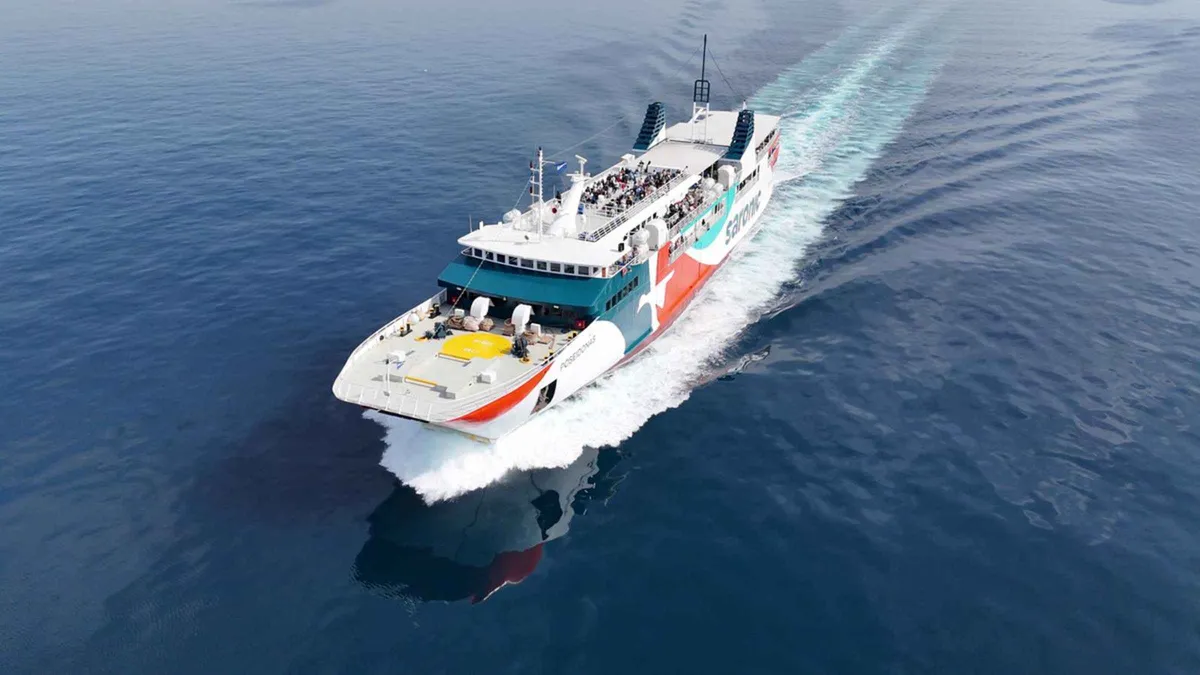 from €12
Athens: Ferry Boat Ticket to/from Aegina Island
Just the boat: a Piraeus–Aegina ferry ticket by email, 75 minutes each way, so the island day is yours to shape.
Check Availability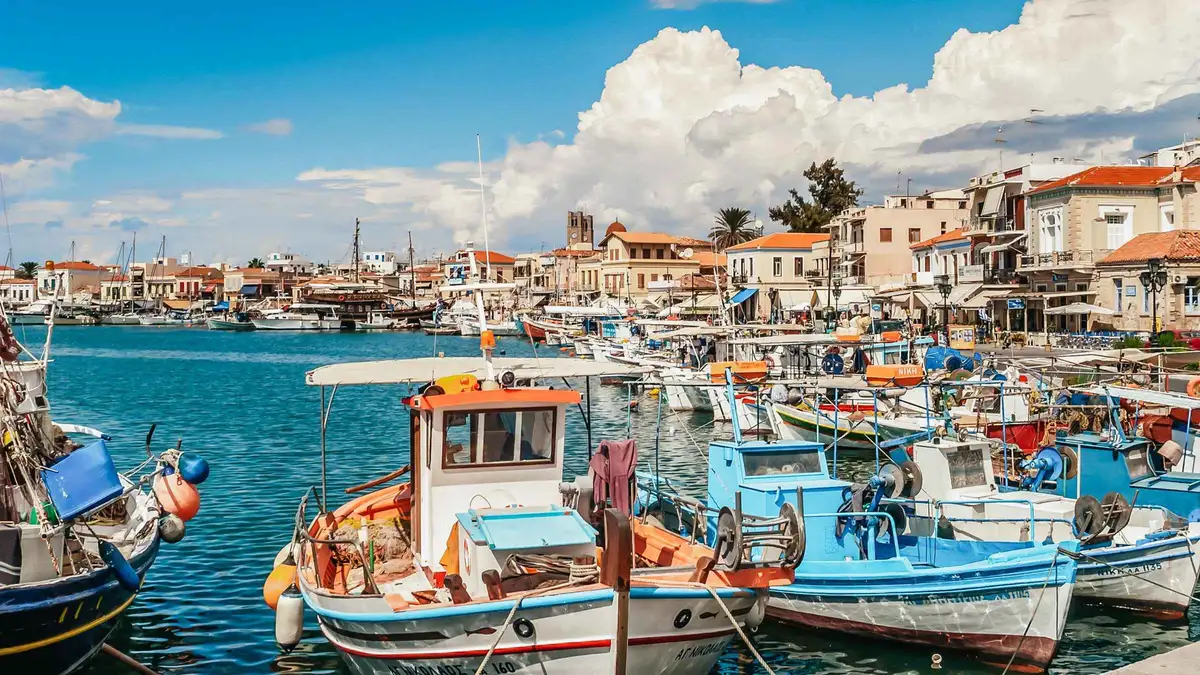 from €123.14
From Athens: Hydra, Poros, and Aegina Day Cruise with Lunch
Twelve hours to Hydra, Poros and Aegina with a buffet lunch on board and time ashore at each.
Check Availability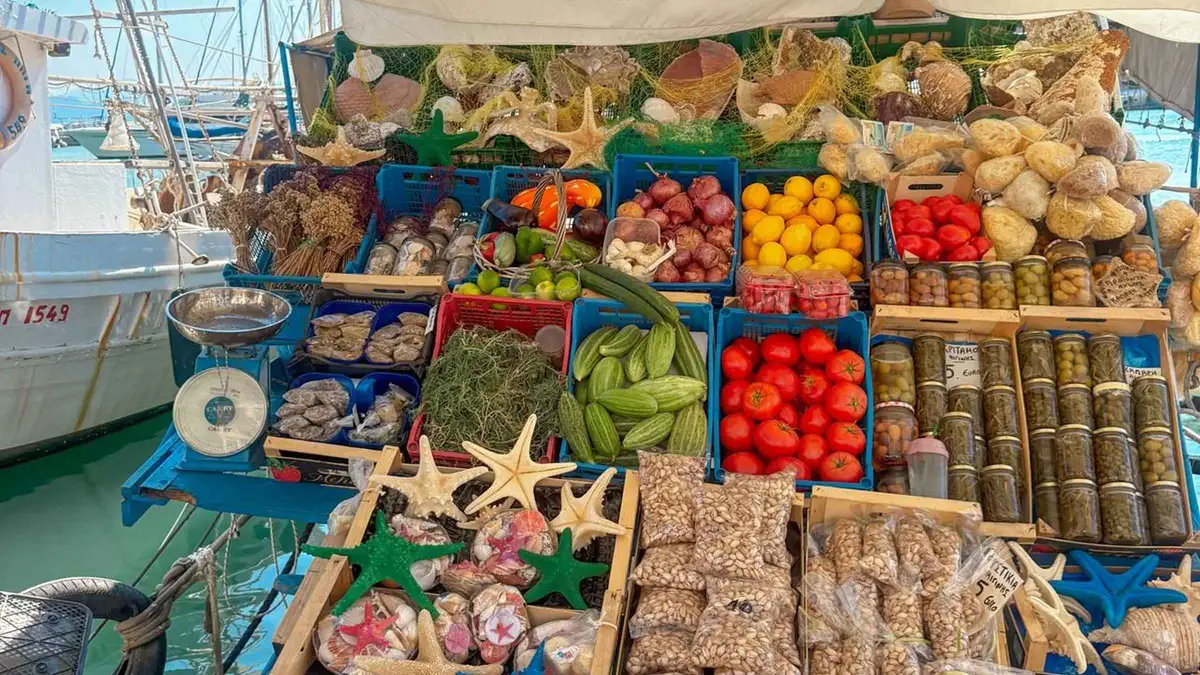 from €127.85
Hydra, Poros & Aegina Cruise with Lunch - Official Operator
The same three islands with the operator that runs the boat, with lunch and live music on the crossing.
Check AvailabilityPrices, ratings and details are the platform's own. Euro figures are the listed prices. The platform bills in your account's currency.
The Temple of Aphaia
The reason this is a sightseeing day and not only a beach day.
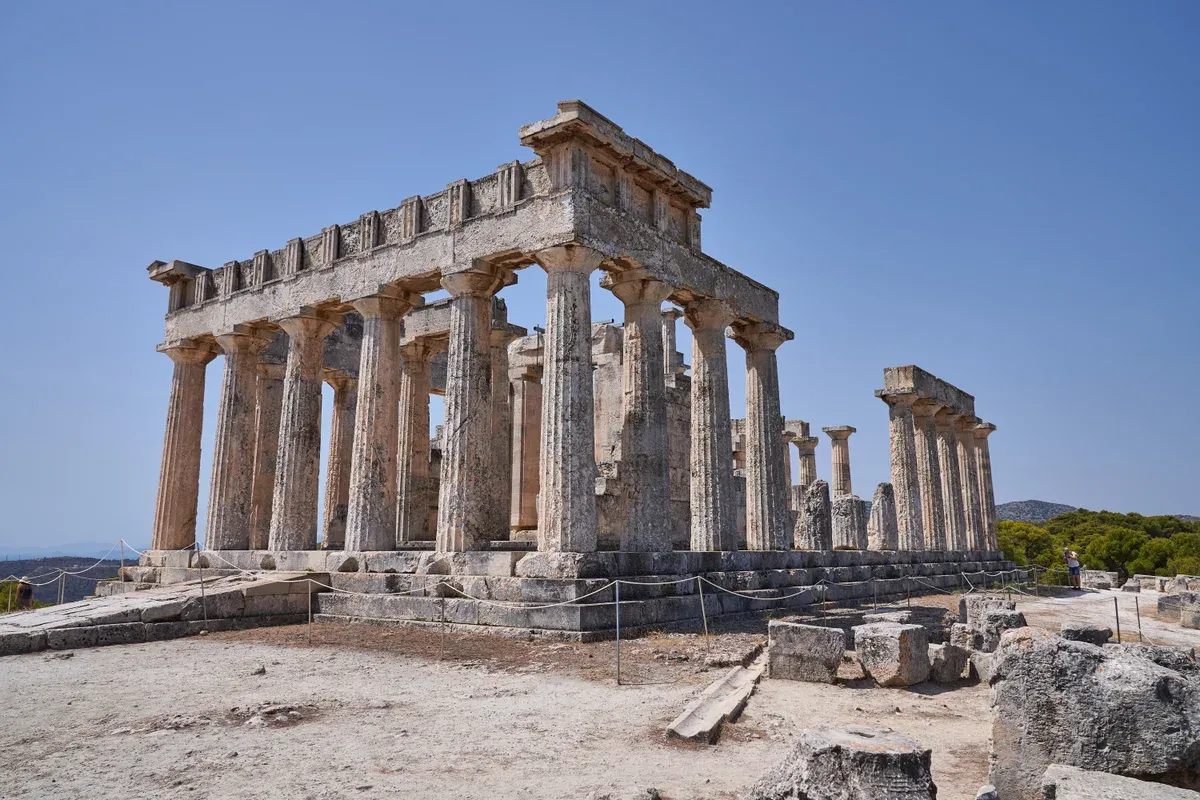
Photo: George E. Koronaios, CC BY-SA 4.0, via Wikimedia Commons
What it is
The temple was built about 500-490 BC for Aphaia, a local goddess whom the Greeks later identified with Athena, and it stands on a pine-covered ridge in the north-east of the island. It is one of the best-preserved temples in Greece. Twenty-four of the original thirty-two Doric columns are still standing, and two tiers of columns survive inside the cella, which is something you cannot see anywhere in Athens.
Entry is €10 full and €5 reduced, and the ticket includes the site's scientific collection, so you can read the small finds with the building itself in front of you. Give the ridge at least an hour.
The pediments, and where they went
The painted pedimental sculptures, among the finest surviving late-Archaic Greek sculpture, were taken off the temple in 1811 by the architect Charles Cockerell and Baron Haller von Hallerstein. They passed to Ludwig I of Bavaria, and Thorvaldsen restored them. They have stood in the Glyptothek in Munich ever since.
So the temple you walk round is missing its best work, and the originals are behind glass a long way north. This is the second time in this guide that the finest part of a Greek building sits somewhere else, and the parallel with the Parthenon marbles is not lost on anyone in Greece.
The sacred triangle
Aphaia stands with the Temple of Poseidon at Cape Sounion and the Hephaisteion in Athens at the points of an almost exact isosceles triangle. A second triangle links Delphi, the Parthenon and Aphaia. Whether the builders did this on purpose is argued about, though Aristotle and Strabo both wrote that sanctuary siting followed a rule, so the idea is not a modern invention.
It is still a good thing to know while you stand on the ridge, with Sounion to the south and Athens to the west, both theoretically in view.
Getting to it
The temple is about 12 km from the main port, and the island bus runs there from the harbour, so you can do it without a vehicle if the timetable suits you. Hiring a scooter or a small car at the port is the usual way and makes the rest of the island reachable. By car the drive from the port takes about 17 minutes.
From Agia Marina below the ridge it is a walk of about 30 minutes on foot or 6 minutes by car, and that path is the nicest approach if the heat allows it. The same ride also puts Palaiochora, the ruined medieval town, and the pistachio groves within easy reach of the day.
Getting there, and the cruise trap
Two completely different products go by the phrase "day trip to Aegina".
The scheduled ferry
From Piraeus it is about 75 minutes on a conventional boat and around 40 minutes on a fast craft, with several sailings a day all year. You buy a ticket, you get on, and you have the island for as long as you like, which is the entire point. Check the return times before you leave the port at Aegina, because the last boats fill up in summer.
The gate at Piraeus matters more than the time on the ticket, since the port is enormous and the signs can send you walking the wrong way. The Piraeus page explains why.
The three-island cruise
The cruise is a ten- to twelve-hour boat day calling at Hydra, Poros and Aegina, with lunch and usually music on board. You get roughly ninety minutes ashore at each island, which buys a walk round a harbour and a coffee and little else. As a day on the water it is a pleasant thing, and people who mainly want to sit on a deck come back happy.
As a way of seeing Aegina it is not one. The Temple of Aphaia is not in it, since the site sits up on a ridge far from the cruise timetable, and neither is Palaiochora. You see three ports and none of the interior.
That is the honest trade.
Which to book
If you want the temple, the pistachios and a swim, take the scheduled boat and make your own day. It leaves you with the whole island on your own timetable, and the temple ridge and the beaches are all reachable without a cruise operator's clock. If you want to sit in the sun with lunch provided and no decisions to make, take the cruise and do not expect to see anything of the island beyond its harbours.
Neither choice is wrong. They are different holidays. The day trips hub is blunt about the distinction and goes through it in more detail.
The rest of the island
A working island rather than a resort, which is most of its charm.
Aegina town
Aegina town has a neoclassical waterfront because the island was briefly the capital. It was the seat of the first government of independent Greece under Ioannis Kapodistrias, and the architecture still shows it. The link runs deeper than the facades.
Kapodistrias opened a mint on the island, and on 12 May 1829 it struck the phoenix, the first coin of the modern Greek state, on the same island where the first Greek coins of the ancient world had been struck. Down on the quay, fishing boats moor bow-in and sell fruit and vegetables straight off their decks. That floating market is the thing people remember, and it costs nothing to watch while you decide which taverna to choose.
Aegina works well as a day trip, so it is worth comparing it with the best tours in Athens before you fix your plans, and Athens guided tours make an easy next step.
Pistachios
Aegina pistachios have held protected designation of origin status since 1997, and they are the island's other export. The story starts with Nikolaos Peroglou, who planted the first organised plantation in 1896 on his estate from seed probably brought from Syria. The crop liked the island's thin soil and coastal air, and it spread from Aegina to Attica and the rest of Greece.
They are sold everywhere on the waterfront, in paper bags and in smarter boxes, and they are noticeably better than supermarket pistachios. Buy them plain and unsalted if you can, because salt hides the difference. They are the standard thing to take back to Athens, and they travel well.
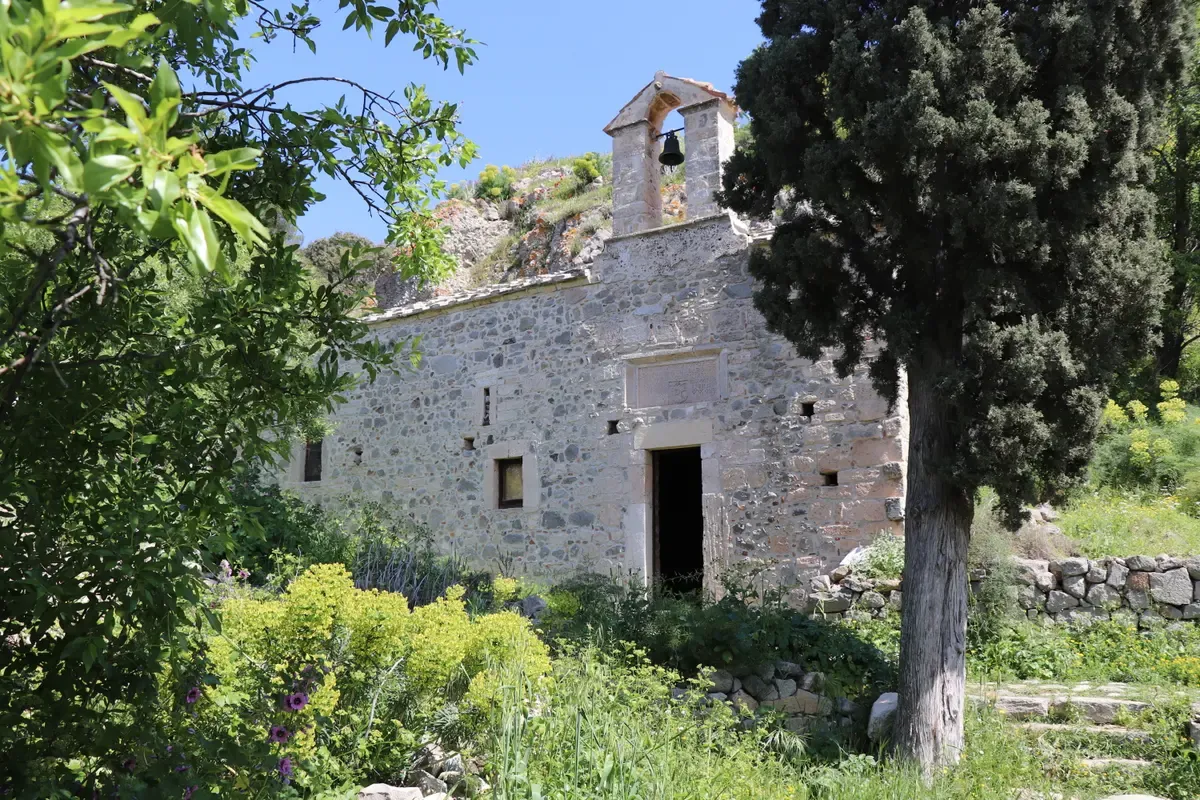
Photo: Furius, CC0, via Wikimedia Commons
Palaiochora and Agia Marina
Palaiochora was settled around 896 AD as an inland refuge from pirate raids and grew up the hillside, and it was said to hold 365 churches, one for each day of the year. Seventy are confirmed. Thirty-three still stand and are open, many with faded wall paintings among the rubble.
The end came in 1537, when Hayreddin Barbarossa besieged the town, took it after four days, demolished the houses and enslaved or killed the people. It is free to walk and usually empty, so go early and give it an hour. Agia Marina on the east coast is the main beach resort and sits below the temple ridge, which makes it the natural base for a morning at the site.
When to come
Weekdays in May, June, September and October are the answer. Athenians come at weekends all summer and the island is genuinely busy then, with the ferries full of day trippers by mid-morning and the waterfront loud by evening. The buses and the port feel it most, and a quiet swim is much easier midweek.
A Tuesday in October, with the season winding down and the pistachio bags fresh on the quay, the island is yours. If your only free days are summer weekends, take the first ferry out and plan the temple early, before the coaches and the tour groups arrive at the ridge.
Aegina or Hydra
The two Saronic islands people choose between, and they are not alike.
Aegina is a working island
Aegina is bigger, closer and cheaper, with agriculture, a proper town, buses, scooters for hire and an important ancient temple. It is a working island that has mattered for a long time. It minted the first coins in the Greek world, silver sea turtle staters struck from the mid-sixth century BC, and it housed the first government of independent Greece.
That weight shows in what there is to do. You can walk to a temple, climb a ruined hill town, swim off organised beaches and eat properly, all on island buses if you do not hire anything. It is the better day if you want to do something, and the better value by a wide margin.
Hydra is a preserved harbour
Hydra is smaller, further and more expensive, and there are no cars on it at all. Goods move by mule, which tells you what kind of place it is. The harbour arrives at you all at once from the ferry deck, stone mansions rising straight from the water with no modern clutter above them, and that arrival is the reason people go.
There is no ancient temple and no ruin to tick off. What there is, is a preserved harbour you sit beside. It is the more beautiful approach and the better place to do nothing for a few hours. Hydra has the detail on boats, prices and what a day there involves.
If you have one island day
Aegina, for the temple and the price. The scheduled ferry gets you there in about 75 minutes, entry to Aphaia is €10, and you can add Palaiochora, the pistachio sellers and a swim without rushing. If you want the photograph and the quiet and do not mind the cost, Hydra.
Doing both in one day is what the cruises sell, and it is why they give you roughly ninety minutes at each, which is enough for a harbour and a coffee and nothing more. Pick one island and own it. You can always come back for the other, and the boats run all year.
Aegina map
The port, the temple, and what else is on the island.
Where this fits
The other water days out of Athens.
Aegina questions
Is Aegina worth visiting?
Yes, and it is the best-value day in this guide: about €12 each way on the boat and €10 at the temple, for an island with a better-preserved Doric temple than anything in Athens. What the day costs adds it up.
How long is the ferry from Athens to Aegina?
About seventy-five minutes from Piraeus on a conventional ferry, around forty on a fast craft, with several sailings a day all year. Piraeus is twenty-five minutes from central Athens by metro for €1.20.
What is there to do on Aegina?
The Temple of Aphaia, the town waterfront with its floating vegetable market, the abandoned medieval town at Palaiochora, the beach at Agia Marina and the pistachios. The rest of the island covers each.
Is Aegina or Hydra better?
Aegina if you want to do something and spend less; Hydra if you want the prettier harbour and do not mind the cost. Aegina or Hydra compares them properly.
Do I need a tour?
No — this is the day trip that least needs one. Buy a ferry ticket, take the island bus or hire a scooter, and pay €10 at the temple. The three-island cruises are a different product entirely.
How much is the Temple of Aphaia?
€10 full and €5 reduced, including the site's scientific collection, and free on the state free-entry days. It is open 08:00 to 20:00 from 1 April to 31 October.
Aegina on Video
Three filmed visits that show the distances, the surfaces and the pace — the things a written page cannot carry. Every id was checked against YouTube on 2 September 2026.
🇬🇷 Aegina Greece | Exotic beaches | Top places | Greek islands travel guide
Aegina's beaches and villages, beyond the port the ferry lands at.
Video: Tourismos Travel GuruAthens city guide - Aegina Island
A short airline-made guide to the island.
Video: easyJetHow to Spend 1 Day in Aegina, Greece!
One day on Aegina, filmed as a day trip from Athens.
Video: Drew AddisPrices, hours and terms are set by the venue or operator and confirmed at checkout.
We may earn a commission if you book through one of our links, at no extra cost to you. Full affiliate disclosure