 Visit Athens Guide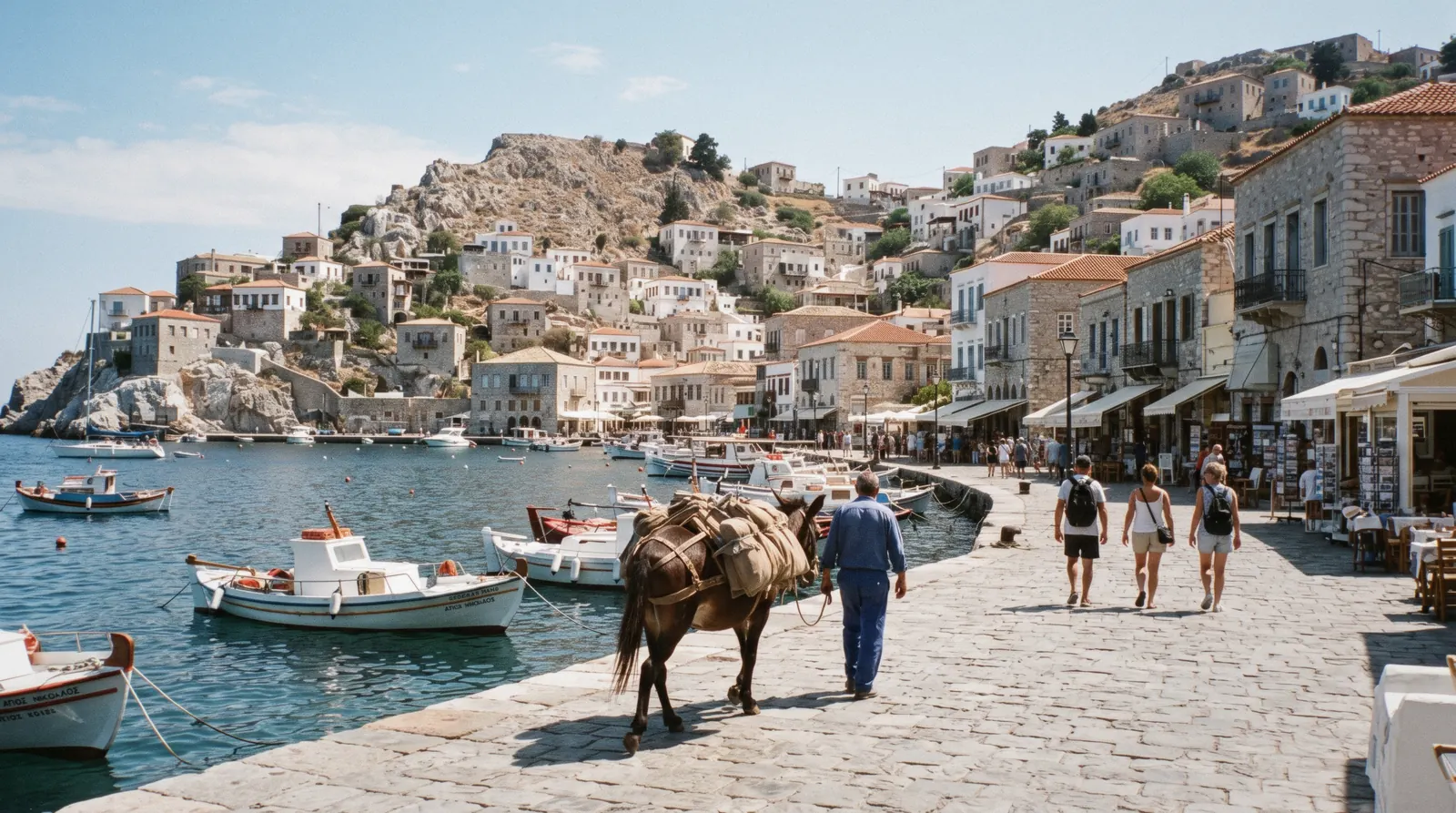
Hydra
Hydra island is the one in the Saronic Gulf with no cars on it. Goods move by mule and by hand-cart, the stone houses of eighteenth-century shipowners stack up the slope around a small deep harbour, and the whole thing is a protected settlement. It is the prettiest arrival within two hours of Athens and the most expensive of the near islands. Checked in Q3 2026. The alternatives are on the day trips hub, and the wider plan is covered in things to do in Athens.
Quick answer How to get there, and what ninety minutes ashore buys
Hydra is about ninety minutes from Piraeus by fast craft. There is nothing you must pay to enter — the island itself is the thing — and the cost of the day is the boat. Cruises give you roughly ninety minutes ashore; a scheduled ferry gives you the day.
Key takeaways
- Cruise or scheduled boat is the whole decision, and ninety minutes ashore is a walk round the harbour and a coffee.
- No cars, no scooters, no bicycles for hire — what "no cars" means explains how things actually move.
- The harbour is the sight, and the walks out of it are the rest: what to do has the two worth taking.
- It is the most expensive of the near islands to eat and sleep on. Aegina is the cheaper island day.
- Ferry strikes stop this trip with a day's notice — the strikes page explains where notices appear.
Key facts
Opening hours
| Fast craft from Piraeus | about 90–minutes |
|---|---|
| Cruise boats ashore | about 90–minutes |
| The harbour | all–day |
Closed None; ferry strikes are the interruption to watch
Admission
- Adult
- No essential entry fee
- Reduced
- —
- Free
- The harbour, the walks and the coast paths
Planning it
- Time needed
- Not stated; our routing: a full day, or an overnight to see it properly
- Book ahead
- Essential — weeks ahead
- Address
- Hydra town, 180 40 Hydra
What the day costs
Prices as listed on 1 September 2026. There is no site ticket on Hydra; every figure here is transport.
The question is whether you want three ports or one island, because ninety minutes ashore is what a three-island cruise gives you here.
| Option | Price | Time ashore | What it is | Book |
|---|---|---|---|---|
| Three-island cruise with lunchAnyone who wants the Saronic sampled, with lunch and a fixed return | From €124 | About 90 min here | Hydra, Poros and Aegina; buffet lunch on board | Check Availability |
| Cruise with the operating companyAnyone who wants the same day booked with the company that runs the boat | From €128 | About 90 min here | The same route, run by the boat's owner | Check Availability |
| Scheduled fast craft from PiraeusAnyone who wants Hydra itself — the harbour, the walk out, and no departure horn | Operator's fare | As long as you like | Book the boat, make your own day | Official site |
| Metro to PiraeusEveryone; the port is on two metro lines from the centre | €1.20 | — | 25 minutes from central Athens | Official site |
The cruises are the way most visitors reach Hydra and they are honest about what they are: a day on the water with three stops. What they are not is a way to see three islands. If Hydra specifically is the point, take a scheduled boat, spend the day, and come back on an evening sailing — or stay the night, which is when the island is at its best.
The boats
The cards, with the operator's own rating and review count.
 from €123.14
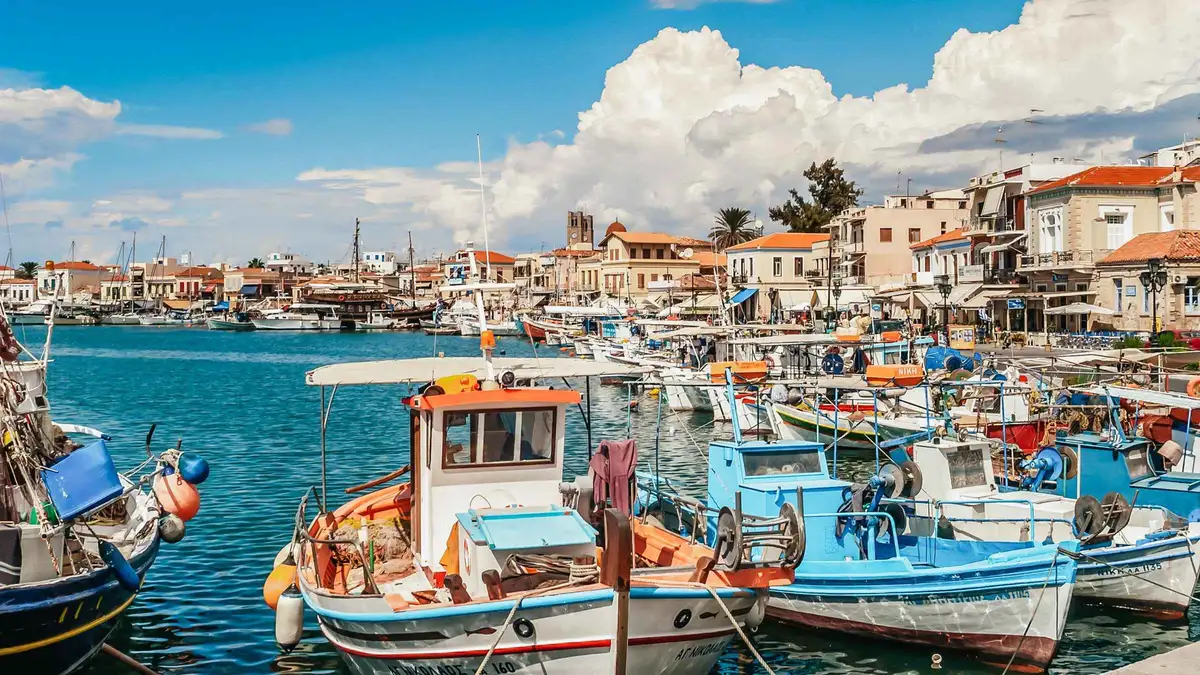
From Athens: Hydra, Poros, and Aegina Day Cruise with Lunch
Twelve hours to Hydra, Poros and Aegina with a buffet lunch on board and time ashore at each.
Check Availability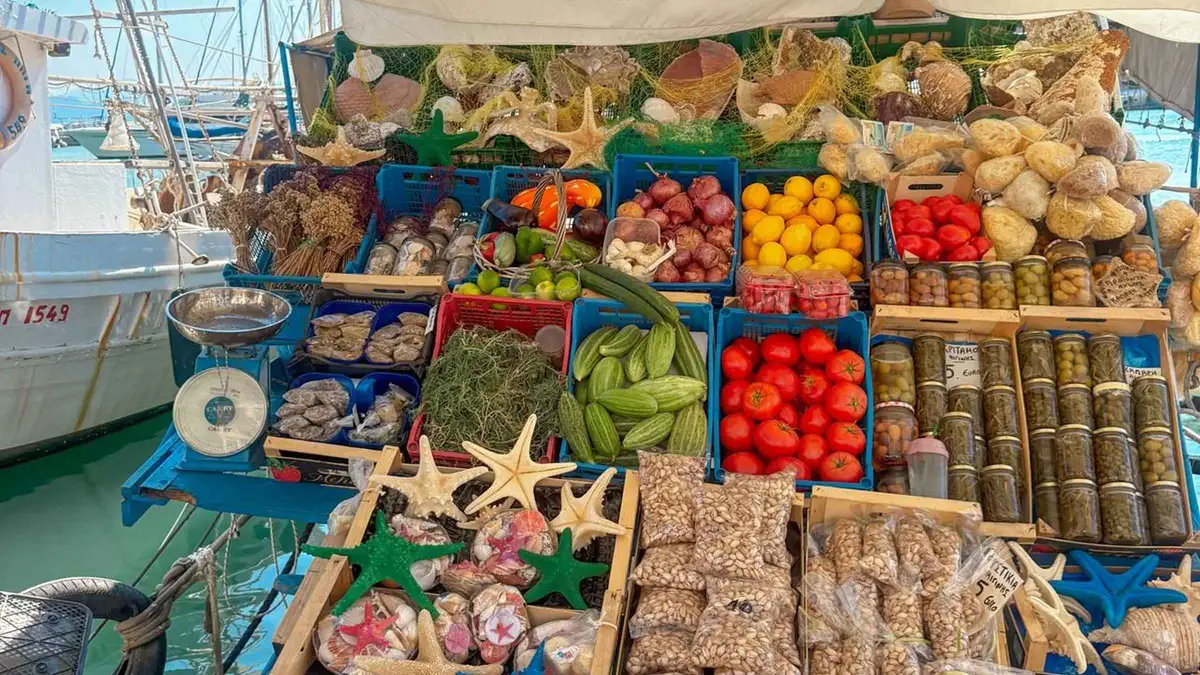 from €127.85
Hydra, Poros & Aegina Cruise with Lunch - Official Operator
The same three islands with the operator that runs the boat, with lunch and live music on the crossing.
Check Availability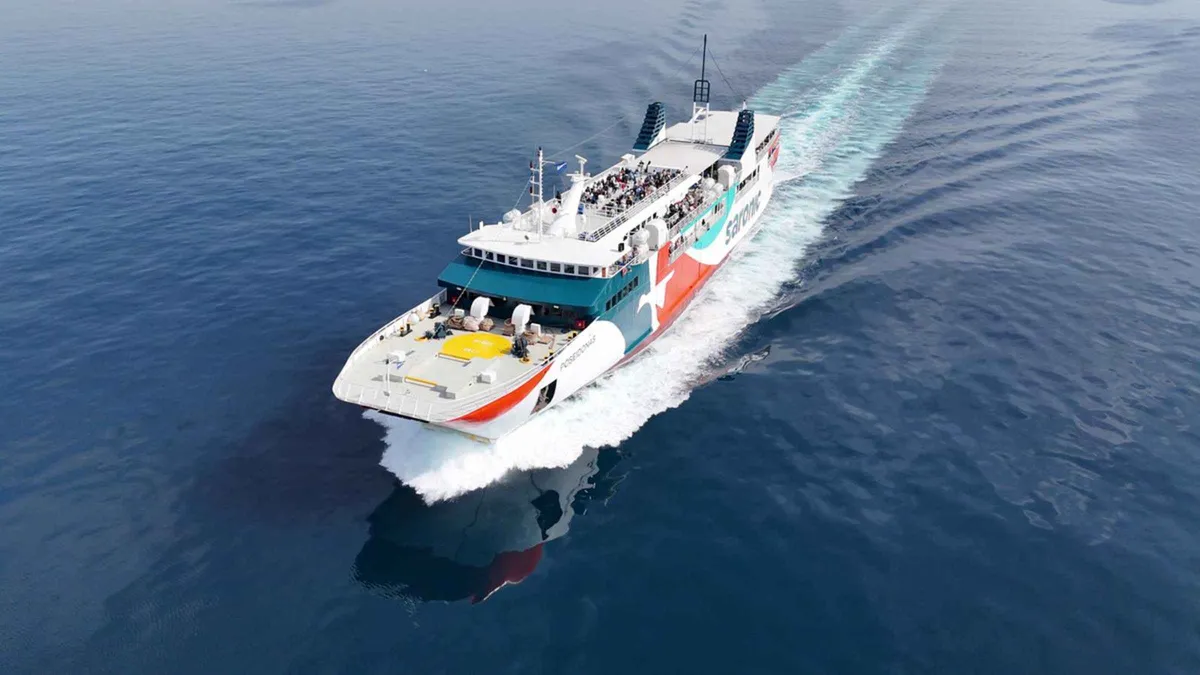 from €12
Athens: Ferry Boat Ticket to/from Aegina Island
Just the boat: a Piraeus–Aegina ferry ticket by email, 75 minutes each way, so the island day is yours to shape.
Check AvailabilityPrices, ratings and details are the platform's own. Euro figures are the listed prices. The platform bills in your account's currency.
What "no cars" actually means
It is not a marketing line; it is enforced and it shapes everything.
No motor vehicles at all
Motor vehicles have been banned on Hydra for more than sixty years, and the ban covers everything with an engine that a private person might own. Private cars, motorbikes and scooters are all out. A handful of municipal service vehicles operate under permission, among them a refuse truck and an ambulance, and nothing else.
Bicycles are restricted too, so you will not see pelotons grinding up the hill lanes either. The rule is old enough that no generation of residents has known the island any other way, and it shapes everything from how luggage arrives to how building materials reach a site. The practical consequence for you is noise and air you can notice.
The loudest thing in Hydra town is the harbour, and the streets belong to feet and hooves. Plan distances accordingly.
Mules, and hand-carts
Freight moves off the boats onto mules and donkeys and up the stepped lanes, and that is not a display laid on for visitors. It is the island's actual logistics. There are several hundred working animals on Hydra, and everything you see arrive must leave the quay the same way, from crates of soft drinks to bags of cement.
Luggage to a hotel goes by mule too, which is worth knowing before you book if you are travelling heavy. Pack what you can carry yourself for a few hundred metres of stone steps, or be ready to pay for the animal that carries it for you. Hand-carts handle the flat parts of the harbour front.
Watch where the mule trains pass and stand aside. They have right of way, and they use it.
What that means for a visit
Everything on Hydra is on foot, and much of it is uphill on stone steps polished by two centuries of use. There is no road transport to fall back on, so a hotel ten minutes above the harbour is ten minutes on your own legs, with your bag, in whatever heat the day has. Water taxis run round the coast to the beaches, and that is how most people reach them, since the paths inland are steps and goats rather than roads.
It also means the island is genuinely difficult for anyone with limited mobility. The harbour front is flat and almost nothing else is. If steps are a problem, choose accommodation on or very near the quay, and treat the coastal walk as your territory rather than the upper lanes.
What to do with the time
There is no museum you must see. There is a harbour, and two walks.
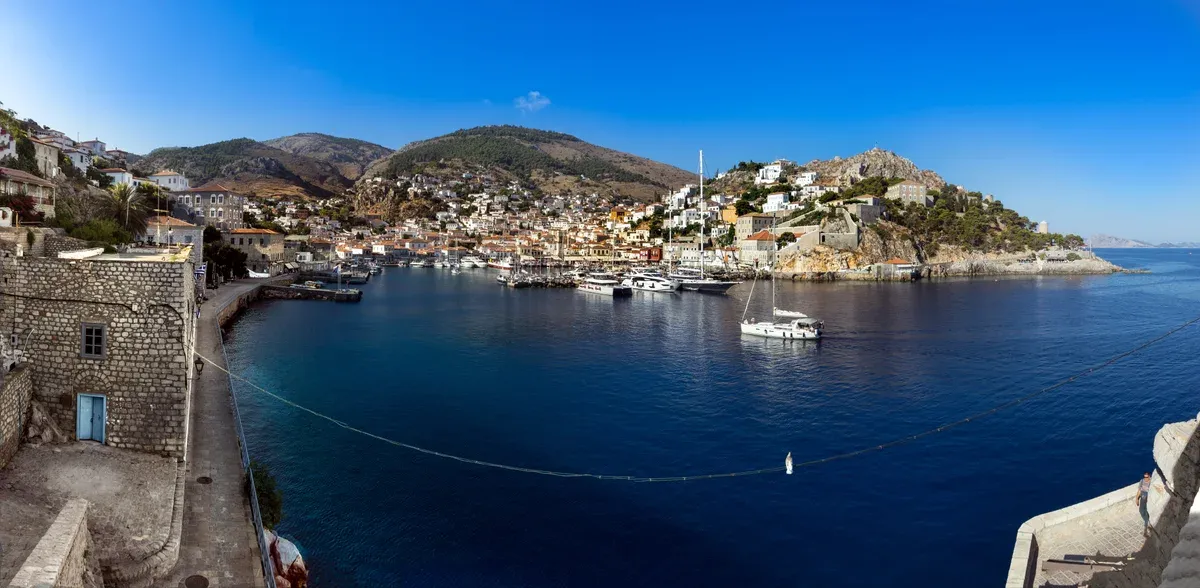
Photo: Violeta Meleti, CC BY-SA 4.0, via Wikimedia Commons
The harbour
Hydra's harbour is a deep natural anchorage ringed by grey stone mansions, the archontika, built by the shipowning families who made the island rich. By the early nineteenth century Hydra had about 125 ships and 10,000 sailors, one of the largest merchant fleets in the Aegean, and in 1821 it put a large part of that fleet into the war of independence. The whole town is a protected settlement, which is why nothing is rendered or painted white.
The stone is the point, and the rules keep it that way. Practically, the quay is where every boat lands, where the water taxis queue and where the tavernas with the highest prices sit. Walk five minutes up any lane off it and the cost of a coffee drops noticeably.
The walk to Kamini and Vlychos
West along the coast path from the harbour, it is about forty minutes to Kamini and another twenty to Vlychos. These are two small settlements with tavernas and swimming off the rocks, and the path between them and the town is flat, which on Hydra is a rare and valuable quality. It is the best walk on the island and it takes you out of the day-tripper zone within fifteen minutes of leaving the quay.
The path is stone and unrailed in places, so ordinary shoes rather than sandals are the sensible choice, and there is little shade, so go early or late in summer. Both villages do a straightforward lunch. Swim at Vlychos, eat at Kamini, and walk back into town as the light goes.
The climb to the monasteries
Up the stepped lanes and out of the back of the town, the climb to Profitis Ilias monastery takes roughly an hour at a steady pace, and from the top you have the whole island below you and the sea on every side. This is the only real hike on Hydra, because a car-free island of steep stone paths does not offer many long routes. It is hot work in summer, so start in the morning, carry more water than seems reasonable and wear real shoes, since the steps are uneven and unshaded for most of the way.
There is no kiosk en route. The monastery keeps irregular hours and is a working foundation rather than an attraction, so treat it as a destination with a view rather than a scheduled visit.
Swimming
There is no sandy beach in Hydra town, and nobody should pretend otherwise. People swim off the rocks at Spilia, just west of the harbour, and at Hydronetta below the cannons, both of which have ladders or cut steps into the water and somewhere to buy a drink. For proper beaches you take a water taxi to Bisti and Agios Nikolaos further round the coast, which is how most visitors reach them since no road does.
Bring something to sit on, because the rocks are sharp and the pebbles are hot by late morning, and bring your own water at the smaller spots. The water itself is clean and deep close in, so weaker swimmers should pick a spot with easy entry and stay within their depth.
Cruise or scheduled boat
The two ways to arrive, and what each is honestly for.
The cruise
The cruise option runs ten to twelve hours, leaving Piraeus in the morning and calling at three islands, with lunch and often live music on board, back in the evening. You get about ninety minutes ashore at each stop, which is enough for the harbour front, a coffee and a quick look up the first lane. As a day on the Saronic Gulf with someone else steering, it is a pleasant and well-organised thing, and it suits people who want variety rather than depth.
As a way of seeing Hydra it gives you the harbour and no more. You will not reach Kamini, Vlychos or any beach, and the hour and a half includes finding your way back to the boat. Weigh that against the price before booking.
The scheduled fast craft
The scheduled fast craft takes about ninety minutes each way from Piraeus, with several sailings a day in season, and it costs a fraction of a cruise. You get five or six hours on the island, which is enough for the coast walk to Kamini and Vlychos, a swim at Spilia or Hydronetta, a long lunch and the harbour in the late afternoon after the cruise boats have gone. That last hour is when Hydra is at its best, so build the day backwards from it.
Book the outward sailing early and the return at dinner time if the timetable allows. Check return times the day before, since seasonal schedules shift. This is the version we would book, and the one that lets the island work on you.
Or stay the night
Hydra empties at about four in the afternoon, when the cruise boats and the last fast craft carry the day-trippers back to Athens, and refills with a different, quieter crowd of people staying over. An overnight is the only way to see the town without day-trippers in it, to swim at Hydronetta in the early evening and to eat dinner on a quay that is no longer a queue. The trade-off is money and luggage.
The island is expensive enough that an overnight is a considered decision rather than an obvious one, and every bag you bring goes up the steps by mule or by your own shoulder. Book rooms well ahead in season, and confirm whether your hotel meets you at the quay or gives directions in steps.
And the strike caveat
Ferry strikes on the Greek routes are called by the seamen's federation separately from any general strike, and they can be announced only a day or two ahead, which is exactly the wrong amount of warning for a fixed day trip. There is no central English calendar of walkouts, so you need to know where the notices appear before you commit money. If your Hydra day is fixed and non-refundable, check the strikes page for the Greek-language listings and the official service announcements, and look again the evening before you sail.
If a strike lands on your day, the realistic options are another day or a full refund, and you will only get the second if you asked for it in advance when booking. Keep the booking terms handy.
Hydra map
The harbour, the coast walk and the swimming.
Where this fits
The other island days.
Hydra questions
Is Hydra worth visiting?
For the arrival and the harbour, yes — it is the prettiest thing within two hours of Athens. On a ninety-minute cruise stop you will see the waterfront and little else; on a scheduled boat you get the coast walk and a swim too. Cruise or scheduled boat compares them.
What is Hydra famous for?
Having no cars — freight moves by mule — and for the stone mansions of the eighteenth-century shipowning families whose fleet funded the Greek war of independence. The whole town is a protected settlement.
Is Hydra expensive?
The most expensive of the near islands to eat and sleep on, largely because everything arrives by boat and moves by mule. Aegina is the cheaper island day by a wide margin.
How do you get around Hydra?
On foot, and by water taxi to the beaches. There are no cars, no hire scooters and restricted bicycles; the lanes are stepped. What "no cars" means covers it.
How long does the ferry take from Athens?
About ninety minutes from Piraeus on a fast craft, with several sailings a day in season. Piraeus is twenty-five minutes from the centre by metro for €1.20.
Is there a beach on Hydra?
No sandy beach in the town. People swim off the rocks at Spilia and Hydronetta beside the harbour, walk west to Kamini and Vlychos, or take a water taxi round the coast.
Hydra on Video
Two filmed visits that show the distances, the surfaces and the pace — the things a written page cannot carry. Every id was checked against YouTube on 2 September 2026.
5 Things to do on the Island of Hydra, Greece
Five things on Hydra, filmed on an island with no cars.
Video: DW Travelhydra, greece | a tiny greek island
A quieter portrait of the same island, at walking pace.
Video: Kaylee FosterPrices, hours and terms are set by the venue or operator and confirmed at checkout.
We may earn a commission if you book through one of our links, at no extra cost to you. Full affiliate disclosure