 Visit Athens Guide
The Acropolis or the Acropolis Museum: Which, and in What Order
Acropolis or Acropolis Museum is the wrong question in one respect — they are ten minutes apart on the same pedestrian avenue and you should do both — and exactly the right one in another, because they are run by two entirely separate organisations: the rock by the culture ministry through Hellenic Heritage at €30, the museum by itself at €20. No ticket covers both, their free days do not match, and their hours differ by up to five hours on the same afternoon. This post is about which to do, in what order, and what to do if you can only do one. Everything was read on their own pages in Q3 2026, and the rest of the city is covered in what to see in Athens Greece.
Quick answer Do both, in this order — and if you cannot, here is which
Do both, and do the rock first. The museum's top floor is built to the Parthenon's own dimensions and alignment with the real building in the window, and that only lands once you have stood in it. If you can only do one: the rock in spring or autumn, the museum in July or in winter.
Key takeaways
- Two organisations, two tickets, €50 together — what each is sets out the difference.
- Why the order matters is the actual argument of this post, and it is not sentimental.
- If you can only do one, the weather decides: the rock has no shade and the museum is air-conditioned and open to 22:00 on Fridays.
- Their free days differ — on 25 March the museum is free and the rock is shut. The free-entry page has both calendars.
- No official product covers both: the combined-ticket page explains what the reseller bundles are actually selling.
What each one actually is
They are not two halves of the same visit, whatever the geography suggests.
The rock: buildings, in place
€30, a declared entry hour, and about ninety minutes on top. What you get is the Propylaea, the Parthenon, the Erechtheion and the Temple of Athena Nike standing where they were built, plus the two theatres on the south slope. What you do not get is much sculpture: nearly everything portable came off the rock long ago, and the Caryatids on the Erechtheion porch are casts. The Acropolis page has the hours and the gates.
The museum: what came off it
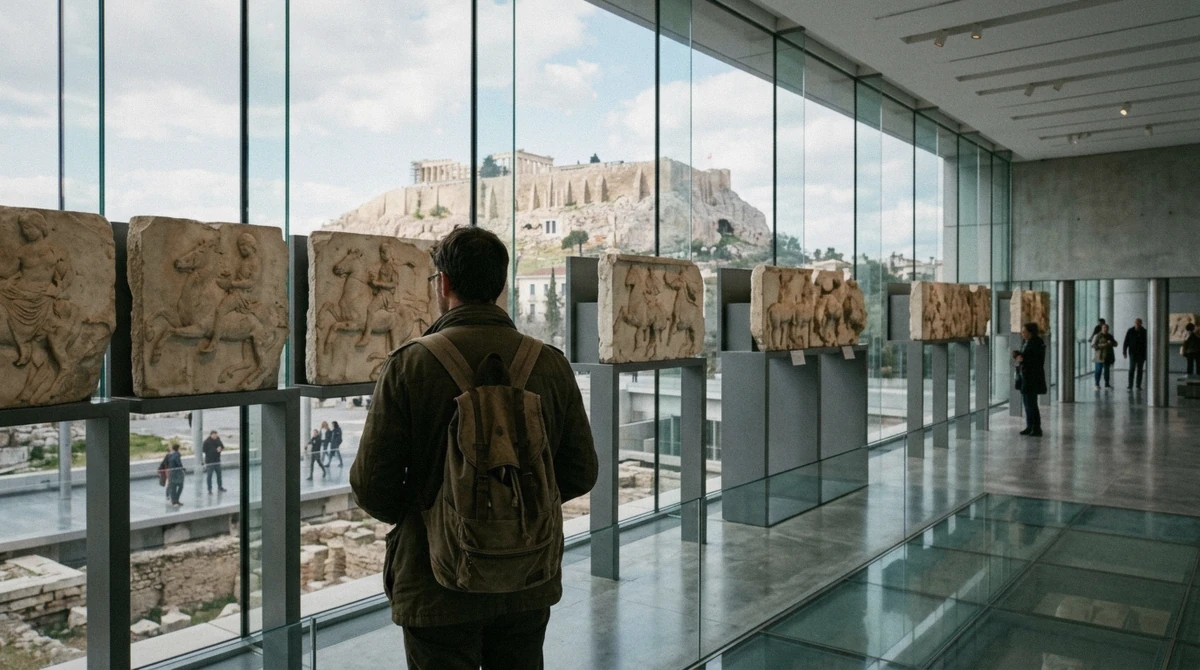
€20, no timed entry, about two hours. The Archaic korai with their surviving paint, five of the six original Caryatids, the Athena Nike parapet, and on the top floor the Parthenon frieze mounted at eye level around a concrete core the exact size of the temple's cella, turned to the same compass alignment, glazed on all four sides. Underneath the building, included in the ticket, is an excavated block of ancient Athens. The museum page has the floors.
Why they are separate
The Acropolis Museum opened on 20 June 2009, designed by Bernard Tschumi with Michalis Photiadis. It was built as a separate legal entity from the state's archaeological estate, and that structure still decides how you buy tickets. The museum sells its own tickets, keeps its own hours, publishes its own free days and issues its reduced ticket at its desk only.
The practical consequence is that the two sellers can disagree. A public-sector strike can shut the rock, because the state sites are staffed by ministry employees, while the museum next door stays open on its own rules. Its free days differ too: 6 March, 25 March, 18 May and 28 October, against the state list. The strikes page explains how closures work on either side.
Visitors who want the ordering handled for them can look at athens guided tours that cover both sites in one go.
Why the order matters
This is the whole point of the post.
The top floor is an argument, and it needs a premise
The Parthenon gallery is not a display of sculpture; it is a reconstruction of the building's own geometry with the surviving blocks in their true positions and plaster casts of the pieces in London beside them. The casts are a different colour. Stand there having just walked round the actual temple and the gaps in the frieze are legible as absences from a building you have seen.
Stand there first and it is a room of marble.
The Caryatids the same way
Six figures hold up the Erechtheion porch on the rock and all six are copies. Five originals stand in the museum's Parthenon-era galleries on a balcony, with a visible gap where the sixth should be, the one Lord Elgin removed. Elgin's 19th-century removals from the Acropolis ran to 18 pedimental statues, 15 metopes and 56 blocks of the Ionic frieze, so the missing maiden is part of a larger tally.
In the museum, white plaster casts mark the places where the original blocks sit in London, so the gaps are made deliberate and legible. The practical line: look at the porch first, in daylight, then meet the originals indoors. The sequence costs nothing extra, since the museum ticket is separate from the rock anyway.
The one reason to reverse it
Heat. In July the rock is a morning-only proposition, and during official heatwaves the culture ministry has repeatedly closed the Acropolis and other open-air sites through the hottest hours, roughly midday to 17:00, announced a day or less ahead. The museum, which stands over an excavated ancient neighbourhood on the Makriyianni plot, is air-conditioned and keeps running.
If your Acropolis slot falls in the afternoon and cannot be moved, do the museum in the morning and accept the weaker sequence. Two things help: the Acropolis Museum free days are 6 March, 25 March, 18 May and 28 October, and its reduced ticket is sold at the desk only. It is a real trade, and in a heatwave the heat wins.
If you can only do one
If it is April, May, September or October
the rock. The weather is on your side, the site hours are long, and standing in the Parthenon is the thing you came for. The Acropolis has the entry times.
If it is July or August
the museum. It is air-conditioned, it is open to 20:00 most days and 22:00 on Fridays, and the rock in the middle of an August day is fifty unpleasant minutes. Athens in the heat explains the shape of a summer day.
If it is December, January or February
the museum again, on a Friday evening — the rock closes at 17:00 and the museum runs to 22:00. See the lit Acropolis afterwards from Philopappos Hill, free.
If you are travelling with children
the museum, and start with the glass floor over the excavation. Athens with kids is honest about the climb.
If you have a mobility limitation
the museum, which has lifts throughout. The rock has a lift on the north face but the summit surface is uneven ancient stone — confirm on the day with the guardhouse.
If you care most about sculpture
the museum, unequivocally. Almost nothing portable is left on the rock.
The two, side by side
Prices and hours from their own official pages, read on 1 September 2026.
| The Acropolis | The Acropolis Museum | |
|---|---|---|
| Price | €30 full / €15 reduced | €20 full / €10 reduced |
| Sold by | Hellenic Heritage, hh.gr | The museum itself |
| Reduced tickets | At the gate with documents | Desk only, never online |
| Timed entry | Yes, a declared hour | No |
| Refunds | None; two changes to 2h before | Per the museum's terms |
| Summer close | 20:00 | 20:00, Fridays 22:00 |
| Winter close | 17:00 | 17:00, Fridays 22:00 |
| Free days | 6 Mar, 18 Apr, 18 May, last weekend of Sep, 28 Oct, two winter Sundays a month | 6 and 25 Mar, 18 May, 28 Oct |
| Time needed | 90 min | 2 h |
Look at the last two rows together. On 25 March the museum is free and the rock is closed for the national holiday; on a free winter Sunday the rock costs nothing and the museum charges €20. Two organisations, two calendars, and no overlap worth relying on.
The tickets, and the bundles
The cards, with the operator's own rating and review count.
 from €36
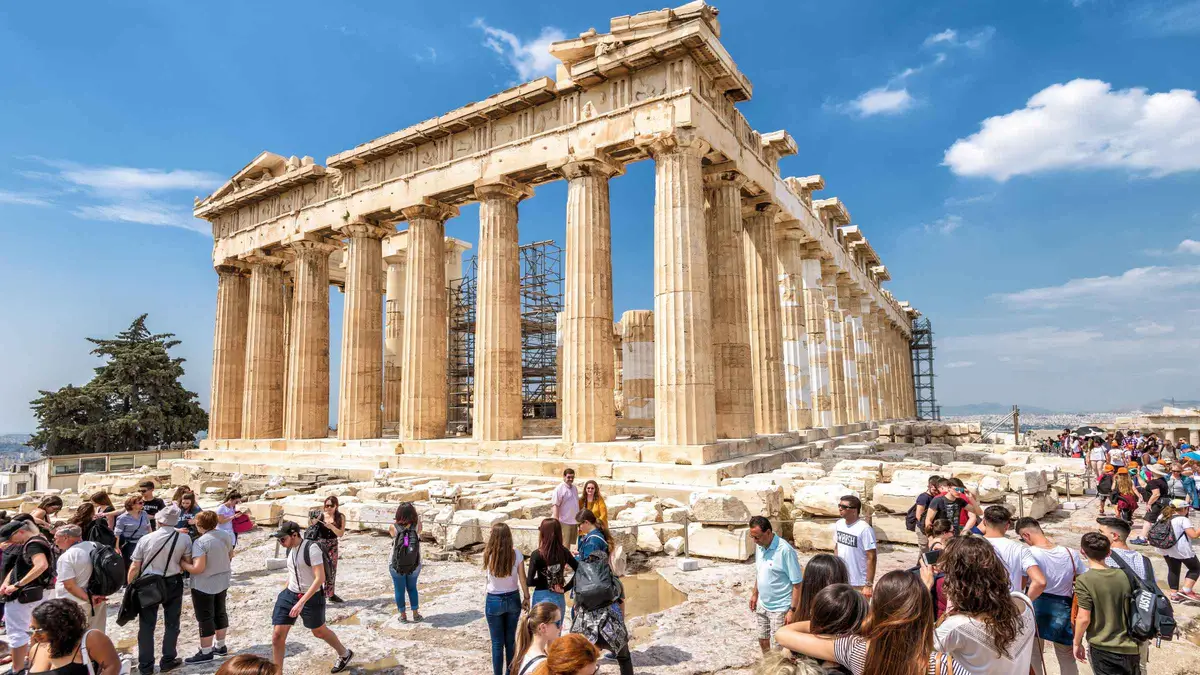
Athens: Acropolis Ticket with Optional Audio or Live Guide
Pre-booked Acropolis entry sent to your phone, with two audio-guide options and no fixed guide to keep up with. The official price is €30; this is the reseller version of the same timed slot.
Check Availability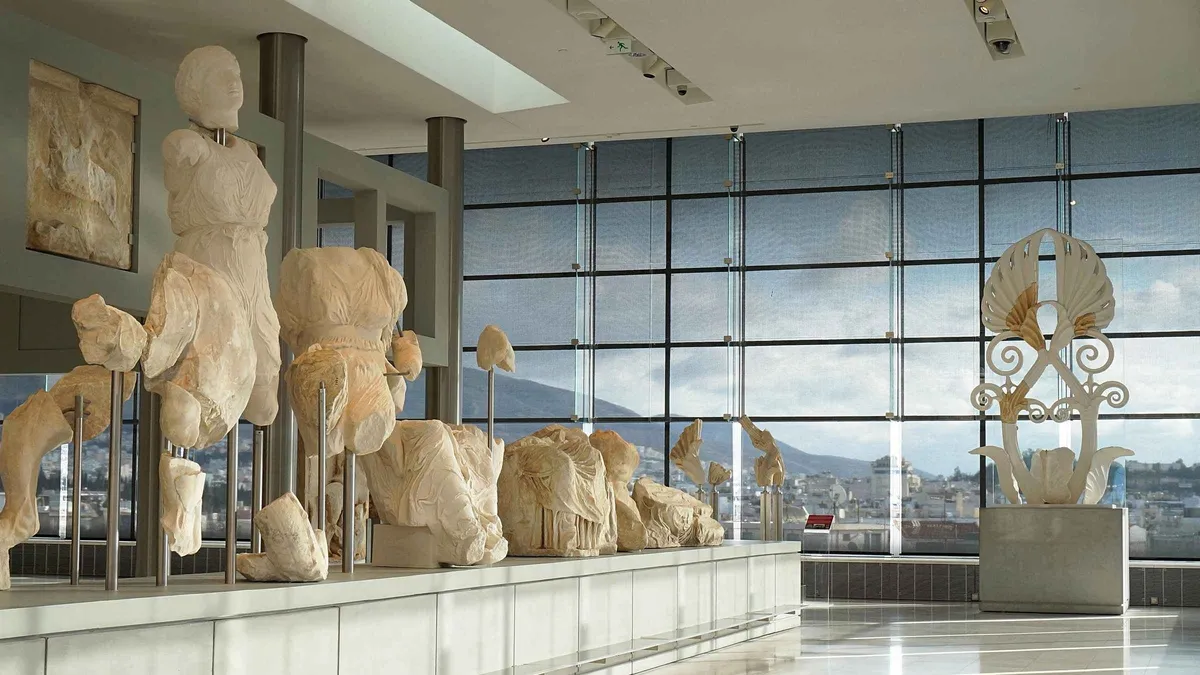 from €26
Athens: Acropolis Museum Ticket with optional Audio Guide
Entry to the Acropolis Museum with optional audio guide. The official price is €20; reduced tickets are only issued at the museum desk, never online.
Check Availability from €63
Combo: Acropolis & Acropolis Museum with Optional Tours
Both tickets in one purchase — a timed slot for the rock and an any-day ticket for the museum. No official pass covers both, so this is the reseller's convenience.
Check Availability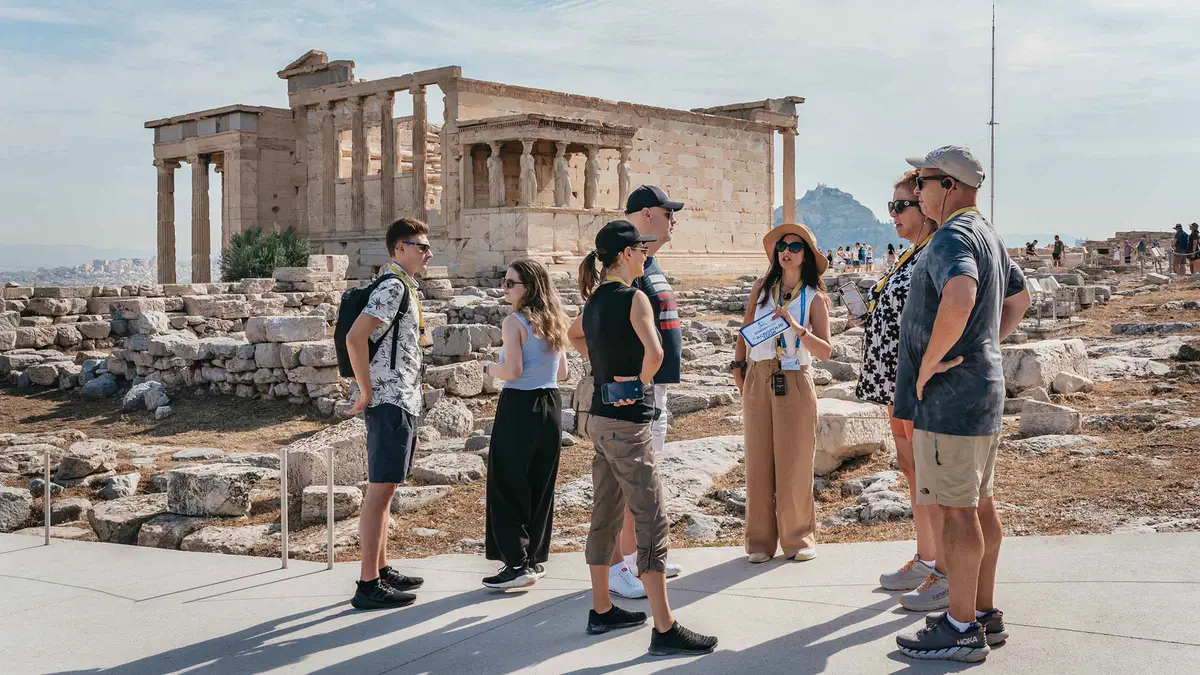 from €34
Athens: Acropolis, Parthenon & Acropolis Museum Guided Tour
An archaeologist takes the monuments on the rock and then the Parthenon gallery in the Acropolis Museum, where the frieze sits at eye level.
Check AvailabilityPrices, ratings and details are the platform's own. Euro figures are the listed prices. The platform bills in your account's currency.
Is a combined ticket worth it?
There is no official one. There are reseller bundles, and the arithmetic is short.
The floor price
The arithmetic is fixed. The Acropolis costs €30 full or €15 reduced, the museum €20 full or €10 reduced at the desk, so €50 is the floor for an adult doing both, and neither seller discounts its own ticket. Any bundle is therefore charging €50 plus a margin for the convenience of one order and, usually, an audio track. The rock-and-museum combo is listed at €63, which puts the convenience premium at about €13.
Worth knowing before you compare: the museum is a separate legal entity from the state sites, with its own shop, hours and free days, which is exactly why the two tickets cannot be bought in one checkout.
When that is worth paying
Two cases make the €13 premium defensible. First, if you want an audio guide anyway, since bundles usually include one and the museum ticket alone does not. Second, if you would otherwise face two checkouts with two different sets of rules, which is what a separate legal entity means in practice: the museum sells its own tickets, keeps its own hours and issues reduced tickets at its desk only, while the state sites run on the Hellenic Heritage system.
One more difference worth pricing in. The Hellenic Heritage tickets are non-refundable, but the defence is two changes per ticket up to two hours before the slot. If you were buying both regardless and want no commentary, pay the €50 floor instead.
And what it cannot do
A bundle cannot issue the museum's €10 reduced ticket. That ticket is desk-only and document-checked, a rule that follows from the museum being its own legal entity rather than part of the state's archaeological estate. So if anyone in your party qualifies, buying the family a bundle costs them the discount, and at €10 a head that adds up fast.
The state side of the bundle has its own reduced ticket at €15, which the standard Hellenic Heritage checkout does handle. The workaround is to split the order: bundle for the full-price adults, a single museum ticket bought at the desk for anyone eligible, with documents in hand. The museum ticket page has the rule in full.
Questions people ask before choosing
Which is better, the Acropolis or the Acropolis Museum?
They do different jobs: the rock is the buildings in place, the museum is what came off them. If you can only do one, the season decides — the decision box sets out five cases.
Should I visit the museum before or after the Acropolis?
After. The top-floor gallery is laid out against the real building and the argument only works if you have walked through it. Why the order matters explains it. The one exception is heat.
Is there one ticket for both?
Not from either official seller — they are separate organisations. Resellers bundle them, and the combined-ticket page prices those bundles against the €50 floor.
How long do both take together?
About three and a half hours of visiting plus the ten-minute walk between them, which is comfortably a single day with lunch in the middle. The one-day plan sequences it.
Do the two have the same free days?
No, and the mismatch catches people: the state list has five fixed dates plus two winter Sundays a month; the museum has four dates and no Sundays. On 25 March the museum is free and the rock is shut. The free-entry page prints both.
Which is better in the rain?
The museum, obviously — but also note that the Acropolis marble is genuinely slippery when wet, which is a safety point rather than a comfort one.