 Visit Athens Guide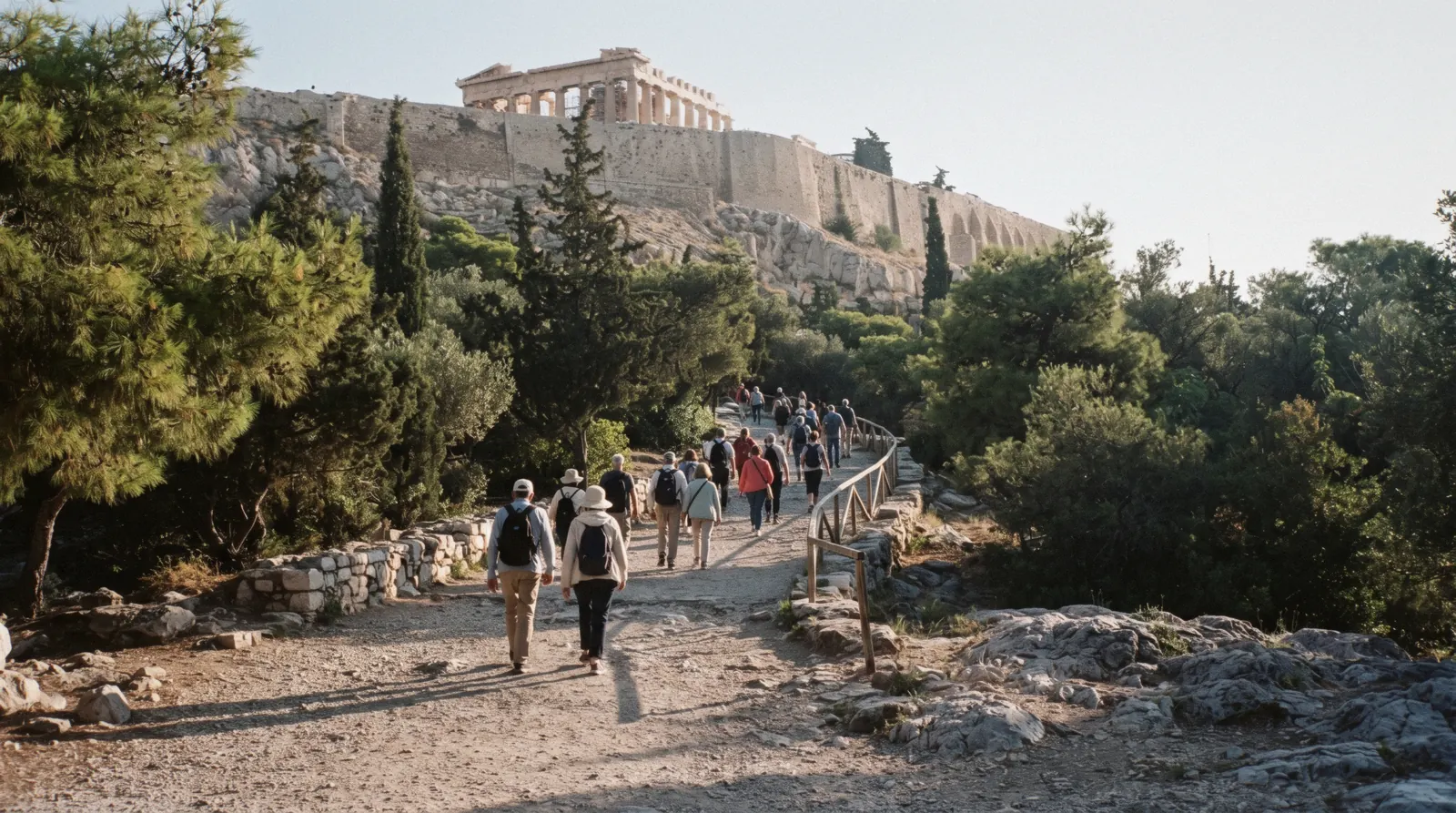
Athens in One Day
Athens in one day works, which is not true of every capital, because the three things that matter sit inside two kilometres of each other. The day is built around one fixed point — the hour on your Acropolis ticket — and everything else falls in around the heat and the closing times. All prices and hours below were read on the official pages in Q3 2026. The longer versions are on two days and three days; the wider plan is on the Athens city guide homepage, starting with the best things to do in Athens.
Quick answer What fits, what it costs, and the one thing to book
One day in Athens covers the Acropolis at opening, the Acropolis Museum in the afternoon and a sunset from Philopappos Hill, with dinner in Psyri after nine. Two tickets, €50, and about six kilometres on foot.
Key takeaways
- Book the 08:00 Acropolis hour and nothing else — the Acropolis ticket is the only timed entry among the sights this day uses.
- The day, stop by stop is the whole plan; what to cut is what to drop when you are late.
- The museum is the afternoon because it is air-conditioned and the rock is not. In winter it is the afternoon because everything else has closed.
- End on Philopappos Hill, which is free and has no closing time — in winter it is the only way to see the rock lit.
- What the day costs adds it up: about €70 to €80 a head including food and transport.
Can Athens be done in one day?
Yes, and better than most capitals — with two honest caveats.
Why it works
Athens compresses well. The Acropolis, its museum, the Ancient Agora, Plaka and the two view hills sit within about two kilometres of each other, and much of the distance is now car-free. Dionysiou Areopagitou, the walkway that links the Acropolis slopes towards the old town, was pedestrianised in 2003 under the programme Melina Mercouri had pushed as culture minister, finished before the 2004 Games.
That single decision turned the south side of the rock into one continuous walking route. There is no transport problem to solve inside the historic centre, so no metro fare to budget and no timetable to chase. The day is a walk, and the walking is the sightseeing.
Budget a full €1.20 for any metro hop outside it, valid 90 minutes.
The first caveat: you will not see the Agora
One day buys the rock and the museum properly, or the rock and the Agora badly. The Ancient Agora at €20 is the first thing a second day adds, and it deserves the wait. This is not a ruin among ruins. It is the ground where the assembly's business, the courts and the market of classical Athens actually sat, which makes it the political centre of the city that invented the idea.
In the middle of it stands the Temple of Hephaestus, built between 449 and 415 BC and almost complete today, because it served as the Christian church of Saint George Akamates from the 7th century until 1834. Rush it and you see stones. Give it its seventy-five minutes on another morning and you see the machine of Athenian democracy.
The second: the season changes the shape
A one-day itinerary is a summer itinerary or a winter one, never both. In July the useful hours are before half past ten and after half past five, and the middle of the day belongs indoors. During official heatwaves the culture ministry has repeatedly closed the Acropolis and other open-air sites through the hottest hours, roughly midday to 17:00, announced a day or less ahead.
Check in the morning before you commit to a timed ticket. In winter the geometry inverts. From 1 November the Olympieion, Roman Agora, Kerameikos and Aristotle's Lyceum close at 15:00 while the Acropolis runs to 17:00, so the small sites come first and the rock comes last. The opening-hours table has the closing times, and the summer page has the heat.
Whichever season you visit, a single day leaves little room for trial and error, so it can help to look at how athens guided tours sequence the same sites before you build your own order.
Before the day: what to check
Three things, and all of them can wreck a single day if they go unchecked.
Is it a closed day?
State sites keep a short, hard list of shutdown days. The Acropolis is closed on 1 January, 25 March, 1 May, Orthodox Easter Sunday, and 25 and 26 December. Most of those are easy to plan around.
The trap is 25 March, a double holiday: the Acropolis shuts for the national anniversary while the Acropolis Museum is open and free, so the two halves of this itinerary split in opposite directions on the same morning. That is the one day the plan has to be rebuilt around, museum first, rock another time, or the rock early and the museum dropped. Check the date before you book anything, because the Hellenic Heritage tickets are non-refundable and a closed day does not get your money back.
Is it a free day?
The state sites waive entry on five fixed dates each year, 6 March, 18 April, 18 May, the last weekend of September and 28 October, plus the first and third Sunday of each month from November to the end of March. Free is good on a quiet February Sunday and bad on 18 May, when the queue itself becomes the day's main event and can swallow the hours you meant to spend inside. The savings are real, €30 at the Acropolis on a paid day, but only if you actually get in.
Weigh each date before you build a trip around one. The free-entry page takes them one by one, and the Acropolis Museum keeps its own separate list of free days.
Is a strike called?
State sites are staffed by ministry employees, so a public-sector strike can close the Acropolis at a few days' notice, and a one-day visitor has no second chance. Greek law gives some warning. Under Law 1264/1982 unions must give at least 24 hours' notice, and four days where a public utility or service is involved, so the threat is usually visible before you travel.
There is no official English calendar. apergia.gr lists calls in Greek and OASA posts transport service notices, and the strikes page explains where each appears. If a call lands after you have booked, the tickets are non-refundable but changeable twice per ticket up to two hours before the slot, which is the one defence you hold. Move the slot, do not lose it.
The day, stop by stop: the rock at opening, the museum after lunch
About six kilometres on foot, almost all of it flat except the climb to the Acropolis and the path up Philopappos at the end. Walk minutes are our estimates between entrance coordinates, rounded up for marble and wrong turns.
-
The Acropolis
€30 full / €15 reducedBe at the south entrance on Dionysiou Areopagitou ten minutes before your hour. Go up the south slope path — it takes you past the Odeon of Herodes Atticus and the Theatre of Dionysus, both on the same ticket — then through the Propylaea to the Parthenon and the Erechtheion. Ninety minutes is the pace this plan assumes, which is enough to walk the whole summit without hurrying.
Leave by about 09:45, before the coach groups land. Flat soles: the marble is polished and genuinely slippery. The Acropolis page has the gates and the seasonal hours.
walk about 10 min to next
-
Coffee, and the pedestrian avenue
FreeCome down and walk east along Dionysiou Areopagitou. It is flat, shaded and closed to cars, and the cafés at the Makrygianni end are where to sit for twenty minutes. This is the recovery stop, and skipping it is how people end up too tired to enjoy the museum.
walk about 5 min to next
-
Acropolis Museum
€20 full / €10 at the deskTen minutes downhill at Dionysiou Areopagitou 15. Go down to the excavated street under the building first — most visitors miss it — then up through the slopes gallery and the Archaic hall to the top floor, where the Parthenon frieze is at eye level with the real temple in the window. Two hours.
If you qualify for the €10 rate, buy at the desk: the museum does not sell reduced tickets online. The museum page has the floors, and the ticket page the rules.
walk about 12 min to next
-
Lunch in Makrygianni or Koukaki
About €10–15Two streets back from the museum the prices halve. A pita wrap is about €4 and a taverna lunch €10 to €15. Avoid the terraces with a view of the rock unless the view is what you are buying — where to eat explains the difference.
walk about 12 min to next
-
Plaka and Anafiotika
FreeRound the east side of the rock into the stepped lanes. Climb to Anafiotika, the whitewashed island houses on the north face, then down past the Lysicrates Monument. Forty minutes, free, and the prettiest walk in the city.
In July do this at five rather than at half past two. The Plaka page has the route.
walk about 8 min to next
-
Monastiraki and the Roman Agora
Free to walk; Roman Agora €10Out of Plaka at the Roman Agora fence — the Gate of Athena Archegetis is on the street and free to look at, and the Tower of the Winds is worth €10 if you have the energy. Then Monastiraki square, the flea market street and the grill counters. The Roman Agora page has the hours; it shuts at 15:00 from November.
walk about 15 min to next
-
Philopappos Hill for sunset
FreeBack west and up the stone path from Dionysiou Areopagitou. Twenty minutes to the saddle, where the Parthenon sits across the gap in profile. Come an hour before sunset and stay ten minutes past it, when the rock is floodlit and the sky is still blue.
In winter this is the only way to see the Acropolis lit, because the site itself closed at five. Philopappos has the three places to stand.
walk about 20 min to next
-
Dinner in Psyri
About €18–20 a headDown off the hill and north-west. Psyri does not fill until about half past nine, which fits a day that ends at sunset. Small plates to share rather than a main course each. The Psyri page explains the timetable, and where to eat the words on the board.
What to cut when you are running late
In this order, and no other.
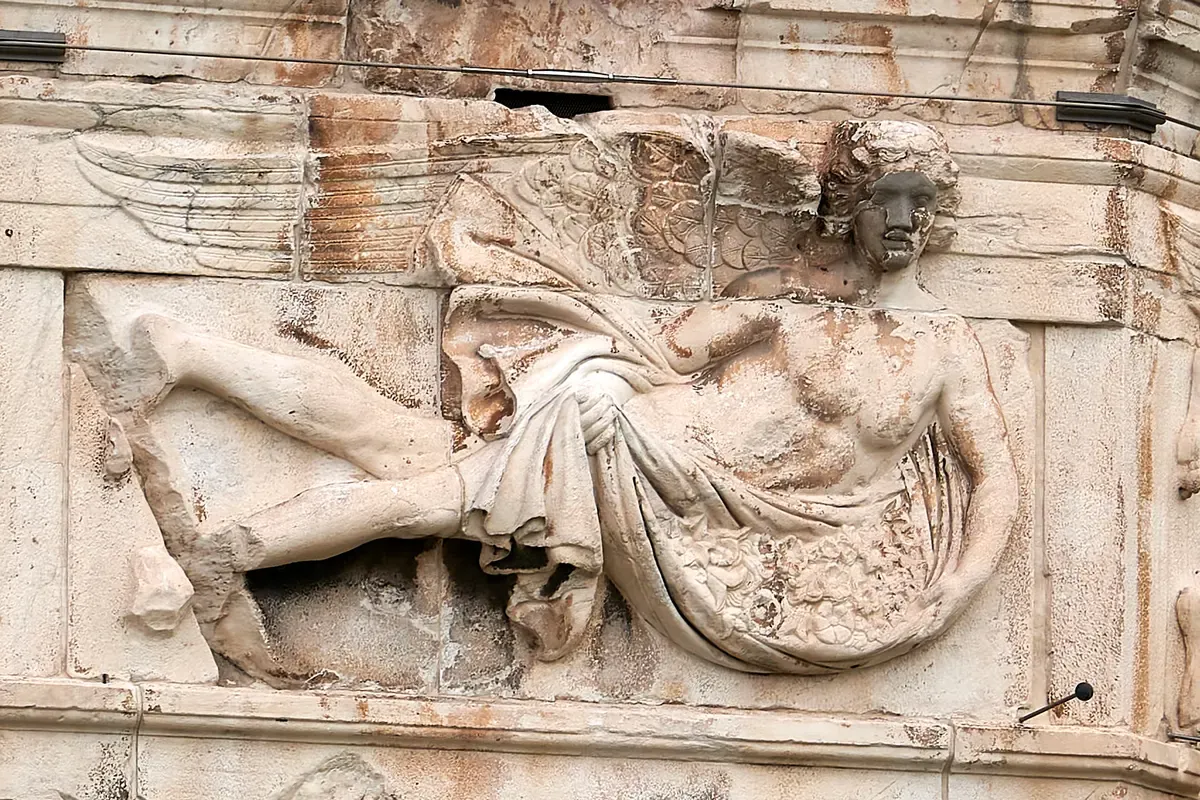
Photo: George E. Koronaios, CC BY-SA 4.0, via Wikimedia Commons
First: the Roman Agora
This is the easiest cut on the list. Entry is €10 with a reduced ticket at €5, and twenty-five minutes inside is a fair visit. The Gate of Athena Archegetis stands at the edge of the enclosure and is clearly visible from the street for nothing, so the essential photograph costs you no ticket at all.
What you give up by walking on is the Tower of the Winds and the ancient paving inside, and in the low season the loss is smaller again, because from 1 November the site closes at 15:00, which usually forces the cut anyway. If the day is running late, buy nothing here, shoot the gate from Athinas-side streets, and spend the recovered half hour on the Acropolis slopes, which are free and open late.
Second: Plaka
Forty minutes and free, which makes dropping it painful, but be honest about what it is. Plaka is a walk rather than a sight, a set of streets to move through, and Monastiraki gives you a version of the same thing on the way to dinner, with the Tzistarakis mosque of 1759 standing on the square, built by an Ottoman governor said to have pulled down a column of the Olympieion to burn for its lime. If you do keep a piece of it, walk uphill to Anafiotika, where masons brought from the island of Anafi from the 1840s to work on King Otto's palace raised Cycladic whitewashed houses on ground that was not theirs.
About 45 of those houses survive. That is the part worth forty minutes, the rest can go.
Third: the museum's excavation
Twenty minutes underneath the building, on the way in. The museum opened in June 2009, designed by Bernard Tschumi with Michalis Photiadis, and it stands directly over an excavated ancient Athenian neighbourhood, which you walk across on the glass floor at the entrance. The dig is included in the ticket, so cutting it saves nothing at the desk, only time.
That is exactly why it is the right sacrifice if you arrive late. The galleries above are the reason you came, and the Parthenon floor cannot be rushed, with its white plaster casts marking the blocks that sit in London. See the sculptures first and the excavation only if the clock allows.
Twenty minutes lost here costs you less than ten minutes lost in the top gallery.
Never: the sunset hill
Keep this one. Philopappos Hill costs nothing, has no closing time, and is the thing people remember from a single day in Athens. It is not just a viewpoint.
The summit monument is the tomb of Gaius Julius Antiochus Epiphanes Philopappos, an exiled prince of Commagene who became an Athenian citizen and a Roman consul, built by the city in AD 114 to 116 in Pentelic marble, 12 metres high and facing the Acropolis. The paths themselves are worth the walk. Dimitris Pikionis laid them between 1954 and 1957 out of broken marble and stone salvaged from demolished Athenian houses.
If the day is collapsing, cut a paid site, any of them, and hold this hour. From the Pnyx on the same ridge you can stand where the assembly voted.
What one day in Athens costs
Entries at official prices read on 1 September 2026, food at typical rates, transport at the OASA fare. Two people sharing plates at dinner rather than ordering a main each.
| Item | Per head | Note |
|---|---|---|
| Acropolis | €30 | Official price, timed entry, no booking fee |
| Acropolis Museum | €20 | €10 reduced, at the desk only |
| Lunch | €4–15 | A pita wrap or a taverna plate |
| Dinner, shared plates | €18–20 | In Psyri, after nine |
| Transport | €1.20–4.10 | A single or a day ticket; the day is mostly a walk |
| Optional: Roman Agora | €10 | Twenty-five minutes |
| Total | about €75–90 | Before drinks and before the hotel |
The two tickets are €50 of that and they are the two things worth every euro. Everything else on the day — Plaka, the hills, the changing of the guard if you pass Syntagma — costs nothing. What Athens costs breaks a longer stay down.
The tickets this day is built on
The cards for the two entries, with the operator's own rating and review count.
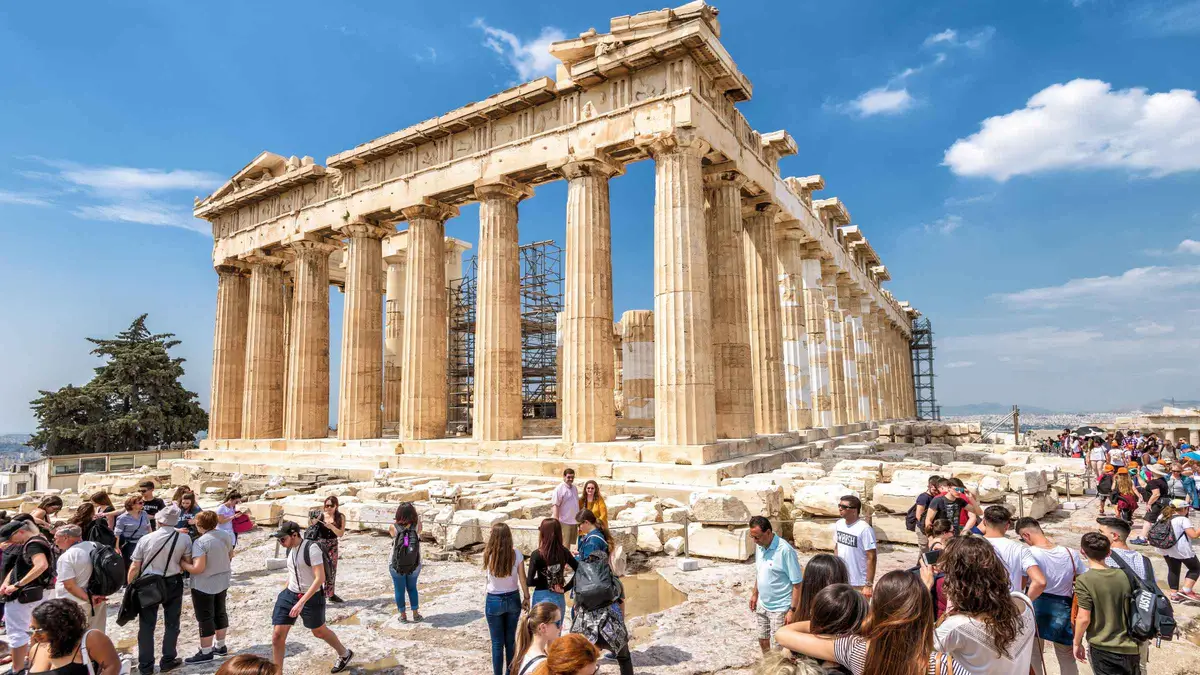 from €36
Athens: Acropolis Ticket with Optional Audio or Live Guide
Pre-booked Acropolis entry sent to your phone, with two audio-guide options and no fixed guide to keep up with. The official price is €30; this is the reseller version of the same timed slot.
Check Availability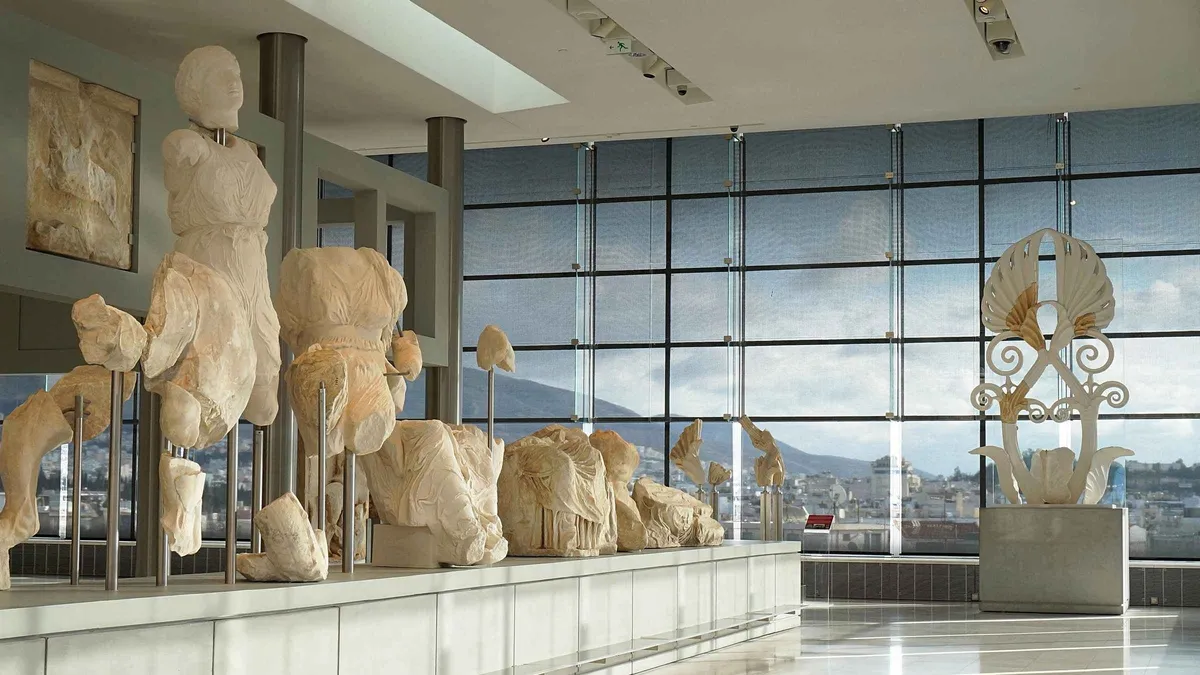 from €26
Athens: Acropolis Museum Ticket with optional Audio Guide
Entry to the Acropolis Museum with optional audio guide. The official price is €20; reduced tickets are only issued at the museum desk, never online.
Check Availability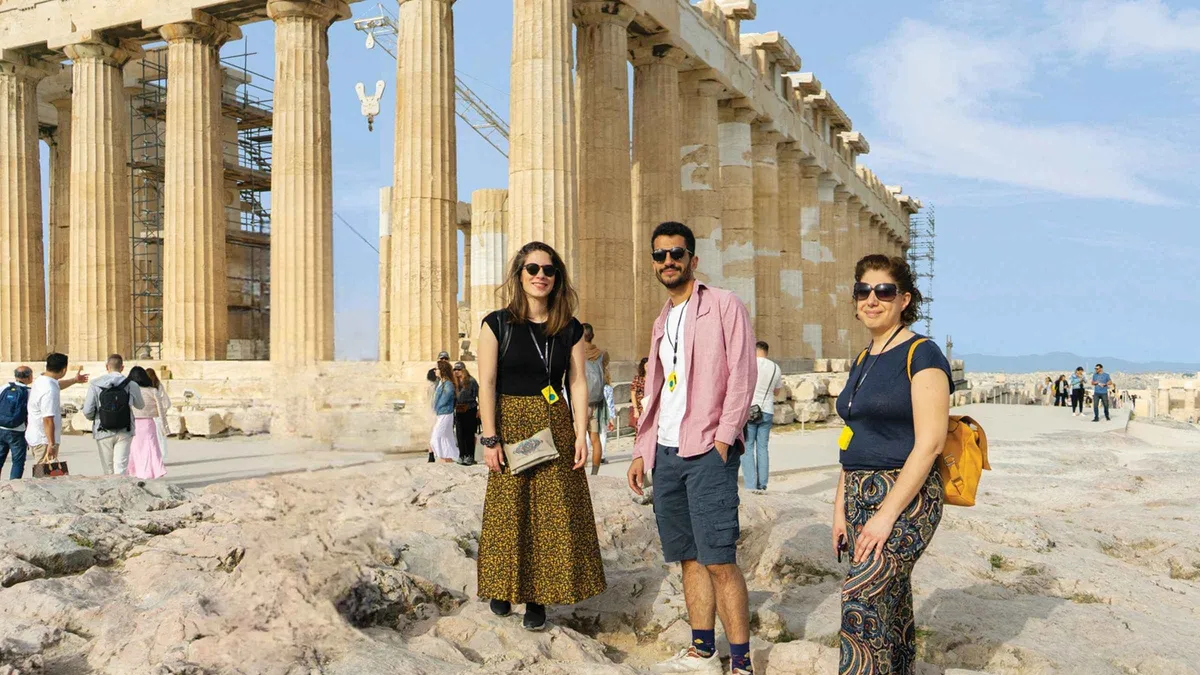 from €27
Athens: First Access Acropolis and Parthenon Guided Tour
An early-morning guided walk that goes to the Parthenon before the coach groups, then the Theatre of Dionysus on the south slope. Two to four hours depending on the option.
Check Availability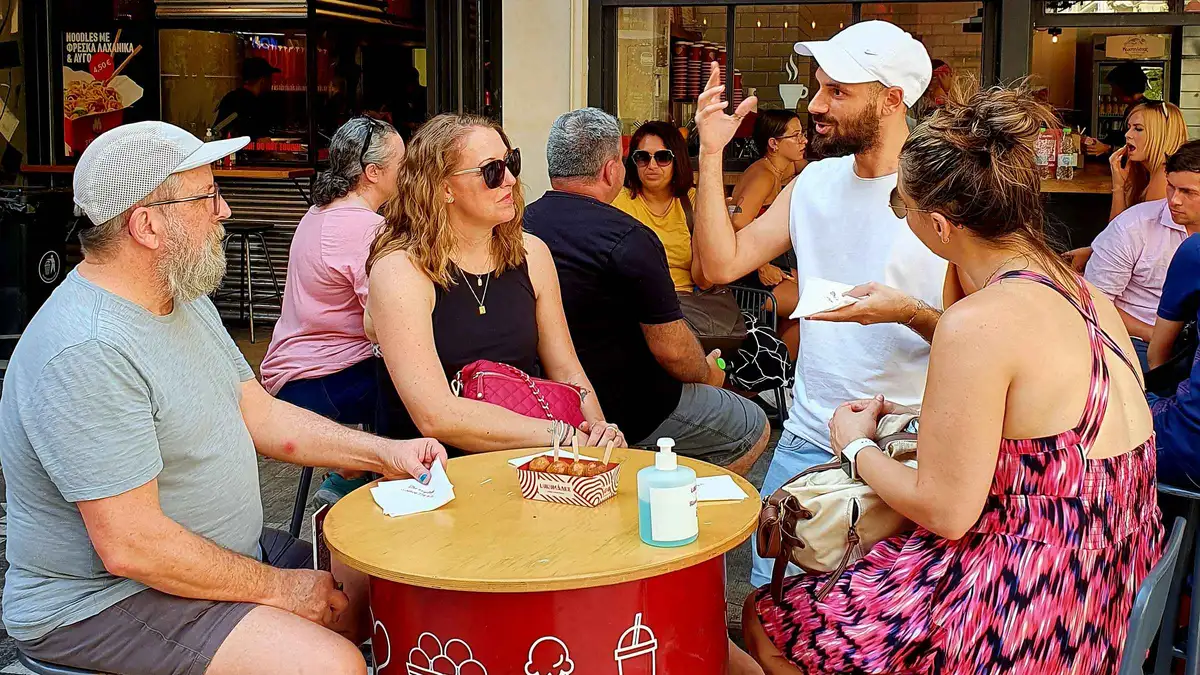 from €59
Athens: Street Food Tasting Tour
Three hours of Athenian street food with beer or wine, moving between the counters locals use rather than the ones on the tourist lanes.
Check AvailabilityPrices, ratings and details are the platform's own. Euro figures are the listed prices. The platform bills in your account's currency.
The one-day route
Eight stops, about six kilometres, ending on the hill.
If one day turns into more
What the next days add, in the order they add it.
Athens in two days
Day two is the democracy and the gold: the two-day plan.
Adds the Agora and the national museumAthens in three days
The version most people should book: the three-day plan.
Adds pace, hills and foodOne day in Athens: questions
Is one day enough for Athens?
For the Acropolis, its museum and a sunset, yes — this plan does that comfortably. It does not fit the Ancient Agora or the National Archaeological Museum, which is what a second day adds. Can Athens be done in one day is honest about the trade.
What should I book for a one-day visit?
The Acropolis, for the 08:00 hour, and nothing else. It is the only timed ticket this day needs — the Acropolis ticket page has the rules, including that it is non-refundable but changeable twice.
What does one day in Athens cost?
About €75 to €90 a head including both entries, lunch, dinner and transport, of which €50 is the two tickets. The cost table itemises it.
Can I fit the Agora in as well?
You can, but not well, and not with the museum. If the Agora matters more to you than the museum, swap them — it is €20 either way and the Agora closes earlier than the rock all summer. The Ancient Agora page has the times.
What if I only have an afternoon?
Take the Acropolis Museum, which needs no timed slot and is open to 20:00 most of the summer and 22:00 on Fridays, then Philopappos at sunset. The rock needs a morning to be worth €30.
Does this plan work in winter?
Yes, compressed: the rock closes at 17:00 and everything smaller at 15:00, so the Roman Agora comes out and the sunset comes at half past five. The museum's Friday to 22:00 is the winter evening. The opening-hours table has the season.
Athens in 1 Day on Video
One filmed version of the same day, useful as a comparison with the routing above.
How to See Athens in a Day Guide
One day in Athens as a tour company plans it — useful as a comparison with our own routing.
Video: the tour guyPrices, hours and terms are set by the venue or operator and confirmed at checkout.
We may earn a commission if you book through one of our links, at no extra cost to you. Full affiliate disclosure