 Visit Athens Guide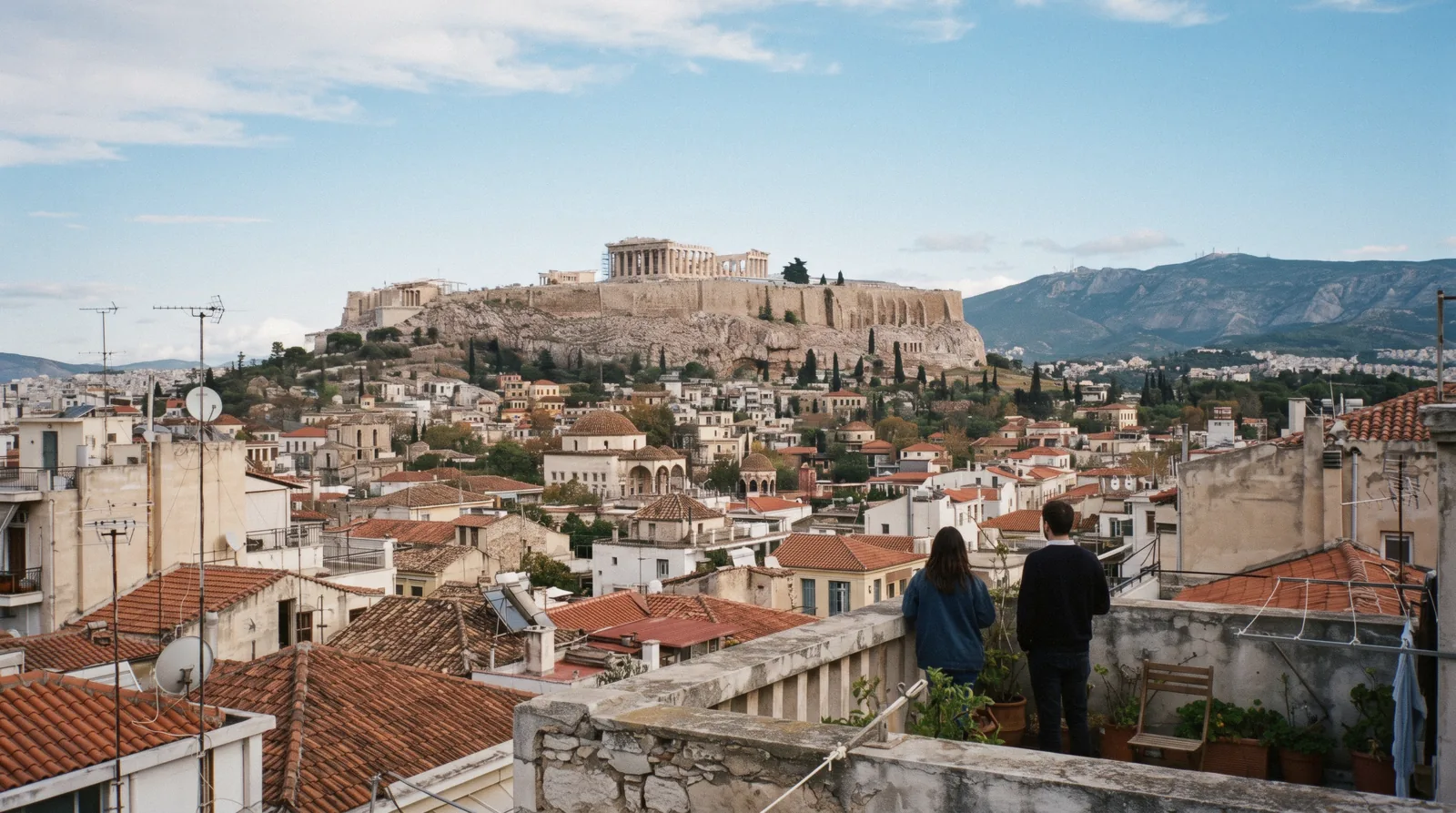
The Best Time to Visit Athens
The best time to visit Athens is April, May, late September and October, and the reason is not only comfort: those are the months when the archaeological sites keep their long hours and the marble is bearable at midday. November to March is cheap, quiet and gives two free Sundays a month, at the cost of a three o'clock closing time. The chart below is ten years of reanalysis data; the calendar beside it is from the official site pages, checked in Q3 2026. For the wider plan, see things to do in Athens.
Quick answer The four good months, and what the others are for
April, May, late September and October: mean daily temperatures between about 16 and 24°C, long site hours and a bearable rock at midday. July and August average close to 28°C with no shade on the Acropolis; December and January are wet and everything shuts at three.
Key takeaways
- The month-by-month chart is ten years of daily means from the ERA5 reanalysis, in Celsius with Fahrenheit under it.
- What each month is actually like puts the weather against the site calendar, which is what really changes a trip.
- Winter is not a bad time — it is a different one. Two free Sundays a month, and the Acropolis Museum to 22:00 on Fridays.
- The old 50% winter ticket discount was abolished, so the season no longer changes the price of anything except the hotel.
- If your dates are fixed in August, Athens in the heat is the page that matters more than this one.
- Athens gets about 65 wet days a year, four times as many in December as in July — the rainfall by month.
Athens month by month
Mean daily temperature by month, averaged from the Open-Meteo ERA5 archive for 2016 to 2025 at the city centre, in Celsius with Fahrenheit underneath. The bands come from the site calendar and the heat, not from opinion.
December is the wettest month in the average, near 96 mm, and July the driest, near 10 mm. Rain is rarely what spoils an Athens day; the heat in the middle of July is.
What each month is actually like
Temperature and rainfall are the ten-year ERA5 means; the site column is from the official opening-hours pages, read on 1 September 2026. Closing times are for the Acropolis, which runs later than most other sites all year.
| Month | Mean | Rain | The sites | Verdict |
|---|---|---|---|---|
| January | 8.9°C | 71 mm | Shut at 17:00; most others at 15:00 | Cheap and quiet; two free Sundays |
| February | 10.0°C | 49 mm | Same | The best value month of the year |
| March | 12.0°C | 46 mm | Same until the 31st | Good, and 25 March closes the sites |
| April | 15.8°C | 34 mm | Long hours from the 1st, to 20:00 | One of the four best |
| May | 20.3°C | 32 mm | 20:00 | The best month, with 18 May free |
| June | 25.6°C | 28 mm | 20:00 | Hot by ten in the morning |
| July | 28.7°C | 10 mm | 20:00 | The hardest month on the rock |
| August | 27.9°C | 11 mm | 20:00 | Hot, and Greece is on holiday |
| September | 23.9°C | 25 mm | Steps down from 19:30 | Excellent from mid-month |
| October | 18.9°C | 26 mm | Steps down to 18:00 | The other best month |
| November | 14.9°C | 80 mm | 15:00–17:00 from the 1st | Wet, cheap, free Sundays start |
| December | 10.9°C | 96 mm | Same | Wettest month; sites shut early |
Read the fourth column against the second. The step down on 1 November is the sharpest change in the Athens year: most central sites go from closing at 18:00 to closing at 15:00 overnight, and the Acropolis to 17:00. That reshapes a winter day far more than nine degrees of temperature does.
What to book, whenever you come
The one timed ticket, and the day trips that shift with the season.
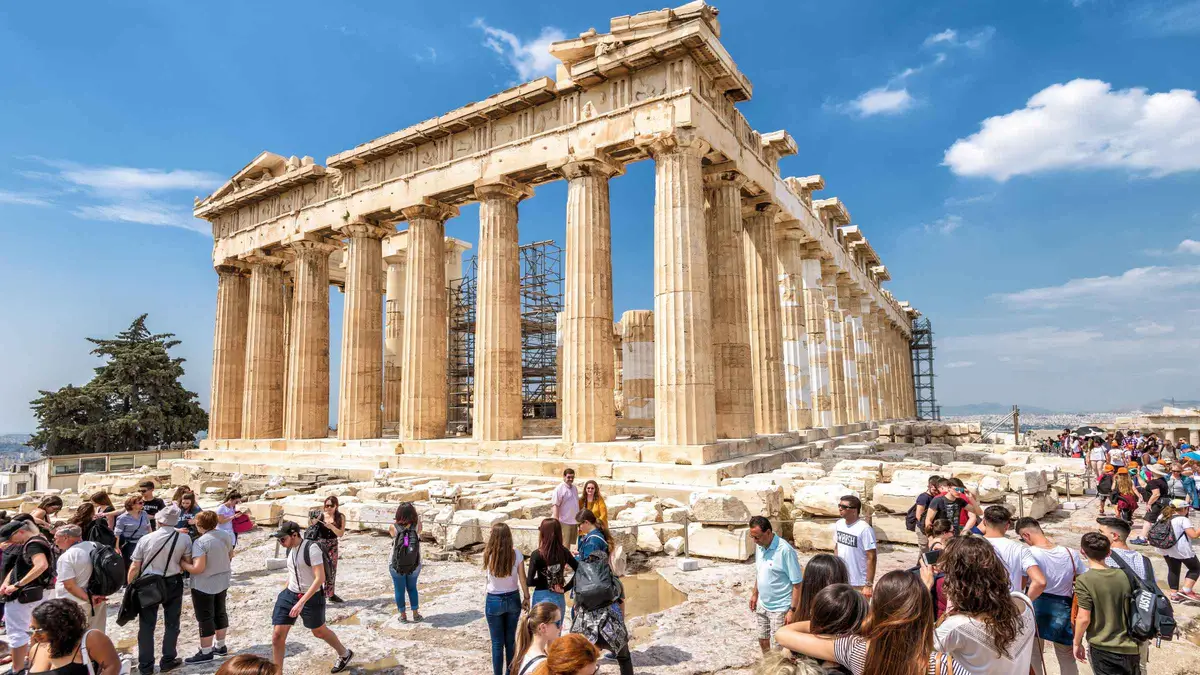 from €36
Athens: Acropolis Ticket with Optional Audio or Live Guide
Pre-booked Acropolis entry sent to your phone, with two audio-guide options and no fixed guide to keep up with. The official price is €30; this is the reseller version of the same timed slot.
Check Availability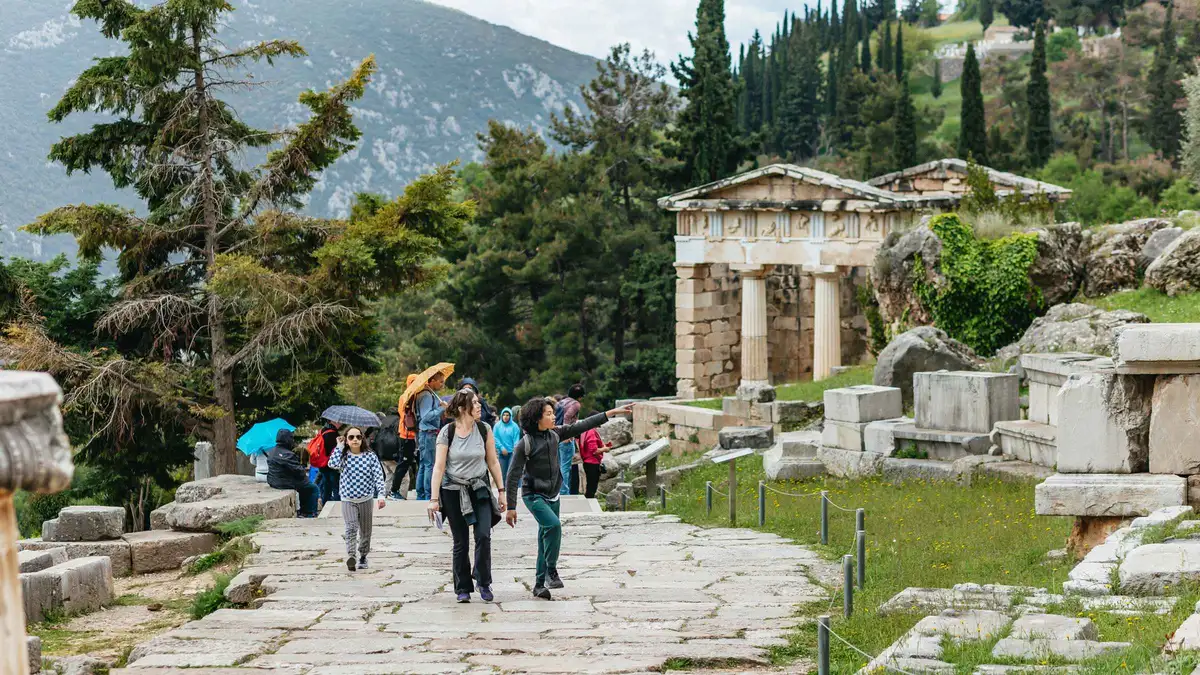 from €39.10
From Athens: Small-Group Delphi, Museum & Arachova Day Trip
The same route in a small group, with the Delphi museum and Arachova, under the Parnassus cliffs.
Check Availability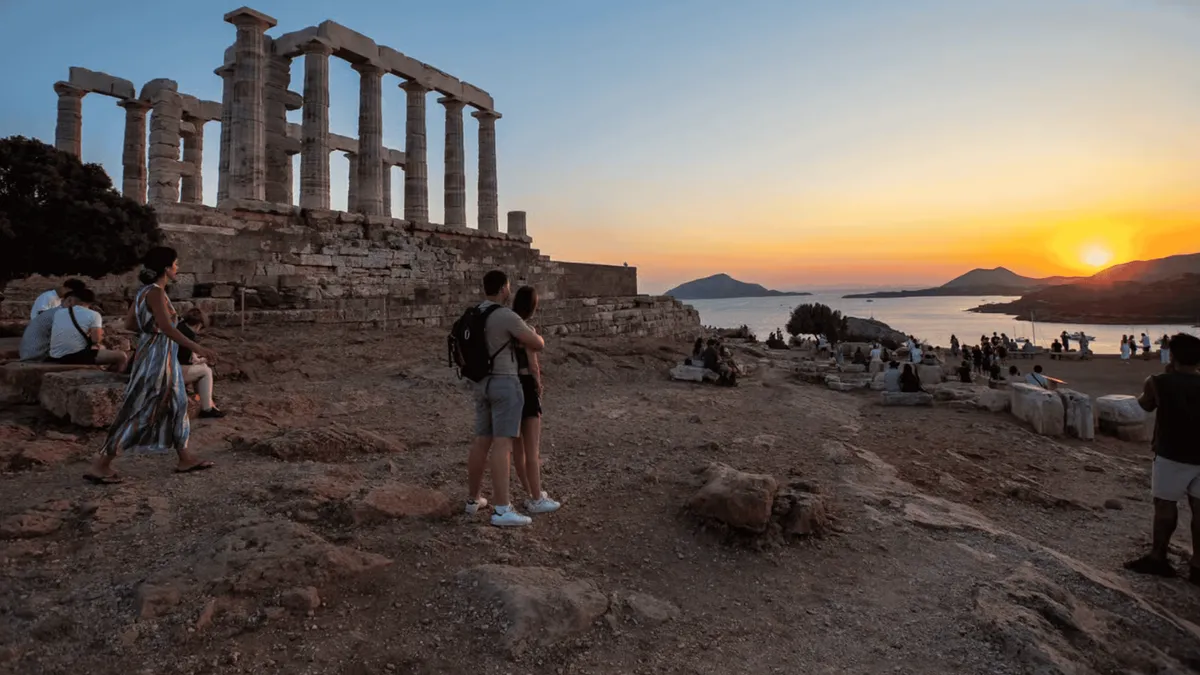 from €28
Athens: Cape Sounion & Temple of Poseidon Sunset Experience
A four-hour evening run down the coast to the Temple of Poseidon for sunset. The site itself opens at 09:30 and closes at sunset year-round.
Check Availability from €59
Athens: Street Food Tasting Tour
Three hours of Athenian street food with beer or wine, moving between the counters locals use rather than the ones on the tourist lanes.
Check AvailabilityPrices, ratings and details are the platform's own. Euro figures are the listed prices. The platform bills in your account's currency.
The four seasons, honestly
Each has a case, and each has a cost.
Spring: April and May
Mean daily temperatures sit around 16°C in April and 20°C in May, and the long site hours return on 1 April. The hills are green, which matters more than it sounds if you are taking Delphi or the Argolid, where bare rock in August and wild flowers in April are two different trips. The variable is Orthodox Easter.
It moves each year, the state sites shut on Easter Sunday, and the week around it fills roads and hotels as the whole country travels. A Western Easter date tells you nothing about the Greek one, and a trip booked blind can land in the middle of the holiday. Check the Orthodox date for your year before you book anything, and either avoid that week or join it deliberately.
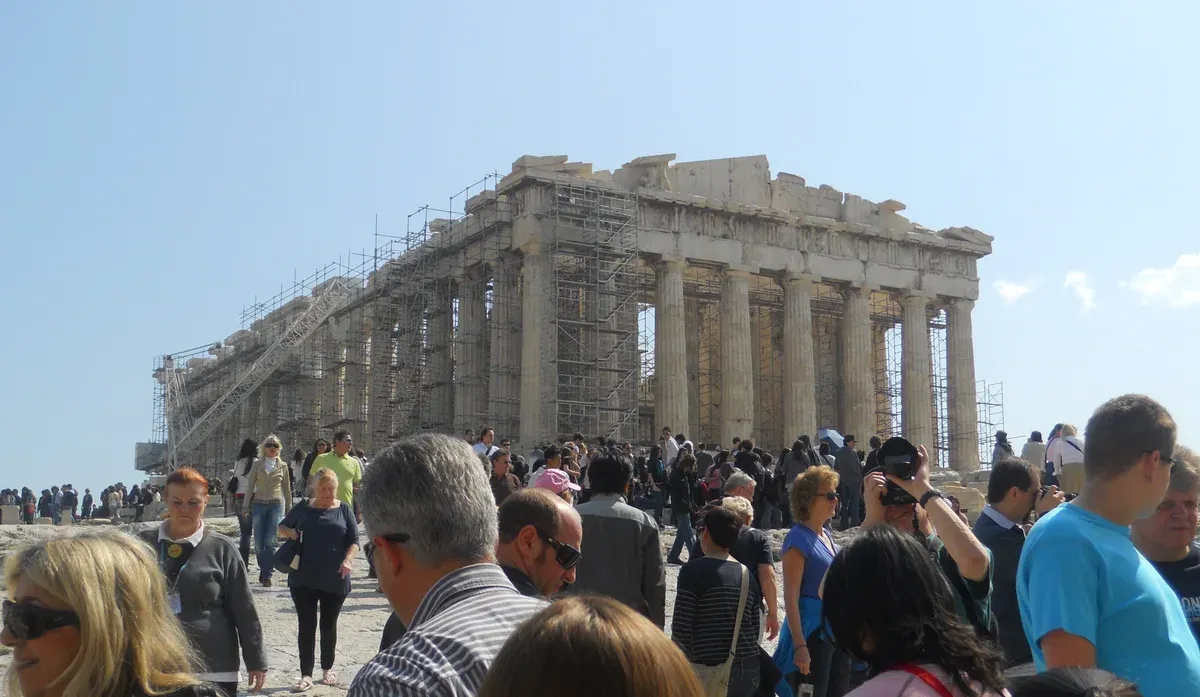
Photo: Erik Drost, CC BY 2.0, via Wikimedia Commons
Summer: June to August
The daily mean runs close to 28°C, rain is rare, and the Acropolis offers no shade at all. The practical answer is to accept the shape summer forces on the day. Sites before half past ten and after half past five, museums, lunch and a nap in the middle hours.
In a declared heatwave the ministry has repeatedly closed the open-air sites from roughly midday to 17:00, and the announcement can come a day or less in advance, so keep a museum in reserve. August adds Greek holidays, some businesses close, and locals leave the city. Do the heavy outdoor walking early, carry water, and read Athens in the heat before you fix a schedule.
Autumn: September and October
This is the best combination the year offers. From mid-September the heat breaks, the site hours are still long, and the sea stays warm enough for an island day, where the ferries run all year. The last weekend of September is one of the free state-site days, which in good weather means queues as well as savings, so arrive early.
October steps the hours down towards the winter timetable but stays comfortable to the end of the month. Practical note: the sea is at its best early in the season, so if an island swim is part of the plan, September beats late October. The heat of August is gone, the winter rain has not started, and the city belongs to the visitors who read the calendar properly.
Winter: November to March
This is the wet season. November and December are the two wettest months by a distance, so pack for rain rather than cold. Hours shrink from 1 November: the Olympieion, Roman Agora, Kerameikos and Aristotle's Lyceum close at 15:00 while the Acropolis runs to 17:00.
Against that you get the lowest hotel rates of the year, no queues anywhere, two free-entry Sundays a month at the state sites, and the Acropolis Museum open to 22:00 on Fridays. The small outdoor sites at 15:00 actually fit a museum-heavy day well, since you can finish outside by mid-afternoon and move indoors. For a trip built around museums rather than hilltop ruins, winter is genuinely the best time to come.
The dates that override the season
Four things that matter more than the weather.
Orthodox Easter
Orthodox Easter moves each year and usually falls on a different Sunday from the Western date, because it is set by a different calendar and calculation. The consequences are practical. The state sites close on Easter Sunday.
The Acropolis Museum keeps short hours on Good Friday and Holy Saturday. And the whole country travels, as Greeks leave the cities for family villages, so buses, ferries and trains are full and hotel prices rise in the days around the feast. A trip booked around a Western Easter can land directly on the Greek one, which surprises visitors every year.
Either avoid that week entirely or plan for it, because the date changes annually and no season label will protect you from it.
The free days
The state sites waive entry on 6 March, 18 April, 18 May, the last weekend of September, 28 October, and the first and third Sunday of each month from 1 November to 31 March. The Acropolis Museum has its own separate list, on 6 March, 25 March, 18 May and 28 October, because it is a separate legal entity from the state sites. A February Sunday is a gift, with short queues and the Acropolis almost to yourself at opening. 18 May in warm weather is different, and the free weekend in September draws the same crowd, so go at opening time.
Note that paid tickets bought for those days are simply wasted, so plan your paid visits around the calendar. The free-entry page weighs each date.
15 August and the holidays
15 August, the Dormition, is a national holiday and much of Greece leaves the cities for islands and villages. Expect closures of shops and services in Athens, and full ferries heading the other way. The two other big national holidays are 25 March and 28 October, both marked with parades. 25 March is the awkward one for sightseeing, because it closes the state sites for the day while the Acropolis Museum, on its own calendar, gives free entry, which makes that a museum day by necessity. 28 October sits on the state-site free list, so the sites open and cost nothing, with crowds to match.
Plan the parade-watching or the museum around the closures rather than discovering them at a ticket gate.
Strikes
Strikes are not seasonal and cannot be predicted more than a few days out. By law, unions must give at least 24 hours' notice, and four days where a public utility or public service is involved, so you get some warning but not much. There is no official English calendar.
Notices appear in Greek on apergia.gr and service notices on OASA. They stop transport and can close state sites outright, since those are staffed by ministry employees and a public-sector walkout shuts the Acropolis with them. Hellenic Heritage tickets are non-refundable, and the defence on offer is two changes per ticket up to two hours before the slot, so if a strike is announced, move the booking rather than lose it. The strikes page explains the detail.
When to visit Athens: questions
What is the best month to visit Athens?
May, narrowly, with October close behind: about 20°C in the daily mean, long site hours, and 18 May free at every state site. The month table sets each month against the site calendar.
Is August too hot for Athens?
It averages close to 28°C and the Acropolis has no shade, so the middle of the day is unpleasant rather than impossible. It works if you plan the ends of the day — Athens in the heat is the page for it.
Is winter a bad time to visit Athens?
No, but it is a different trip. Most sites shut at 15:00 and the Acropolis at 17:00, November and December are the wettest months, and against that you get the lowest rates of the year, no queues and two free Sundays a month.
How many days do you need in Athens?
Three nights for the city, and a fourth only if you leave it for a day trip. The three-day plan is honest about where the fourth night should go.
Is Athens cheaper out of season?
Hotels are — the rate bands on where to stay move noticeably. Tickets are not: the 50% winter discount on state sites was abolished, and every official page now prints one price all year.
When does the weather break in autumn?
Around mid-September in most years: the daily mean drops from about 26°C in early September to about 22°C by the end of it, while the sites are still open until 19:00. That fortnight is the best window in the calendar.
Where to go from here
The pages the season decides.
Athens in the heat
How to shape a day around 28°C and unshaded marble: Athens in the heat.
If you are coming in July or AugustOpening hours
Six bands, the Tuesday that opens at one, the winter afternoons that end at three: opening hours.
The seasonal bandsFree entry days
Five fixed dates and two winter Sundays a month, weighed against the queue: free entry days.
If your dates are flexibleBest Time to Visit on Video
One film on the same subject.
When to Visit Greece - The Best Times for Islands, Athens, & More
When to come, argued month by month, from a channel that does not oversell the shoulder season.
Video: Wolters WorldPrices, hours and terms are set by the venue or operator and confirmed at checkout.
We may earn a commission if you book through one of our links, at no extra cost to you. Full affiliate disclosure