 Visit Athens Guide
One Day in Athens off a Cruise: The Transfer Eats the Day
A day in Athens off a cruise is shorter than the port call suggests, because the number that matters is not how long the ship is alongside but how much of that the transfer takes. Piraeus to the Acropolis and back is about two hours of your day before you have looked at anything, and the ship's all-aboard time is not negotiable. This post is the arithmetic and the plan that survives it, with fares read in Q3 2026. The port itself is on the Piraeus page, and the city on the Athens guide, starting with the best things to do in Athens.

Quick answer What an eight-hour call actually buys
Reckon two hours of an Athens port call on the transfer. An eight-hour call leaves about six hours in the city, which is the Acropolis, its museum and a walk — and nothing else.
Key takeaways
- The transfer arithmetic is the whole post: the metro is €1.20 and about fifty minutes door to door each way.
- Book the Acropolis hour before you sail. It is the only timed entry you will need, and a closed slot cannot be rescued from a ship.
- The six-hour plan does the two big tickets and gets you back with a margin.
- The all-aboard rule is real: what happens if you are late is the one paragraph worth reading twice.
- Which gate your ship is at decides your morning — the Piraeus page explains why.
The transfer arithmetic
Fares from the OASA product list, read on 1 September 2026; times are ours, measured door to door and rounded up. "Door" means the ship's gangway, not the port gate.
| Way in | Cost each way | Time each way | Note |
|---|---|---|---|
| Metro from Piraeus station | €1.20 | About 50 min door to door | Line 1 to Monastiraki or Line 3 to Akropoli |
| Taxi to the Acropolis | €20–30 metered | About 40 min, more in traffic | Faster only outside rush hour |
| Ship's shore excursion | Varies, usually the dearest | Coach, and a fixed schedule | The ship waits for it — the only real advantage |
| Walk from the quay to Piraeus station | Free | 10–25 min | This is the part people forget |
The last row is the one that ruins plans. The coastal and cruise quays at Piraeus spread over several kilometres, and the walk from your berth to the metro can be twenty-five minutes with a shuttle wait on top. Two hours of transfer for an eight-hour call is a realistic estimate, not a pessimistic one.
The six-hour plan, hour by hour
Assumes an 08:00 alongside and a 17:00 all-aboard, which is a common Athens call. Clock times shift with your ship; the durations do not.
-
08:15
Off the ship, walk or shuttle to Piraeus station
Ten to twenty-five minutes depending on the berth. Find out the night before which gate you are at.
-
08:45
Metro to Akropoli on Line 3, or Monastiraki on Line 1
€1.20, about 25 minutes. Buy a return or use a contactless card.
-
09:30
The Acropolis, on a slot booked before you sailed
Ninety minutes on the rock. €30, and the hour is declared on the ticket — the ticket page has the rules.
-
11:15
Down the south slope to the Acropolis Museum
Ten minutes on the pedestrian avenue. €20, no timed entry, and ninety minutes is enough for the three floors.
-
13:00
Lunch in Makrygianni or Koukaki
Two streets back from the museum, where the prices halve. About €12 — where to eat has the words.
-
14:00
Plaka and Monastiraki on foot
Free, about an hour, and it ends at a metro station on both lines.
-
15:15
Metro back to Piraeus
About 25 minutes, plus the walk to the berth.
-
16:00
Back on board, an hour before all-aboard
That margin is the point of the whole schedule.
The all-aboard rule
The paragraph to read twice.
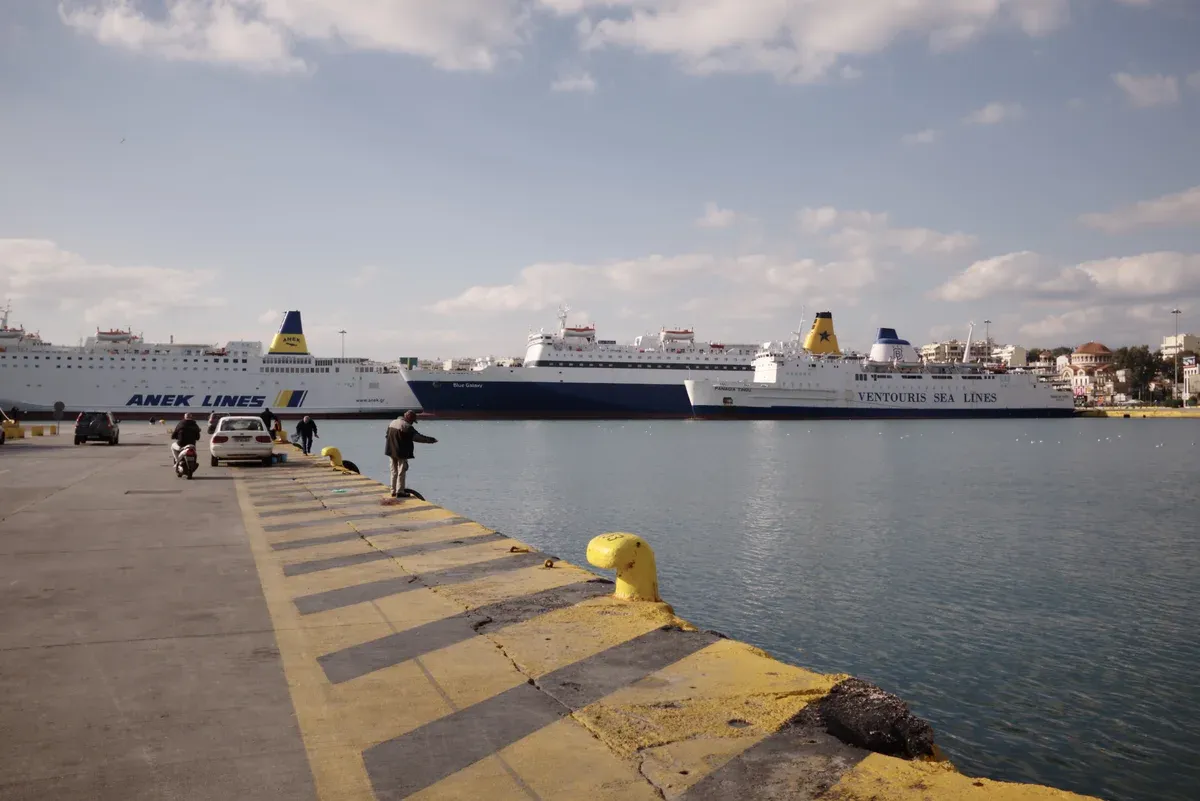
Photo: Nicolas Vigier, CC0, via Wikimedia Commons
The ship does not wait
All-aboard is typically thirty to sixty minutes before departure, and a ship will sail without passengers who are late back from an independent excursion. This is not a bluff. The crew works to a port schedule, and the next several hundred passengers in the next port do not care that you were admiring the Parthenon.
Once the ship has gone, getting to the next port becomes your problem and your expense, and in Greece that can mean a domestic flight or a long ferry crossing, each eating a day of the trip. The rule only bends for one case, covered below. For everything you arrange yourself, the departure time printed in the daily programme is the deadline that matters.
The one exception
If you are on the ship's own shore excursion and the coach is delayed, the ship waits. That guarantee is the actual product you are buying with a cruise-line tour, and it is worth more than the guiding on a tight call. Athens is an easy city to do independently, with the metro linking Piraeus to the centre, so many callers will still prefer their own plan.
The honest way to decide is to look at the gap between your arrival and all-aboard. A long day buys independence. A short call, or one where the ship berths on the far side of a midday deadline, makes the ship's own coach a defensible insurance policy even at a higher price.
Build the margin in
An hour of slack before all-aboard is not excessive. A metro delay, a strike, a queue at the turnstiles and the walk from the station to the berth can eat forty minutes between them, and none of those will negotiate with your departure time. Strikes are the sharpest risk.
Unions must give at least 24 hours notice under Law 1264/1982, and four days where a public utility is involved, so the evening before is when you find out. The plan above gets you back at 16:00 for a 17:00 all-aboard deliberately. Spend the spare hour near the port rather than squeezing in one more sight, because the last hour of a port call is for distance, not for museums.
And check for a strike the night before
A metro strike on a port-call day turns a €2.40 return into a €50 taxi day, and a general strike can close the Acropolis entirely. State sites are staffed by ministry employees, so a public-sector stoppage shuts them even when the weather is perfect and your slot is booked. Notices follow a legal timetable: at least 24 hours ahead for most strikes, and four days where a public utility or public service is involved.
There is no official English calendar. The strikes page explains where the notices appear, on apergia.gr in Greek and through OASA service announcements. Check the night before, not the morning of, so you still have time to rebook a slot or reorder the day.
By how long your call is
If you have four hours or fewer
do not attempt the Acropolis. Take the metro to Monastiraki, walk Plaka and the Roman Agora fence, and go back. It is free and it is a real hour in the city.
If you have six hours
the Acropolis and nothing else, with the slot booked before you sailed and lunch on the walk back.
If you have eight hours
the Acropolis and its museum — the six-hour plan fits both with an hour of margin.
If you have ten hours or an overnight
add the Ancient Agora in the morning before the rock, or the National Archaeological Museum in the afternoon.
If you want someone else to hold the schedule
the ship's excursion, or a private tour with a stated return time. The ship waits for its own tours and for nobody else's.
If you have already seen the Acropolis
Piraeus itself — the archaeological museum with the harbour bronzes and fish at Mikrolimano — with no transfer at all.
What to book before you sail
The timed ticket first, then anything with a guide.
 from €36
Athens: Acropolis Ticket with Optional Audio or Live Guide
Pre-booked Acropolis entry sent to your phone, with two audio-guide options and no fixed guide to keep up with. The official price is €30; this is the reseller version of the same timed slot.
Check Availability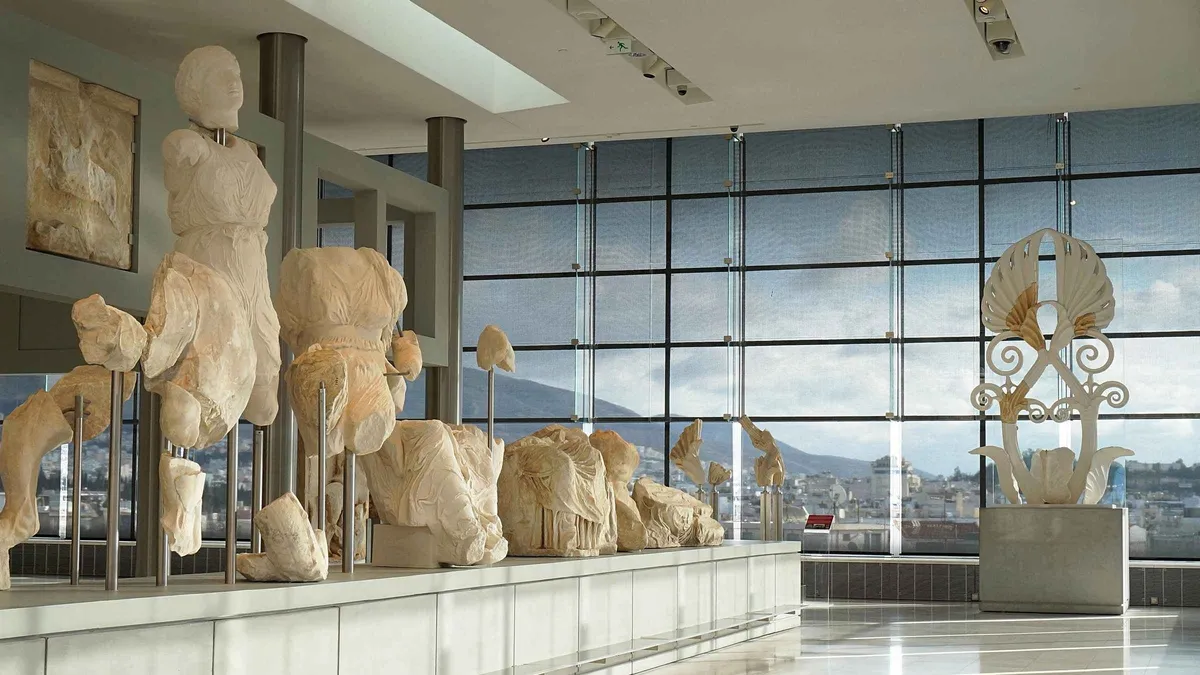 from €26
Athens: Acropolis Museum Ticket with optional Audio Guide
Entry to the Acropolis Museum with optional audio guide. The official price is €20; reduced tickets are only issued at the museum desk, never online.
Check Availability from €27
Athens: First Access Acropolis and Parthenon Guided Tour
An early-morning guided walk that goes to the Parthenon before the coach groups, then the Theatre of Dionysus on the south slope. Two to four hours depending on the option.
Check Availability from €34
Athens: Acropolis, Parthenon & Acropolis Museum Guided Tour
An archaeologist takes the monuments on the rock and then the Parthenon gallery in the Acropolis Museum, where the frieze sits at eye level.
Check AvailabilityPrices, ratings and details are the platform's own. Euro figures are the listed prices. The platform bills in your account's currency.
Four ways a port call goes wrong
All of them avoidable from the ship the night before.
Not booking the Acropolis slot
Entry to the Acropolis is by declared hour, and in summer the morning hours sell out days ahead. The ticket costs €30 full or €15 reduced, and it is tied to the time you chose when booking. Turning up at Piraeus without one and hoping to buy on the day is how a port call becomes a walk round Plaka instead of a visit to the Parthenon.
Two practical notes follow from this. First, book the slot when you book the cruise, so the morning hours after arrival are still open. Second, Hellenic Heritage tickets are non-refundable, though you may change the time twice per ticket up to two hours before the slot, which covers a shifted arrival.
Underestimating the berth walk
Piraeus is a big working port, and the distance from ship to gate varies enormously. Ten minutes at one gate and twenty-five at another, plus a shuttle that runs when it runs rather than when your timetable needs it. That variance alone can decide whether you make a 09:00 metro or watch it leave.
So ask at the guest services desk the evening before which gate you are on and how the shuttle works, then walk part of the route yourself if time allows. Do the same arithmetic in reverse for the return. Whatever gap you allowed in the morning, the walk back to the ship needs it too, and a wrong assumption about the gate is the cheapest error to rule out in advance.
Trying to add a third thing
Six hours in the city is two tickets and a walk. That is already the Acropolis and one museum or site, with the metro journey at each end. Adding the Ancient Agora or the National Archaeological Museum to that turns a good day into a forced march and puts the return at risk.
The prices are tempting, €20 full at the Agora and €20 at the museum, but the ticket is not the constraint, the clock is. The museum also opens at 13:00 on Tuesdays all year, which can quietly delete it from a morning plan. Choose two sights, book both slots ahead, and leave the third for the next call.
A missed ship costs far more than a missed museum.
Assuming a taxi is faster
Into central Athens at nine in the morning the metro usually wins, because it is immune to the traffic that a taxi sits in. The same applies in reverse on the way back at four in the afternoon, when the roads out of the centre build up exactly as your all-aboard deadline approaches. If you do take a taxi, know the rules.
The flat fare from the airport to the centre is €40, or €55 between midnight and 05:00, decided by the time you arrive, not the time you leave, and a receipt is required by law. From Piraeus the meter applies. For most port calls the metro is the faster and the cheaper answer in both directions.
Port-call questions
Can you see the Acropolis on a cruise stop in Athens?
Yes, comfortably on a six-hour call and with its museum on an eight-hour one — provided the entry hour is booked before you sail. The six-hour plan has the timings.
How long does it take from Piraeus to the Acropolis?
About fifty minutes door to door by metro for €1.20, of which ten to twenty-five is the walk from the berth to Piraeus station. The transfer arithmetic has the options.
Is the ship's excursion worth it?
For the guiding, not especially — Athens is easy to do independently. For the guarantee that the ship waits if the coach is delayed, on a tight call, yes. The all-aboard rule explains why that is the real product.
What if my call is only four hours?
Skip the Acropolis. Metro to Monastiraki, walk Plaka and the Roman Agora fence, and go back — free, and a genuine hour in the city rather than a rushed one on the rock.
Do I need euros?
Contactless cards work on the metro and in most places. Take some coins for a kiosk or a lavatory; what Athens costs covers the payment practicalities.
What happens if I miss all-aboard?
The ship sails and reaching the next port is your responsibility and expense — unless you were on the ship's own excursion, in which case it waits. Build an hour of margin into any independent plan.