 Visit Athens Guide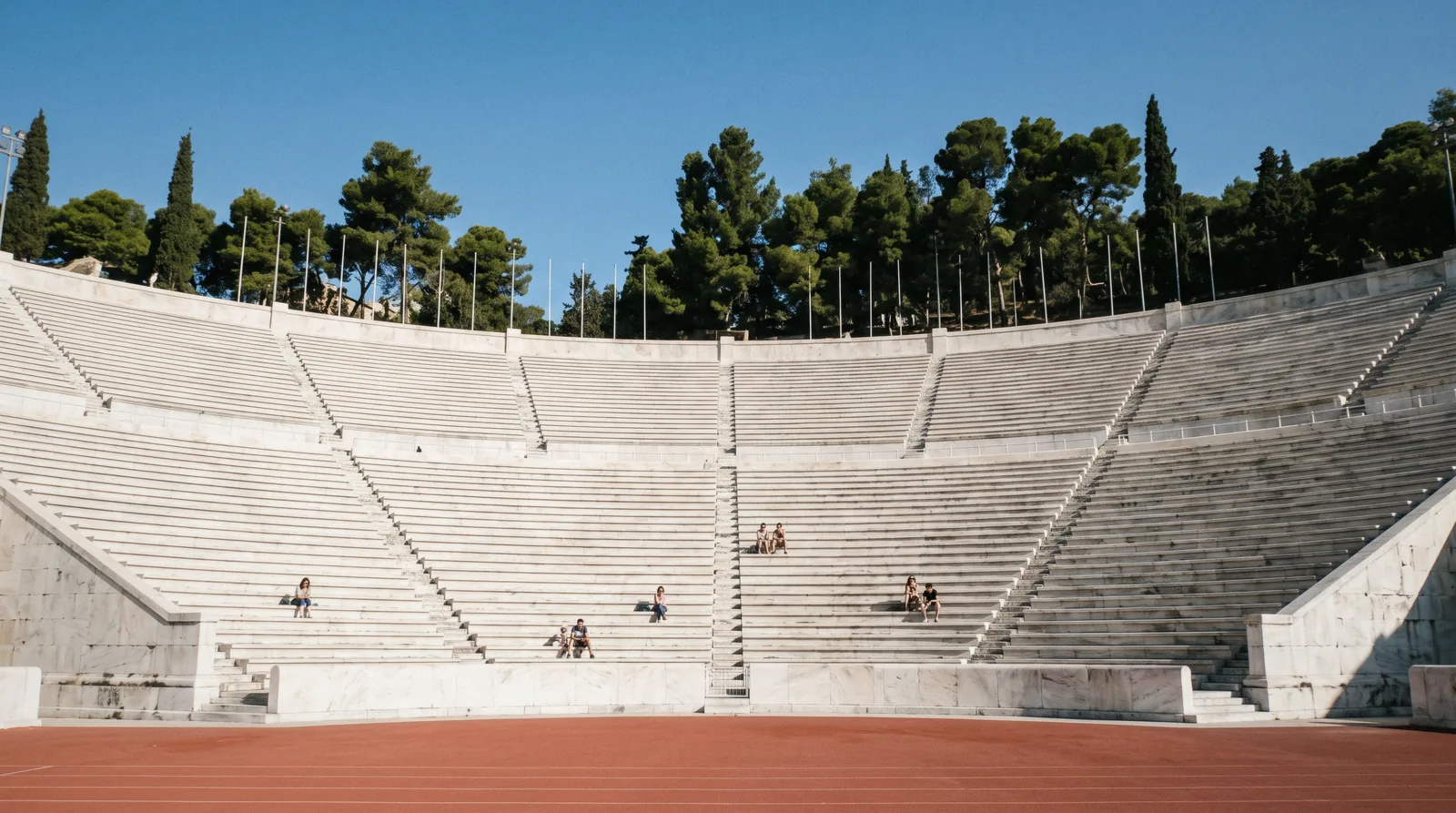
The Panathenaic Stadium
The Panathenaic Stadium — Kallimarmaro, the beautiful marble — is the horseshoe of white Pentelic tiers east of the National Garden, rebuilt on its ancient foundations for the first modern Olympic Games in 1896. It is run by its own organisation, not by the culture ministry, and it does things its own way: tickets at the desk, an audio guide included, and a charge to use the lavatory. This page has the prices and hours as checked in Q3 2026; the wider plan is on what to see in Athens Greece.
Quick answer What it costs, where to buy, and the charge nobody expects
The Panathenaic Stadium costs €12 general and €6 reduced for students, and takes about forty-five minutes. Tickets are sold at the stadium's own desk, in cash or by card — the public cannot buy them online.
Key takeaways
- The desk is the only channel. How tickets work here explains what the stadium says about online sales and about refunds.
- The toilets cost €1.50 per person and want exact change — no other Athens sight charges for this, and it is on the stadium's own page.
- A 30-minute audio guide in eleven languages is included in the full and reduced tickets, which is why the €12 buys more than a walk round a running track.
- You can run on the track and stand on the winners' podium; that is the point of the visit for most people, and there is no extra charge.
- The stadium is ten minutes from the Temple of Olympian Zeus through the National Garden, which is the shaded way to walk it in August.
Key facts
Opening hours
| March – October, daily | 08:00–19:00 |
|---|---|
| November – February, daily | 08:00–17:00 |
| Last entry | —–at closing time |
Closed Not published on the visitor page; check before travelling on a public holiday
Admission
- Adult
- €12.00
- Reduced
- €6.00 for students on production of a student card
- Free
- Children up to 6; disabled visitors and one companion; teachers escorting Greek school groups
Planning it
- Time needed
- Not stated by the stadium; our routing: 45 minutes with the audio guide
- Book ahead
- Optional — walk-up usually fine
- Address
- Vasileos Konstantinou Avenue, 116 35 Athens
What the stadium charges
Everything on the stadium's own visitor page, read on panathenaicstadium.gr on 1 September 2026. The page notes that these prices took effect on 1 October 2025.
The stadium sells nothing online to the public, so the only question at the desk is which category you fall into — and whether you have €1.50 in coins.
| Ticket | Price | Who | Where sold | Book |
|---|---|---|---|---|
| General admissionEveryone without a document to show; the audio guide and the stadium museum are inside the price | €12.00 | Anyone; includes the stadium museum and the audio guide | Ticket desk, cash or card | Official site |
| ReducedStudents, on production of a student card at the desk | €6.00 | Students on production of a student card | Ticket desk only, with documents | Official site |
| FreeChildren up to six, disabled visitors with one companion, and teachers escorting Greek school groups | €0 | Children up to 6; disabled visitors and one companion; teachers escorting Greek school groups | Ticket desk only, with documents | Official site |
| ToiletsEveryone who needs them, ticket or no ticket — exact change, and no other Athens sight charges this | €1.50 per person | Everyone, ticket-holder or not | At the door, exact amount required | Official site |
Two rules from the same page are worth reading twice. The ticket is valid only on the date it is issued, and once bought it cannot be cancelled or refunded. And electronic purchase is offered to travel agents only — as an individual you turn up and pay at the desk, which is unusual for a sight of this size and means a queue on a summer morning.
Tours that include the stadium
The cards behind the table, with the operator's own rating and review count.
 from €78.90
Athens: City Pass with Acropolis, Museums, HoHo & Transport
The Acropolis, the Acropolis Museum and a 48-hour hop-on hop-off bus in one pass, with public transport and an island cruise as options.
Check Availability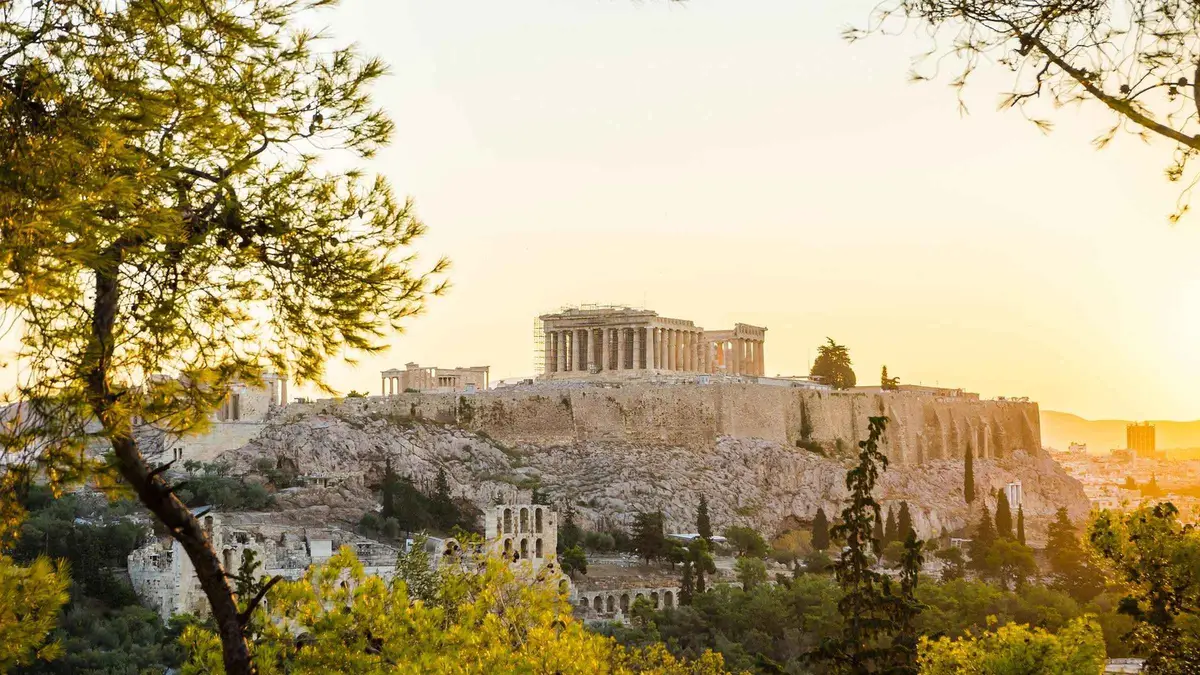 from €42
Athens: Philosophy and Democracy Walking Tour
Three and a half hours on foot through the places where philosophy and democracy actually happened, rather than the places they are commemorated.
Check Availability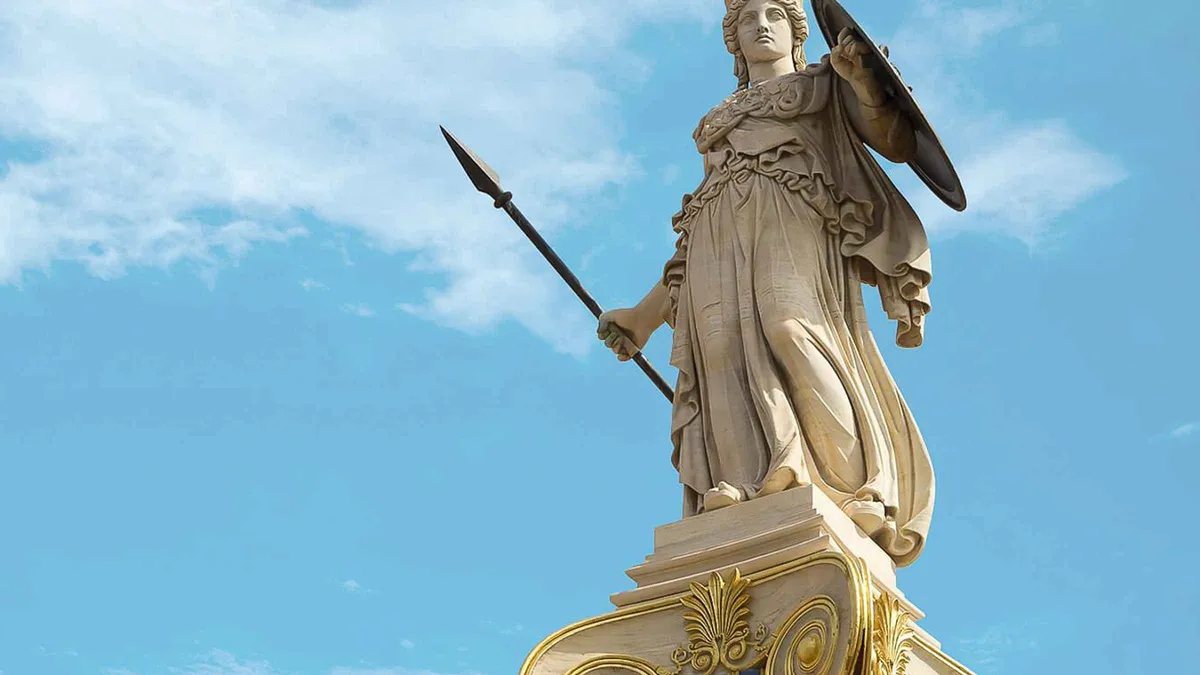 from €45
Athens: Acropolis and Mythology Highlights Small Group Tour
The rock plus the Temple of Olympian Zeus and the Ancient Agora, told through the myths attached to each: a comprehensive first day on foot.
Check AvailabilityPrices, ratings and details are the platform's own. Euro figures are the listed prices. The platform bills in your account's currency.
What you are standing in
Three separate stadiums on the same ground, about 2,300 years apart.
The Greek stadium
The site was laid out about 330 BC by the statesman Lykourgos for the athletic contests of the Panathenaic Games, on the site of a racecourse in a natural ravine between two hills that gave the seating its shape. Around AD 144 Herodes Atticus rebuilt it in marble with about 50,000 seats, a size few Greek stadiums reached. After antiquity the marble was quarried for other buildings and the bowl silted over and vanished under farmland, which is why the structure you see today is largely a modern reconstruction on ancient foundations rather than a ruin.
That history matters when you plan your visit. The horseshoe plan and tight turns are the ancient ones, so walk to the top tier to read the shape of the original track before you come down to the track level itself.
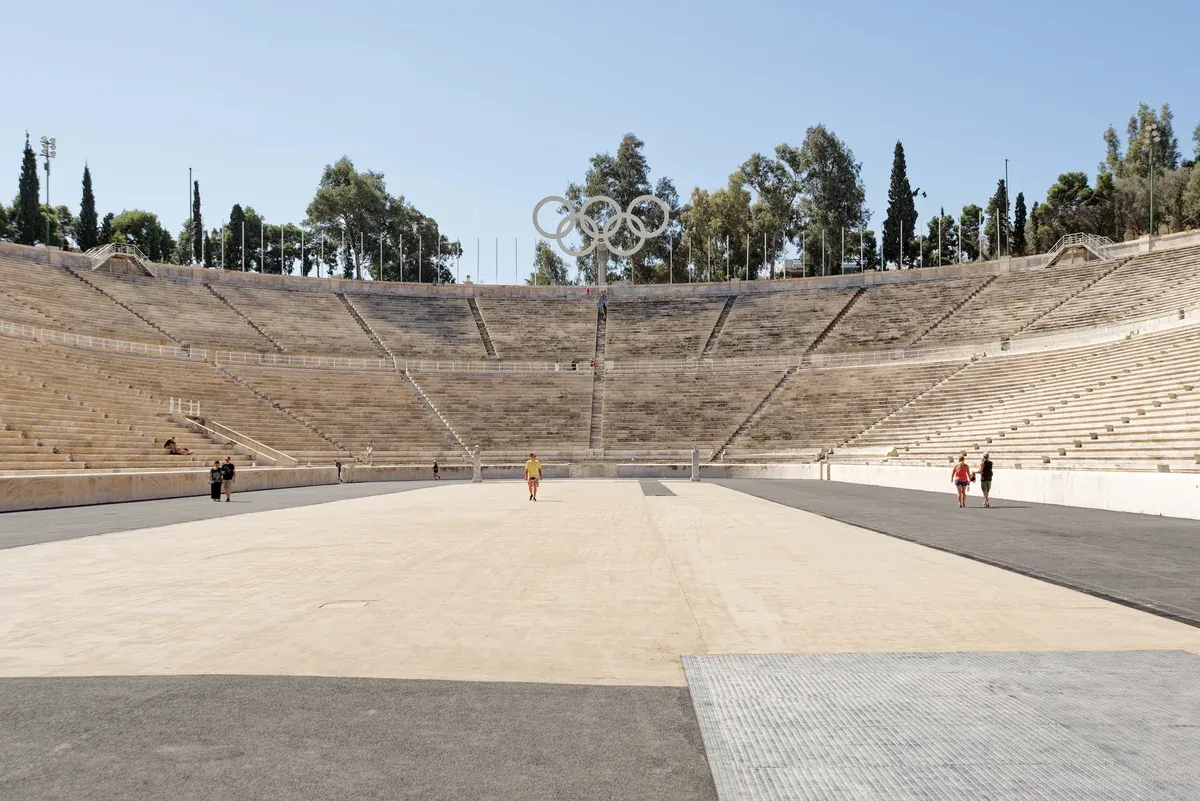
Photo: Jakub Hałun, CC BY 4.0, via Wikimedia Commons
The 1896 rebuild
The ruin was excavated in the 1870s and then rebuilt entirely in white Pentelic marble with money given by Georgios Averoff, in time for the first modern Olympic Games of 1896. The marble came from the same quarry as the Parthenon, and the stadium is the only one in the world built wholly of marble. The long horseshoe and the tight turns are faithful to the ancient plan, which is why it is a poor track by modern standards and a remarkable object in its own right.
Averoff's gift was decisive. Without it the Games' main venue might not have existed at all, and his statue stands at the entrance. Read the two rebuilds as one story: Lykourgos founded it, Herodes Atticus marbleised it, Averoff brought it back.
What it is used for now
The stadium still works for a living. It is the finish of the Athens Classic Marathon every November, and it hosts the handover ceremony of the Olympic flame before every Games, a ritual that draws broadcast crews and closures. In 2004 it hosted the archery competition and the marathon finish when the Games returned to Athens.
Concerts use the bowl too, so check the programme if you want the tiers to yourself. Most days, though, it functions as a museum with a running track in it, and that is the best way to treat a visit. Allow an hour with the audio guide, walk the full top row for the view towards Lycabettus and the Acropolis, and finish on the track for the standard photograph.
What the visit actually is
You walk in at track level, go round, climb the tiers for the view back toward the Acropolis, and take the vaulted tunnel the athletes used. There are two marble thrones on the long side, a winners' podium you may stand on, and a small museum of Olympic torches and posters from every Games. The audio guide runs thirty minutes in eleven languages and is included; it is the difference between a photograph and a visit.
Hours, getting there and the practicalities
Two seasonal bands, and a site with no shade at all.
Hours
From March to October the stadium opens 08:00 to 19:00. From November to February it opens 08:00 to 17:00. Two practical points.
The page gives last entry as the closing time itself rather than earlier, which is unusual and useful if you arrive late in the day. And it recommends the morning and late afternoon in summer, because the marble tiers reflect heat and there is nowhere to get out of the sun once you are inside the bowl. Plan accordingly.
Bring water and a hat in July and August, and expect the white marble to be dazzling around midday. The good news is that the visit is compact, so an early morning slot fits easily before the rest of your sightseeing, and the late slot pairs well with an evening in Kolonaki.
Getting there
The stadium sits about a kilometre from Syntagma, Akropoli and Evangelismos stations, so any of the three works and the walk is flat. City buses 2, 4, 10, 11, 90, 209 and 550 and trolleys 2, 4, 10 and 11 stop at the stop named Stadium. Tram line 6 stops at Zappeio, close to the garden side.
There is bike parking at the entrance if you cycle. The pleasant way in on foot is through the National Garden and past the Zappeion, which brings you out under the pines opposite the main entrance. If you are coming from the Acropolis side, the walk along the tree-lined boulevard takes roughly the same fifteen minutes and avoids the busiest road crossings.
Buy a standard single ticket, €1.20, for any of the metro stations.
Access
According to the stadium's own page, both the track and the stoa are accessible to wheelchair users, so the lower level presents no problem and the view of the bowl from track level is the closest you can get to the marble. The tiers are a different matter. They are steep marble steps with no handrails in the ancient manner, and the same page warns that they can be slippery in winter, when rain or frost sits on the polished surface.
Wear shoes with grip rather than smooth soles, and take the steps slowly on the way down, which is where most people slip. If climbing is difficult, enjoy the stadium from the track and the stoa and skip the top rows. The view from below is still worth the ticket.
The small print
Three things to know before you go in. First, take cash for the lavatory, which costs €1.50 and needs the exact amount, so break a note beforehand or you will be walking back out. Second, take water.
There is a canteen on site but no shade anywhere in the bowl, and the marble throws the heat back at you, so a bottle per person in summer is not optional. Third, take the audio guide device at the entrance rather than waving it away. It is included in the ticket and it earns its place.
Without it the stadium is fifteen minutes and a photograph. With it you get the story of the 1896 rebuild and the ancient Games, and the visit stretches to a proper hour. The full ticket is €12 and the reduced one €6.
Panathenaic Stadium map
The entrance, the stops, and what is within ten minutes on foot.
Next stop from the Panathenaic Stadium
Walk minutes are our estimates from the GPS distances.
Temple of Olympian Zeus
West past the Zappeion. €20 and half an hour — the Olympieion closes at 15:00 in winter.
10 min walkNational Garden
Free, shaded and full of cats and a duck pond. The National Garden is the August route north.
5 min walkChanging of the guard
Through the garden to Syntagma. The ceremony is on the hour, and the full version on Sunday at 11:00.
12 min walkPanathenaic Stadium questions
What is the Panathenaic Stadium famous for?
Hosting the first modern Olympic Games in 1896, and for being the only stadium in the world built entirely of marble. It also hosts the Olympic flame handover before every Games and the finish of the Athens Classic Marathon.
Is it worth visiting?
For forty-five minutes and €12 with the audio guide included, yes — you walk the track, climb the tiers and use the athletes' tunnel. Without the audio guide it is a quick photograph. What you are standing in sets out what there is.
Can you see the Panathenaic Stadium for free?
You can see it well from the street — the open end faces Vasileos Konstantinou and the whole horseshoe is visible through the railings, which is why many visitors decide the €12 is optional. You cannot walk on the track or reach the tiers without a ticket.
Can I buy tickets online?
Not as an individual. The stadium's page says payment is made at the ticket desk in cash or by card, and that electronic purchase is available to travel agents only. The ticket rules have the rest, including that tickets are valid only on the day of issue and cannot be refunded.
Do the toilets really cost money?
Yes — €1.50 per person, exact amount required, stated on the stadium's own visitor page alongside the ticket prices. Take coins.
Can you run on the track?
Yes, and stand on the winners' podium. That is included in the ticket and is what most people come for.
Panathenaic Stadium on Video
Two filmed visits that show the distances, the surfaces and the pace — the things a written page cannot carry. Every id was checked against YouTube on 2 September 2026.
Greece - Panathenaic Stadium
The stadium filmed as a stadium, which is the right way to look at it.
Video: Stadiums of the WorldHow to visit the Panathenaic Stadium in Athens
The practical visit: the desk, the track, the tunnel and how long it takes.
Video: Cruise LifestylePrices, hours and terms are set by the venue or operator and confirmed at checkout.
We may earn a commission if you book through one of our links, at no extra cost to you. Full affiliate disclosure