 Visit Athens Guide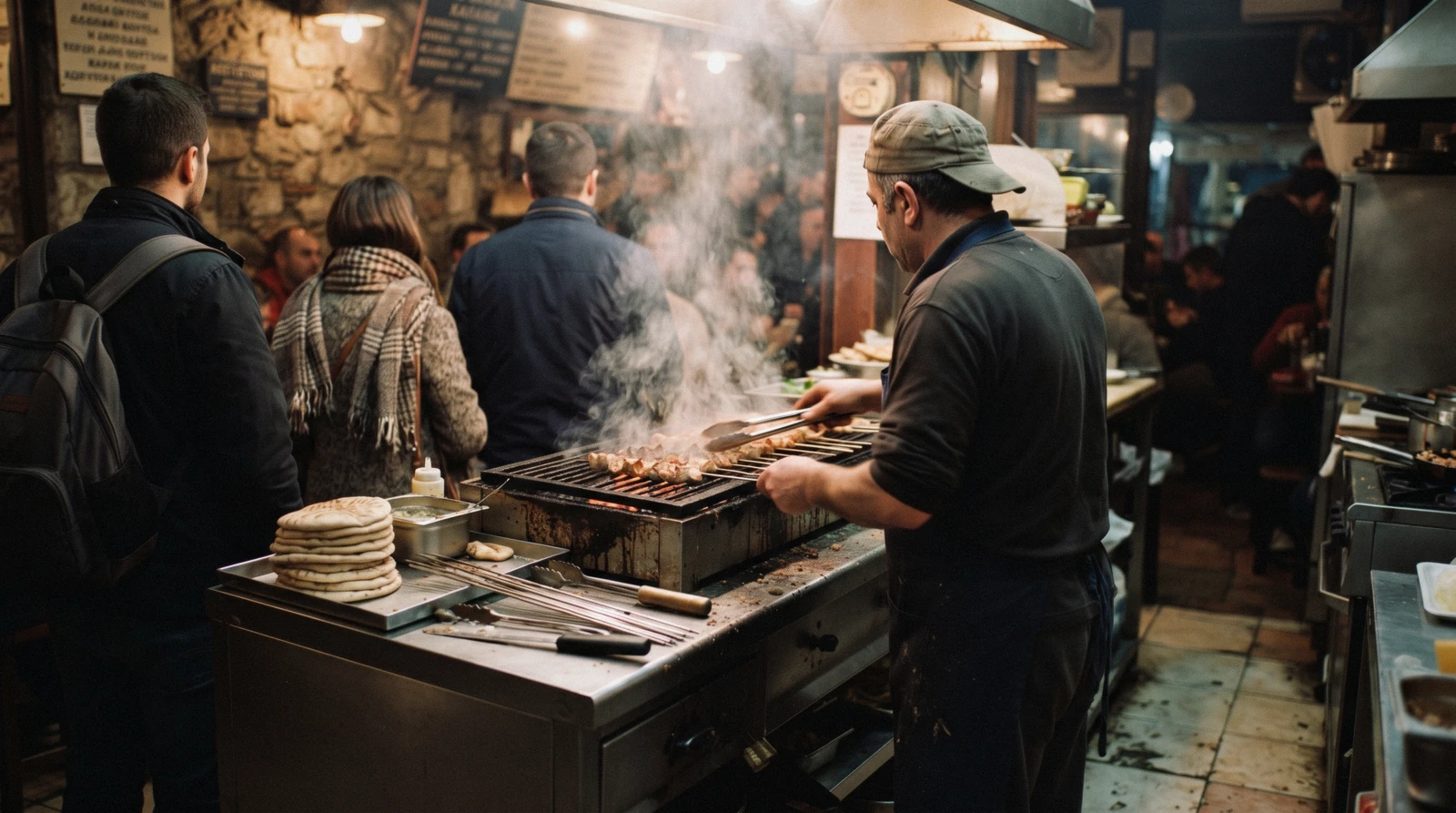
Where to Eat in Athens, and How the Menu Works
Where to eat in Athens is less a list of restaurants than a question of vocabulary and timing: what a mezedopoleio is and why it is not a taverna, why the kitchen you want does not fill until nine, and why the fish should be priced per kilo before it goes on the grill. This page covers the words, the districts and the two habits that change the bill, as checked in Q3 2026. The districts themselves are on the neighbourhoods hub, and the wider plan on what to do in Athens.
Quick answer The words, the hour and the two habits
Athens eats late and shares plates. A pita wrap of souvlaki or gyros is the cheap standing lunch at about €4; dinner is a table of small plates from about nine at night, and it is both cheaper and better than a main course each.
Key takeaways
- The vocabulary is the single most useful thing on this page: taverna, mezedopoleio and psarotaverna are three different promises.
- Ask the price per kilo before fish goes on the grill. That is the one line that turns a pleasant dinner into an argument.
- Where to eat, by district — Psyri after nine, Monastiraki for the grill streets, Exarchia for value, and two streets off the Plaka lanes for anything at all.
- The central market on Athinas is open Monday to Saturday from early morning and closed on Sundays; the cook-shops inside it serve at hours no restaurant keeps.
- A street-food walk on the first evening pays for itself in the four days after it, because you learn which counter is which.
- Coeliac or vegan? Greece runs no certified list, but EU law and one Greek word do the work — gluten-free and vegan in Athens.
What the words on the board mean
The vocabulary that decides whether you sit down in the right place. Prices are typical ranges we have seen quoted rather than fixed rates; the point of the table is the promise each word makes.
| Word | What it is | What to order | Roughly |
|---|---|---|---|
| Souvlaki | Meat grilled on a skewer | A skewer, or a pita wrap of it | €3–5 a wrap |
| Gyros | Meat shaved off a vertical cone | Pita wrap, apo ola — with everything | €3–5 a wrap |
| Taverna | Cooked dishes, often from a tray you can look at | Whatever is in the tray today | €12–18 a head |
| Mezedopoleio | Small plates to share, with drinks | Six plates between four people | €15–20 a head |
| Psarotaverna | Fish, sold by weight | Ask the price per kilo first | Varies widely |
| Kafeneio | An old-style coffee house | Greek coffee, with a glass of water | €2–3 |
Two ordering habits worth adopting on the first night. Apo ola on a pita gets you tomato, onion and chips inside it, which is how it is meant to be eaten. And in a mezedopoleio order fewer plates than you think and add more — the kitchen expects a table to keep going, and ordering everything at once arrives at once.
Food walks, and what each covers
All three stay inside the centre, so the hours go on eating rather than on a coach.
 from €59
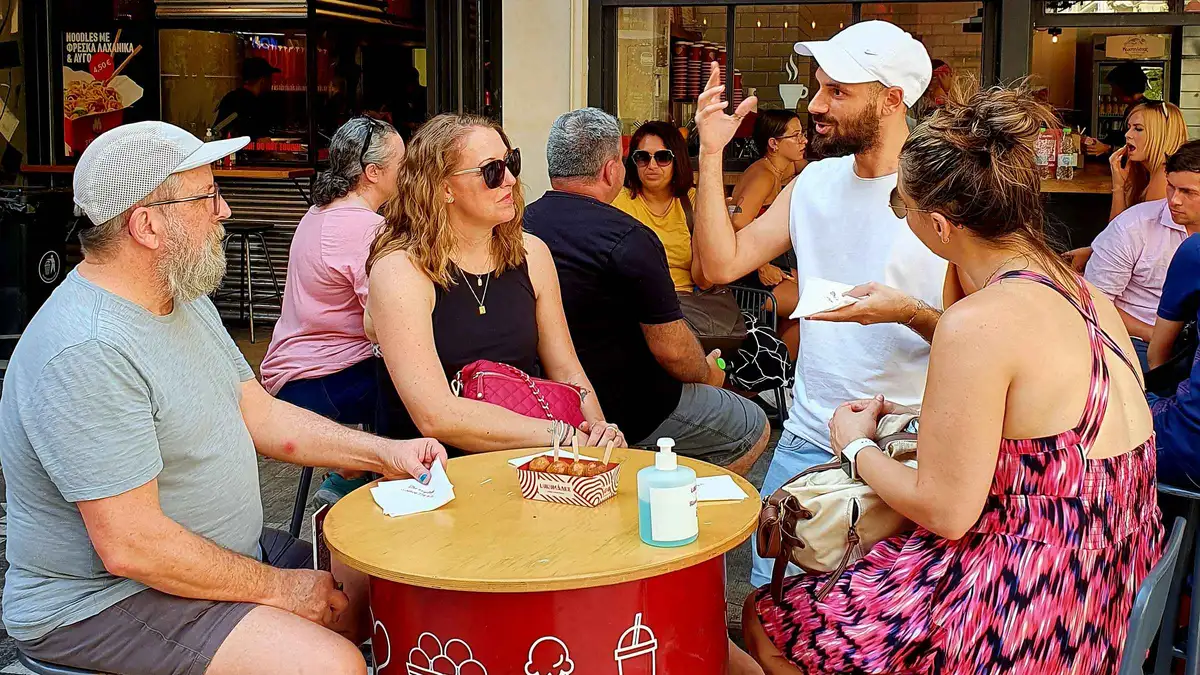
Athens: Street Food Tasting Tour
Three hours of Athenian street food with beer or wine, moving between the counters locals use rather than the ones on the tourist lanes.
Check Availability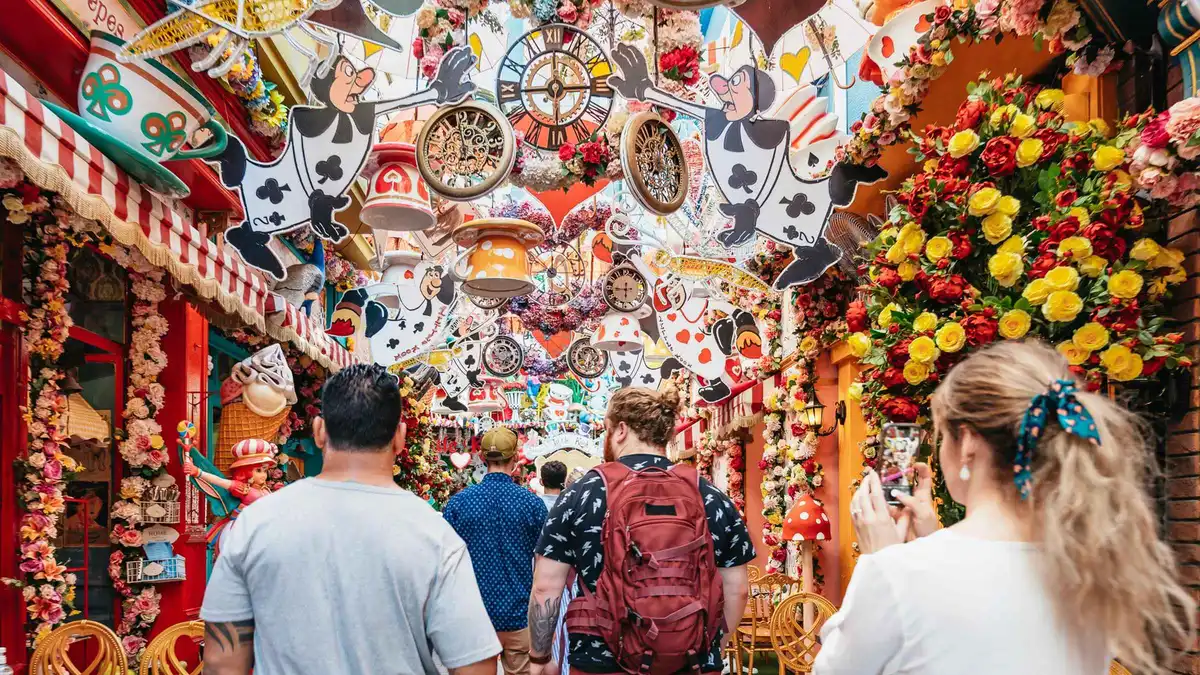 from €69
Athens: Original Athens Food Tour (Full Meal Experience)
Four hours through traditional shops and the central market area: street food, pastries, wine, cheese and mezze, enough to replace a meal.
Check Availability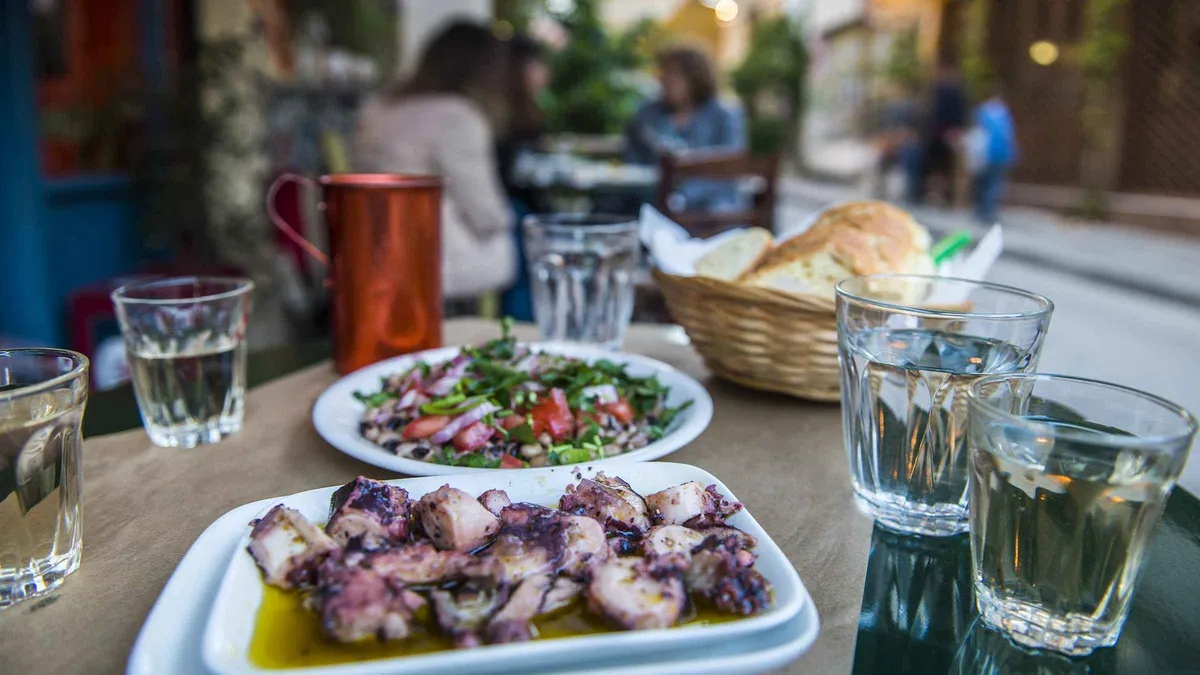 from €69
Athens: Greek Food Discovery Small Group Walking Tour
Eight to ten tastings in a small group, through markets and the food streets Athenians shop on.
Check AvailabilityPrices, ratings and details are the platform's own. Euro figures are the listed prices. The platform bills in your account's currency.
Where to eat, by district
Four answers, and one street to avoid.
Monastiraki and Mitropoleos: the grill streets
The cluster of souvlaki counters around Mitropoleos and the square is cheap, busy and genuinely good, and it is not a secret. Athenians queue there too. This is the standing lunch of the city and it costs about €4.
The square itself has older business under the grills. The Tzistarakis mosque of 1759 still stands on it, built by an Ottoman governor who was said to have pulled down a column of the Olympieion to burn for its lime. The practical line is simple.
The counters run all day, so the crowd risk is at weekend lunch, and the fix is to come before noon or after four. Queuing at a counter with a menu outside is normal here, not a warning sign. Monastiraki has the geography.
Psyri: dinner, after nine
Ten minutes north-west of Monastiraki and the answer to the question of where people actually eat. Mezedopoleia, small plates, a few places with live rebetiko, and a street that is dead at seven and full at ten. The quarter has always had a late streak.
In the 19th century it was the rough ground of the koutsavakides, the knife-carrying men about town, and the restaurants are what moved into those streets later. The practical consequence is timing. Booking matters less than arriving after nine, and a table at eight will put you in an empty room watching staff set up.
Prices are ordinary for the centre, no view premium. If you want the rebetiko nights, ask the same day rather than planning weeks ahead. Psyri covers it.
Exarchia: value
Student money sets the prices, and the quality-per-euro is the best in the centre. It is also five minutes from the National Archaeological Museum, which makes it the obvious lunch after a morning there. The museum opens at 13:00 on Tuesdays all year and charges €20 full and €10 reduced, so plan lunch before a Tuesday visit and after a morning one.
The name is not political in origin. Exarchia takes it from a 19th-century shopkeeper called Exarchos. The district later became known for the Athens Polytechnic, which the army broke into on 17 November 1973 to end the student occupation, and the date is still commemorated.
Practically, this is a residential quarter, so expect small family-run places, cash-friendly prices and no view. Exarchia has more. Once you have eaten your way through the quarter, the same residential logic applies to sleeping here, so it is worth reading up on where to stay in Athens before you book.
Varvakios, the central market
The covered meat and fish market on Athinas, open from early morning to mid-afternoon Monday to Saturday and closed on Sundays. It was built about 1886 with money left by Ioannis Varvakis, a fighter of the War of Independence who made his fortune in caviar, and it is still a working market rather than a set piece. The cook-shops inside serve patsas, the tripe soup, at hours no restaurant keeps, which makes them a late-night institution as much as a morning one.
The surrounding streets hold the spice and cheese shops, so combine the two in one pass. Go in the morning, because the fish is sold out and the stalls are shutting down well before the official closing time. Sunday is a dead day here, so plan around it.
The one to walk past
The restaurant lanes in the middle of Plaka with a view of the rock and a man outside with a menu. The food is not bad and the price is roughly double what the same meal costs two streets away, because the terrace is the product. Plaka is worth walking.
It is not where to book dinner. The old town grew up in the 19th century on the slopes below the Acropolis, and the ground floor of almost every house became a table for visitors, which is how the price structure set. The fix costs nothing.
Walk through on your way to or from the sites, note where the staff are eating or where locals sit, then book your actual dinner in Psyri or Exarchia. You keep the stroll and lose the premium.
The two habits that change the bill
Neither of them is a secret, and both are ignored by almost every visitor.
Eat late
Greek kitchens get going around nine at night. A place full at seven is full of people on someone else's timetable, and the kitchen knows it. Push dinner back by two hours and the same street is a different city, which is also why the sights at the end of the day and dinner at nine fit together so well in summer.
The open-air sites close earliest in winter, when the Olympieion, Roman Agora, Kerameikos and Aristotle's Lyceum shut at 15:00 while the Acropolis runs to 17:00, so plan the late dinner accordingly. One warning for summer. During official heatwaves the ministry has closed open-air sites through the hottest hours, roughly midday to 17:00, sometimes with only a day's notice, and those mornings push everything, including dinner, later.
Empty at eight, packed at ten. Trust that pattern.
Share
Greek menus are built for a table ordering six or eight plates between four people, not a main course each. Ordering individually is more expensive, arrives all at once, and misses the point. Start with four plates for two and add.
The logic comes from how mezedopoleia work, where dishes land when they are ready and the table picks at them over a couple of hours, so a shared order also solves the problem of everything arriving together. Prices per plate look small and add up, which cuts both ways. Four plates for two can cost less than two mains each, or more, depending on what you order, so watch the fish and anything priced by weight.
Ask the waiter what came in that morning. Adding plates halfway through is normal and expected.
And one purchase
A food walk on the first evening is the exception to our general scepticism about guided things in a walkable city. What you are buying is the ability to order confidently for the rest of the trip. The street-food route covers ten stops in three hours, and after it you will not need another one. Budget it as a meal plus tuition rather than a tour.
Three hours of grazing across ten stops is dinner in itself, so do not book a restaurant afterwards. Go on the first evening, not the last, because the vocabulary and the ordering habits are the actual product and you want them working for the rest of the week. If your dates fall on a strike day, check apergia.gr or the OASA notices before setting out.
Eating in Athens: questions
What should I eat in Athens?
A pita wrap of souvlaki or gyros for lunch, and a table of shared small plates for dinner. Beyond that: patsas at the central market if you are curious, and fish only where the price per kilo is stated. The vocabulary table explains each word on the board.
What time do people eat dinner in Athens?
From about nine at night. Kitchens are open earlier and will serve you, but the room will be tourists. The two habits explains why it matters.
Where do locals eat in Athens?
Psyri for dinner, the Monastiraki grill streets for a fast lunch, Exarchia for value, and the cook-shops in the Varvakios market for something older. Where to eat, by district covers each.
Is eating out expensive here?
Less than Rome or Barcelona. A pita wrap is about €4 and a shared taverna dinner for two lands near €45. What Athens costs breaks a day down.
Is a food tour worth it?
On the first evening, yes — it is the fastest way to learn which counter is which, and it replaces a dinner rather than adding to the budget. On the third evening it is a luxury.
Is the tap water safe?
In Athens itself, yes, and it is what most tavernas will bring you unless you ask otherwise.
Where to go from here
The pages this one leads into.
Neighbourhoods
Six districts measured by walk time and by what the evening does: the neighbourhoods hub.
Which street to be onWhat it costs
A sightseeing day costed, and where the money leaks: what Athens costs.
What a day comes toWhere to Eat on Video
Two films covering the same ground as this page, from channels that work in Athens rather than passing through. Ids checked on 2 September 2026.
TOP 10 RESTAURANTS in ATHENS | Greek Food Guide
Ten restaurants, filmed. Treat it as a starting list rather than a ranking.
Video: Locavore EatsWhat to Eat in Athens: A Real Chef's Honest Port Day Guide
A chef's view of eating in Athens on a short port day.
Video: Addy and TerryPrices, hours and terms are set by the venue or operator and confirmed at checkout.
We may earn a commission if you book through one of our links, at no extra cost to you. Full affiliate disclosure