 Visit Athens Guide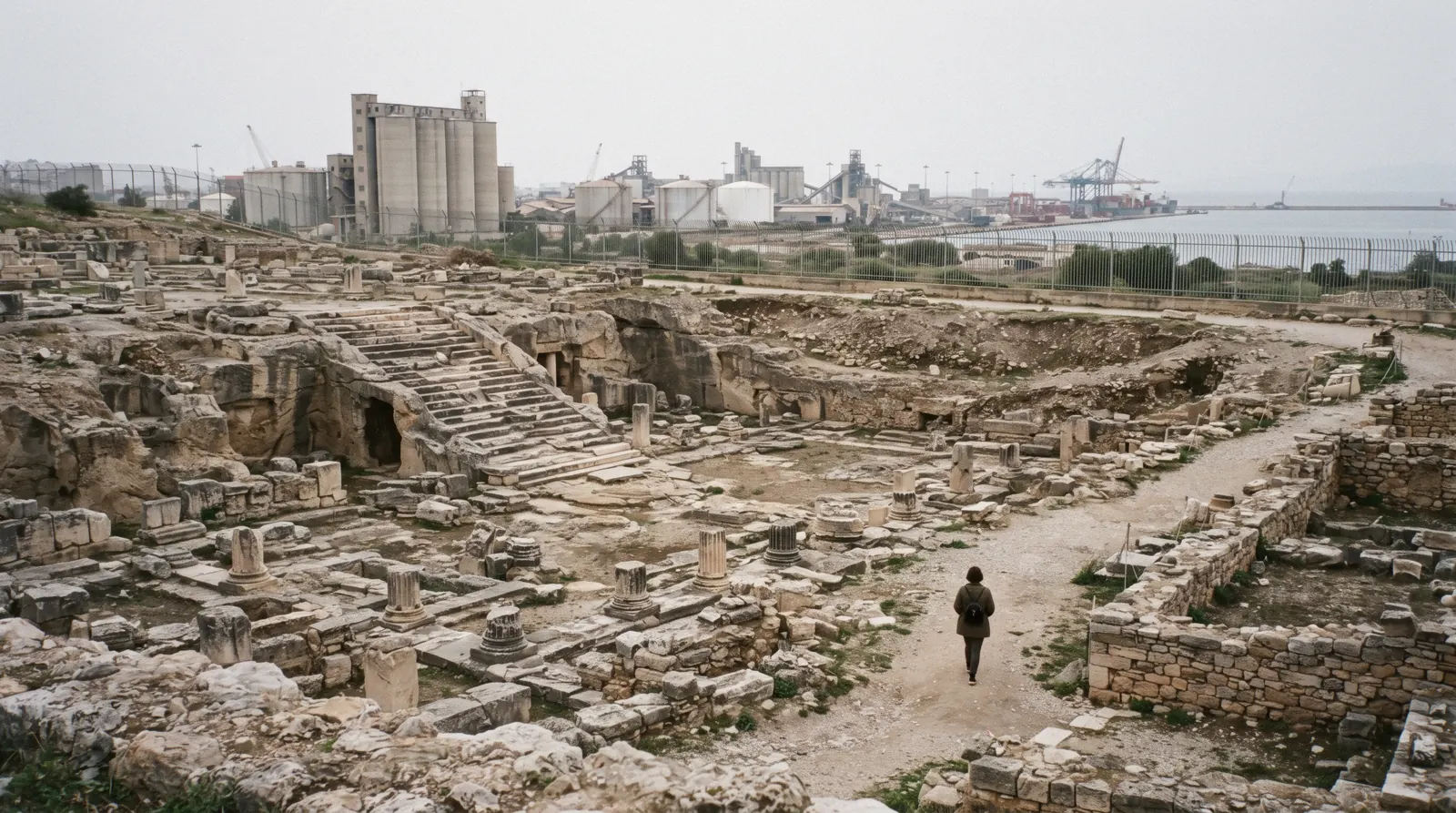
Eleusis and the Mysteries
Eleusis — modern Elefsina — is half an hour west of Athens, and for something like two thousand years it held the most important initiation cult in the Greek world. What everybody knows about the Eleusinian Mysteries is that nobody who was initiated ever wrote down what happened, and the silence held. The site sits between an oil refinery and a shipyard, which is part of what makes going there worthwhile. Checked in Q3 2026. The other trips are on the day trips hub, and the wider plan in what to see in Athens.
Quick answer What it was, what it costs, and the day not to come
Eleusis costs €10 full and €5 reduced and takes about ninety minutes with its museum. It is closed every Tuesday, all year. Half an hour west of Athens, and almost always empty.
Key takeaways
- The Tuesday closure is the practical fact: it applies in both seasons, unlike the winter-only Tuesday at Ancient Corinth.
- What the Mysteries were is honest about how little is actually known, including about the drug theory the search results are full of.
- The Telesterion is the point — a hall for thousands of initiates, cut into the hillside, unlike any other Greek building.
- The setting is half the experience: the site today explains the refinery on one side and the shipyard on the other.
- It is a second-visit trip. On a first three days, Delphi and Cape Sounion come first.
Key facts
Opening hours
| 1 April – 31 August, Wed–Mon | 08:00–20:00 |
|---|---|
| 1–15 September, Wed–Mon | 08:00–19:30 |
| 16–30 September, Wed–Mon | 08:00–19:00 |
| 1–31 October, Wed–Mon | 08:00–18:30 then 18:00 |
| 1 Nov – 31 Mar, Mon and Wed–Sun | 08:30–15:30 |
| Tuesday, all year | —–closed |
Closed Every Tuesday, plus 1 January, 25 March, 1 May, Orthodox Easter Sunday, 25 and 26 December
Admission
- Adult
- €10
- Reduced
- €5
- Free
- 6 March, 18 April, 18 May, the last weekend of September, 28 October, and the first and third Sunday from 1 November to 31 March
Planning it
- Time needed
- Not stated; our routing: 90 minutes with the museum
- Book ahead
- Optional — walk-up usually fine
- Address
- Archaeological Site and Museum of Eleusis, 192 00 Elefsina
Getting in, and getting there
The gate price from the official page, read on 1 September 2026, and the ways to cover the thirty kilometres from Athens.
The Tuesday closure is the fact that decides this visit, not the price — the site shuts on Tuesdays all year, unlike almost everything else in Attica.
| Item | Price | What it is | Note | Book |
|---|---|---|---|---|
| Official ticketAnyone coming for the sanctuary of the Mysteries and its museum, on any day but Tuesday | €10 (€5) | The archaeological site and its museum | Closed every Tuesday | Official site |
| Bus from central AthensAnyone willing to spend about an hour each way on a city bus for the cheapest trip in this guide | Within the urban fare | About an hour on the A16 or B16 | Elefsina is on the city bus network | Official site |
| Free-entry daysAnyone whose dates fall on a state free day | €0 | The same | Five fixed dates plus two winter Sundays a month | Official site |
| Philosophy and democracy walkAnyone who wants the ideas rather than the site; this walk stays in the centre | From €41 | Central Athens on foot; not this site | Eleusis is not on the standard tour circuit | Check Availability |
Almost no organised day trip goes to Eleusis, which is part of why it is empty. It is reachable on an ordinary city bus for the price of a transport ticket, or in half an hour by car on the old Sacred Way — the modern road follows roughly the route the procession took.
Tours near this
No day trip in our list goes to Eleusis; these are the walks that cover the same religion in the city.
 from €42
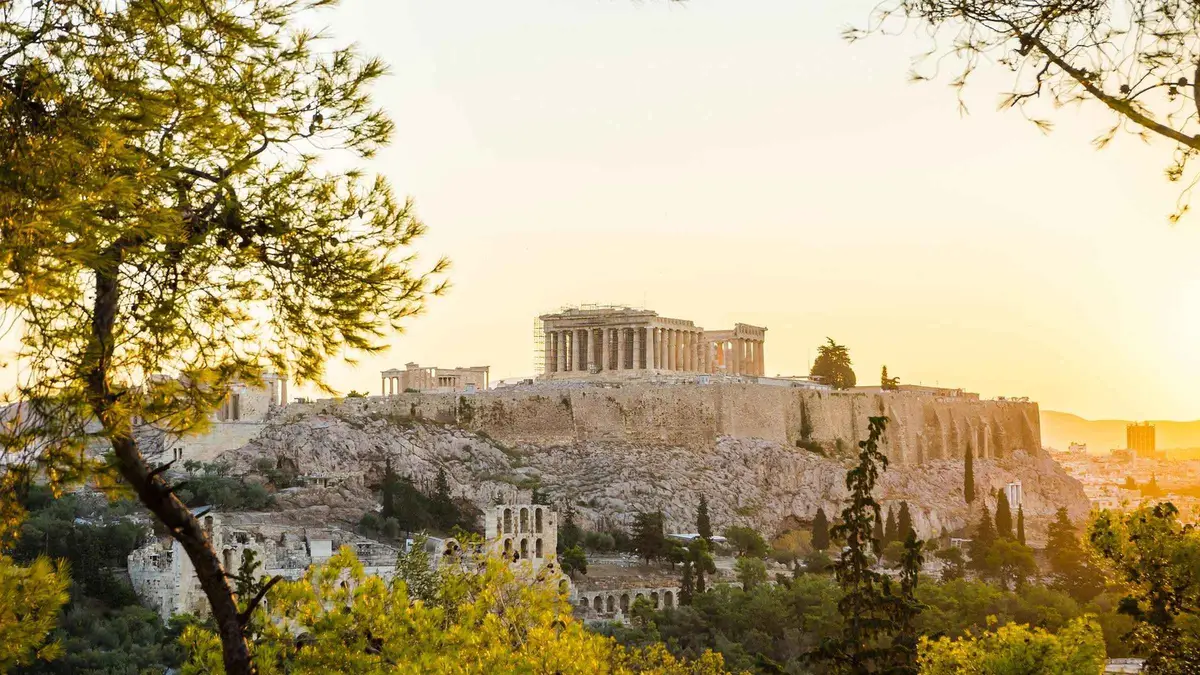
Athens: Philosophy and Democracy Walking Tour
Three and a half hours on foot through the places where philosophy and democracy actually happened, rather than the places they are commemorated.
Check Availability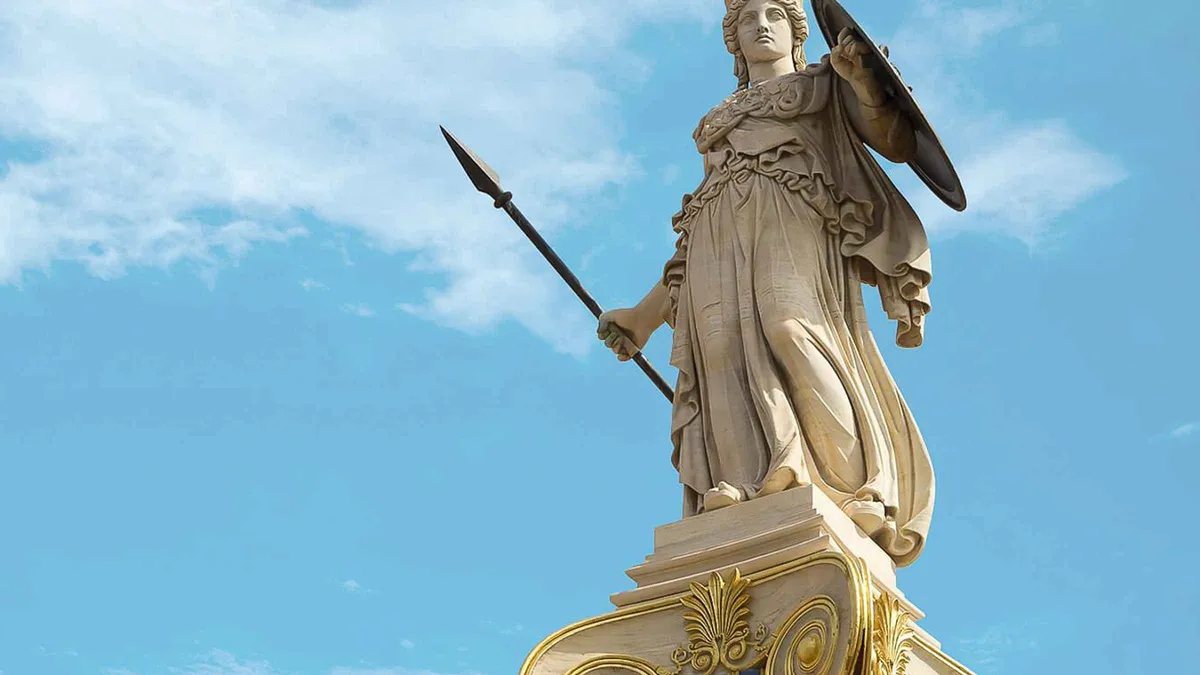 from €45
Athens: Acropolis and Mythology Highlights Small Group Tour
The rock plus the Temple of Olympian Zeus and the Ancient Agora, told through the myths attached to each: a comprehensive first day on foot.
Check Availability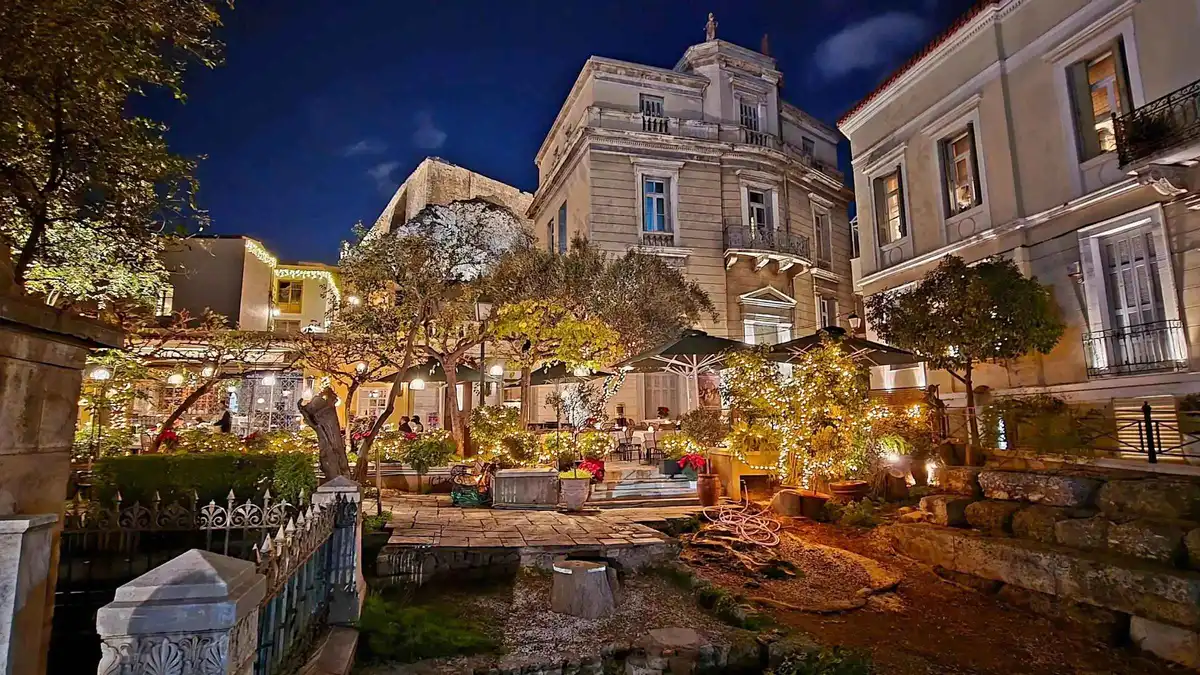 from €18
Athens: Night Walking Tour with Local Guide
Two hours after dark through the historic centre, the Cathedral, Anafiotika, Monastiraki and Plaka, with a local guide and no museum entries.
Check AvailabilityPrices, ratings and details are the platform's own. Euro figures are the listed prices. The platform bills in your account's currency.
What the Mysteries were, and what is actually known
Less than the internet suggests, which is the interesting part.
The cult
The Mysteries were an annual initiation into the cult of Demeter and Persephone, run at Eleusis from perhaps the fifteenth century BC. The sanctuary stayed open for well over a thousand years, until the emperor Theodosius closed the pagan sanctuaries in AD 393. Admission was unusually broad for the ancient world.
Anyone who spoke Greek and had not committed murder could take part, women, slaves and foreigners included, at a time when most Athenian religious and civic business excluded all three groups. The ceremony was an initiation once in a lifetime, not a repeatable ritual, and ancient writers who went through it consistently describe it as a turning point in how they faced death. What exactly produced that effect is the puzzle the rest of this page tries to untangle.
The procession
Initiates gathered in Athens and walked the whole route to Eleusis on foot. Before setting out they bathed in the sea at Phaleron, each carrying a piglet for later sacrifice. The Sacred Way ran thirty kilometres from the Dipylon gate at Kerameikos, the largest gate of the ancient city, to the sanctuary, and the walk took the better part of a day, ending with arrival by torchlight.
The march was not simply transport to the site. It counted as part of the rite itself, so the pilgrimage and the ceremony cannot be separated. If you want to trace it today, the starting point survives at Kerameikos in Athens, where the Sacred Gate beside the Dipylon was the road's formal beginning.
The line to Eleusis is its continuation.
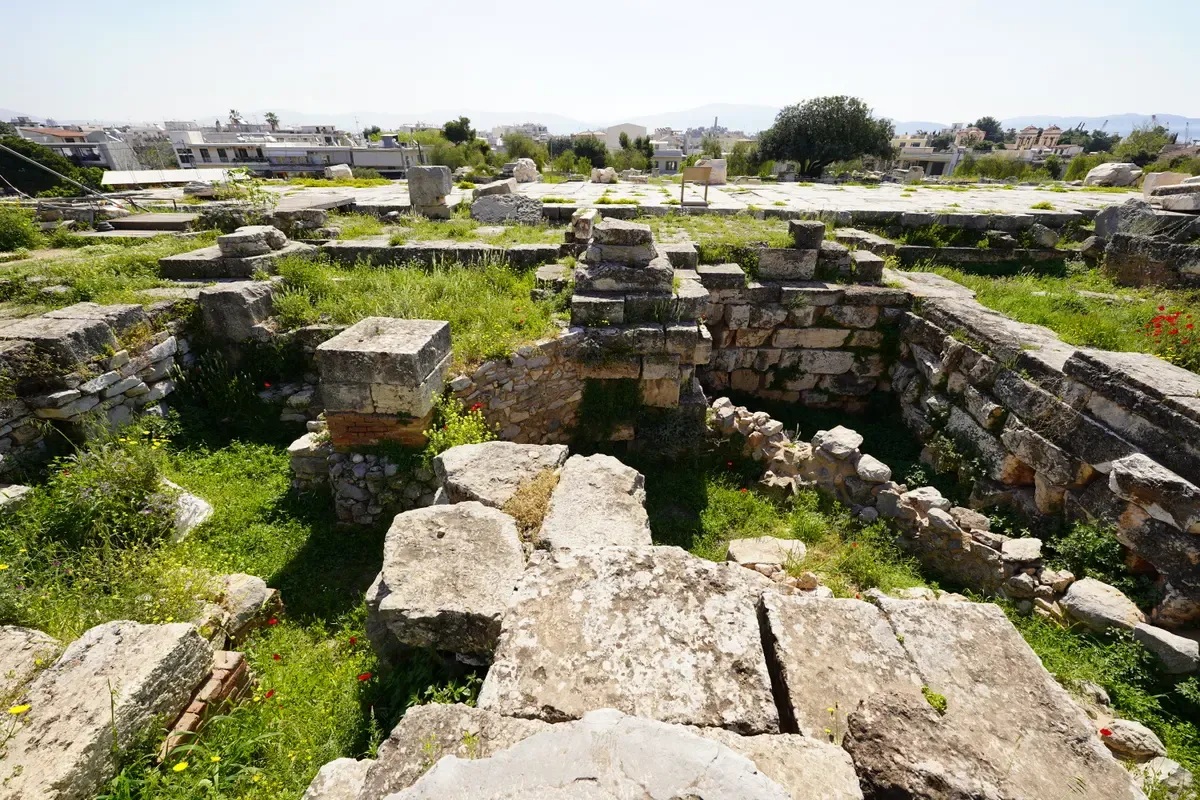
Photo: TimeTravelRome, CC BY 2.0, via Wikimedia Commons
What happened inside
Nobody knows, and that is not evasiveness. Initiates were sworn to silence, and across many centuries and many thousands of participants the secret held. Given how much else the ancient world gossiped about, this is one of the most remarkable facts in ancient history.
What the surviving sources do say is narrow but consistent. Things were shown, things were said and things were done. A great light was somehow involved.
And the reported effect was specific: afterwards, the initiated no longer feared death. Theodosius closed the sanctuary in AD 393, so the ritual was repeated for well over a millennium before stopping, which makes the silence even more striking. Anyone claiming to describe the ceremony in detail is going beyond the evidence, and this page tries not to.
The kykeon, and the drug theory
Initiates drank a barley-and-mint preparation called the kykeon as part of the rite. A well-known modern hypothesis argues that the barley carried ergot, a fungus whose alkaloids resemble LSD, and that the mystical experience was therefore pharmacological. It is a tidy theory and it is repeated constantly online, so it is worth stating plainly what it is: speculation.
It has never been demonstrated, and there is no ancient evidence for it. No ancient source says the drink altered consciousness, and the theory was proposed some two thousand years after the sanctuary closed in AD 393. If you read that the Mysteries are explained, treat the claim with the same scepticism you would apply to any account of what happened inside the Telesterion, which is to say a great deal.
The site today
An excavated hillside between an oil refinery and a shipyard.
Photo: TimeTravelRome, CC BY 2.0, via Wikimedia Commons
The Telesterion
The hall of initiation, cut back into the rock of the hill and stepped on all four sides so that thousands could stand facing inward on the central Anaktoron. There is no parallel for it in Greek architecture — Greek religion happened outdoors, at altars in front of temples, and this is a Greek building designed to hold a crowd inside, in the dark. Its foundations and the rock-cut steps are what you walk on.
The Propylaea and the Plutonion
Eleusis was approached through two monumental gateways, and the outer one copies the Propylaea on the Acropolis, a deliberate architectural echo between the two sanctuaries. Below, at the foot of the hill, is a cave identified as an entrance to the underworld. This is the Plutonion, tied to the central myth of the site: the place where Persephone was said to return from Hades each spring, which is what the Mysteries annually re-enacted.
Remember that the sanctuary closed in AD 393 and was buried for centuries. The village of Kastri grew over the ruins before its people were moved out so the French School could begin the Great Excavation in 1892, which is how these gateways and the cave came back into the open. Give the gateways unhurried time.
The museum
The site museum is small and sits on the hill above the excavations. It is included in the site ticket, so there is no second payment to plan for, which makes it an easy add-on to any visit. Its strongest pieces are the Fleeing Kore and the great Roman caryatid from the inner Propylaea, standing where a column once did.
Around them are votive reliefs and the pottery of the cult, the ordinary objects tied to a ritual whose details never leaked out. Since initiates were sworn to silence for the whole life of the sanctuary, which ran until AD 393, objects like these carry much of the evidence that survives. See the site first and the museum after, so the caryatid and the reliefs land in the right order.
The setting
Elefsina is a heavy-industrial town, with oil refineries, shipyards and cement works. The archaeological site sits in the middle of it, and cranes and flare stacks line the skyline behind the Telesterion. Most guides treat this as a defect and photograph the ruins from angles that hide the tanks.
It is arguably the most honest landscape in Attica. The sanctuary was never a remote holy place. It stood inside a working town, with the procession arriving along a road from Athens, and it has simply kept that context.
Industrial Eleusis and sacred Eleusis share the ground the way Kastri village once did, before its people were moved out for the French School's Great Excavation in 1892. Come expecting the cranes and you will not be disappointed by them.
Eleusis map
The site, and the road the procession walked from Athens.
Where this fits
The other trips out of the city.
Kerameikos
The Sacred Gate the procession left Athens by: Kerameikos, when it is open.
Where the walk beganEleusis questions
What was Eleusis famous for?
The Eleusinian Mysteries: an annual initiation into the cult of Demeter and Persephone that ran for something like two thousand years and was open to anyone who spoke Greek, including women and slaves. What the Mysteries were has what is known.
What happened in the Eleusinian Mysteries?
Nobody knows. Initiates were sworn to silence and the secret held across centuries and many thousands of people. The sources say things were shown, said and done, that light was involved, and that afterwards the initiated did not fear death.
What drug was used in the Eleusinian Mysteries?
None that is documented. Initiates drank the kykeon, a barley-and-mint preparation; a modern hypothesis suggests it was contaminated with ergot, which contains LSD-like alkaloids. That is speculation and has never been demonstrated, and there is no ancient evidence for it.
What does Eleusinian mean?
Of Eleusis — the town, thirty kilometres west of Athens, now called Elefsina. The Mysteries take their name from the place they were held.
Is Eleusis worth visiting?
On a second or third trip to Athens, yes — it is important, it is cheap, it is half an hour away and you will usually have it to yourself. On a first three days it does not make the list. The site today describes what is actually there.
What day is it closed?
Tuesday, every week and in both seasons. That is unusual among the state sites and it catches people — the opening-hours table lines it up against the rest.
Eleusis on Video
Three filmed visits that show the distances, the surfaces and the pace — the things a written page cannot carry. Every id was checked against YouTube on 2 September 2026.
Eleusis: Setting of the Mysteries
Eleusis and what the Mysteries were, which is the only reason to make the trip.
Video: Scenic Routes to the PastGreece's Hallucinogenic Cult: Mysteries of Eleusis
On the disputed pharmacology of the rite — interesting, and firmly a hypothesis rather than a finding.
Video: Tales From The RoadVirtual Walkthrough of Ancient Eleusis | Sacred City of Eleusinian Mysteries | Historical Burials
A virtual walkthrough of the sanctuary, useful because the site itself is sparsely labelled.
Video: Wander and WhisperPrices, hours and terms are set by the venue or operator and confirmed at checkout.
We may earn a commission if you book through one of our links, at no extra cost to you. Full affiliate disclosure