 Visit Athens Guide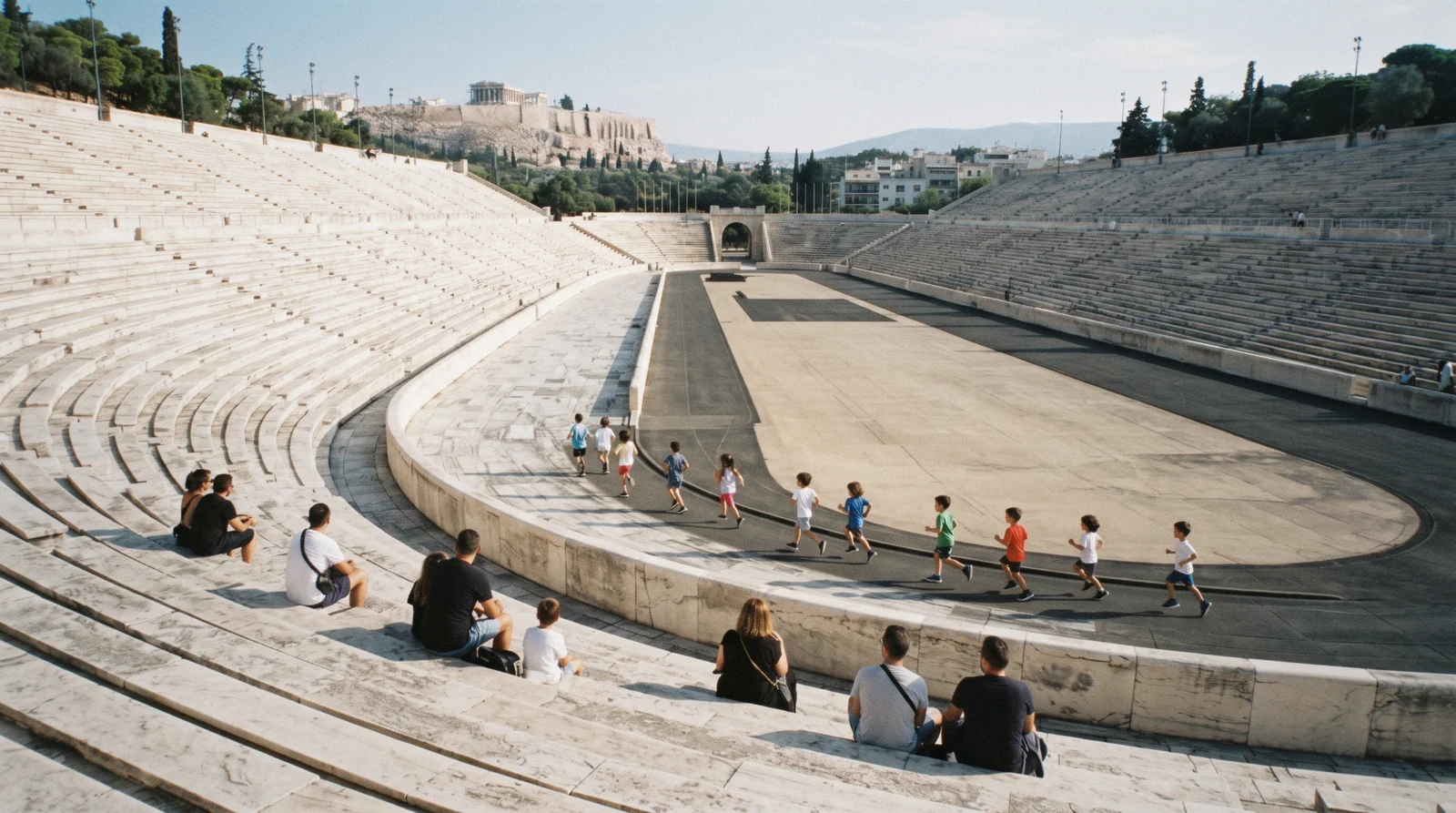
Athens with Kids
Athens with kids is cheaper than most European capitals and harder work underfoot than any of them. Children go free at a great deal of it — the reduced and free categories are generous — but the surfaces are marble, the shade is scarce and the two big museums are long. This page is about what actually holds attention, what a family day costs, and where the practical traps are. Checked in Q3 2026. The wider plan is on what to do in Athens.
Quick answer What is free, what works, and the pram question
Children get in free or cheaply almost everywhere in Athens, and the three places that reliably hold their attention are the Panathenaic Stadium, the Mycenaean gold room at the National Archaeological Museum, and the changing of the guard. None of the three is a long visit.
Key takeaways
- What children pay sets out each seller's rules — they differ, and the documents are checked at the gate rather than at purchase.
- What actually works is honest about the Acropolis: it is a hot climb on slippery marble, and forty-five minutes is a realistic ceiling.
- Leave the pram. The practical traps covers surfaces, shade and lavatories, including the one that costs €1.50.
- The changing of the guard is free, ten minutes and happens every hour — the most reliable win in the city.
- A family day comes to about half what two adults spend, because the entries mostly vanish.
What children pay
Each seller sets its own categories, read on their own pages on 1 September 2026. Documents are checked at the gate, and at two of these sellers the reduced ticket cannot be bought online at all.
| Where | Children | How it is issued | Note |
|---|---|---|---|
| The Acropolis and state sites | Reduced €15, and free categories apply | At the gate, with documents | The full list is on the ministry's own pages; bring the document itself |
| Acropolis Museum | Under-18s free | Desk only, never online | Buying online for a child is money thrown away |
| Museum of Cycladic Art | Under-18s free | At the desk | Also free for visitors with disabilities and a companion |
| Panathenaic Stadium | Under-6s free; students €6 | Desk only, cash or card | The stadium does not sell to the public online at all |
| The changing of the guard | Free | No ticket | Every hour, on the hour |
| Philopappos and the National Garden | Free | No gate | No closing time on the hill |
The line that costs families money is the second one. The Acropolis Museum issues free and reduced tickets at its desk only — a parent who books the family online pays €20 a head for tickets the children were entitled to for nothing, and there is no refund mechanism for buying the wrong category.
What is worth booking with children
Short, early and with something to do. The cards carry the operator's own rating and review count.
 from €27
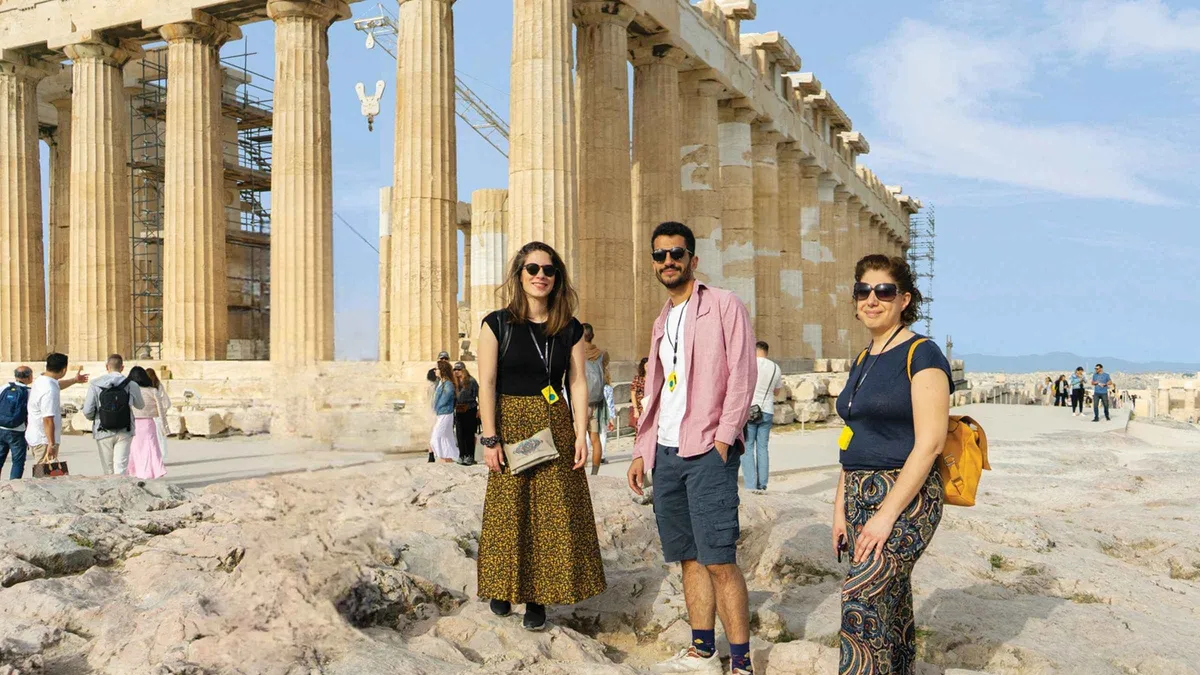
Athens: First Access Acropolis and Parthenon Guided Tour
An early-morning guided walk that goes to the Parthenon before the coach groups, then the Theatre of Dionysus on the south slope. Two to four hours depending on the option.
Check Availability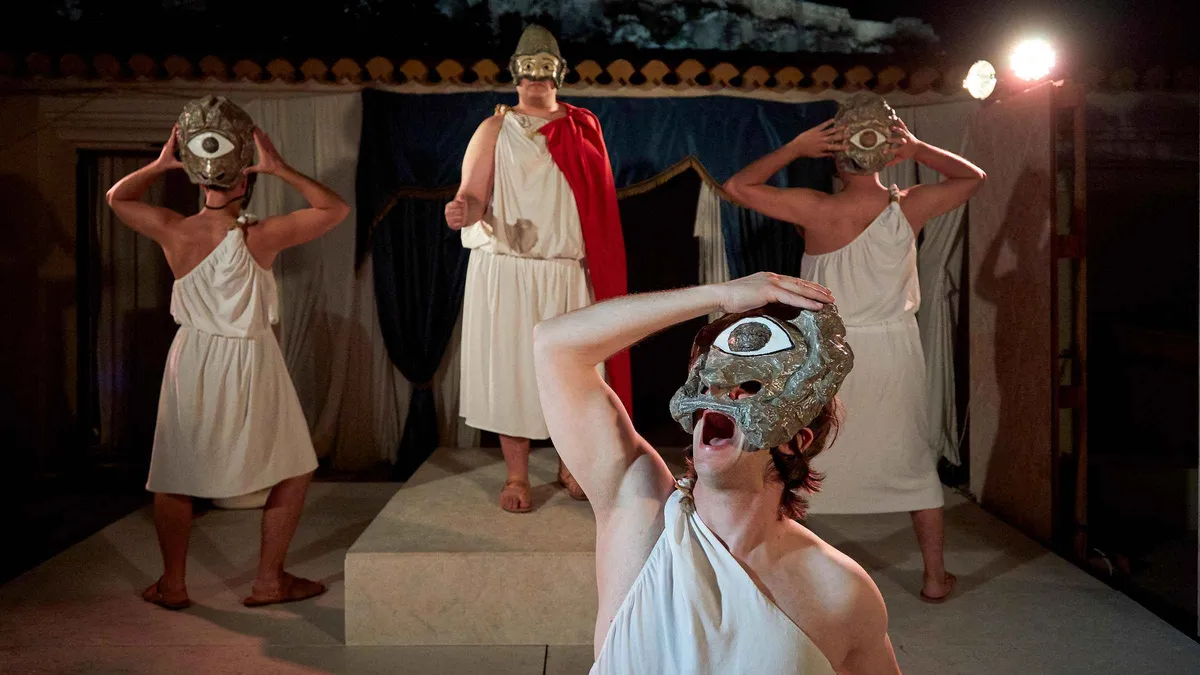 from €30
Athens: Ancient Greek Theater Performance
A 75-minute performance in English at the foot of the Acropolis, staging ancient Greek theatre with modern projection.
Check Availability from €12
Athens: Ferry Boat Ticket to/from Aegina Island
Just the boat: a Piraeus–Aegina ferry ticket by email, 75 minutes each way, so the island day is yours to shape.
Check Availability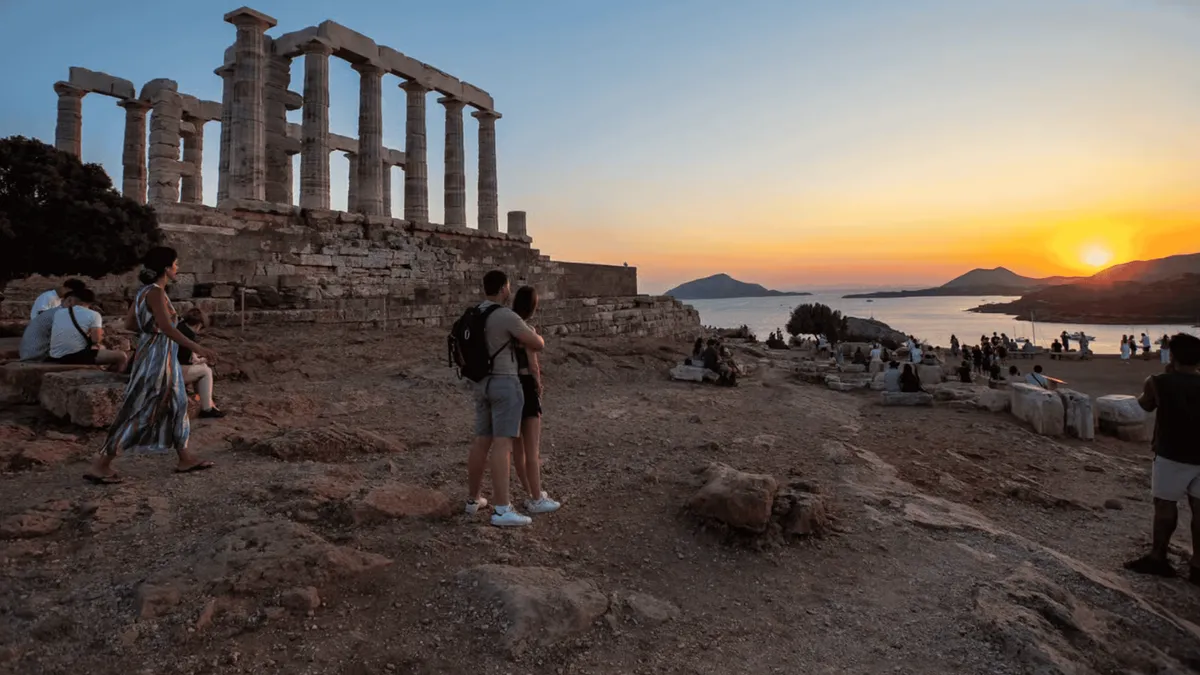 from €28
Athens: Cape Sounion & Temple of Poseidon Sunset Experience
A four-hour evening run down the coast to the Temple of Poseidon for sunset. The site itself opens at 09:30 and closes at sunset year-round.
Check AvailabilityPrices, ratings and details are the platform's own. Euro figures are the listed prices. The platform bills in your account's currency.
What actually works, and what does not
Ranked by how long a child will stay interested, which is not the same as how important the place is.
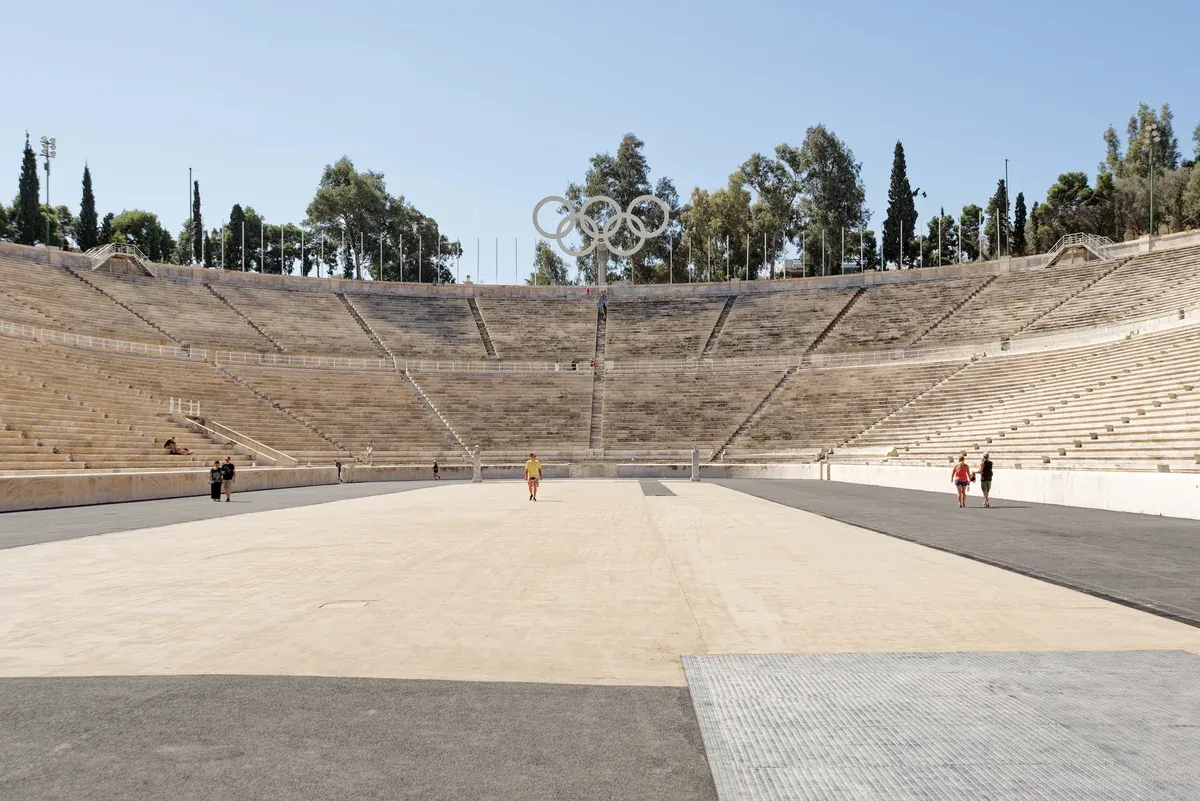
Photo: Jakub Hałun, CC BY 4.0, via Wikimedia Commons
Works: the Panathenaic Stadium
This is the only stadium in the world built entirely of marble, and the marble came from the same quarry on Penteli as the Parthenon. Lykourgos laid out the first version about 330 BC for the Panathenaic Games. Herodes Atticus rebuilt it in stone by AD 144 with roughly 50,000 seats, and Georgios Averoff paid for the 1896 restoration ahead of the first modern Olympics.
Children can run on the track and stand on the winners' podium, and the audio guide is included. Allow forty-five minutes. It is €12 for adults and free under six, and it is the single most reliable hour with children in Athens.
Take coins: the lavatory is €1.50 with exact change. The stadium page has the rules.
Works: the Mycenaean gold
Straight ahead from the entrance at the National Archaeological Museum sits a room of gold masks, inlaid daggers and treasure from the shaft graves of Mycenae. Heinrich Schliemann dug Grave Circle A in 1876 and found five gold masks. He named one the Mask of Agamemnon, though it was hammered from gold leaf over a wooden form around 1525 BC, three or four centuries before any Trojan War could have happened.
That story holds attention in a way a hall of pottery does not. Entry is €20 full and €10 reduced, and the museum opens at 13:00 on Tuesdays all year, so do not plan an early visit on that day. Go to the gold room first and treat the rest as optional.
Works: the changing of the guard
Ten minutes, free, and it happens every hour of every day, so it can be slotted anywhere. The uniform does the work: the pleated kilt, the red clogs with pompoms, the slow high stepping. The fustanella is 30 metres of white cloth in 400 pleats, one for each year of Ottoman rule, and each tsarouchi shoe pair weighs about 3 kg with 120 nails in the soles.
The Evzones date from 1868, took over guarding the Tomb of the Unknown Soldier when it was begun in 1929, and have been the purely ceremonial Presidential Guard since 1974. The ceremony page explains what each part means, which is the sort of detail children ask about.
Harder: the Acropolis
The Parthenon was built between 447 and 432 BC, then served as a church from 1205 and as a mosque after the Ottoman capture of 1460, its stairway becoming a minaret. In 1687 a Venetian shell hit the gunpowder stored inside and blew the temple into the ruin you see. A ticket costs €30 full and €15 reduced, and the climb is twenty minutes on worn marble with no shade and no barriers on the historic surfaces.
Forty-five minutes on top is a realistic ceiling with young children. Go at 08:00, take water, and treat the south-slope theatres on the way up as part of the visit rather than a detour. During official heatwaves the site has been closed through the hottest hours at short notice.
It is still worth doing.
Harder: the Acropolis Museum
The building opened on 20 June 2009, designed by Bernard Tschumi with Michalis Photiadis, and stands directly over an excavated ancient Athenian neighbourhood. Children see it first, through the glass floor at the entrance, and many will spend ten minutes just walking on it. Upstairs, white plaster casts stand in the Parthenon gallery where the original blocks sit in London, taken by Lord Elgin in the 19th century: 18 pedimental statues, 15 metopes and 56 frieze blocks.
The Caryatids are the other thing that lands. Tickets are €20 full and €10 reduced, with the reduced ticket sold only at the desk, and the museum runs its own hours and free days separately from the state sites. Ninety minutes maximum.
Skip: the Olympieion and the small sites
The temple took an absurd time to build. Peisistratos began it about 550 BC, the work stopped when the tyranny fell in 510 BC, Antiochus IV restarted it in 174 BC, and Hadrian finally finished it about AD 131. Of 104 columns, 16 survive and 15 stand, because a storm brought one down in 1852 and it still lies where it fell, split into drums.
That is what €20 full or €10 reduced buys: fifteen standing columns and half an hour of open ground, a poor trade with children. The Roman Agora, Hadrian's Library and Aristotle's Lyceum are the same problem at smaller prices, and from 1 November the Olympieion closes at 15:00. Walk past Hadrian's Arch instead. It is free and on the pavement.
The practical traps
Four things that are worse in Athens than in most cities with children.
Prams do not work
The Acropolis is worn marble and rock. Plaka is stepped lanes. The pavements in much of the centre are narrow and parked on, and there are no barriers on the historic surfaces.
A carrier is the right answer for anyone under about three, because a pram will spend the visit being carried anyway. There is a lift on the north face of the Acropolis for visitors with reduced mobility, and the site guardhouse can confirm it is running on the day before you queue. State sites are staffed by ministry employees, so a public-sector strike can shut the whole rock, and tickets bought through Hellenic Heritage are non-refundable, though you can change the time slot twice up to two hours before.
Check apergia.gr, which lists strikes in Greek, and OASA for service notices.
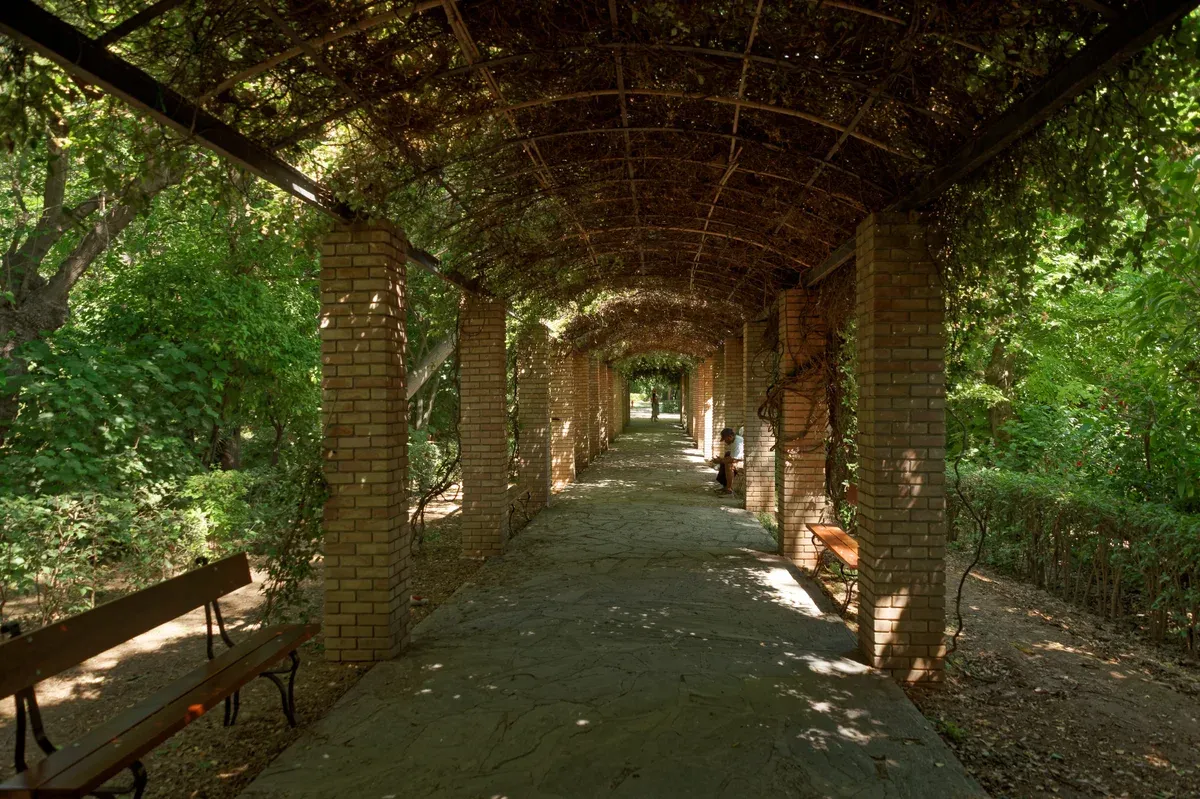
Photo: Jakub Hałun, CC BY 4.0, via Wikimedia Commons
Shade and water
There is none on the rock, none at the Olympieion and none on the stadium tiers, and Athens in summer is not a place to gamble on that. The shaded places are the National Garden, the pines on Philopappos and the trees in the Ancient Agora. The garden was commissioned by Queen Amalia in 1838 and finished by 1840 with over 500 imported plant species, and it runs several degrees cooler than the pavement around it.
Fill water bottles at the Acropolis entrance fountain, because there is nothing on top. In official heatwaves the culture ministry has repeatedly closed open-air sites through the hottest hours, roughly midday to 17:00, announced a day or less ahead, so keep a museum or the garden as a fallback.
Lavatories
They are thin on the ground at the sites, and usually inside the museums rather than outside them, so plan around museum and café stops rather than assuming there will be one at the gate. The one reliable charge to know is the Panathenaic Stadium, which asks €1.50 a person and wants the exact coins, so carry change if that is on your route. Free state-site days on 6 March, 18 April, 18 May, 28 October and the winter Sundays crowd the sites, which makes the loos and everything else harder.
If a strike closes a state site, the ticket is non-refundable, but two changes per ticket are allowed up to two hours before the slot. Keep the plan loose enough to use them.
Eating times
Greek dinner starts at nine, which does not suit small children, and Greek restaurants are entirely relaxed about children at any hour, which does. Eat early in a taverna rather than late in a mezedopoleio, order small plates the table shares, and expect staff to be actively pleased to see a child. A practical line: Varvakios Agora on Athinas, the central market of about 1886, paid for by the caviar fortune of independence fighter Ioannis Varvakis, is open to mid-afternoon Monday to Saturday and closed Sundays, so it works for a morning look and not an evening one.
Lunch fits the middle of the day better than a late taverna sit-down. Where to eat has the vocabulary you need for ordering.
A day that works
Short, early and with a running-about stop in it.
Morning
Be at the Acropolis gate for 08:00. Go up the south slope and treat the theatres on it as part of the visit, then allow forty-five minutes on top before coming down ahead of the heat and the crowds. There is no shade up there and no water, so fill bottles at the entrance fountain and keep the pace slow on the worn marble.
A ticket is €30 full or €15 reduced. On the way down, stop for coffee and a break on Dionysiou Areopagitou, the pedestrian street laid out in 2003 under the programme Melina Mercouri pushed as culture minister and finished before the 2004 Games. It is flat, shaded and closed to cars, so children can walk it without a hand on them the whole time.
Middle of the day
This hour belongs indoors in summer, and the Acropolis Museum is the obvious answer. Start with the glass floor over the excavation at the entrance, which is included in the ticket, then give the Caryatids and the Parthenon gallery their turn. Ninety minutes maximum before attention runs out.
Tickets are €20 full and €10 reduced, the reduced one sold only at the desk, and the museum keeps its own hours and free days apart from the state sites. Or go straight to lunch if the morning was hard. If a strike has shut the Acropolis, remember the defence: Hellenic Heritage tickets are non-refundable, but each ticket allows two changes up to two hours before the slot, so move the climb to another morning rather than losing it.
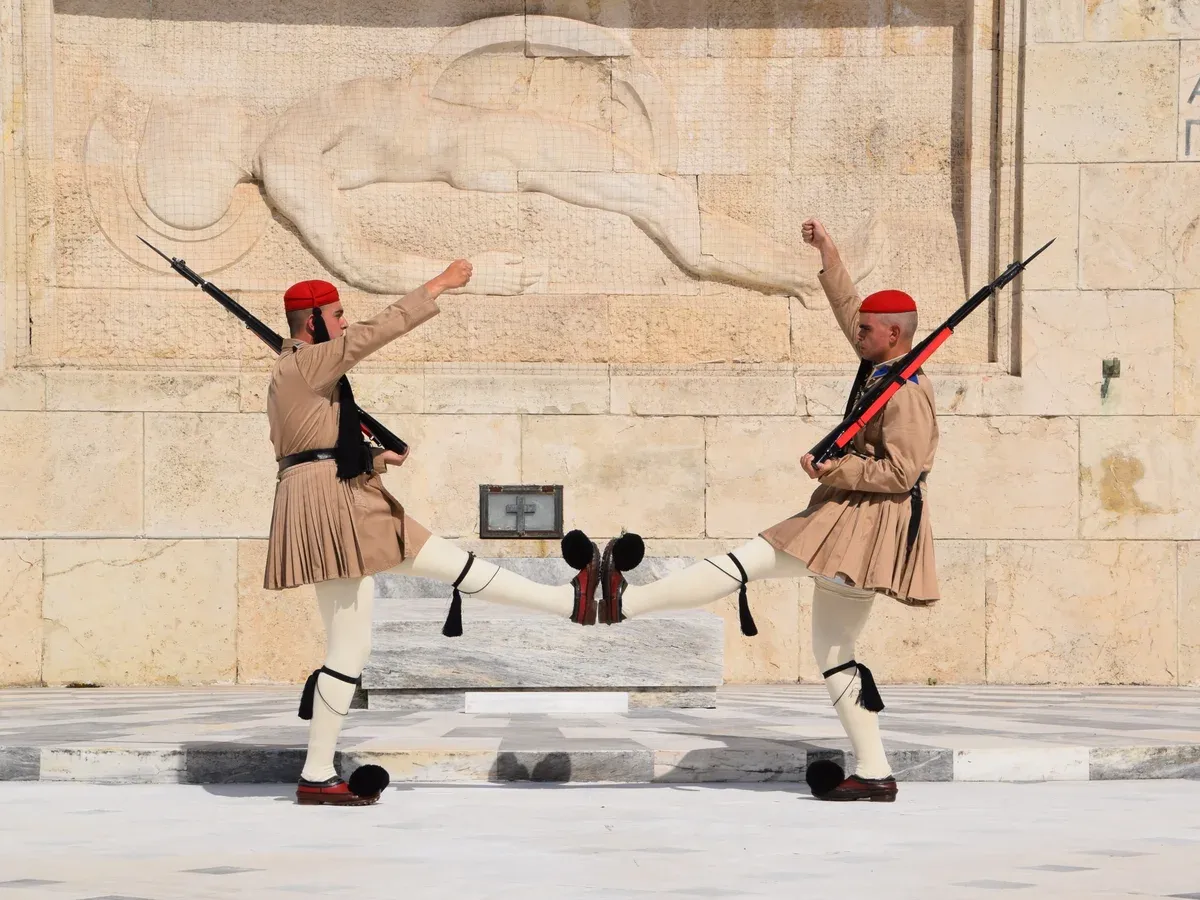
Photo: Luc.T from Buggenhout, België, CC BY 2.0, via Wikimedia Commons
Afternoon
Reach the Panathenaic Stadium through the National Garden, which is free, shaded and several degrees cooler than the pavement, with a duck pond, a small animal enclosure and a playground. Queen Amalia commissioned it in 1838 and the agronomist Friedrich Schmidt filled it with over 500 imported species, peacocks and turtles among them. At the stadium, children can run on the track and stand on the winners' podium, the audio guide is included, and €12 buys the most reliable hour of the day.
Allow forty-five minutes and take coins for the €1.50 lavatory. On the way back through Syntagma, catch the changing of the guard on the hour. The Evzones have guarded the Tomb of the Unknown Soldier there since 1929, and the ceremony is free.
Evening
Eat early in Koukaki or Psyri. Koukaki grew around Georgios Koukakis' iron bed factory at the turn of the twentieth century, and Psyri was the rough quarter of 19th-century Athens, ground of the knife-carrying koutsavakides. Both now eat and drink well, and Greek restaurants are relaxed about children at any hour, so an early table is no imposition.
If there is energy left, climb Philopappos at sunset. The summit monument is the tomb of Gaius Julius Antiochus Epiphanes Philopappos, a Roman consul and exiled prince of Commagene, built by the city in Pentelic marble in AD 114-116. The stone paths were laid by Dimitris Pikionis in 1954-57 out of marble salvaged from demolished houses, and for older children that walk is the best part of the day.
The best tours in Athens can carry that storytelling further, with guided walks that suit children between stops.
What a family day costs
Two adults and two children under twelve, entries at official prices read on 1 September 2026, food at typical rates. Compare with the €150 to €180 the same two adults would spend alone.
| Item | Adults | Children | Total |
|---|---|---|---|
| Acropolis | €60 | Reduced or free, documents at the gate | €60–90 |
| Acropolis Museum | €40 | Free under 18 | €40 |
| Panathenaic Stadium | €24 | Free under 6 | €24–36 |
| Changing of the guard, garden, hill | €0 | €0 | €0 |
| Food, four people | €60–80 | — | €60–80 |
| Transport | €8–16 | Reduced fares apply | €10–20 |
| Family day | — | — | about €195–265 |
The children's entries are close to nothing, which is why an Athens family day costs less per head than a couple's. The two lines to get right are the Acropolis Museum, where the children's tickets must be issued at the desk, and food, which is where a family of four actually spends its money. What Athens costs breaks a day down further.
Athens with children: questions
Is the Acropolis free for kids?
There are free and reduced categories that apply to children, and they are checked at the gate against documents rather than at purchase. The Acropolis Museum is clearer: under-18s go free, and the ticket must be issued at its desk, never online. What children pay has each seller's rule.
Is Athens worth visiting with children?
Yes, with the right expectations. Three places reliably work — the stadium, the Mycenaean gold and the changing of the guard — and the Acropolis is a hot climb with a hard ceiling on attention. What actually works is honest about each.
Can I take a pram to the Acropolis?
Not usefully. The surfaces are worn marble and rock and the approach is a steady climb. A carrier is the answer for small children; there is a lift on the north face for visitors with reduced mobility, which the site guardhouse can confirm is running.
What is there for children to do in Athens?
Run on the track at the Panathenaic Stadium, see the gold at the National Archaeological Museum, watch the guard change at Syntagma, walk on the glass floor at the Acropolis Museum, and the duck pond and playground in the National Garden. A day that works sequences them.
Will restaurants mind?
The opposite. Greek restaurants are actively welcoming to children at any hour. The practical issue is timing: Greek dinner starts at nine, so eat earlier in a taverna rather than later in a mezedopoleio.
What does a family day cost?
About €195 to €265 for two adults and two children including entries, food and transport — less per head than two adults alone, because the children's entries are close to nothing. The cost table itemises it.
Where to go from here
The pages a family trip leans on.
Panathenaic Stadium
A track they can run on, an audio guide included, and tickets at the desk only: the stadium.
The reliable hourNational Garden
Free, shaded, with a duck pond and a small zoo: the National Garden.
Shade and a playgroundWhat Athens costs
A day costed by traveller type, and where the money leaks: what Athens costs.
The budgetPrices, hours and terms are set by the venue or operator and confirmed at checkout.
We may earn a commission if you book through one of our links, at no extra cost to you. Full affiliate disclosure