 Visit Athens Guide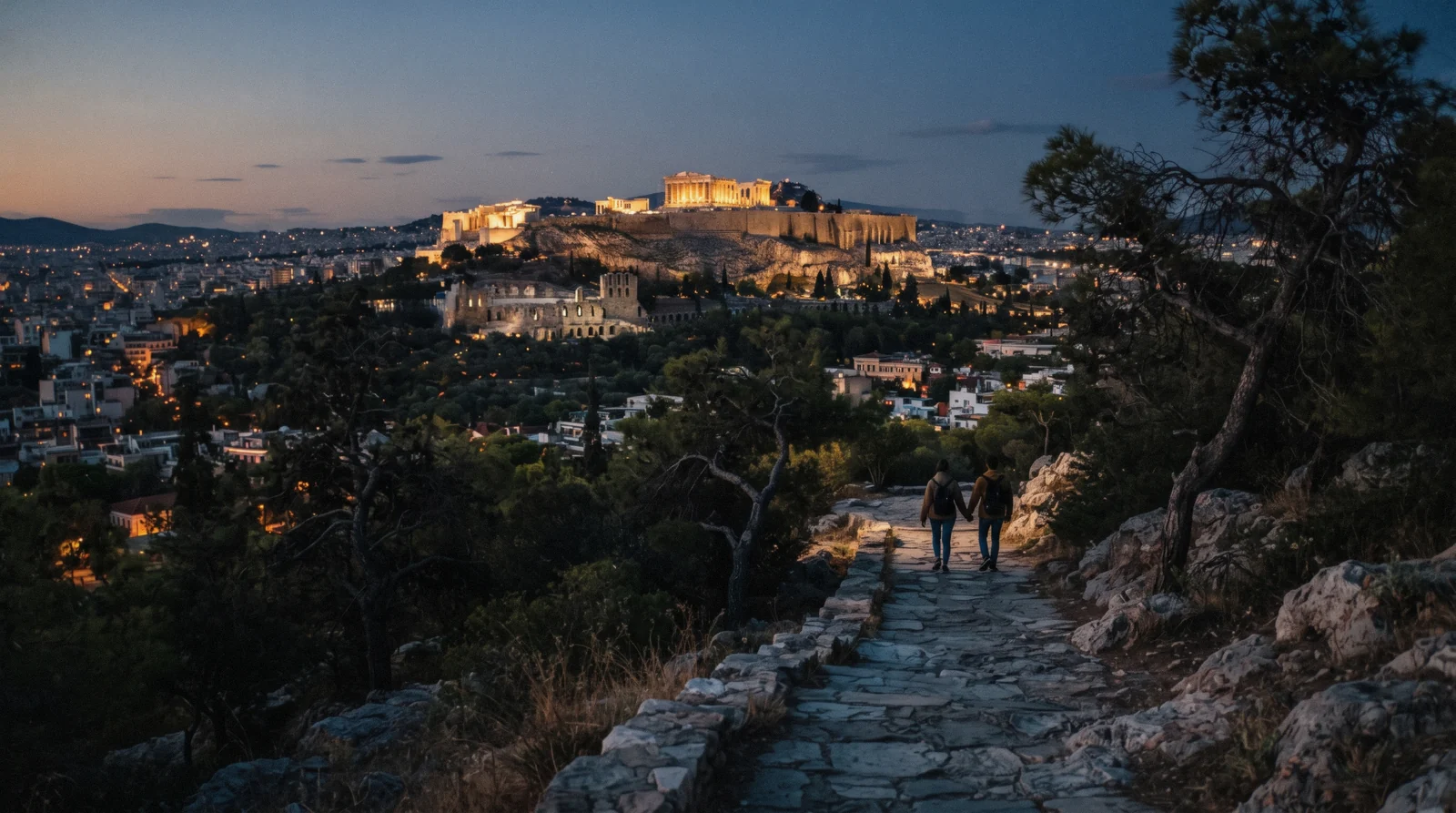
Athens in Three Days
Athens in 3 days is the right length, and the reason is not that there is more to see than two days hold — it is that the third day is where the city stops being a checklist. Days one and two are the sites; day three is the hills, the food, the neighbourhoods and enough slack that a shut gate does not ruin anything. Checked in Q3 2026. The shorter versions are one day and two days; for the wider plan, see what to see in Athens.
Quick answer What the third day is for, and why a fourth should leave town
Three days in Athens is two days of sites and one of hills, food and slack. Entries come to about €90 in total because the third day costs almost nothing, and only one ticket in the three days carries a fixed hour.
Key takeaways
- Days one and two are unchanged: one day and two days have them stop by stop.
- Day three is deliberately loose — two hills, a market, a food walk and the museums you skipped, in whatever order the weather allows.
- It is also the shock absorber: why the slack matters explains what it is really for.
- A fourth night is better spent on a day trip than on a fourth day of the centre. That is the honest answer and most guides will not give it.
- What three days cost comes to about €210 to €250 a head before the hotel.
The three days, in one paragraph each
Two fixed days and one that is not.
Day one: the rock
The Acropolis opens at 08:00 and the queues form by 08:30, so go at opening and climb the rock before the tour groups do. The Parthenon was built between 447 and 432 BC, blown apart in 1687 when a Venetian shell hit the gunpowder the Ottomans had stored inside it. In the afternoon the Acropolis Museum puts you over an excavated ancient neighbourhood, visible through the glass floor at the entrance and included in the ticket.
Then Plaka and Monastiraki on foot, Philopappos Hill for sunset and dinner in Psyri. Entry money comes to about €50 across the day, with the Acropolis at €30 and the museum at €20. The one-day plan has the times and the walking.
Day two: the democracy and the gold
Start at the Ancient Agora when it opens. This was where the assembly's business, the courts and the market of classical Athens all sat, and the Temple of Hephaestus beside it survives almost complete because it served as a church from the 7th century until 1834. Then the Roman Agora, and the National Archaeological Museum around midday.
It opens at 13:00 on Tuesdays all year, so a Tuesday morning will leave you outside a shut door. The Olympieion costs €20, and 15 of its original 104 columns still stand. Finish with the changing of the guard on the way to dinner.
Entry money for the day is about €60, or €70 with the Roman Agora added. The two-day plan has it stop by stop.
Day three: everything else
Day three has no fixed hour and almost no entry fees. The morning belongs to Varvakios Agora, the central market on Athinas, built about 1886 with money left by Ioannis Varvakis, a War of Independence fighter who made his fortune in caviar. It runs to mid-afternoon Monday to Saturday and closes on Sundays, so check the day before.
The middle of the day is a hill or a museum depending on the weather, since July heat and winter rain both argue for indoor options. The National Garden is free and several degrees cooler than the pavement around it. In the evening, take a food walk. Day three, stop by stop is a menu rather than a schedule.
Day three, stop by stop: the loose one
This is the day to reorder freely. Everything below is walk-up, most of it is free, and the only thing that cares what time you arrive is the market.
-
Varvakios central market
Free to walk throughThe covered meat and fish market on Athinas, open Monday to Saturday from early morning and closed on Sundays. It is a working market and it winds down by mid-afternoon, so this is the one thing on day three with a real time on it. The cook-shops inside serve patsas at hours no restaurant keeps, and the spice and cheese streets are just outside. Where to eat has the words.
walk about 10 min to next
-
Kerameikos, if it is open
€10 full / €5 reducedTen minutes west along Ermou. The state cemetery and the potters' quarter, with the Dipylon gate the Panathenaic procession formed at and a stream running through it — the only green archaeological site in the centre.
⚠ Check first: its official page currently prints "the site is temporarily closed" under summer hours. The Kerameikos page explains how to check for your date and what to do instead.
walk about 15 min to next
-
Lunch, then a museum or a hill
€12 at the Cycladic; the hills are freeThis is the fork. On a clear day: Lycabettus for the wide city view, on foot or by funicular at €13 return. On a hot or hazy one: the Museum of Cycladic Art at €12, five minutes from the Byzantine and Christian Museum — but not on a Tuesday, when both are shut. The museums hub compares them.
walk varies min to next
-
Panathenaic Stadium and the National Garden
€12 full / €6 reducedThe marble horseshoe of the first modern Olympics, with a track you can run on and the audio guide included. Tickets at the desk only — the stadium does not sell to the public online — and take coins, because the lavatory is €1.50 with exact change.
Walk back through the National Garden, which is free, shaded and the only pleasant way to cross this part of the city in August.
walk about 15 min to next
-
The other hill
FreeWhichever of Philopappos and Lycabettus you did not do at lunchtime. On day three the Pnyx is worth the extra ten minutes — the terrace where the Athenian assembly voted, unfenced, with nobody on it.
walk about 20 min to next
-
A food walk, or dinner in Exarchia
€59 for the walk, or €8–12 for dinnerBy day three you know which counter is which, so a food walk is a luxury rather than an education — take it if you want the stories. Otherwise eat in Exarchia, where the students set the prices, or go back to Psyri for one more table of small plates.
Why the slack matters
The third day is not a list of leftovers; it is insurance.
Things close without warning
Greek sites close in ways no timetable predicts. Kerameikos is currently listed as temporarily closed, with no reason and no end date given. The Odeon shuts to daytime visitors whenever a performance is being rigged on its stage. State sites are staffed by ministry employees, so a public-sector strike can close the Acropolis at a few days' notice, and law 1264/1982 requires unions to give only 24 hours' notice, or four days for a public service. Hellenic Heritage tickets are non-refundable, though you can change a ticket twice up to two hours before your slot.
On a two-day trip any of these wrecks a day. On a three-day trip they cost you one item.
The weather is a real variable
Summer heat is an operational problem, not a mood. During official heatwaves the culture ministry has repeatedly closed the Acropolis and other open-air sites through the hottest hours, roughly midday to 17:00, announced a day or less in advance. Municipalities open air-conditioned rooms and outdoor work is restricted by ministerial decision.
July and August average close to 28°C with no shade on the rock, so carry water and go at opening. Winter has the opposite problem. A wet December afternoon makes the marble in Plaka genuinely slippery underfoot.
Day three is where you put the thing that needs the weather to cooperate, a hill, a view or a long lunch outdoors, precisely because it can move.
And you will be tired
Two days of archaeological sites is more walking on uneven stone than most people do at home in a week, and the Pompeian-style marble underfoot in Plaka punishes tired ankles. A third day built around a market, a garden and one museum is not under-planning. It is the day that makes the other two enjoyable in retrospect.
The National Garden works well here. Queen Amalia commissioned it in 1838 and the agronomist Friedrich Schmidt finished it by 1840, importing over 500 plant species along with peacocks, ducks and turtles across 15.5 hectares. It is free to enter and several degrees cooler than the streets around it.
Sit down, eat, and let the legs recover before the evening.
The fourth night: leave the city
The most useful advice on this page, and the one most guides avoid giving.
Three days is the city
After three days you have seen the Acropolis, both its museums, both Agoras, the national collection, two hills and four neighbourhoods. What remains in the centre is genuinely second-tier. Hadrian's Library, Aristotle's Lyceum at €5, the Roman Agora at €10 and the smaller museums each deserve twenty minutes rather than a morning.
They are worth seeing if you are walking past anyway. They are not worth a day of a short trip. If you have a fourth night, the better use of it is to leave the city rather than to grind through the remaining ticket list.
The list will still be there on your next visit.
What a fourth night buys instead
Delphi is the one we would take at ten to eleven hours. The sanctuary of Apollo held the Pythia, who gave the oracles, and the omphalos that marked what the Greeks called the navel of the world. Theodosius closed the pagan sanctuaries in AD 393, and the French School began the Great Excavation in 1892 after moving the village that had grown over the ruins. Cape Sounion at four hours costs only an evening, with the Temple of Poseidon built in 444 BC and 15 of its 34 columns standing. Aegina is a full island day for less than an Acropolis ticket. The day trips hub sorts them by hours.
Or move the base
Some places repay an overnight far better than a fourteen-hour round trip in a single day. Nafplio works as a base for the Argolid. Kalambaka, under Meteora, lets you reach the monasteries early, before the coaches arrive.
Monastic building on the pillars began in the 14th century with Saint Athanasios and the Monastery of the Transfiguration, and of about thirty monasteries six are still active, on the UNESCO list since 1988. A Saronic island such as Hydra, where motor vehicles have been banned for more than sixty years and goods move by mule, is calmer once the day boats leave. With five nights, spending two outside Athens beats five in the city.
What three days in Athens cost
Entries at official prices read on 1 September 2026, food at typical rates. Per head, two people sharing plates at dinner.
| Day | Entries | Food and transport | Per head |
|---|---|---|---|
| Day one: the rock | €50 | €26–39 | €75–90 |
| Day two: Agora and museum | €40 | €29–39 | €70–80 |
| Day three: hills and food | €0–24 | €30–45 | €35–70 |
| Three days | €90–114 | €85–125 | €210–250 |
| If you add a day trip | +€20 entry | +€39–105 for the trip | +€75–150 |
The third day is where the range widens most, because it can be free — two hills, the market and the National Garden cost nothing at all — or it can be a stadium, a museum and a food walk. That flexibility is the point of it. What Athens costs breaks a day down by traveller type.
The bookings worth making for three days
One ticket with an hour on it, and two optional walks.
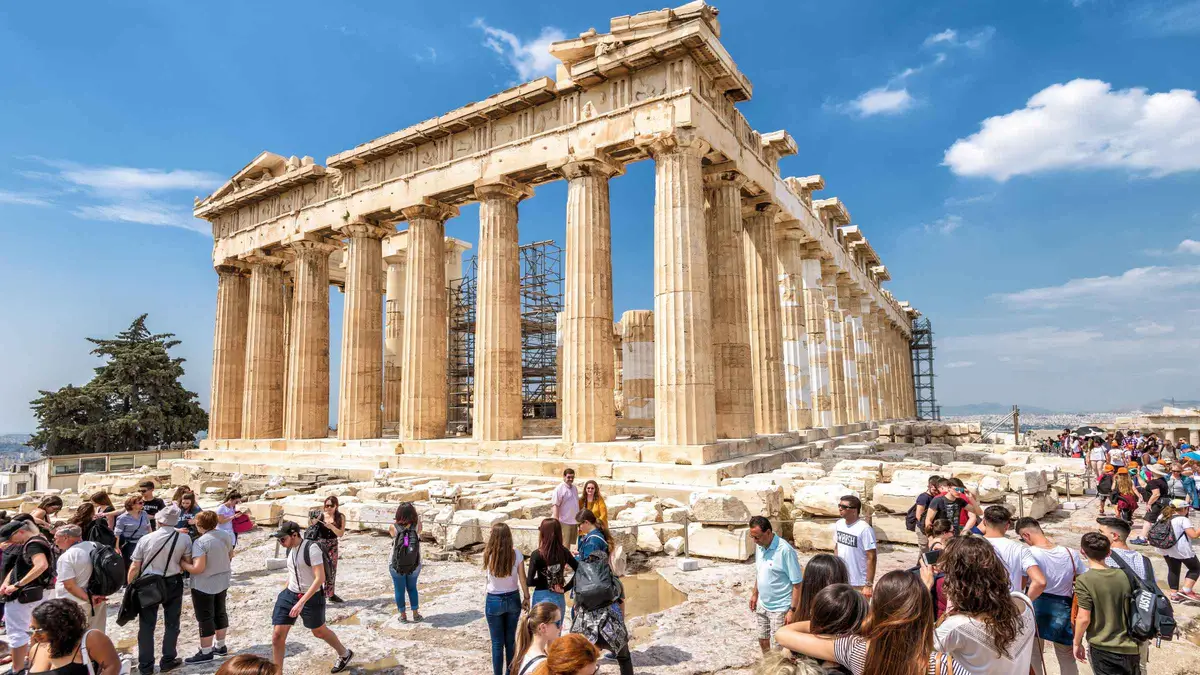 from €36
Athens: Acropolis Ticket with Optional Audio or Live Guide
Pre-booked Acropolis entry sent to your phone, with two audio-guide options and no fixed guide to keep up with. The official price is €30; this is the reseller version of the same timed slot.
Check Availability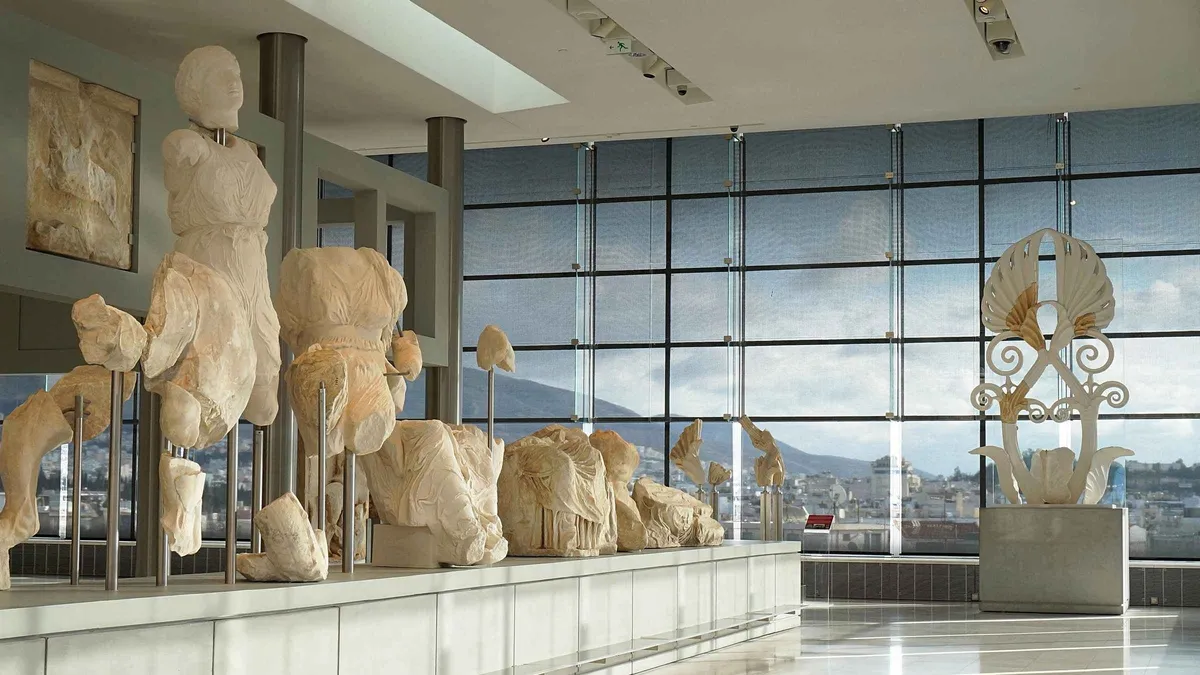 from €26
Athens: Acropolis Museum Ticket with optional Audio Guide
Entry to the Acropolis Museum with optional audio guide. The official price is €20; reduced tickets are only issued at the museum desk, never online.
Check Availability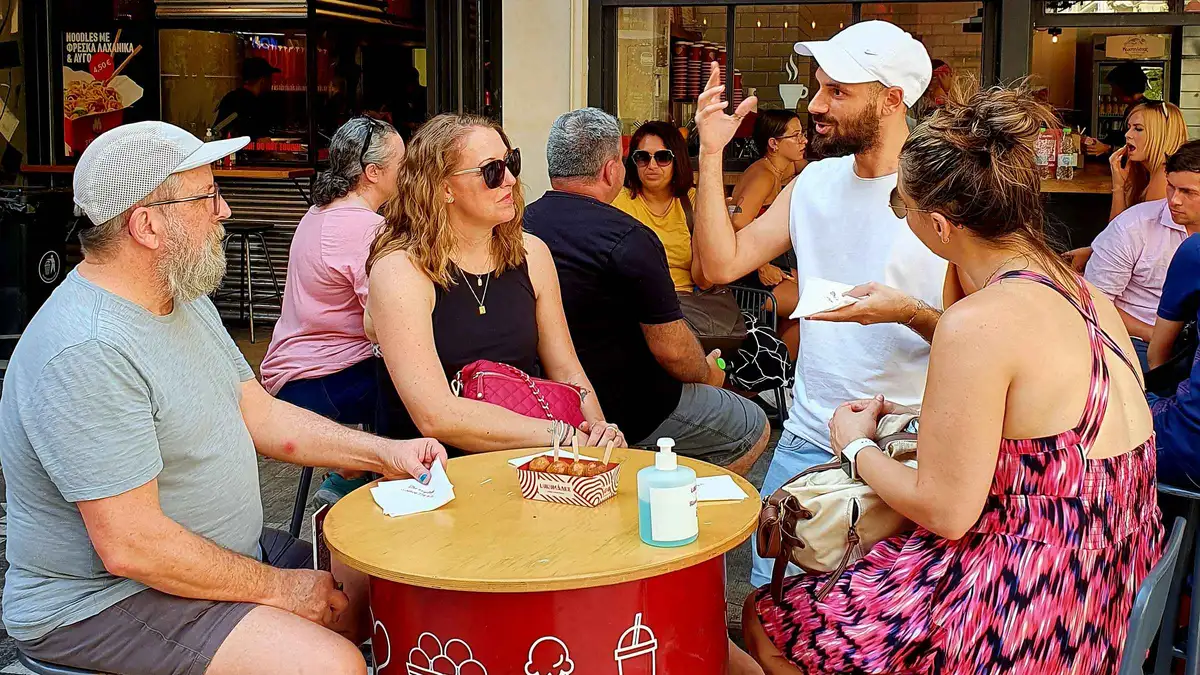 from €59
Athens: Street Food Tasting Tour
Three hours of Athenian street food with beer or wine, moving between the counters locals use rather than the ones on the tourist lanes.
Check Availability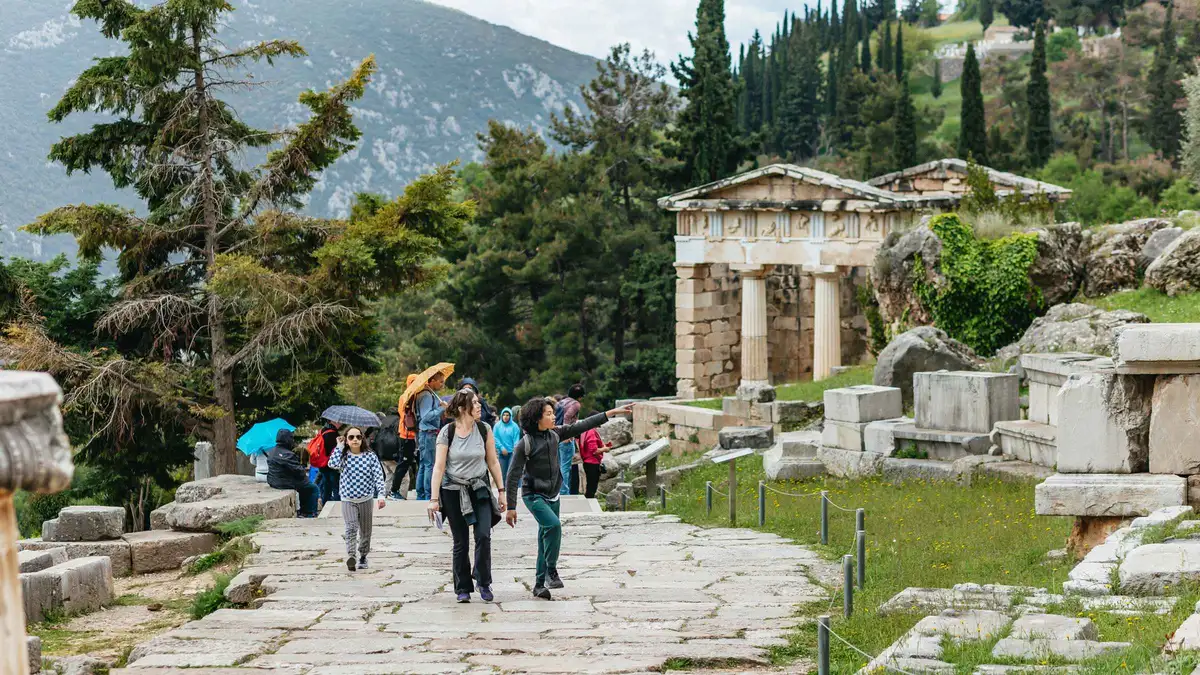 from €39.10
From Athens: Small-Group Delphi, Museum & Arachova Day Trip
The same route in a small group, with the Delphi museum and Arachova, under the Parnassus cliffs.
Check AvailabilityPrices, ratings and details are the platform's own. Euro figures are the listed prices. The platform bills in your account's currency.
The three-day map
Day one round the rock, day two north, day three loose.
After three days
Where the fourth night should go.
Day trips
Delphi at ten, Cape Sounion at four, Meteora at fourteen: the day trips hub.
Sorted by hoursWhat Athens costs
A day costed by traveller type, and where the money leaks: what Athens costs.
The budgetThree days in Athens: questions
Is three days enough for Athens?
Yes — three days is the right length for the city. After that the centre has given you what it has, and a fourth night is better spent on a day trip. The fourth night is blunt about that.
What should I do on the third day?
The market in the morning, a hill or a museum depending on the weather, the Panathenaic Stadium and the National Garden, the other hill at sunset. Day three, stop by stop is a menu rather than a schedule.
What does three days in Athens cost?
About €210 to €250 a head before the hotel, of which €90 to €114 is entries. The third day is where the range widens, because it can be almost free. The cost table splits it by day.
Do I need to book anything?
Only the Acropolis hour, on day one. Every other entry across the three days is walk-up, including both big museums. The tickets hub has every price.
Should I do a day trip on the third day instead?
Not on the third — do the city properly first. If you have a fourth night, that is the day trip, and Delphi is the one to take.
What if it rains?
Move day three's hill to a museum: the Acropolis Museum runs to 22:00 on Fridays and the Cycladic to 20:00 on Thursdays. That flexibility is exactly what the third day is for — why the slack matters explains it.
Athens in 3 Days on Video
Three filmed versions of the same trip. Compare their order against the one above — the differences are usually about the ticket hour. Ids checked on 2 September 2026.
We Skipped the Islands for 3 Days in Athens (Here's Why)
An argument for giving Athens three days instead of using it as an airport, which is this site's position too.
Video: Max and JacquelineHow to Spend 3 Days in ATHENS Greece | Travel Itinerary
A three-day itinerary filmed in order, so the distances are visible.
Video: Explorer's RadarAthens: Top Things To Do in 72 Hours (Best Travel Guide) 🇬🇷
Seventy-two hours compressed, with the sights in a workable sequence.
Video: Kristina's TravelsPrices, hours and terms are set by the venue or operator and confirmed at checkout.
We may earn a commission if you book through one of our links, at no extra cost to you. Full affiliate disclosure