 Visit Athens Guide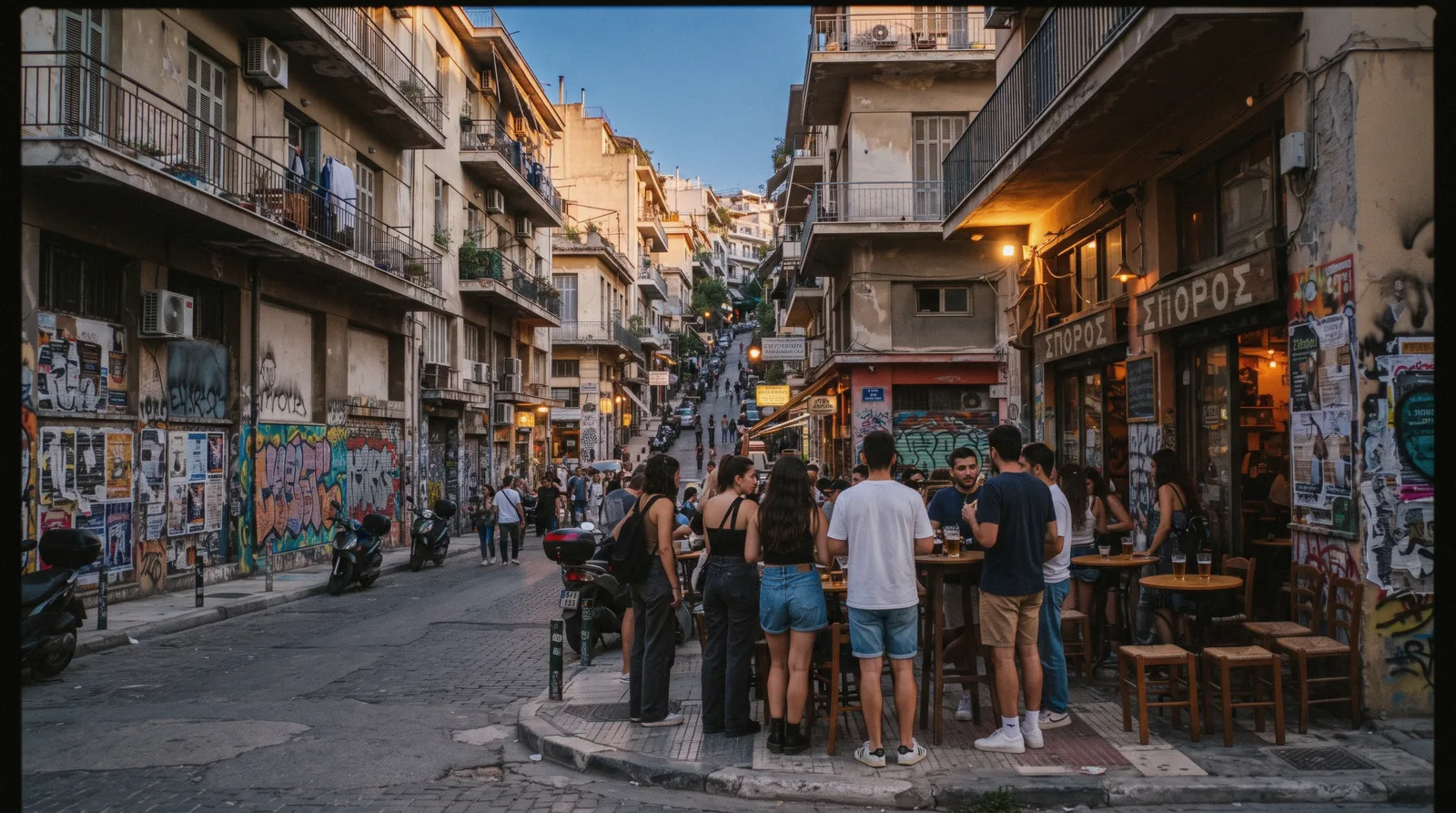
Exarchia
Exarchia athens guidebooks either romanticise or warn about is the quarter between the Polytechnic and Strefi Hill, five minutes from the National Archaeological Museum. It is where Greek student and protest politics has been centred since 1973, it is heavily muralled, and it is also where a great deal of the best cheap food and live music in the city is. This page tries to describe it rather than take a position, as checked in Q3 2026. The other districts are on the neighbourhoods hub, and the wider plan on what to do in athens homepage.
Quick answer What it actually is, and what the warnings are worth
Exarchia is a dense central neighbourhood next to the Polytechnic and the National Archaeological Museum, with a long political history, a great deal of street art and the best value eating in the centre. It is not a no-go area and it is not a theme park.
Key takeaways
- It is five minutes from the National Archaeological Museum, which makes it the obvious lunch after a morning there.
- What the reputation is about explains the Polytechnic and why the district is policed and postered the way it is.
- Eating and music is the practical reason to come: student prices, and live rooms that are not put on for visitors.
- On safety, the honest answer is in is it safe — ordinary city-centre care, and a specific note about demonstrations.
- For contrast, Kolonaki is ten minutes uphill and roughly twice the price.
What is in and around it
What a visitor would actually walk to, with the official price where there is one, read on 1 September 2026.
| What | Price | Walk | Note |
|---|---|---|---|
| National Archaeological Museum | €20 (€10) | 5 min | Opens at 13:00 on Tuesdays |
| Exarchia Square | Free | — | The centre of the district; cafés on three sides |
| Strefi Hill | Free | 10 min | A rough pine hill with a view over the district |
| The Polytechnic | Free to look at | 5 min | The gate that the 1973 tanks came through |
| Street art | Free | — | Dense, changing, and largely political |
| Live music rooms | Drink prices | — | Rebetiko, jazz and rock; mostly after ten |
The museum five minutes away is the reason most visitors end up here at all, and it is a good one: a morning in the national collection and lunch in Exarchia is one of the better cheap days in Athens.
Tours that come this way
The cards, with the operator's own rating and review count.
 from €42
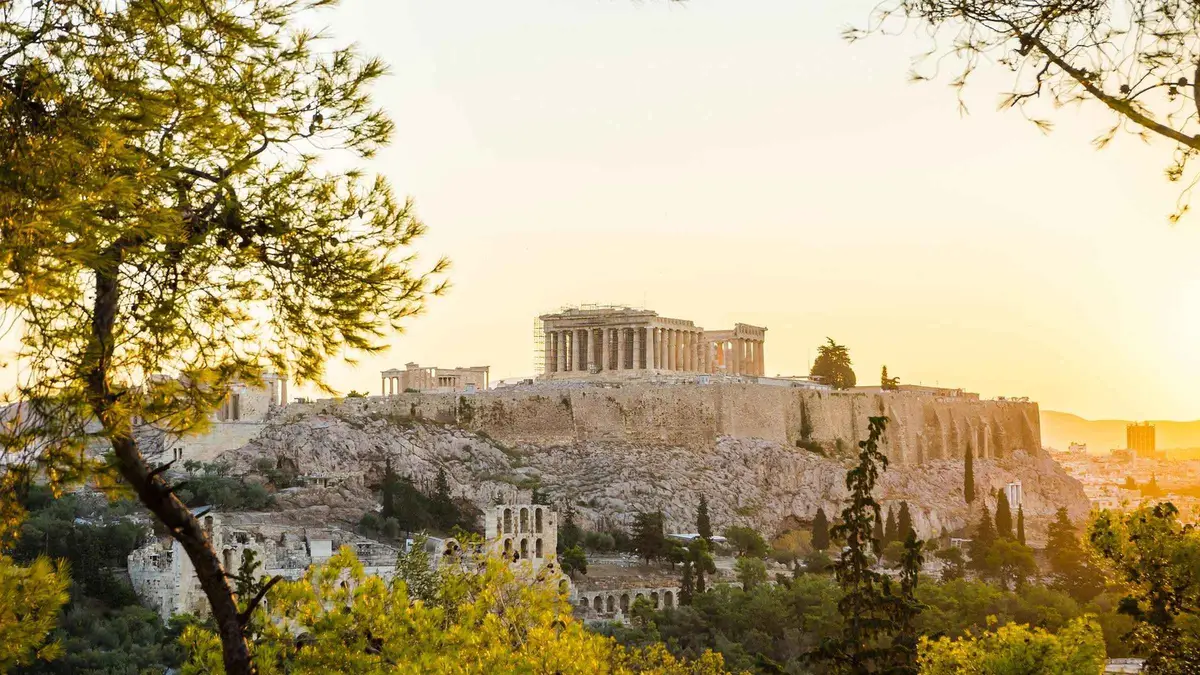
Athens: Philosophy and Democracy Walking Tour
Three and a half hours on foot through the places where philosophy and democracy actually happened, rather than the places they are commemorated.
Check Availability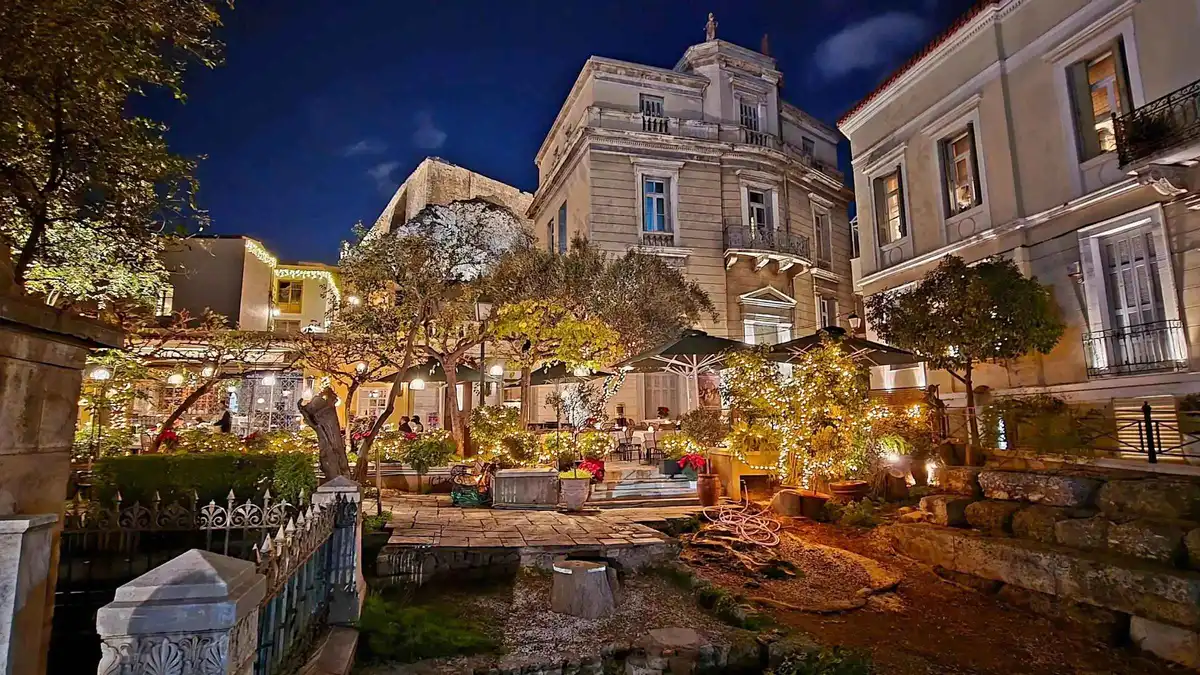 from €18
Athens: Night Walking Tour with Local Guide
Two hours after dark through the historic centre, the Cathedral, Anafiotika, Monastiraki and Plaka, with a local guide and no museum entries.
Check Availability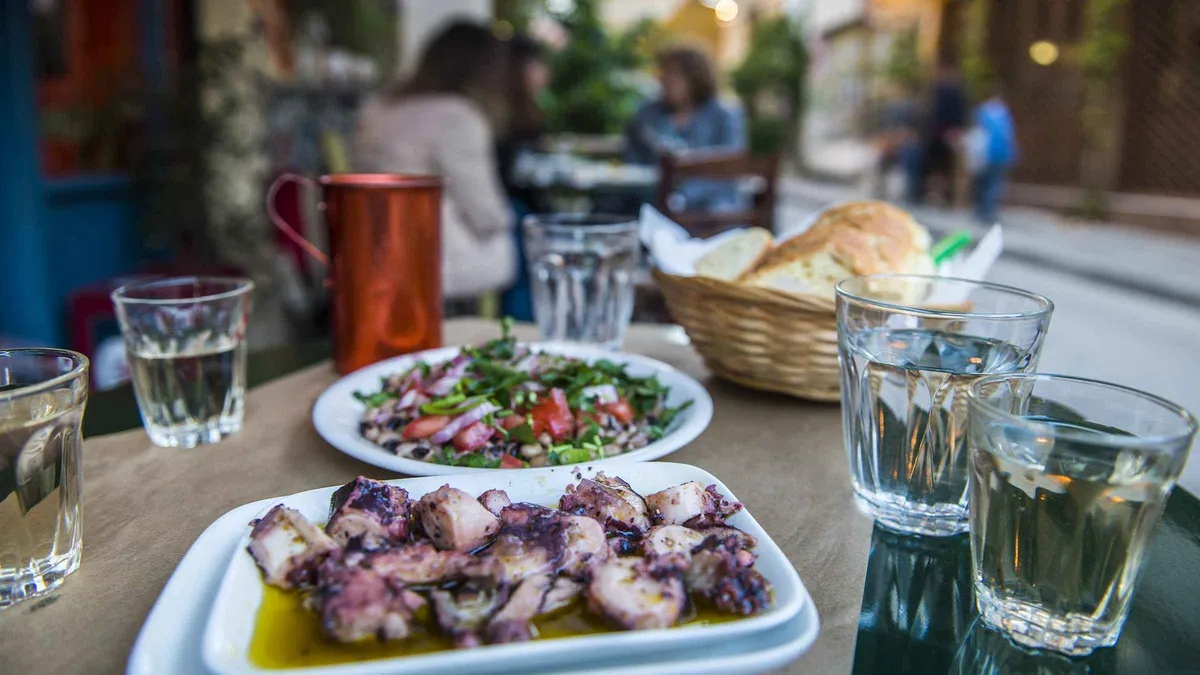 from €69
Athens: Greek Food Discovery Small Group Walking Tour
Eight to ten tastings in a small group, through markets and the food streets Athenians shop on.
Check AvailabilityPrices, ratings and details are the platform's own. Euro figures are the listed prices. The platform bills in your account's currency.
What the reputation is about
Some history, because without it the district reads as simply scruffy.
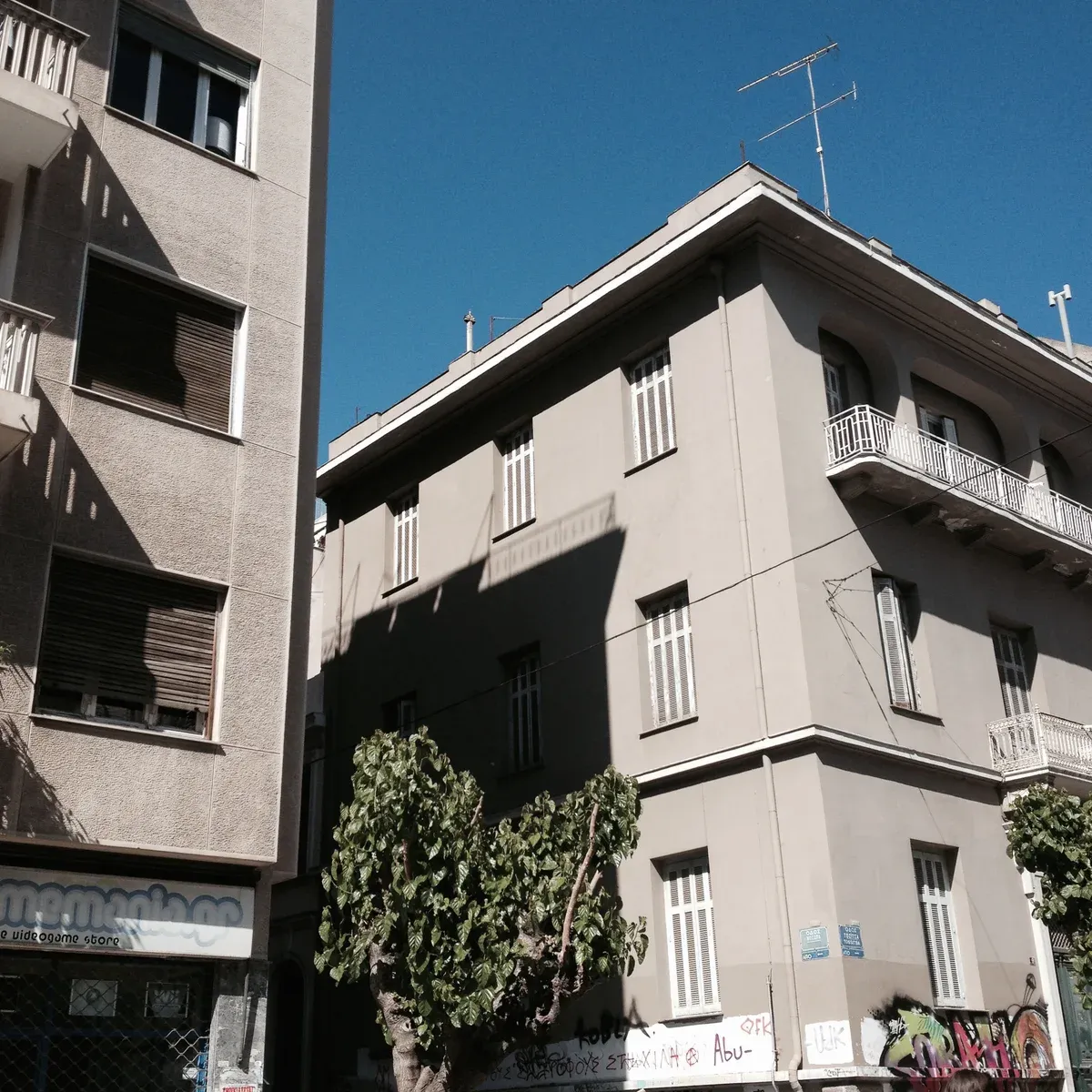
Photo: Alexialia, CC BY-SA 4.0, via Wikimedia Commons
The Polytechnic, November 1973
The student occupation of the Athens Polytechnic against the military junta ended when a tank was driven through the gate on 17 November 1973. Forty civilians died in the streets around the building, and the junta itself fell the following year. The aftermath produced the academic asylum law, which still shields university grounds from police entry.
The date is commemorated every year by a march that starts in Exarchia and ends in the centre, and the gate of the Polytechnic is preserved as the focus of it. If you are in Athens on the anniversary, expect the whole district to close to traffic from the afternoon. The square fills with banners, stalls and crowds in the tens of thousands, which is worth seeing once, provided you are happy to walk rather than drive anywhere near it.
Since then
Exarchia has been the geographical centre of the Greek left and anarchist politics ever since, with squats, self-organised spaces and a long record of confrontation with the police. The district takes its name from a 19th-century shopkeeper called Exarchos, which predates the politics by a century. The identity now rests on the murals, the posters and the periodic tear gas, alongside bookshops, record shops and radical publishing houses that keep working between the confrontations.
For over a decade there has also been redevelopment pressure, most visibly a metro station built under the square against sustained local opposition. That fight framed the neighbourhood as a symbol far beyond Athens, and a good deal of what is written about it treats it as an idea rather than a place. It is both, and the two coexist awkwardly.
What that means for a visitor
Very little, most days. You will see political posters and graffiti you cannot read, a police presence at the edges, and a neighbourhood going about its business. Cafes and bars are full of students and long-term residents rather than tourists, which is exactly why many people come.
On demonstration days, which are announced in advance and cluster around fixed dates, the streets around the Polytechnic are best avoided in the evening. Metro access is also limited by that same redevelopment history, since the line under the square was contested and you should check connections before relying on it. Otherwise come at lunchtime, sit on a terrace, and read the walls.
The murals change constantly, and the best of them are genuine large-scale work rather than tags, which surprises visitors expecting nothing but mess.
Eating, drinking and listening
The practical reason to walk here.
Student prices
The neighbourhood's economy is set by students and by people who have lived here for decades, so a plate costs what a plate costs and nobody marks prices up for visitors. This is the best quality-per-euro in the centre of Athens, and the gap against Kolonaki ten minutes uphill is startling. A full meze dinner with wine here can cost less than a single main course in the districts that face the Acropolis.
The reason is simple. Rent, customer base and turnover are all local, so menus and drinks lists are written for people who will come back weekly. Bars in particular pour good house wine at prices that have barely moved in years.
If your budget has an evening or two of slack, spend them here rather than in the postcard districts.
What to eat
Mezedopoleia around the square, souvlaki counters on the main streets, and a good number of cheap ethnic kitchens. Exarchia has the widest range of non-Greek food in central Athens, a byproduct of decades of students, immigrants and political exiles settling here, so you can eat across several continents within two streets of the Polytechnic. Portions follow the student logic, which means large and cheap rather than delicate.
Sit-down tavernas share the blocks with takeaway counters, and both fill up late, as the district eats on its own schedule. If your Greek is limited, menus in English are normal but the spoken menu is often more generous. Where to eat in Athens has the vocabulary that works everywhere, and it is worth ten minutes of reading before you order.
Music
Rebetiko, jazz and rock rooms, most of them small, most of them starting late and none of them staged for visitors. This is a district with bookshops, record shops and a long student population, and the live music follows from that. Bands play to people who know them, not to tour groups, so sets often begin after eleven and run well past midnight.
Door charges, where they exist, are modest and sometimes include a drink. If you want live Greek music that is not a floor show for restaurant customers, this district and Psyri are where to look. Wander the smaller streets off the square rather than the square itself, listen for sound carrying from basement doors, and go in.
The rooms are friendly, the audiences mixed across generations, and nobody will mind an unfamiliar face.
Is it safe
The question everyone asks, answered without either romance or scaremongering.
Day to day
It is a densely populated central neighbourhood full of students, families and shops, and by day it is unremarkable. The ordinary caution of any European city centre applies. Keep pockets and phones secure, keep some awareness at night, and stop there.
Exarchia has more graffiti and more police at its edges than most districts, and neither is aimed at you. The streets between the square and the National Archaeological Museum are busy with foot traffic through the evening, which is itself a comfort. A great deal of what visitors read about Exarchia describes the situation a decade ago, when confrontations were more frequent and more destructive.
Today the district is a functioning residential centre with an unusually good café and bar scene. Treat it as that, and walk through it with the same ease you would give any part of central Athens.
The specific things to know
Demonstrations are announced in advance and concentrate around the Polytechnic and the square, mostly in the evening and on fixed anniversaries such as 17 November, which marks the 1973 tank assault on the Polytechnic, and 6 December. Tear gas is used at some of them, and it drifts several streets beyond the march itself, so distance is the only reliable protection. If one is called, the practical advice is the same as anywhere.
Eat somewhere else that night, keep your hotel reachable on foot or by an unaffected metro line, and do not linger to film the front line. Shops around the square often close early on the big dates without treating it as an emergency. During public-sector strikes, check service notices before travelling, since transport disruptions elsewhere in the city can leave you walking home late.
The honest caveat
There is an open drug scene in parts of the district and around Omonia to the south-west, and it is visible. You may see people injecting in doorways or asleep in the street, particularly in the blocks between Exarchia square and Omonia in the early morning and late at night. It is a public-health situation rather than a threat to passers-by, and it has persisted through successive city administrations because the underlying problems are national rather than local.
People who would find it distressing, especially those travelling with children, should know it is there and route accordingly. It does not cancel the rest of the district. The cafes, tavernas and music rooms are a few minutes away and entirely unaffected.
Adjust your route, not your plans, and the neighbourhood will reward you.
Exarchia map
The square, the Polytechnic, the hill and the museum next door.
Next stop from Exarchia
Walk minutes are our estimates from the GPS distances.
National Archaeological Museum
West along the block. €20 — the museum opens at 13:00 on Tuesdays.
5 min walkKolonaki
East and up, into a different economy. Kolonaki has the three museums and the hill.
10 min uphillWhere to eat
The words on the board and the two habits that halve the bill: where to eat in Athens.
Before you sit downExarchia questions
Is Exarchia safe for tourists?
By day it is an unremarkable dense city neighbourhood, and ordinary city-centre care is what it asks for. The specific things to know are demonstrations on announced dates and a visible drug scene at its south-western edge. Is it safe covers both without exaggeration.
Why is Exarchia famous?
Because of the Polytechnic uprising of November 1973 against the junta, and because it has been the centre of Greek left and anarchist politics ever since. What the reputation is about has the history.
Is it worth visiting?
For lunch after the National Archaeological Museum, for the street art and for live music at night, yes. It is a neighbourhood rather than a sight, and it is best walked with some idea of what you are looking at.
Where should I eat in Exarchia?
Around the square and on the streets running off it: mezedopoleia, souvlaki counters and the widest range of cheap non-Greek food in the centre. Eating, drinking and listening has more.
Should I stay in Exarchia?
It is cheap and central and twenty minutes from the Acropolis, and it is not the obvious first-trip choice — Koukaki is. On a longer stay, or a second visit, it is a good address. Where to stay compares the six districts.
Is there street art worth seeing?
A great deal of it, dense and changing, and mostly political rather than decorative. It is concentrated around the square, the Polytechnic and the streets towards Strefi Hill.
Prices, hours and terms are set by the venue or operator and confirmed at checkout.
We may earn a commission if you book through one of our links, at no extra cost to you. Full affiliate disclosure