 Visit Athens Guide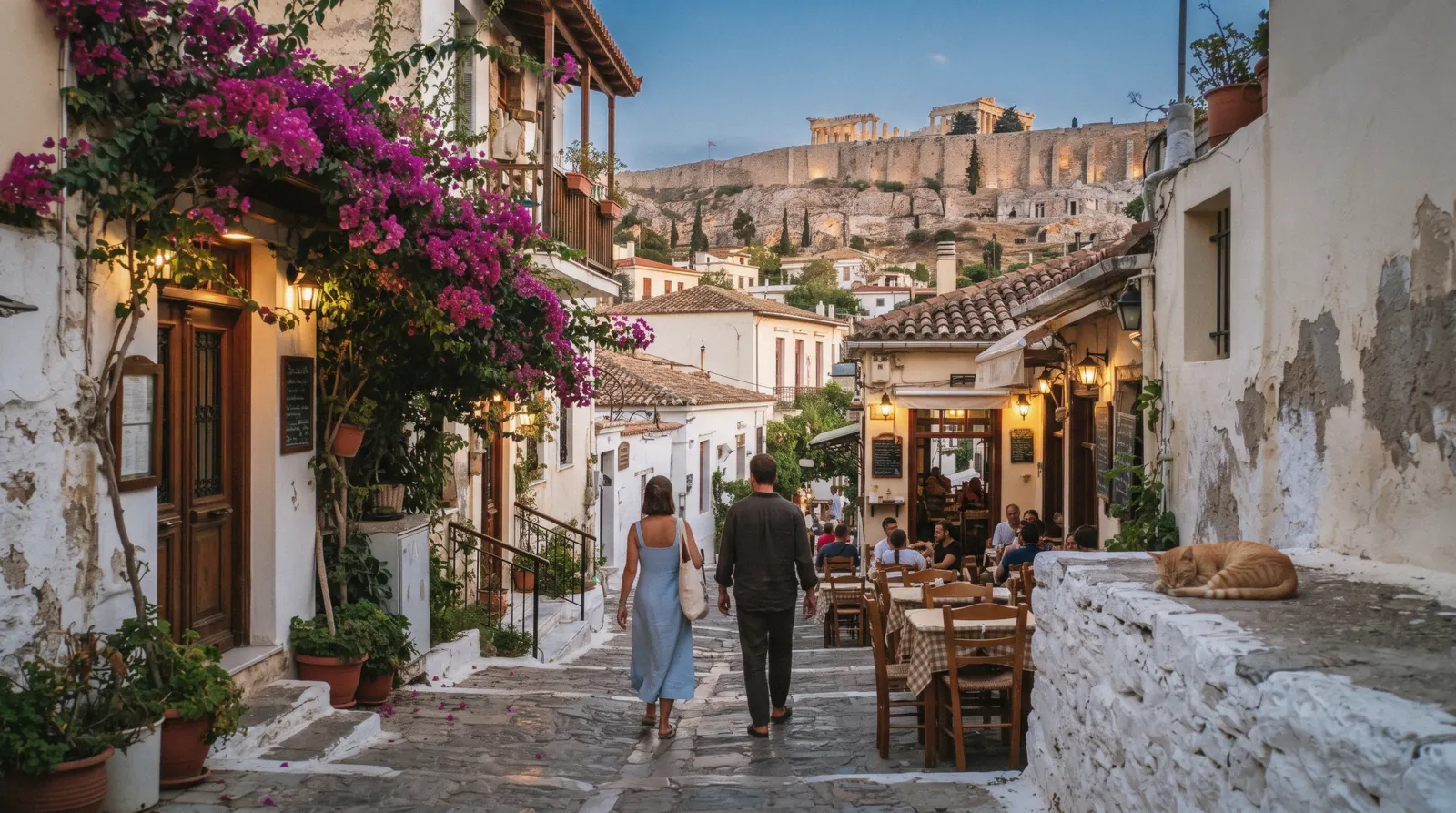
Plaka
Plaka athens visitors arrive in first is the grid of stepped lanes wrapped round the north and east foot of the Acropolis — the oldest continuously inhabited quarter of the city and the one most thoroughly given over to visitors. It is genuinely beautiful to walk and genuinely the most expensive place in Athens to sit down. This page separates the two, as checked in Q3 2026. The other districts are on the neighbourhoods hub, and the wider plan on what to see in Athens.
Quick answer How long it takes, and the one thing to get right
Plaka takes about forty minutes to walk properly and costs nothing. The one decision that matters is dinner: the terraces on the main lanes are roughly double the price of the same meal two streets away.
Key takeaways
- Walk it early. Anafiotika, the whitewashed cluster above the lanes, is empty at eight in the morning and full by eleven.
- The only ticketed site inside the quarter is the Roman Agora at €10, with the Tower of the Winds in it.
- Where to eat, and where not to is blunt about the restaurant lanes — the food is not bad, the price is the view.
- It is five to ten minutes from the Acropolis south gate, which is why staying here is tempting and expensive.
- For dinner at Athenian prices and Athenian hours, walk ten minutes to Psyri.
What is actually inside Plaka
Everything worth stopping at within the quarter, with the official price where there is one, read on 1 September 2026. Most of it is free, which is the point of the walk.
| What | Price | Time | Note |
|---|---|---|---|
| Anafiotika | Free | 20 min | Whitewashed island houses above the lanes; residential, so keep the noise down |
| Roman Agora | €10 (€5) | 25 min | The Tower of the Winds is inside the fence |
| Hadrian's Library | €10 (€5) | 20 min | At the Monastiraki edge of the quarter |
| Lysicrates Monument | Free | 5 min | A 4th-century BC choragic monument standing in a small square |
| Metropolitan Cathedral and Little Metropolis | Free | 15 min | The tiny 12th-century church beside the big 19th-century one |
| Museum of Greek Folk Art branches | Varies | 30 min | Several small buildings scattered through the quarter |
Two of those are on the abolished combination ticket's list, which is why the multi-site question comes up here more than anywhere else in the city: you can walk past three €10 gates in fifteen minutes.
Walks through the quarter
The cards, with the operator's own rating and review count.
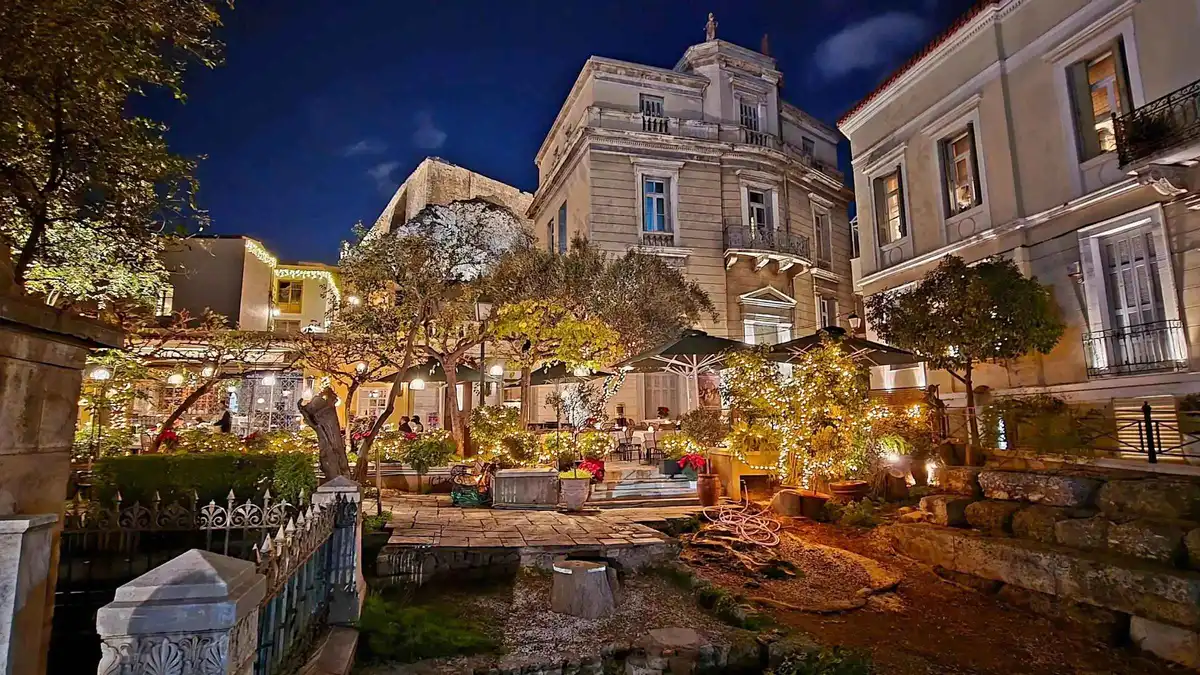 from €18
Athens: Night Walking Tour with Local Guide
Two hours after dark through the historic centre, the Cathedral, Anafiotika, Monastiraki and Plaka, with a local guide and no museum entries.
Check Availability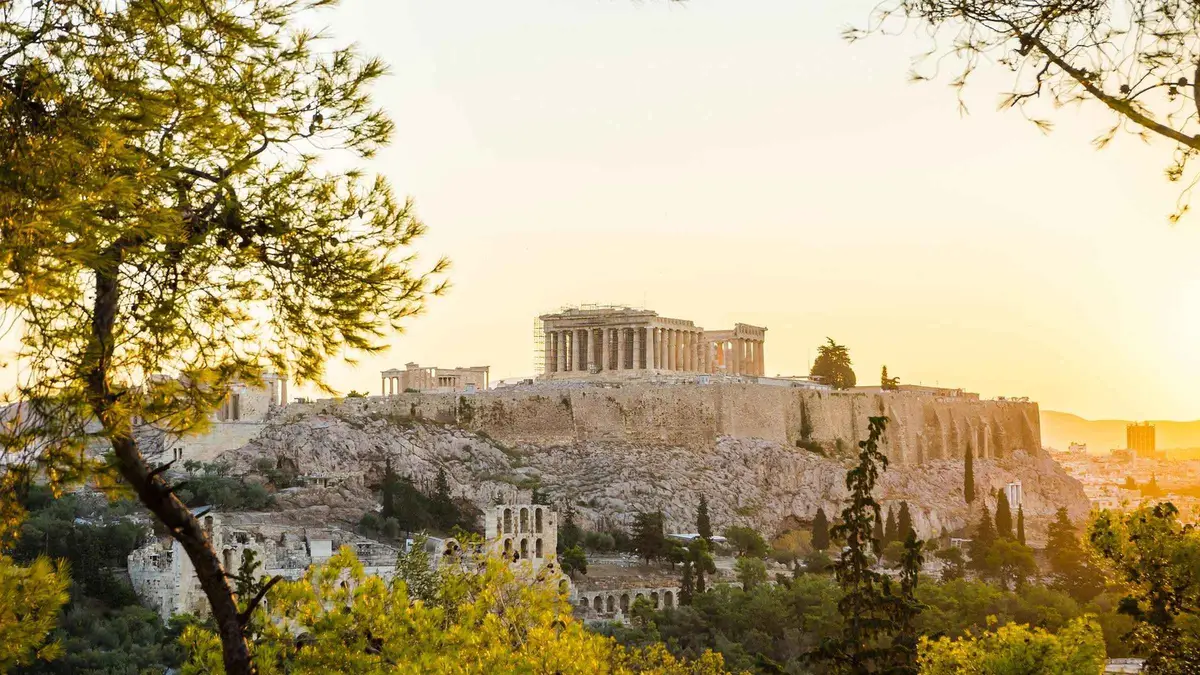 from €42
Athens: Philosophy and Democracy Walking Tour
Three and a half hours on foot through the places where philosophy and democracy actually happened, rather than the places they are commemorated.
Check Availability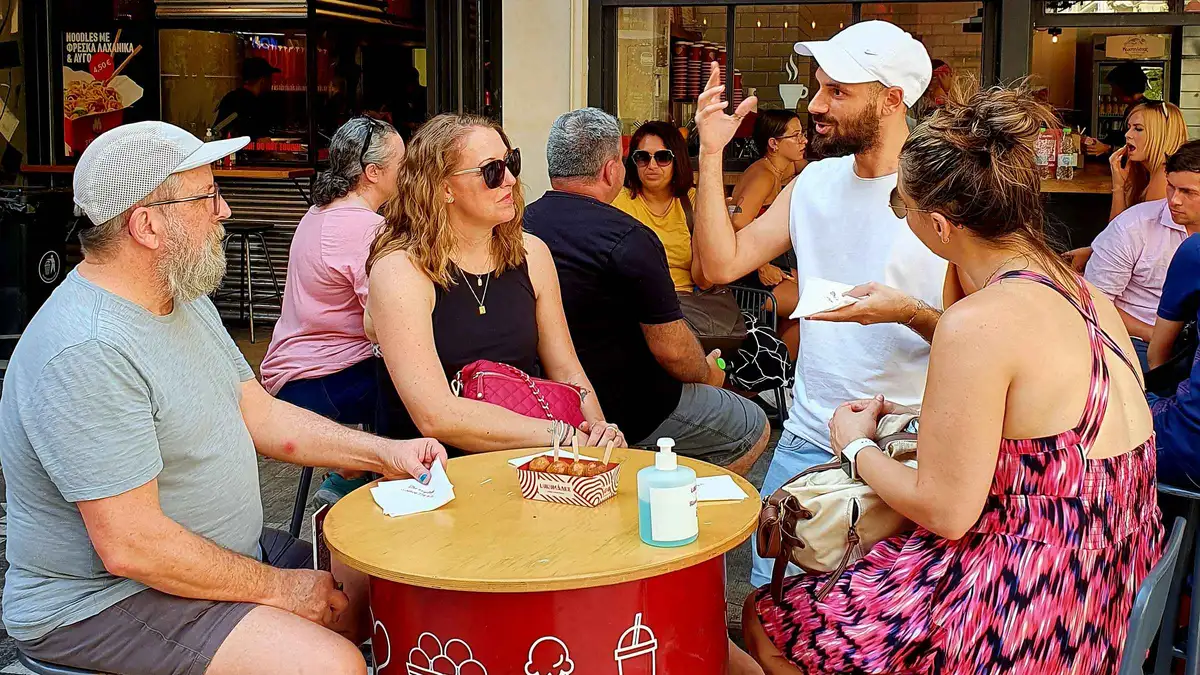 from €59
Athens: Street Food Tasting Tour
Three hours of Athenian street food with beer or wine, moving between the counters locals use rather than the ones on the tourist lanes.
Check AvailabilityPrices, ratings and details are the platform's own. Euro figures are the listed prices. The platform bills in your account's currency.
The walk, in the order it works
Forty minutes from Monastiraki round to the Acropolis Museum, uphill most of the way.
Start at the Roman Agora, not at Monastiraki square
The square itself is a transport interchange with a flea market attached. Walk two minutes up Dioskouron to the fence of the Roman Agora, where the Gate of Athena Archegetis stands on the street line, and start there. From that corner the lanes climb and the traffic stops.
The Agora costs €10 (€5 reduced) and holds the Tower of the Winds, built in the 2nd or early 1st century BC by Andronicus of Cyrrhus. Its eight sides each carry a relief of one wind, with sundial lines below and a water clock inside. In winter, from 1 November, the site shuts at 15:00, so the morning is the time for this walk.
Tickets are non-refundable, though you may change the slot twice up to two hours before.
Up through the lanes
Adrianou is the long spine and the most commercial, and the lanes climbing off it to the right, Mnisikleous, Erechtheos and Tholou, are where the quarter is worth photographing. They are stepped, so this is not a wheelchair or a suitcase route. Keep climbing and you reach Anafiotika.
The little cluster was built from the 1840s by masons brought from the island of Anafi to work on King Otto's palace, who raised Cycladic houses on ground that was not theirs. About 45 of the houses survive, white-walled and flat-roofed like their island models. There is no ticket to walk the lanes.
Wear shoes with a grip, because the polished steps get slippery, and expect to lose your way, which is half the point.
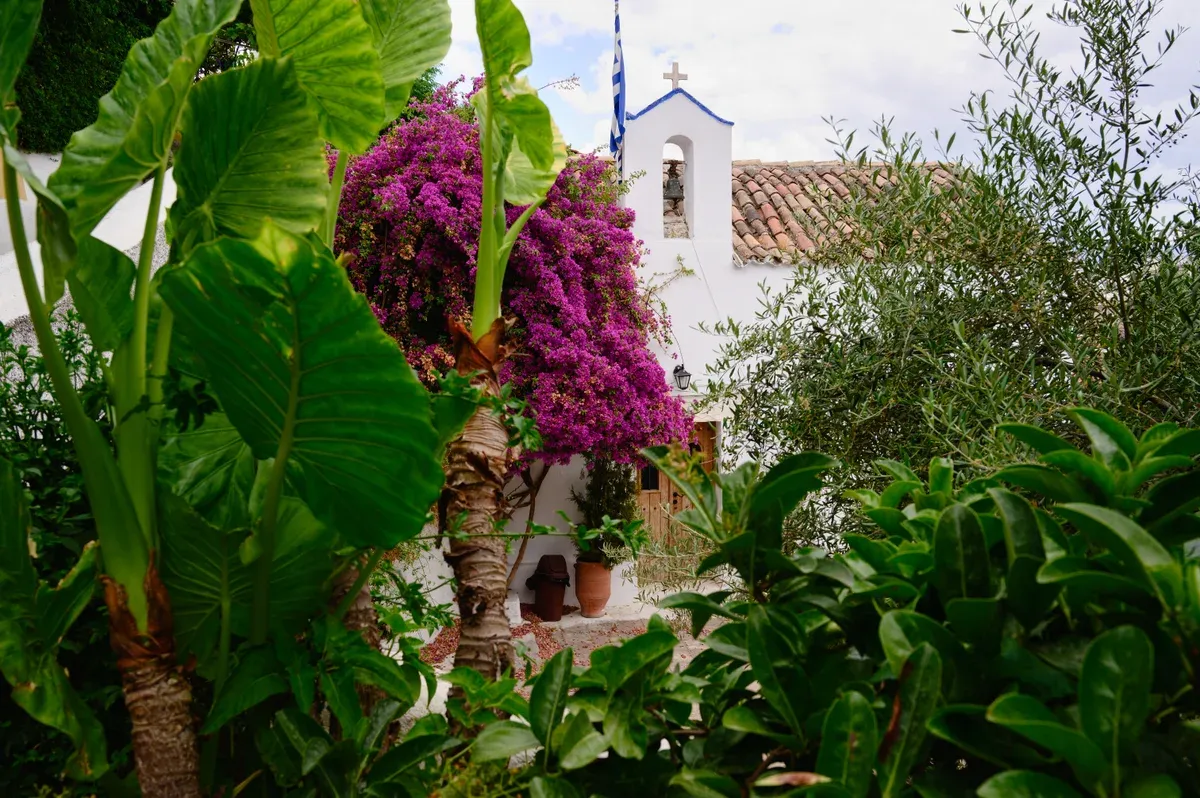
Photo: Zde, CC BY-SA 4.0, via Wikimedia Commons
Anafiotika
A cluster of about forty small whitewashed houses on the north face of the rock, built in the 1840s by stonemasons brought from Anafi in the Cyclades to work on King Otto's palace. They built what they knew, so the lanes are Cycladic — flat white walls, blue doors, bougainvillea, alleys a metre wide. It is residential and people live in it; go at eight in the morning and speak quietly.
Down to the Lysicrates Monument and out
The east side of the quarter is quieter. The Lysicrates Monument, a small circular marble structure of 334 BC that once carried a prize tripod, stands in its own square, and from there it is five minutes down to Dionysiou Areopagitou. That street was pedestrianised in 2003 under the Unification of the Archaeological Sites programme, the scheme Melina Mercouri pushed as culture minister, finished before the 2004 Games. The Acropolis Museum sits at the end of it.
It opened in 2009 on the Makriyianni plot, over an excavated ancient neighbourhood you can see through the glass floor at the entrance, included in the ticket. Entry is €20, with the €10 reduced ticket sold only at the desk.
Where to eat, and where not to
The most useful paragraph on this page.
What to avoid
The restaurants along the main lanes with a man outside holding a menu and a terrace angled at the rock. The food is usually competent and the price is roughly double what the same plates cost elsewhere in the centre, because you are paying for the terrace. That is not a scam, it is a view, correctly priced, but it is worth knowing you are buying it.
One more practical point about the view itself. During official heatwaves the culture ministry has closed the Acropolis and other open-air sites through the hottest hours, roughly midday to 17:00, sometimes announced only a day ahead. A terrace facing the rock in the afternoon of such a day may look out at a closed hill.
What works
Two streets off the main routes, on the Monastiraki side and up towards the Cathedral, there are ordinary tavernas and kafeneia at ordinary prices. The souvlaki counters around Mitropoleos, at the quarter's northern edge, are the cheap standing lunch of the whole city at about €4 a wrap. Walk a few minutes further and you reach the central market on Athinas, Varvakios, built about 1886 and paid for by a bequest from Ioannis Varvakis, a fighter of the War of Independence who made his fortune in caviar.
It opens to mid-afternoon Monday to Saturday and closes on Sundays, so time a meat-and-fish-hall wander accordingly. Where to eat in Athens has the vocabulary you need at the counter.
And the walk that solves it
Ten minutes north-west is Psyri, which is where Athenians actually eat after nine at night, at half the price and twice the noise. The quarter has form here. It was the rough ground of 19th-century Athens, home of the koutsavakides, the knife-carrying street men of the old city, and a certain loudness has never left it.
The walk from Plaka takes you past Monastiraki square, where the Tzistarakis mosque of 1759 stands. It was built by an Ottoman governor who was said to have pulled down a column of the Olympieion to burn for its lime. If you are staying in Plaka, walking out of it for dinner is the single best habit to form.
Staying in Plaka, honestly
It is the obvious choice and not always the right one.
What you get
Five to ten minutes from the Acropolis south gate, everything walkable, and a lane outside your door that looks like the reason you came. For a two-night trip with the rock as the point, that is a strong case. The rock itself now costs €30 full or €15 reduced, so a morning walk to the gate rather than a metro ride takes some of the sting out of it.
Timing matters too. In winter, from 1 November, the Acropolis runs to 17:00 while the Olympieion, Roman Agora, Kerameikos and Aristotle's Lyceum close at 15:00, so a Plaka base puts the longer-closing sites inside a short stroll on short days.
What you pay
Room rates sit at the top of the central range, and there is a dinner problem every night unless you walk out. Suitcases on stepped lanes are also a real consideration: check whether your address is reachable on wheels before you book. Budget the difference against the sites you will actually pay for.
The Ancient Agora at the quarter's edge is €20 full and €10 reduced, the Acropolis €30 and €15, so two people doing the main pair are already past €100 before hotels. One help: state sites are free on 6 March, 18 April, 18 May, the last weekend of September, 28 October, and the first and third Sunday of each month from 1 November to 31 March.
The alternative
Koukaki, on the other side of the rock, is eight to twelve minutes from the same gate, residential, quieter and cheaper to eat in. It is the answer for most first trips, and where to stay makes the comparison in full. The neighbourhood earned its shape early.
It is named after Georgios Koukakis, whose iron bed factory opened there at the turn of the twentieth century and pulled a working-class neighbourhood in around it. What you trade is the postcard doorstep. What you gain is tavernas priced for people who live there, a flat walk to the museum side of the Acropolis, and hotel rates that leave money for the €20 ticket to the Acropolis Museum at the foot of the hill.
Plaka map
The quarter, what is ticketed inside it, and the two gates it sits between.
Next stop from Plaka
Walk minutes are our estimates from the GPS distances.
The Acropolis
Up to the south gate. €30 with a declared hour — the Acropolis has the seasonal times.
8 min walkPsyri
North-west for dinner at Athenian prices and Athenian hours. Psyri fills after nine.
10 min walkMonastiraki
Two metro lines, the flea market and the grill streets. Monastiraki is the transport hub.
5 min walkPlaka questions
Is Plaka worth visiting?
To walk, yes — it is the prettiest forty minutes in Athens and it costs nothing. To eat on the main lanes, less so: where to eat, and where not to explains the difference in price.
How long does it take to walk around Plaka?
About forty minutes at a normal pace from the Roman Agora up through the lanes to Anafiotika and down to the Lysicrates Monument. Longer if you stop, and steeper than it looks — the lanes are stepped.
What is Anafiotika?
A cluster of about forty whitewashed houses on the north face of the Acropolis rock, built in the 1840s by masons from the island of Anafi who were brought to Athens to work on the royal palace and built in the style they knew. It is residential; visit early and quietly.
Should I stay in Plaka?
If the postcard matters more than the budget, and if your address is reachable with a suitcase. Koukaki is the quieter, cheaper alternative at a similar walk from the Acropolis gate — staying in Plaka, honestly compares them.
Is Plaka expensive?
To walk, no. To eat on a terrace with a view of the rock, yes — roughly double what the same meal costs two streets away, which is the price of the terrace rather than the food.
What is there to do in Plaka besides walking?
The Roman Agora with the Tower of the Winds at €10, Hadrian's Library at the Monastiraki edge, the Lysicrates Monument, the Little Metropolis church and several small folk art museums. What is actually inside prices each.
Plaka on Video
Three walks through the district, filmed at street level, which is the only honest way to judge whether you want to sleep here. Ids checked on 2 September 2026.
Athens : Guide to finding the famous Instagram spots (Walking Tour of PLAKA and ANAFIOTIKA)
A walk through Plaka and the streets around it, filmed for photographs rather than history.
Video: Greece Explained🇬🇷 Central ATHENS GUIDE for Tourists - Acropolis, Plaka, Monastiraki, Syntagma, Ermou, Greece
The central districts in one walk, which is a good way to see how short the distances are.
Video: Greece Explored 🇬🇷Plaka - A Must Visit Destination in Athens, Greece!
Plaka on its own terms, at walking pace.
Video: Take Time To TravelPrices, hours and terms are set by the venue or operator and confirmed at checkout.
We may earn a commission if you book through one of our links, at no extra cost to you. Full affiliate disclosure