 Visit Athens Guide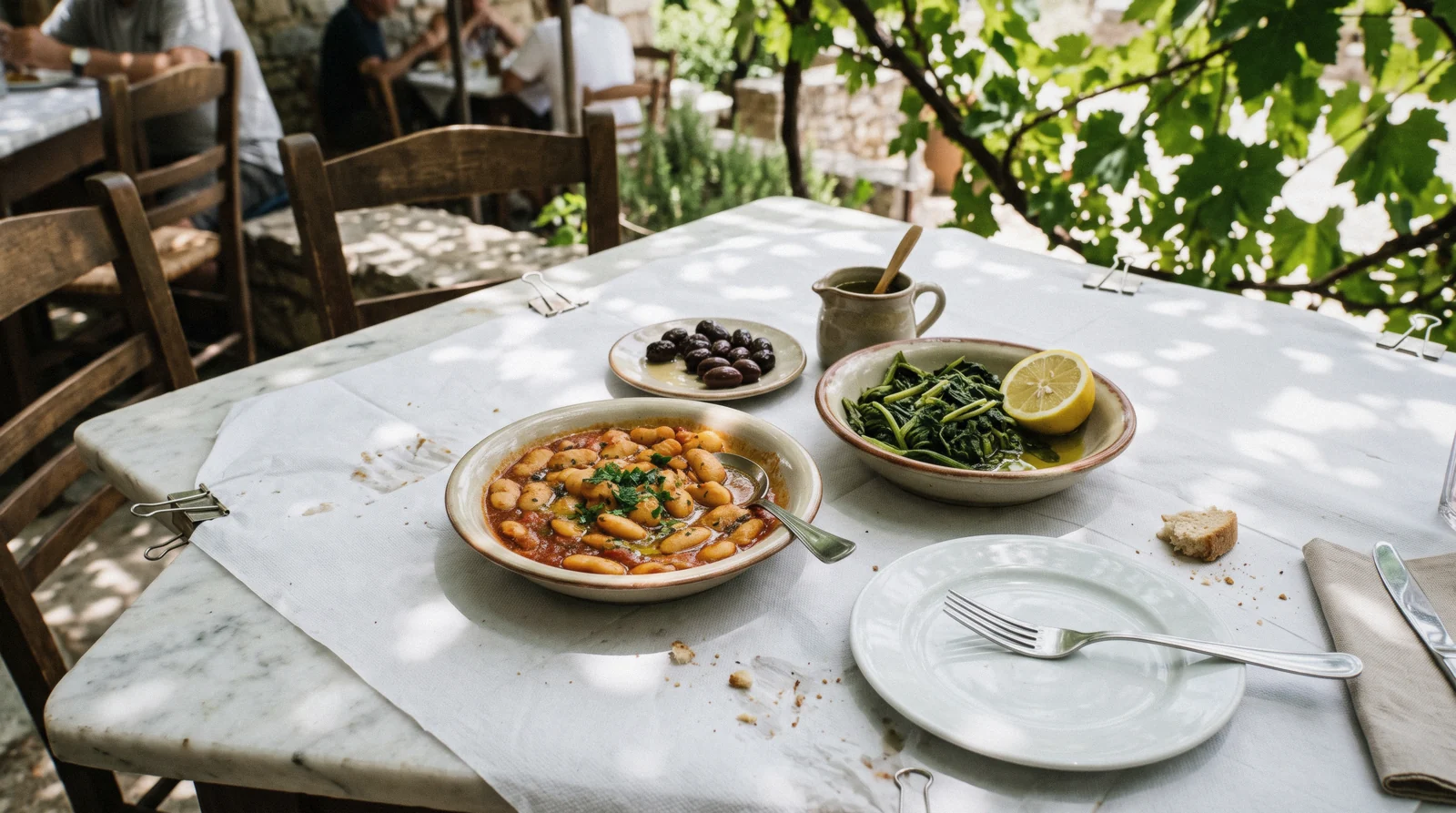
Gluten-Free and Vegan in Athens
Eating gluten free in Athens rests on a legal right rather than on a certification scheme, and eating vegan rests on a religious calendar rather than on a trend. That is the whole of it, and it is not what most guides tell you. Greece has no audited gluten-free venue register — the national coeliac society's own eating-out page is an unfulfilled promise from 2016 — while EU law obliges every taverna in the country to tell you whether a dish contains gluten. Meanwhile Orthodox fasting has made vegan cooking a normal part of a Greek menu for centuries, under a word most visitors never learn. Sources were read in Q3 2026. Where to eat generally is on the food hub, and for the city see what to see in Athens Greece.
Quick answer One legal right, one Greek word
Two things carry a restricted diet in Athens. First, Regulation (EU) 1169/2011 makes allergen information mandatory for restaurant food, so a taverna is legally obliged to tell you whether a dish contains gluten — you have a right to the answer, not a favour to ask for. Second, the word νηστίσιμο (nistisimo, “fasting”) means a dish contains no meat, dairy or eggs, which is vegan by construction and is on ordinary menus all over the city.
Key takeaways
- Greece has no certified gluten-free list — any site claiming one is not citing a national body.
- EU law is your tool instead: allergen declaration is mandatory for non-prepacked food.
- Nistisima is the Greek word that unlocks vegan food, and the fasting calendar decides how much of it is out on a given day.
- Greek food is unusually friendly to both diets by accident — and there are four specific traps.
- The phrases to say are here, in Greek, because pointing at an app is slower.
There Is No Certified List, and That Matters
Start here, because it changes how you should search.
What the national society actually publishes
The Hellenic Coeliac Society (coeliac.gr) is an official member of AOECS, the European federation of coeliac associations. Its “Eating out” page consists of a single sentence, in Greek, which translates as: “We hope that on this page we will create lists of restaurants and eateries from various regions of Greece that have been informed about the disease and confirm their ability to offer gluten-free meals.” The lists were never created. The site's footer reads © 2016.
Why we are telling you this
Italy has the opposite situation. The Italian Coeliac Association audits and lists venues, so a traveller there can plan around an official register. A great deal of English-language advice about Greece is written as though the same infrastructure exists here, and it does not.
If a page offers you a "certified gluten-free" list for Athens, ask which body certified it. There is no Greek body issuing that certification to restaurants, so any list claiming otherwise is a list of someone's favourites wearing an official-looking label. That does not make eating in Athens difficult, but it does change how you prepare.
Instead of searching for accreditation, you search for kitchens that advertise as dedicated gluten-free, and for the ordinary tavernas where much of the food never had gluten in it. The rest of this guide is about doing exactly that. Once you know which kitchens to trust, the same preparation mindset applies to planning your days, and comparing athens guided tours before you arrive means one less thing to research on an empty stomach, starting with athens walking tours.
So the search term to drop
Stop looking for certification and start looking for two other things. The first is kitchens that are dedicated. A handful of gluten-free bakeries and pizzerias exist in Athens and advertise as such, and those are the places where a coeliac can order freely rather than interrogate a menu.
The second, and far larger, group is the ordinary taverna serving food that never had gluten in it. Grilled meat, olive oil vegetables, beans cooked in tomato, salads dressed at the table. This second group is where most of your meals will actually come from in Greece, and it is a much bigger pool than a dedicated list would suggest. The section below is about reading a normal menu and asking the right questions, which is the skill that carries you through an entire trip rather than one or two specialist meals.
The Right You Do Have
Weaker than a certificate and stronger than goodwill, and it applies in every taverna in the country.
Regulation (EU) No 1169/2011, Article 44
For food sold without prepackaging — which is what a restaurant serves — Article 44(1)(a) makes the allergen particulars of Article 9(1)(c) mandatory. Annex II, item 1, defines the relevant substance as “cereals containing gluten, namely: wheat, rye, barley, oats, spelt, kamut or their hybridised strains, and products thereof”. In plain terms: the restaurant must be able to tell you whether a dish contains gluten.
The regulation leaves how it tells you to each member state, which is why you will see it on a menu in one place and get a verbal answer in the next.
What that means at the table
Ask, and treat the answer as information the kitchen is obliged to have rather than a special request. A Greek taverna cook usually knows exactly what is in a dish, because most of the menu is four ingredients and olive oil. What the law cannot give you is protection from cross-contamination in a shared fryer or a shared grill, and that is the real risk in a small kitchen.
For coeliac disease rather than a preference, say so explicitly — the distinction matters and is understood.
Nistisima: The Word That Does the Work
If you learn one Greek word for eating in Athens, learn this one.
What it means
Νηστίσιμο (nistisimo, plural νηστίσιμα / nistisima) means "for the fast". Orthodox fasting excludes meat, dairy and eggs, so a dish labelled nistisimo is vegan by construction rather than by intention. That distinction is exactly why the word is so widespread and so reliable.
Cooks are not making a vegan version of something. They are making a dish that has always been part of the fasting tradition, centuries before anyone said the word vegan. One caveat matters.
Fish is excluded on most fast days too, though shellfish is traditionally allowed, so a nistisimo dish may still contain octopus, squid, mussels or shrimp. Confirm rather than assume with anything from the sea. For everything drawn from the vegetable garden, the pulse store or the olive grove, the label does the checking for you, and it appears all over Greece.
Where you will see it
You will meet the word in three places. On ordinary taverna menus, either as a section heading or as a marker beside individual dishes. In bakery windows, where fasting breads and pastries appear especially around the big fasting seasons.
And on supermarket labels, where packets carry the word just as they would an allergen claim. The practical move is to learn one question. Ask "Έχετε νηστίσιμα;" ("Do you have fasting dishes?") and you have asked, in a form of words a Greek kitchen understands instantly, for the vegan part of the menu.
It works far better than the English word, which in a small taverna may produce confusion or a plate of chips. A waiter hearing nistisima knows exactly which dishes qualify, and will usually run through them without needing the menu.
The dishes it produces
The fasting tradition produces a long list of dishes you will recognise on any Greek menu. Gigantes, big butter beans baked in tomato. Fasolakia, green beans cooked the same way.
Briam, roasted vegetables. Horta, boiled wild greens dressed with lemon and olive oil. Dolmades made without meat, lentil soup, chickpea stew, imam bayildi, olives and tahini.
This is not a compromise menu cooked grudgingly for special diets. It is a large part of what Greek home cooking actually is, because the fasting calendar shaped it over centuries. The list has one more quality that matters here.
Almost all of it is naturally gluten-free, since it is built from beans, vegetables, olive oil and lemon rather than from flour. Learn these names and you can order a full meal in any taverna without a single risky question.
The Calendar Behind the Menu
How much nistisima a kitchen puts out is not random. It follows the Church calendar, and two periods change the city noticeably.
The two big fasts
Great Lent, the seven weeks before Orthodox Easter, is the long one: nistisima sections expand, bakeries sell lenten pastries, and even chain cafés carry vegan options they drop the rest of the year. The first fortnight of August, up to the Dormition on 15 August, is the second — and note that 15 August is also one of the days the state archaeological sites close, so it appears twice in your planning. See what is actually closed and the opening-hours table.
And the weekly rhythm
Wednesdays and Fridays are traditional fast days through most of the year. In practice this means a Wednesday or Friday lunch in a neighbourhood taverna is the easiest vegan meal of the week, and a Sunday lunch is the hardest. It is a small thing that quietly improves a week of eating if you know it.
Reading a Greek Menu Without a Certificate
Greek food is accidentally generous to both diets, with four specific places it is not.
Naturally without gluten, in most kitchens
Grilled meat and fish, horta, gigantes, fasolakia, briam, lentil soup, most salads including horiatiki, olives, tzatziki, melitzanosalata, feta, dolmades in vine leaves, and rice. Ladera — the vegetable dishes cooked in olive oil — are the backbone of both diets at once when the tomato base is not thickened.
The four traps
- Keftedes and biftekia — Greek meatballs almost always contain breadcrumbs, and sometimes soaked bread.
- Thickened sauces and giouvetsi — flour appears in some stews, and giouvetsi is baked with orzo, which is wheat pasta.
- The shared fryer — chips are potato, but they may come out of the same oil as breaded cheese or calamari.
- Souvlaki — the meat is fine, the pita is not, and asking for it “in a plate” (μερίδα, merida) rather than wrapped is a normal, cheap order that nobody finds strange.
And two things that surprise people
Tzatziki, taramasalata and most dips are dairy or fish based, so they are not vegan even where they are gluten-free — the vegan dips are melitzanosalata, fava and htipiti made without cheese, so ask. And Greek coffee, ouzo, tsipouro and wine are all gluten-free; beer is not, and Athens has good gluten-free beer in the specialist shops but rarely in a taverna fridge.
What to Say, in Greek
Short, and worth reading out loud once before you need them.
The five sentences
- Έχω κοιλιοκάκη — Ého kiliokáki — “I have coeliac disease.” This is the sentence that changes the answer; it is a recognised medical condition, not a preference.
- Χωρίς γλουτένη — Horís gloutén i — “without gluten.”
- Έχετε νηστίσιμα; — Éhete nistísima? — “Do you have fasting dishes?” — the vegan question.
- Χωρίς κρέας, χωρίς γαλακτοκομικά, χωρίς αυγό — “no meat, no dairy, no egg.”
- Έχει αλεύρι; — Éhi alévri? — “Does it have flour?” — the single most useful question at a taverna counter.
One note on how to ask
Ask before you sit rather than after the bread lands, and ask the person who is carrying plates rather than the one at the till. In a family taverna the cook is frequently the person you are talking to or is ten feet away, and the answer you get is the real one. That informality is why Athens works better for restricted diets than its lack of certification suggests.
Food Walks, Where the Guide Asks the Kitchen
The fastest way to eat well on a restricted diet in a language you do not read is to bring someone who does. Tell the operator your requirement when you book — all three take dietary notes in advance. Prices and ratings are the operators' own, checked on 1 September 2026.
 from €59
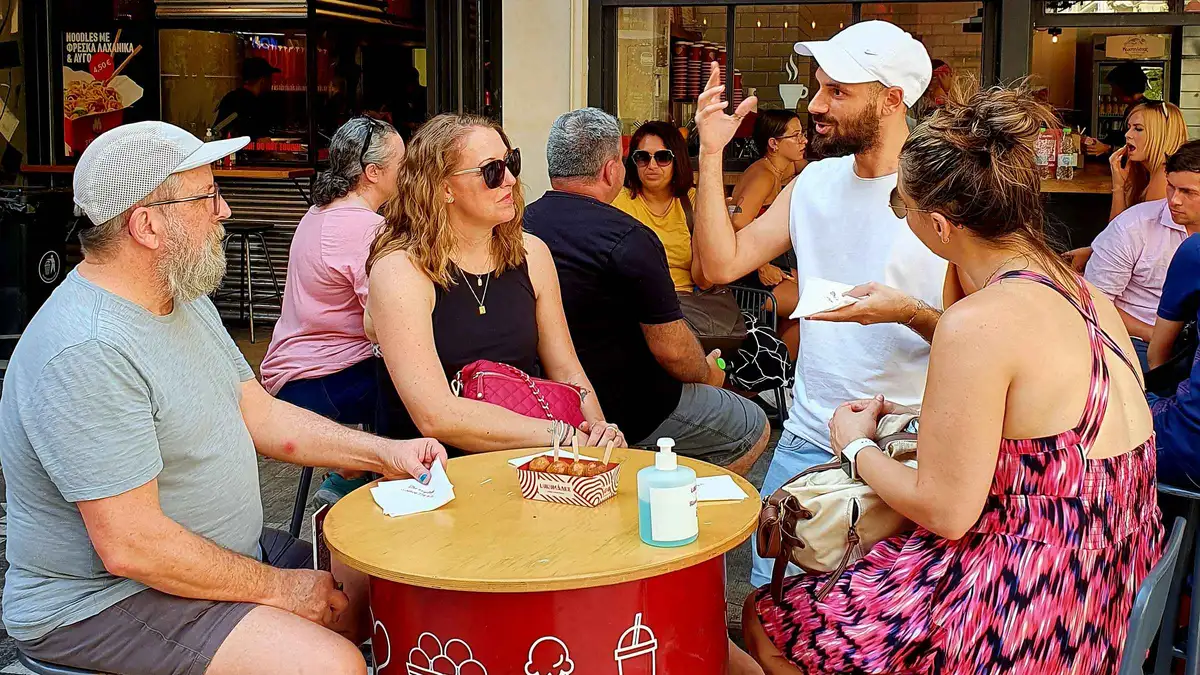
Athens: Street Food Tasting Tour
Three hours of Athenian street food with beer or wine, moving between the counters locals use rather than the ones on the tourist lanes.
Check Availability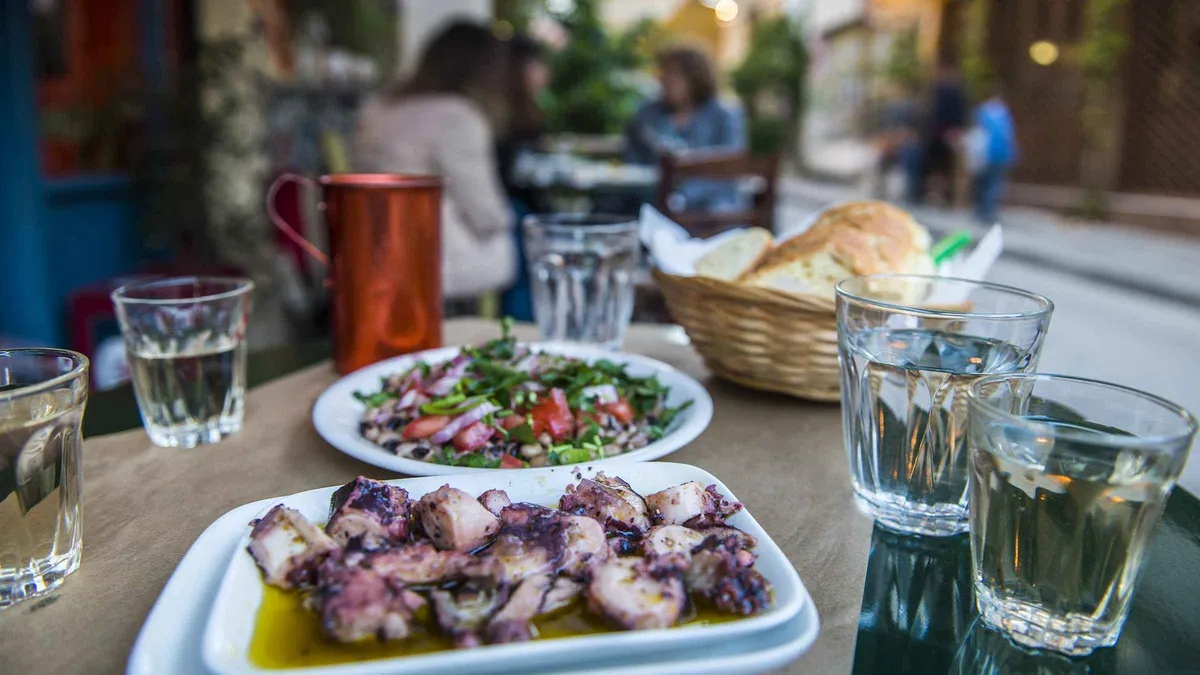 from €69
Athens: Greek Food Discovery Small Group Walking Tour
Eight to ten tastings in a small group, through markets and the food streets Athenians shop on.
Check Availability from €69
Athens: Original Athens Food Tour (Full Meal Experience)
Four hours through traditional shops and the central market area: street food, pastries, wine, cheese and mezze, enough to replace a meal.
Check AvailabilityPrices, ratings and details are the platform's own. Euro figures are the listed prices. The platform bills in your account's currency.
Dietary Questions
Is there a certified gluten-free restaurant list for Athens?
No. The Hellenic Coeliac Society, Greece's AOECS member, publishes an eating-out page saying it hopes to create such lists; it never did, and the site dates from 2016. There is no Greek body certifying restaurants, so treat any “certified” list with suspicion.
Do Greek restaurants have to tell me about allergens?
Yes. Regulation (EU) No 1169/2011, Article 44, makes allergen information mandatory for non-prepacked food, which covers restaurant meals, and Annex II item 1 is gluten-containing cereals. How the information is given is left to each member state, so you may get it on the menu or verbally.
Is it easy to be vegan in Athens?
Easier than in most European capitals, for an unexpected reason: Orthodox fasting. Ask for νηστίσιμα (nistisima) and you have asked for the no-meat, no-dairy, no-egg part of an ordinary menu. Great Lent and the first half of August are when the choice is widest.
Is souvlaki gluten-free?
The meat is; the pita is not. Order it as a μερίδα (merida) — a plate rather than a wrap — which is a standard order and usually comes with chips and salad. Ask whether the chips share a fryer with anything breaded.
Are Greek meatballs safe for coeliacs?
Usually not. Keftedes and biftekia are normally bound with breadcrumbs and sometimes with soaked bread. Grilled meat — souvlaki, brizola, paidakia — is the safer order on the same menu.
Where to go from here
What is actually closed
Including 15 August, which closes more than restaurants.
Gluten-Free & Vegan on Video
Three films on the same subject, useful where a page can only describe. Ids checked on 2 September 2026.
Athens on a Budget | 1-Day Itinerary with Gluten Free & Vegan Eats Before Our Cruise
A day in Athens planned round gluten-free and vegan eating, which is rarer on film than it should be.
Video: Five Hungry TravelersIs Greece good for Gluten Free People? || How To Coeliac
A coeliac traveller on eating in Greece — the practical version of what this page argues legally.
Video: How To CoeliacThe European Gluten Free Future - Athens Edition
Gluten-free shopping and eating in Athens specifically.
Video: The Gluten Free RecipesWe may earn a commission if you book through one of our links, at no extra cost to you. Full affiliate disclosure