 Visit Athens Guide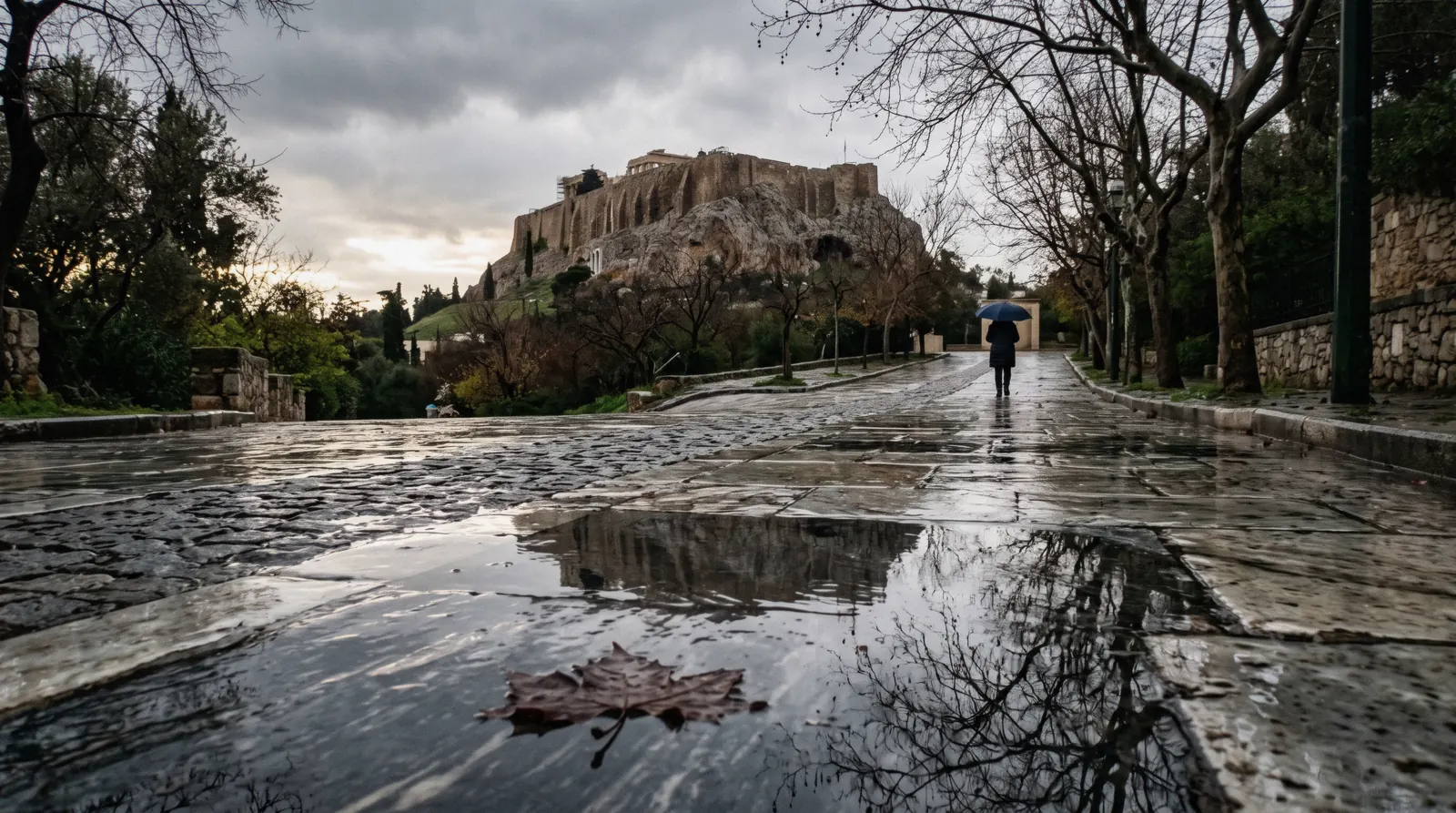
A Rainy Day in Athens
A rainy day in Athens is uncommon and, when it comes, concentrated: about sixty-five wet days a year, four times as many in December as in July, and almost none between late June and early September. The figures below are ten-year means from the same ERA5 archive this site uses for temperature, so they are comparable with the month-by-month chart. The problem with a wet day here is not the rain: it is that the wettest months are the ones when the archaeological sites shut at half past three, so the day is squeezed from both ends. This page is a plan for that. It sits on the plan hub, part of what to see in Athens.
Quick answer The numbers, and the indoor day that works
Athens averages about 65 days a year with a millimetre or more of rain — 8.2 in December against 2.1 in July. If one of them lands on your trip, the day that works is the Acropolis Museum in the morning, lunch in its second-floor restaurant, and the National Archaeological Museum or the Museum of Cycladic Art after. All three are indoors, all three are ten minutes apart by metro, and none of them needs a booked slot.
Key takeaways
- The numbers by month — December is the wettest, July is effectively dry.
- The indoor day: two museums, one covered market and a restaurant with the Parthenon in the window.
- The winter closing time is the real trap: state sites shut at 15:30 from 1 November.
- The rock in the rain is a genuine safety question, not a comfort one — the marble is polished.
- Nothing here needs booking, so a wet morning can be re-planned at breakfast.
How Much It Actually Rains
Ten-year means, 2016 to 2025, from the Open-Meteo ERA5 archive at the city centre — the same source and decade as the temperature chart on when to visit.
The month-by-month table
A "wet day" is one with at least a millimetre of rain. "Heavy" means ten millimetres or more, which in Athens usually arrives as a short, hard storm rather than a day of drizzle. Read the wet-days column rather than the millimetres: it is the one that predicts whether a day of your trip gets rained on.
The practical consequence is that a wet day rarely ruins a whole trip, it ruins a morning. Shift the rock for a clear day and keep an indoor programme for the grey one. Plan for that in advance, because state-site tickets are non-refundable.
You can change a ticket twice, up to two hours before the slot, which is exactly the flexibility a forecast needs. Note too that from 1 November the Olympieion, Roman Agora, Kerameikos and Aristotle's Lyceum close at 15:00, so a shortened wet afternoon bites sooner.
| Month | Rain (mm) | Wet days | Heavy days |
|---|---|---|---|
| January | 70.7 | 7.9 | 2.7 |
| February | 49.2 | 7.2 | 1.6 |
| March | 44.5 | 6.7 | 1.2 |
| April | 32.9 | 5.4 | 0.7 |
| May | 32.5 | 5.4 | 0.8 |
| June | 27.5 | 5.0 | 0.6 |
| July | 10.1 | 2.1 | 0.1 |
| August | 11.1 | 2.3 | 0.1 |
| September | 26.0 | 3.1 | 0.6 |
| October | 24.9 | 3.1 | 0.9 |
| November | 83.8 | 8.5 | 2.7 |
| December | 86.3 | 8.2 | 3.0 |
What the numbers mean for a trip
A week in July has roughly a one-in-two chance of containing a single wet day, and that day is likely to be a shower rather than a washout. A week in December contains about two wet days and, on average, most of a heavy one. Spring and autumn sit between: five or six wet days a month in April and May, three in September and October — which is one of several reasons those two months are the ones we recommend on when to visit.
And the shape of Athenian rain
It tends to arrive as a front rather than as weather that sits on the city. A heavy hour at eleven and clear light by three is a much more common December day than eight hours of grey. That is why the plan below is built to be abandoned halfway through: if it clears, Philopappos Hill after rain, with the dust washed out of the air, is the best view of the year.
The Trap Is the Closing Time, Not the Rain
This is the thing that turns a wet day into a wasted one, and it is entirely avoidable.
From 1 November the sites shut at 15:30
The state archaeological sites run 08:30 to 15:30 from 1 November to 31 March, with last admission twenty minutes earlier. So on a December day that rains until one o'clock, the Acropolis is not a fallback for the afternoon — there is no afternoon. The museums are the opposite: the Acropolis Museum runs late, and Friday to 22:00 all year. The opening-hours table has every site's winter band.
Which reverses the usual advice
In summer you do the rock at eight and the museum in the afternoon heat. In winter, if the morning is wet, do not save the rock for later — either go up between showers or write it off for the day and give the whole thing to museums. Trying to do both in a five-hour winter window is how people end up with twenty minutes on the Acropolis in the rain.
The Indoor Day That Works
Six things, all under a roof, all within a short metro ride of each other, none requiring a booking.
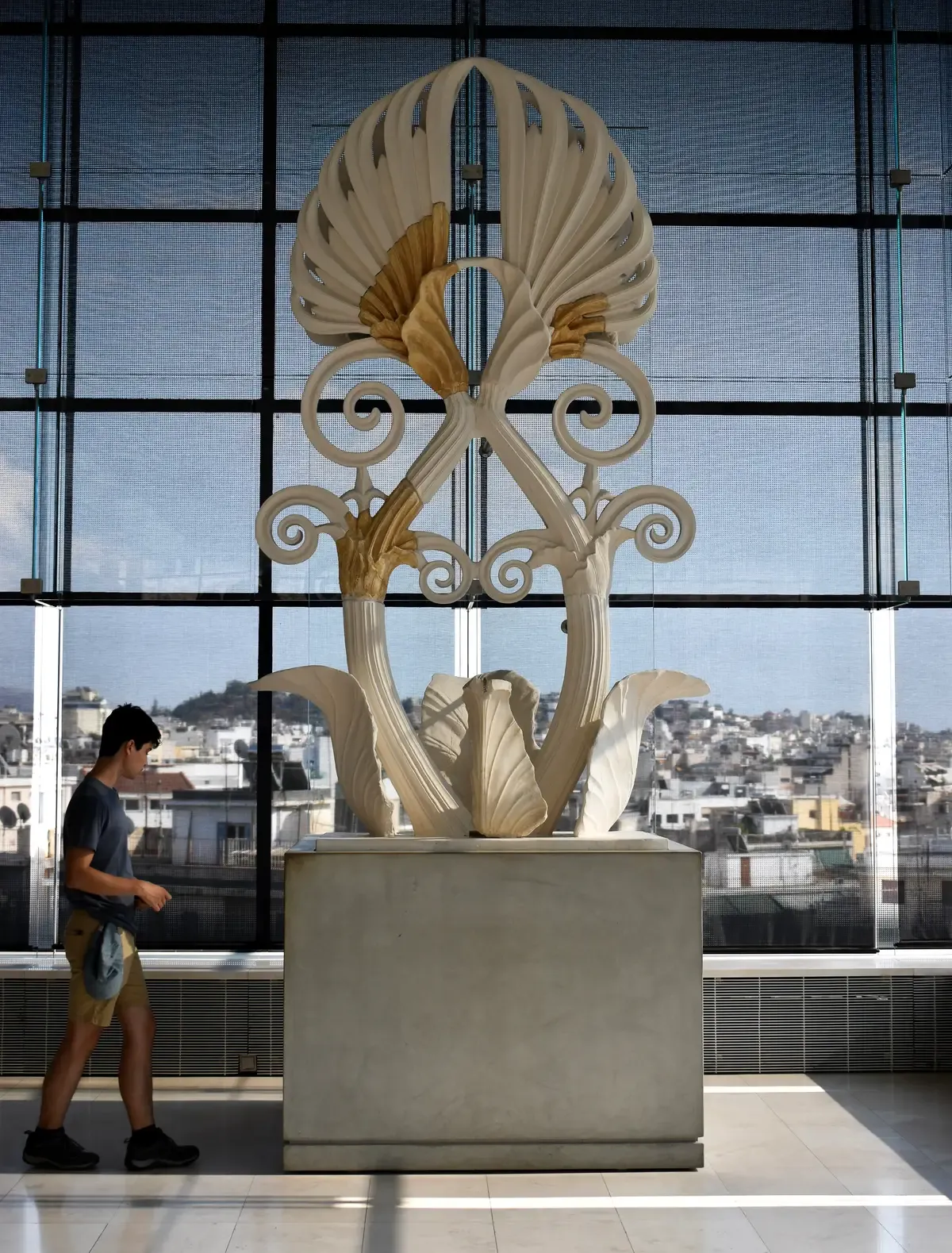
Photo: Julian Lupyan, CC0, via Wikimedia Commons
Morning: the Acropolis Museum
€20, no time slot, and the one museum in the city built to be looked at as well as looked in. It opened on 20 June 2009, designed by Bernard Tschumi with Michalis Photiadis, and stands over an excavated ancient Athenian neighbourhood. You see it through the glass floor at the entrance, and it is included in the ticket, so arrive ten minutes early for that alone.
Two hours is honest. The top floor reconstructs the Parthenon's dimensions in the museum's own scale, with white plaster casts standing where the original blocks sit in London, and the real building in the window. That makes it the sensible substitute when weather or a closure keeps you off the rock.
It is a separate legal entity from the state sites, so it keeps its own hours and free days. The museum's page has the layout.
Lunch: the second-floor restaurant
The best-value indoor view in Athens, and the deal depends on one detail at the desk. The museum's second-floor restaurant needs only a free admission ticket. You do not have to buy the €20 exhibition ticket to eat there, so say that plainly when you ask, because the reduced €10 ticket is itself sold only at the desk and the same person will be handling both.
The restaurant looks straight at the Acropolis, and it stays open to midnight on Friday and Saturday, which makes it work as an early dinner as well as a lunch. The ground-floor shop and café need no ticket at all, but they lack the view. If the weather has pushed half the city indoors, come before 13:00 or after 15:00 rather than at the peak.
Afternoon: pick one of three museums
The National Archaeological Museum at €20 is the biggest and the best, and needs two hours of its own — but note it opens at 13:00 on Tuesdays. The Museum of Cycladic Art at €12 is an hour and is closed Tuesdays. The Museum of Modern Greek Culture in Plaka at €15 is the third, and it is the one that carries a declared entry hour — see the tickets hub.
If you want to be out but dry
The Varvakios central market on Athinas is covered, loud and entirely indifferent to weather. It was built about 1886 with money left by Ioannis Varvakis, a fighter of the War of Independence who made his fortune in caviar, and it still works as a food market. It opens to mid-afternoon Monday to Saturday and closes on Sundays, so it is a morning plan.
The arcades off Monastiraki and the covered stretches of Ermou buy you an hour. The metro itself is a genuine option. Syntagma station keeps a free archaeological display in its concourse, a classical sculpture foundry, a sub-Mycenaean and Byzantine cemetery, looms and amphorae, set into the station wall, all of it dug up when Lines 2 and 3 were built.
It costs a €1.20 ticket with 90 minutes of travel you were buying anyway. Getting around has the fares. A rainy day like this one is exactly when the best tours in Athens with an indoor bias earn their keep, and the Athens guided tours cover which ones keep you under cover from the market to the museum.
The evening
Psyri is the wet-night district, and it has form as the part of town that ignores respectable opinion. In the 19th century it was the rough quarter of Athens, the ground of the knife-carrying koutsavakides, and the streets are still dense and mostly narrow, which matters when the sky is working. You can move between doors with short runs between them, and the tavernas and bars carry a wet night without anyone treating it as an event.
Come after the rain has settled the dust rather than during the first downpour, because the gutters take a while to cope. The ground-floor cafés around the square fill early. Where to eat has the rest.
The Acropolis in the Rain
A question about footing rather than about comfort.
The marble is polished, and it is the hazard
Two and a half thousand years of feet have burnished the rock and the ancient steps to something close to glass, and wet it is genuinely slippery — the Areopagus beside the entrance is the worst of it, which is why the site provides metal steps alongside. There is no shelter of any kind on top. If the forecast is heavy and your ticket is for that hour, remember you can move the slot twice, free, up to 120 minutes before — this is exactly the situation that rule exists for.
And the case for going anyway
A light shower on the Acropolis empties it. If you have proper shoes and the rain is passing rather than settled, the twenty minutes after it stops are the best light and the fewest people you will get all year. That is a judgement about your footwear, not about your ticket.
The Indoor Tickets Worth Having Ready
All three of these are wet-weather proof: the museum products are entirely indoors, and the combined tour puts the indoor half within reach if the rock is a washout. Prices and ratings are the operators' own, checked on 1 September 2026.
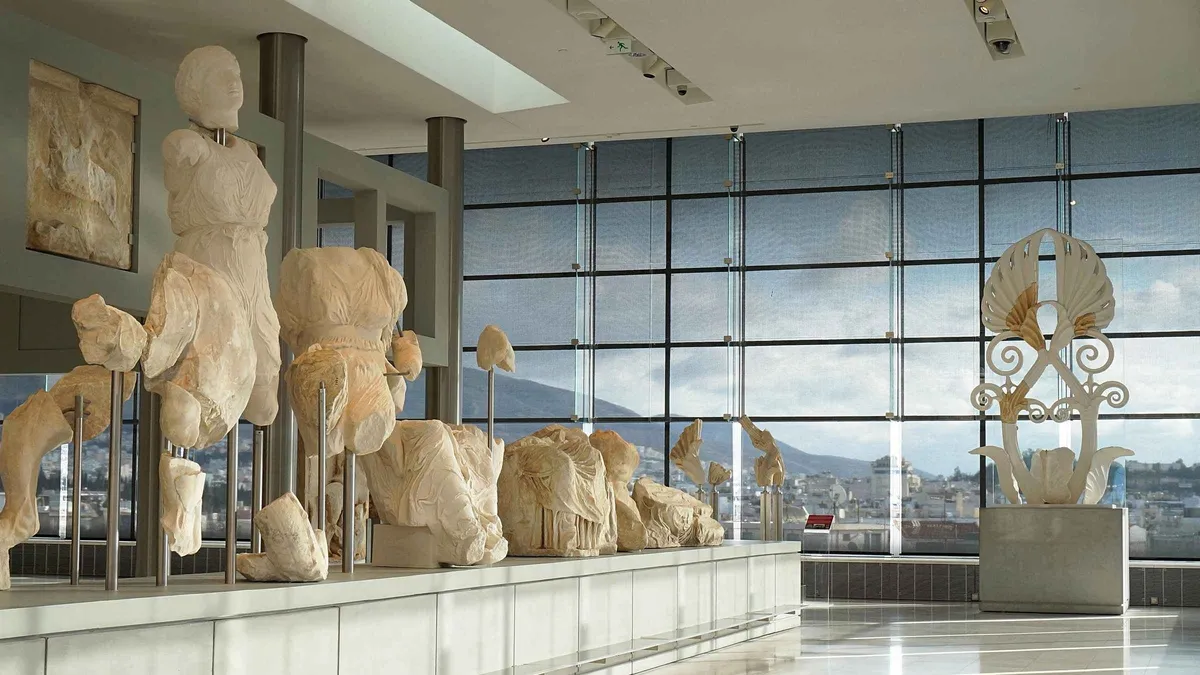 from €26
Athens: Acropolis Museum Ticket with optional Audio Guide
Entry to the Acropolis Museum with optional audio guide. The official price is €20; reduced tickets are only issued at the museum desk, never online.
Check Availability from €49
Athens: Parthenon, Acropolis and Museum Small Group Tour
Three hours in a small group with pre-reserved tickets, covering the Acropolis, the Parthenon and the museum below it in one run.
Check Availability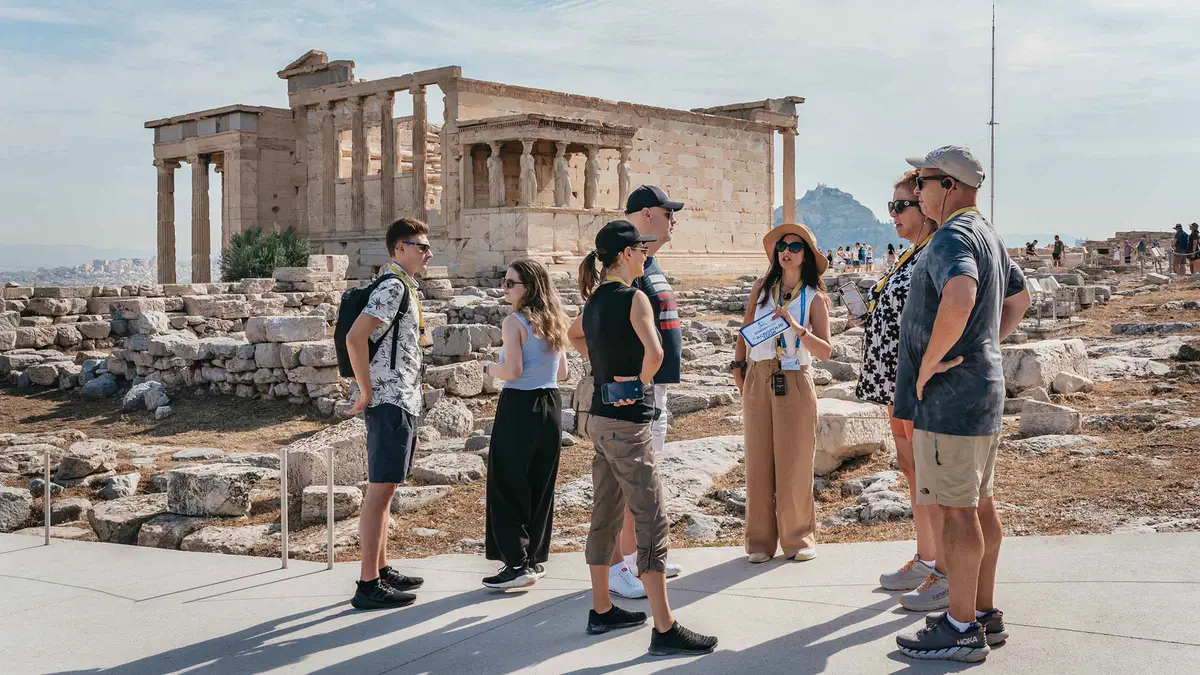 from €34
Athens: Acropolis, Parthenon & Acropolis Museum Guided Tour
An archaeologist takes the monuments on the rock and then the Parthenon gallery in the Acropolis Museum, where the frieze sits at eye level.
Check AvailabilityPrices, ratings and details are the platform's own. Euro figures are the listed prices. The platform bills in your account's currency.
Rain Questions
How often does it rain in Athens?
About 65 days a year with at least a millimetre, on a ten-year ERA5 mean for the city centre. December averages 8.2 wet days and July 2.1, so the odds depend almost entirely on the month.
Does it rain in Athens in summer?
Barely. July averages 10.1 mm across 2.1 wet days and August 11.1 mm across 2.3, with heavy rain essentially absent. Summer's problem in Athens is heat, not water — the August page covers it.
What is there to do in Athens when it rains?
The Acropolis Museum, the National Archaeological Museum, the Museum of Cycladic Art and the Museum of Modern Greek Culture are all indoors and none needs a booked slot except the last. The covered Varvakios market and the museum's own restaurant fill the gaps — the indoor plan sets out an order.
Is the Acropolis open in the rain?
Normally yes, but the marble is polished and slippery when wet and there is no shelter on top. If your slot falls in heavy rain, you can move it twice free of charge up to 120 minutes beforehand — see ticket recovery.
When is the wettest month in Athens?
December, at about 86 mm across 8.2 wet days, with November a close second at 84 mm. Both are also months when the archaeological sites close at 15:30, which matters more to a day's plan than the rain does.
Where to go from here
Rainy Day on Video
One film on the same subject.
Athens in the WINTER : Worth going ? (November to March)
Athens between November and March — the months this page's rainfall table is about.
Video: Greece ExplainedWe may earn a commission if you book through one of our links, at no extra cost to you. Full affiliate disclosure