 Visit Athens Guide
Delphi or Meteora: Which One Is Worth the Day
Delphi or Meteora is the question almost every second-time visitor to Athens ends up asking, usually with one free day and a coach ticket open in another tab. They are not comparable trips. One is a ten-hour day for around €26 that ends at a single ticketed site with published hours; the other is fourteen hours for €84 and upwards, ending at six independent monasteries that each set their own closing day. This compares them on the four things that actually decide it — the length of the day, the money, what you get through the door, and how badly each can go wrong in winter. This is a guide post on what to do in Athens; both trips have their own pages here: Delphi, Meteora, and everything else within reach on the day trips hub.
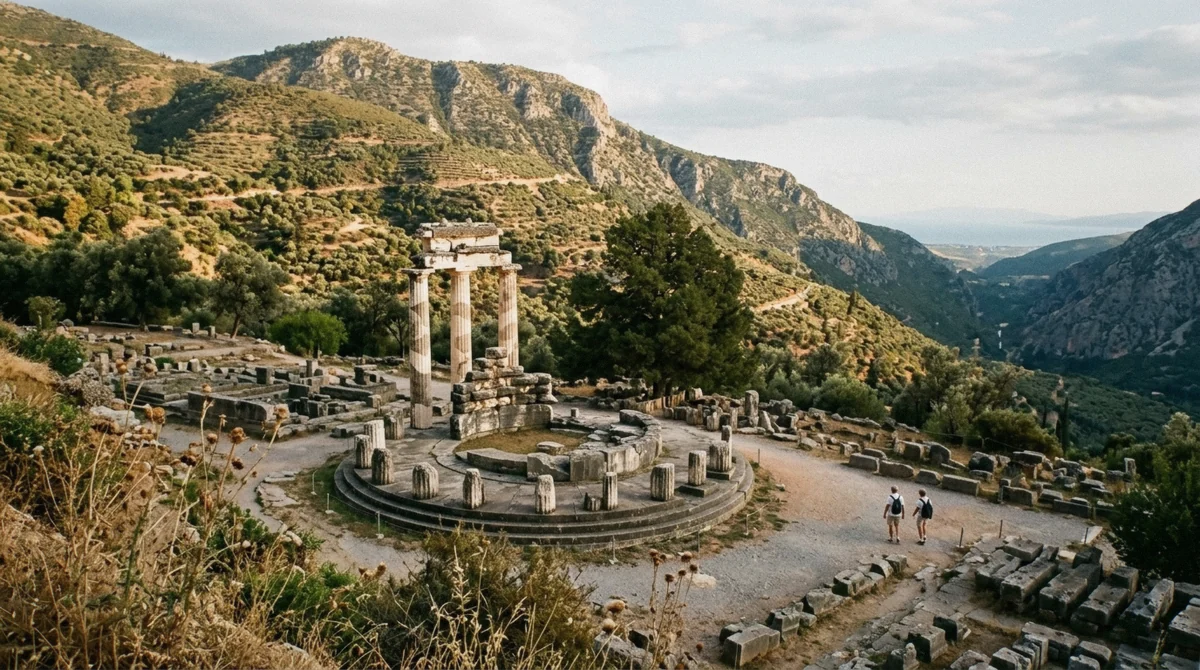
Quick answer One day: Delphi. Two days: Meteora, overnight.
If you have one free day out of Athens, take Delphi. It is ten hours instead of fourteen, costs a third as much, and its €20 ticket covers the site and the museum together — which almost no Greek ticket does. Meteora is arguably the more astonishing place, but as a day trip from Athens it is nine hours of moving for three hours of monasteries. Give Meteora an overnight in Kalambaka or leave it for another trip.
Key takeaways
- The day: ten hours against fourteen — that gap is the whole argument.
- The money: Delphi tours start at €26, Meteora at €84, before the doors.
- The door: one €20 ticket at Delphi, six separate monastery charges at Meteora, none of them published centrally.
- The winter trap is real on both, and worse at Delphi than people expect — the site shuts at 15:30 from November.
- Neither is bookable on a slot, so nothing here needs the 120-minute rule.
The Length of the Day Decides It
Everything else on this page is a detail beside this one number.
Ten hours and fourteen hours are different holidays
The Delphi coach trips on this site run about ten hours door to door. The Meteora ones run fourteen — the shortest of them leaves at nine in the morning and the day is genuinely over when you get back. Delphi sits roughly two and a half hours north-west of Athens; Meteora is nearly twice that, in the middle of Thessaly.
What that buys at the far end is almost identical: two to three hours actually on your feet at Delphi, and about the same at Meteora once the driving between monasteries is subtracted. So the fourteen-hour day is not longer at the destination. It is longer on the road.
What the extra four hours actually cost you
An Athens day is short in summer for a different reason — nobody wants to be outside between one and four — and short in winter because the light goes at half past five. A fourteen-hour excursion removes the whole day either way, including the evening: you are back too late for a proper dinner and too tired for Psyri. A ten-hour Delphi day gets you back to Athens with the evening intact, which on a short trip is worth more than most people price it at.
The honest concession
Meteora is the more extraordinary sight, and it is not close. Six monasteries on sandstone pillars, built where they were built precisely because nothing could reach them, is a thing that does not exist twice. Delphi is a ruined sanctuary on a mountainside — magnificent, but it asks more imagination of you.
If you are choosing on what you will remember rather than on how the day runs, Meteora wins. This page argues about the day.
Which one, in one line
If You have one free day from Athens, want the ancient world, and want your evening back.
take Delphi — Ten hours, from about €26, one €20 ticket that covers the museum too.
If You can give it an overnight in Kalambaka, or a fourteen-hour day does not frighten you.
take Meteora — Fourteen hours from Athens, from about €84, and each monastery charges at its own door.
If It is your first three days in Athens and you have not yet done the Acropolis Museum properly.
take neither — Athens in 3 days fills them without leaving the city.
Delphi and Meteora, Side by Side
Tour prices and durations are the operators' own, scraped from their listings and checked on 1 September 2026; ticket prices and hours come from the official sites. The last column is the one that decides most trips.
| Delphi | Meteora | |
|---|---|---|
| Door to door | About 10 hours | About 14 hours |
| Tours from | €26 | €84 |
| Entry | €20, site and museum | Charged at each monastery door; not published centrally |
| Time on your feet | 2–3 hours | 3–4 hours, split across two monasteries |
| Winter closing | 15:30, from 1 November | About 15:00, and each house differs |
The Four Trips This Page Compares
Two to Delphi and two to Meteora, with the operators' own ratings and review counts. The Meteora train option is the outlier: it is the same fourteen hours, but they are spent sitting rather than on a coach.
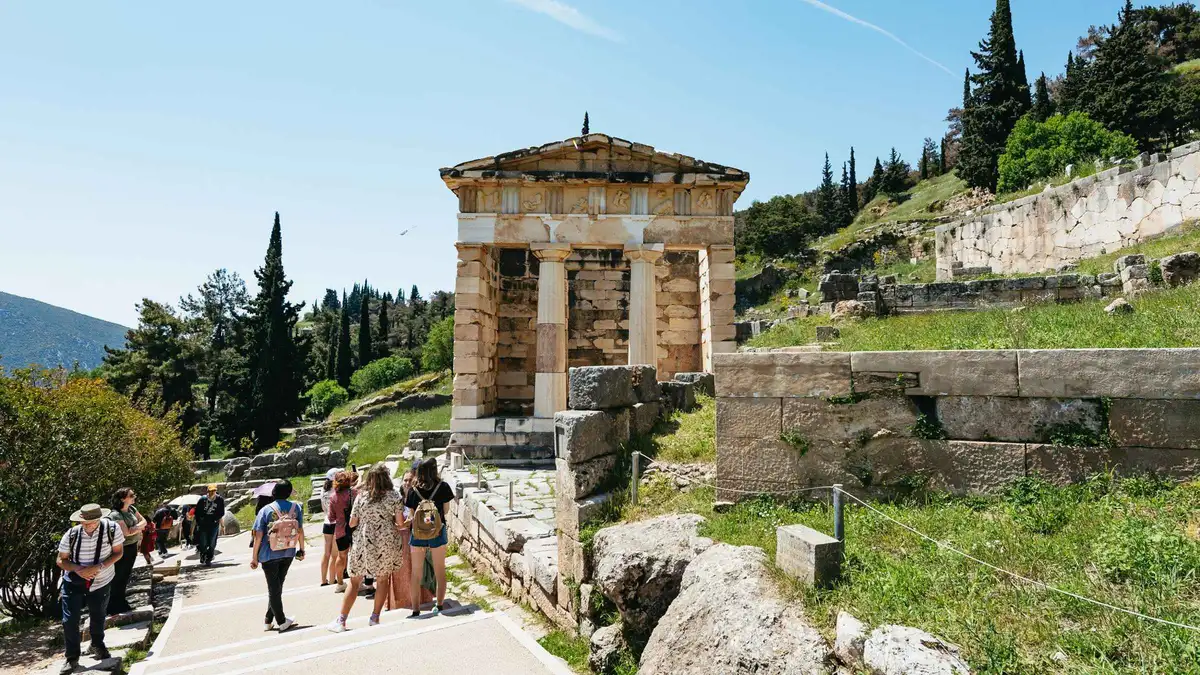 from €26
Athens: Mythology of Delphi, Museum and Arachova Guided Tour
Ten hours to the Temple of Apollo and the Delphi museum, with the mountain village of Arachova on the way back. One official ticket covers site and museum.
Check Availability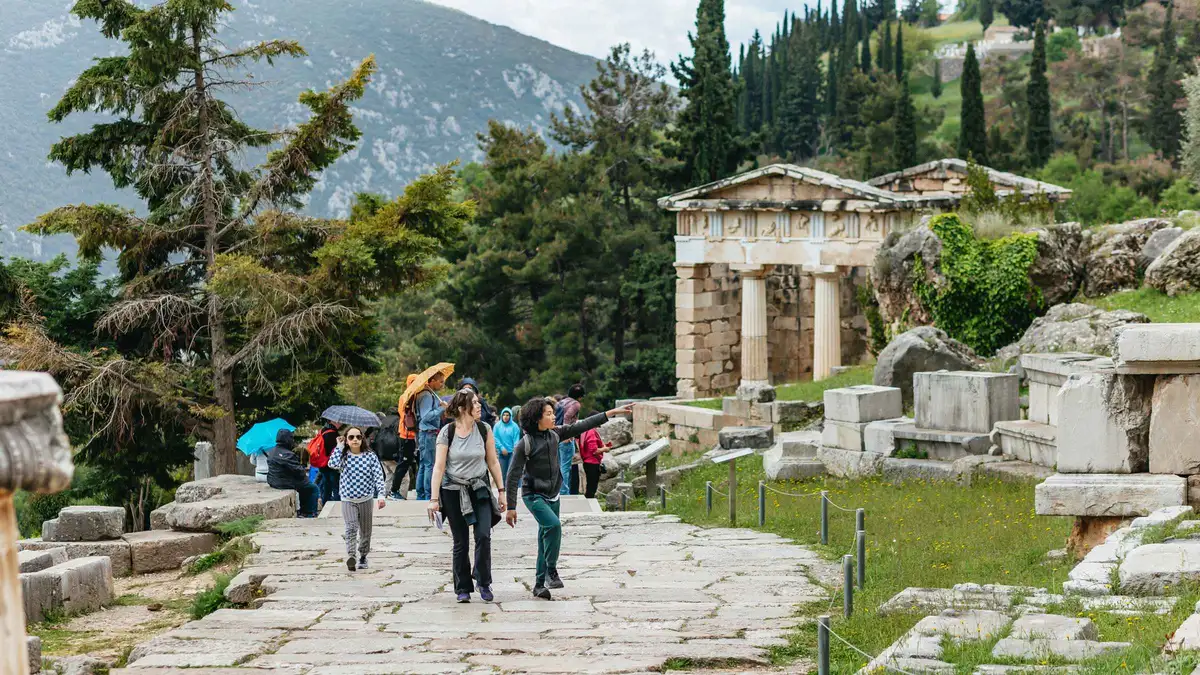 from €39.10
From Athens: Small-Group Delphi, Museum & Arachova Day Trip
The same route in a small group, with the Delphi museum and Arachova, under the Parnassus cliffs.
Check Availability from €84
Meteora Monasteries DayTrip at 9ΑΜ, Sea Stops, Caves & Lunch
Fourteen hours by coach with a 09:00 departure, monastery visits, the hermit caves and a lunch stop, plus stops on the coast.
Check Availability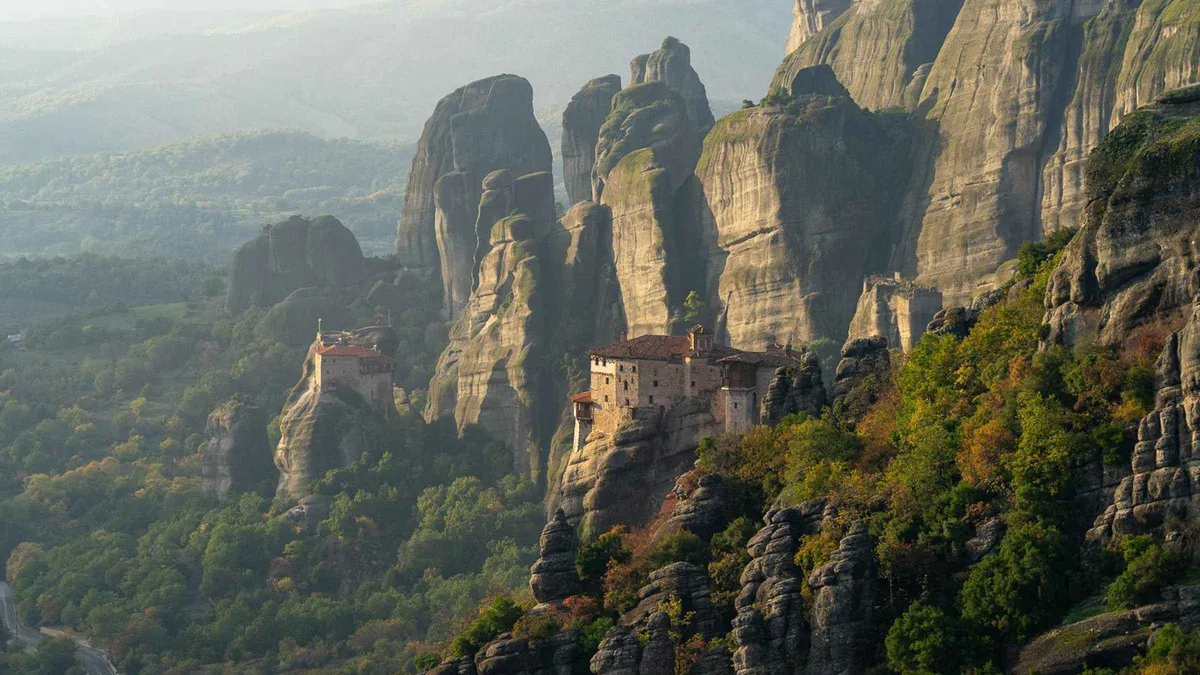 from €105
From Athens: Meteora Caves & Monasteries Day Trip by Train
The civilised version of the same day: train through the countryside instead of a coach, then the monasteries and caves.
Check AvailabilityPrices, ratings and details are the platform's own. Euro figures are the listed prices. The platform bills in your account's currency.
What Each One Costs, Including the Doors
The tour price is most of it at Meteora and only some of it at Delphi.
Delphi: the ticket is unusually good value
€20 full, €10 reduced, and it covers the archaeological site and the museum on one ticket — which is worth saying twice, because almost no other ticket in this guide does. At Athens' own sites the museum is nearly always separate. It also means the rainy-day version of Delphi still works: the museum holds the Charioteer, and it is indoors.
Free on 6 March, 18 April, 18 May, the last weekend of September, 28 October, and the first and third Sunday from November to March — the same national calendar as the Athens free days.
Meteora: nobody publishes the total
Meteora is not one site but a federation. Monastic building on the pillars began in the 14th century with Saint Athanasios and the Monastery of the Transfiguration, and of about thirty houses six are still active on the UNESCO list. Each of the six is an independent house and charges its own small entry at its own door.
None of them publishes that figure centrally, and we are not going to invent one, because the Meteora page says the same. The early monks went up by rope ladders and in nets on hooks, which is your reminder to bring cash, per person, per monastery, and expect to visit two. What is certain is the trip itself: from about €84, and €105 for the rail version.
The two-to-one rule
Delphi is an outing, Meteora is an excursion, and the prices say so plainly. At the low end you can do Delphi three times for the price of one Meteora day. That is not an argument for doing Delphi three times.
It is an argument for deciding before you book which kind of day you want. Delphi is the sanctuary of Apollo, where the Pythia gave the oracles, close enough to Athens for a single run up the mountain and back. Meteora costs more because it eats a full day of transport, and the monastery entries come on top of the ticket.
If the budget for the whole trip is the constraint, what Athens costs puts both in context next to everything else you might spend on.
How Each One Goes Wrong
Two completely different failure modes, and both are avoidable in about a minute.
Delphi's trap is the clock
From 1 November to 31 March the site opens 08:30 and closes at 15:30, with last admission twenty minutes earlier. A coach leaving Athens at eight arrives in the middle of that window, which is fine — but a self-driven late start is not, and neither is lingering over lunch in Arachova on the way. In summer the site runs to 20:00 and the problem inverts: the coaches all arrive between 11:00 and 13:00, which is both the hottest and the busiest part of the day on an unshaded mountainside.
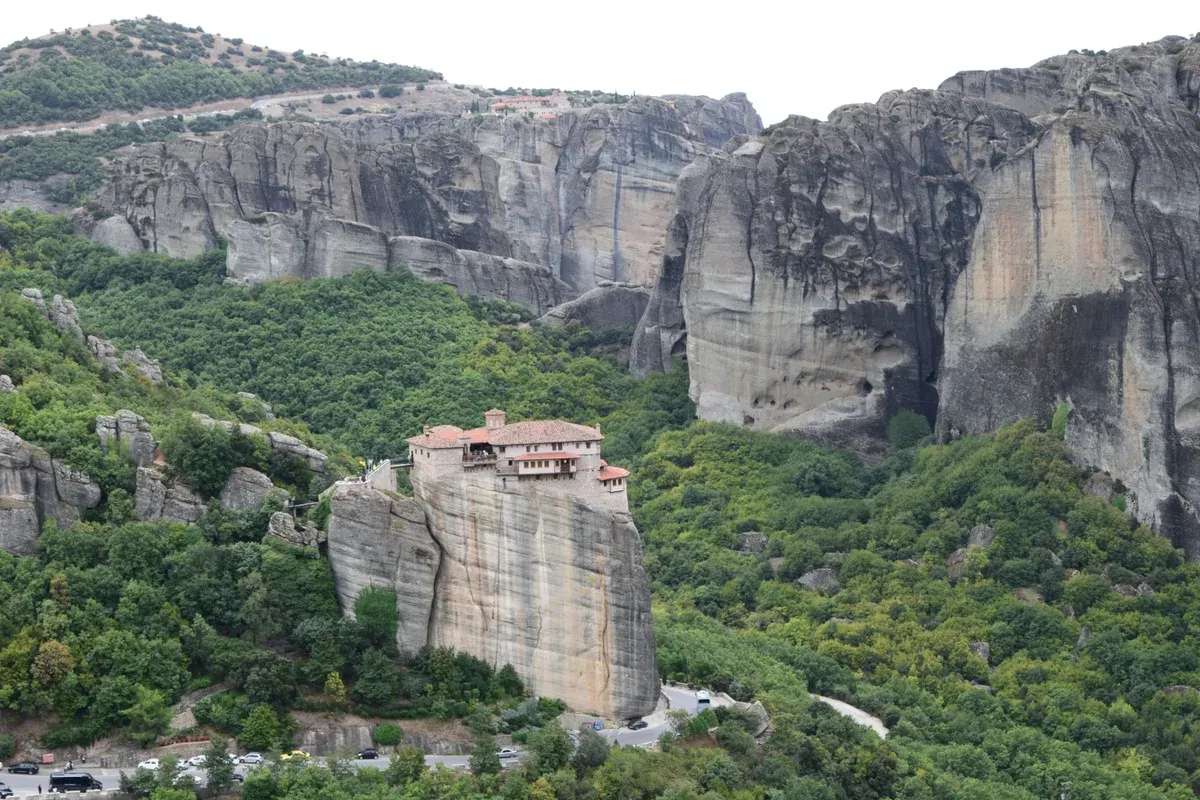
Photo: Patryk Morawiec, CC BY-SA 4.0, via Wikimedia Commons
Meteora's trap is the calendar
Each monastery closes on a different day of the week, and the days change between the summer and winter timetables. The houses stagger them deliberately so that some are always open — helpful in principle, and a trap in practice, because a visitor who arrives planning on Great Meteoron on the wrong weekday has travelled four hours for a locked gate. On an organised tour this is the operator's problem.
On a self-driven or rail trip it is entirely yours.
And the dress code that turns people away
The six monasteries of Meteora are working religious houses, active on the UNESCO list since 1988, and the monks enforce the rules at the door. Shoulders and knees covered, for everyone, men and women alike. Most houses lend a wrap skirt at the entrance, and relying on that with a queue of coach passengers behind you is a poor plan.
Bring your own scarf or long skirt and you walk straight in. The rule catches out summer visitors most often, because the same heat that makes shorts tempting is the heat that gets you sent back to the bus. Delphi has no dress code at all.
It is an archaeological sanctuary run as a site, not a living monastery, so shorts and vest tops cause nobody any trouble there.
What neither can go wrong with
Neither Delphi nor Meteora uses timed entry, so there is no slot to miss and nothing to move. That is a real difference from Athens, where state-site tickets carry fixed entry windows and non-refundable terms, defended only by two changes per ticket up to two hours before the slot. The 120-minute rule that governs Athens' own tickets simply does not apply out here.
Your risks are older ones: opening hours, and the coach or train departing without you. Delphi closed its pagan sanctuaries for good when Theodosius did so in AD 393, but modern visitors only need to arrive before the gate shuts. The only thing you can genuinely miss at either place is your transport home, so leave margin in the plan.
Once you are back in the capital, browsing athens guided tours is the natural next step, since those fixed-entry rules you dodged today will apply there.
If You Want Both
There is a good answer and a bad one.
The good one: sleep in Kalambaka
Meteora rewards an overnight more than any other trip from Athens. Arriving in the afternoon, seeing the pillars at sunset from the road above Kastraki, sleeping in Kalambaka and doing the monasteries at nine the next morning turns the worst part of the trip — the driving — into two halves instead of one block, and puts you at the doors before the coaches. Then Delphi fits neatly into a separate single day from Athens.
The bad one: both as day trips in one week
Twenty-four hours of travelling in a seven-day trip, for about six hours at the two destinations combined. If the week is your only week in Greece, that is a poor trade against a third day in Athens or a ferry to Hydra or Aegina, which cost a fraction of the time. The day trips hub sorts everything by hours spent, which is the honest way to sort it.
Delphi or Meteora: Common Questions
Is Meteora worth it as a day trip from Athens?
Worth it, but expensive in hours: about fourteen door to door for roughly three at the monasteries. If it is the only day you have, take it — the place justifies almost anything. If you have a second day, spend it on an overnight in Kalambaka instead and the same trip becomes twice as good. The Meteora page has the routing.
Which is better for a first visit to Greece?
Delphi. It is the shorter day, the cheaper ticket, and it connects directly to what you have just been looking at in Athens — the same gods, the same period, the same sanctuary logic. Meteora is Byzantine and monastic and belongs to a different Greece altogether, which is part of why it is so striking, and part of why it sits oddly in a three-day Athens trip.
Can you do Delphi and Meteora on the same trip?
Yes, but not as two day trips from Athens in one week — that is twenty-four hours of travelling. Do Delphi as a day from Athens and Meteora as an overnight, or combine them on a two-day tour that runs Athens → Delphi → Kalambaka → Athens.
How much does it cost to enter the Meteora monasteries?
Each monastery charges its own entry at its own door, and none of the six publishes the figure centrally, so we do not print one. Carry cash, per person, per house, and plan on two houses in a day.
Is Delphi open in winter?
Yes, daily, but only 08:30 to 15:30 from 1 November to 31 March, with last admission twenty minutes before. It closes on 1 January, 25 March, 1 May, Orthodox Easter Sunday and 25–26 December. The museum keeps the same hours as the site, on the same €20 ticket.