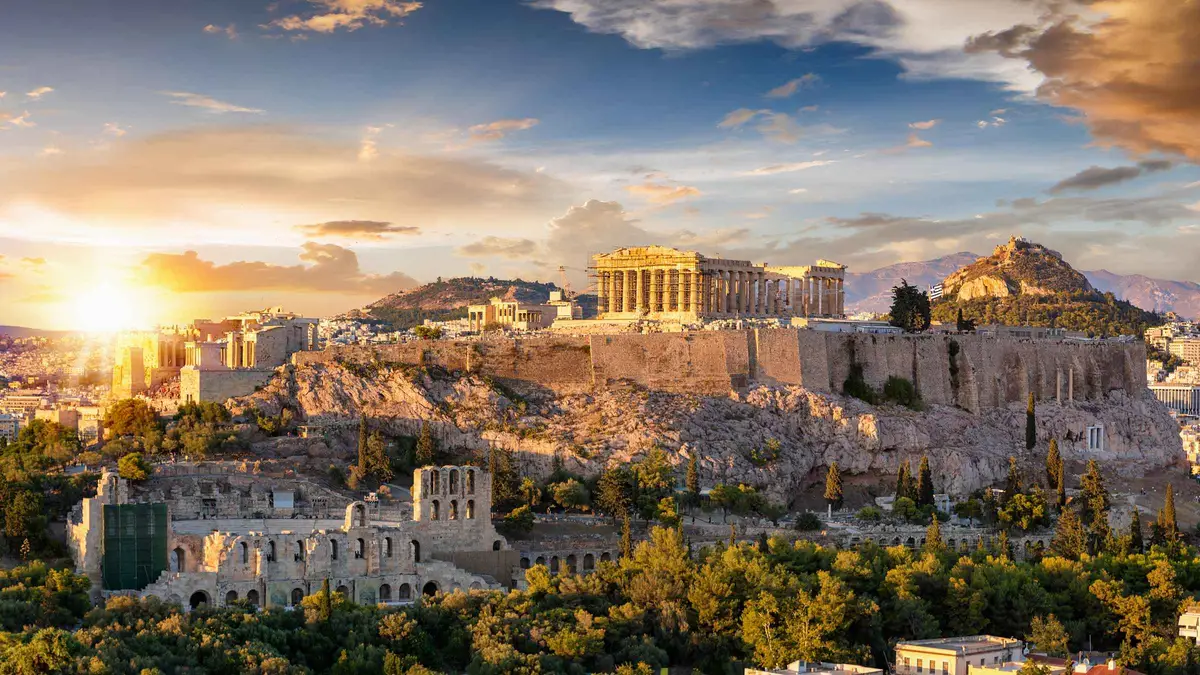
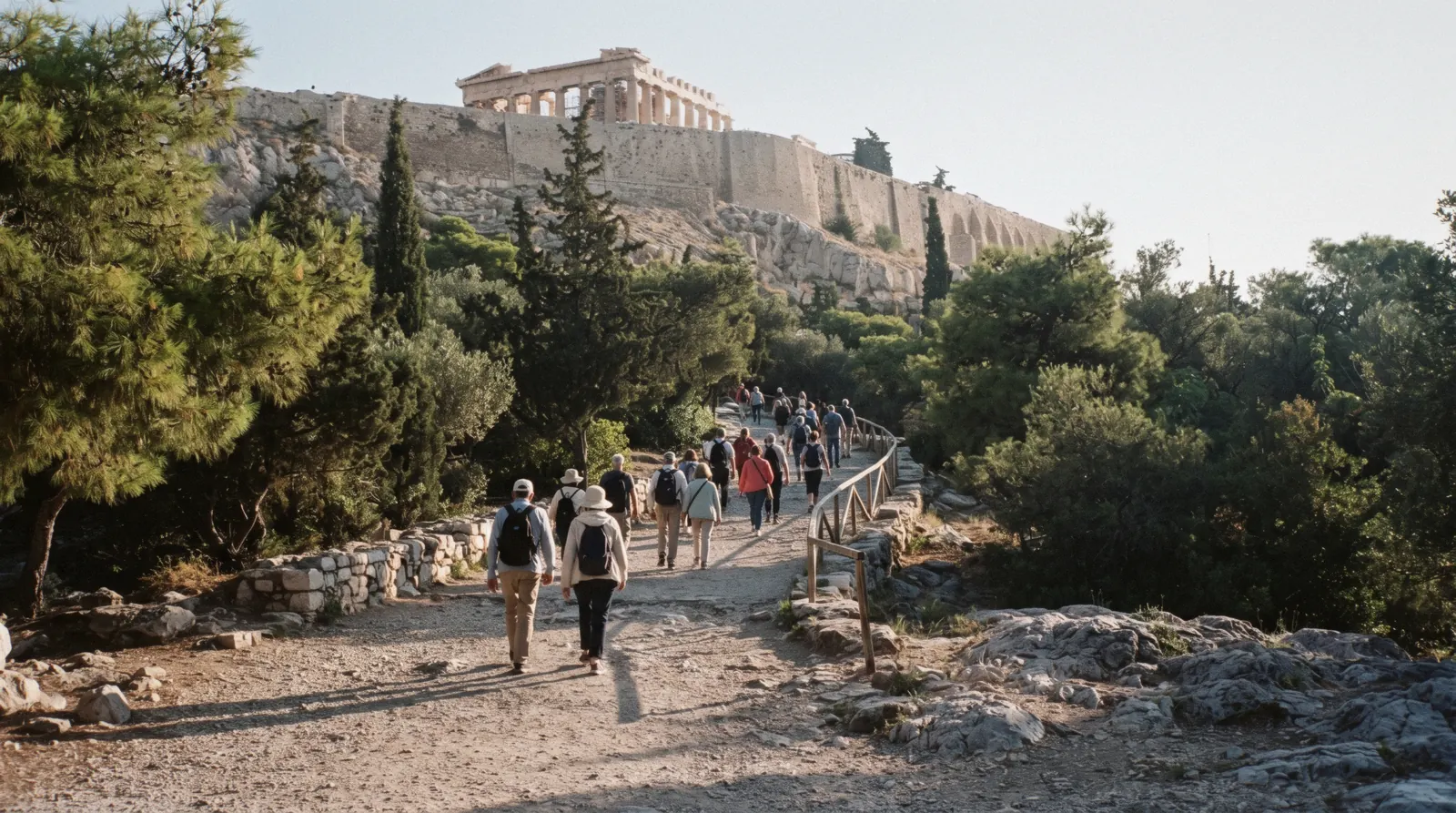
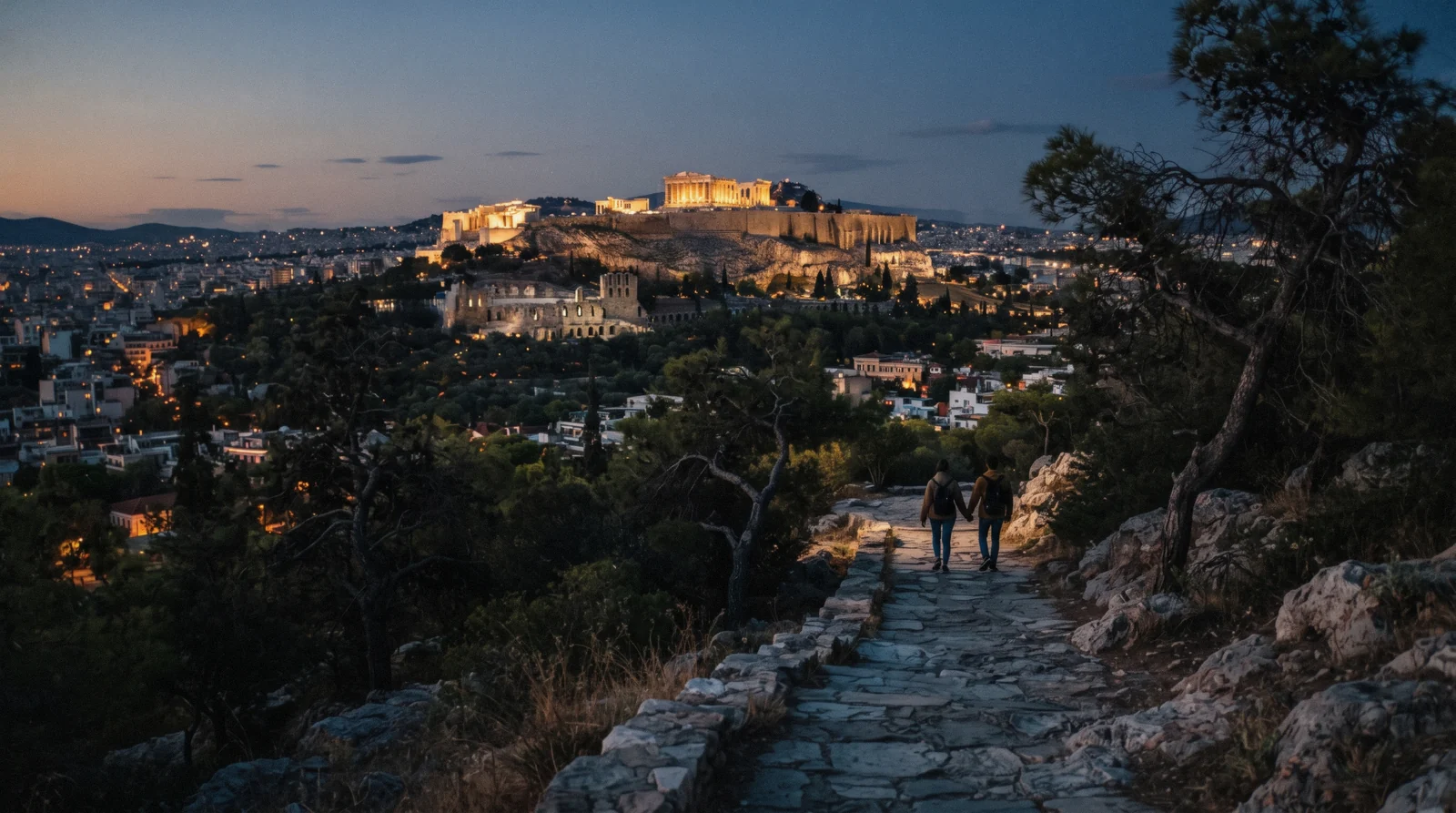
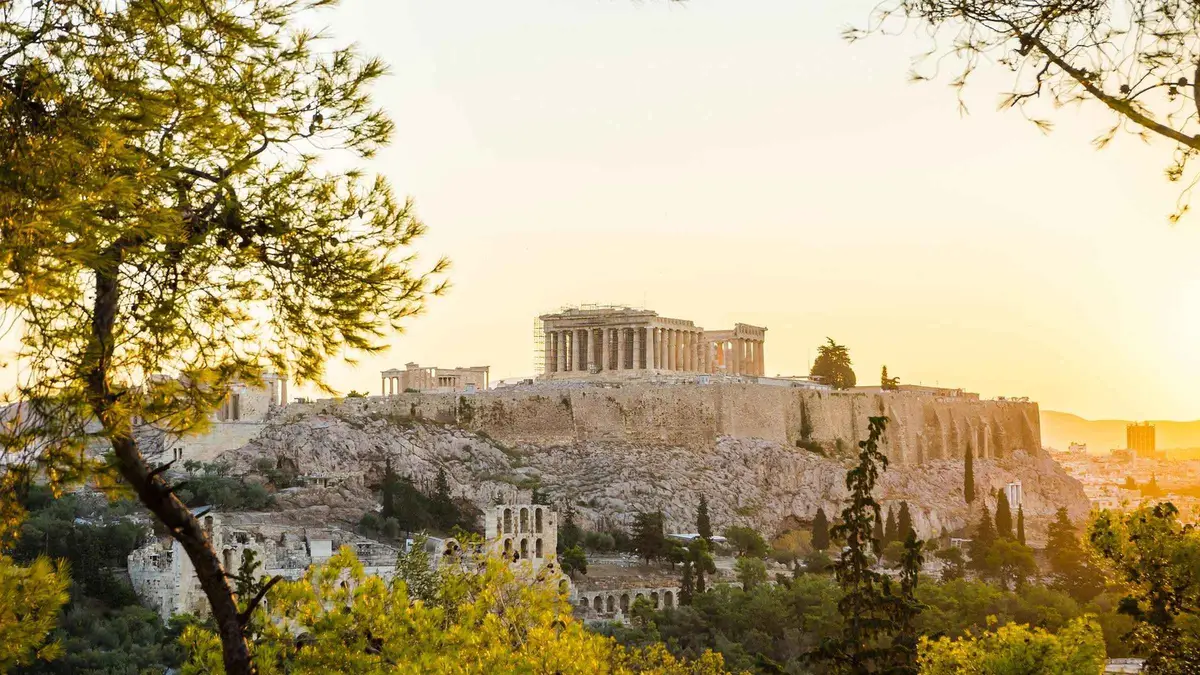
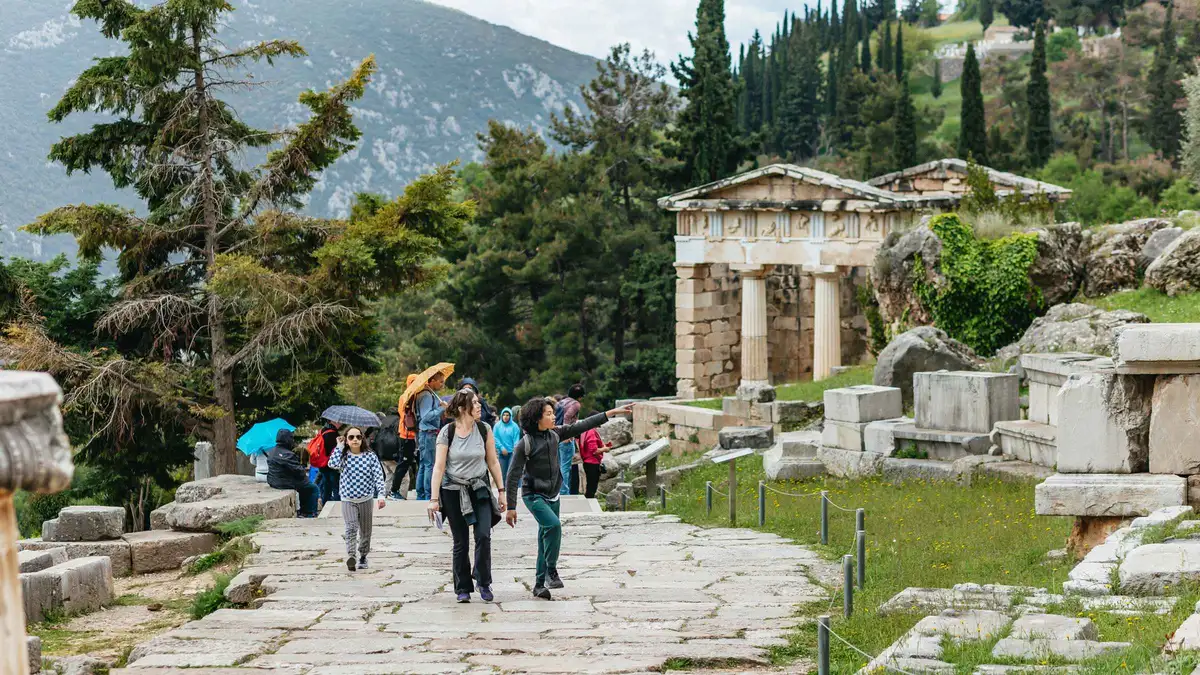
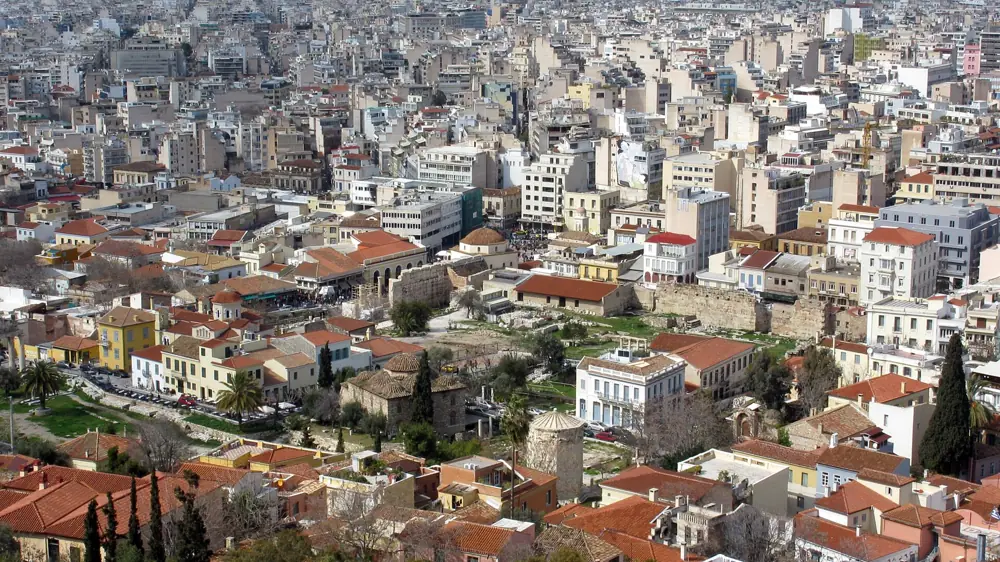
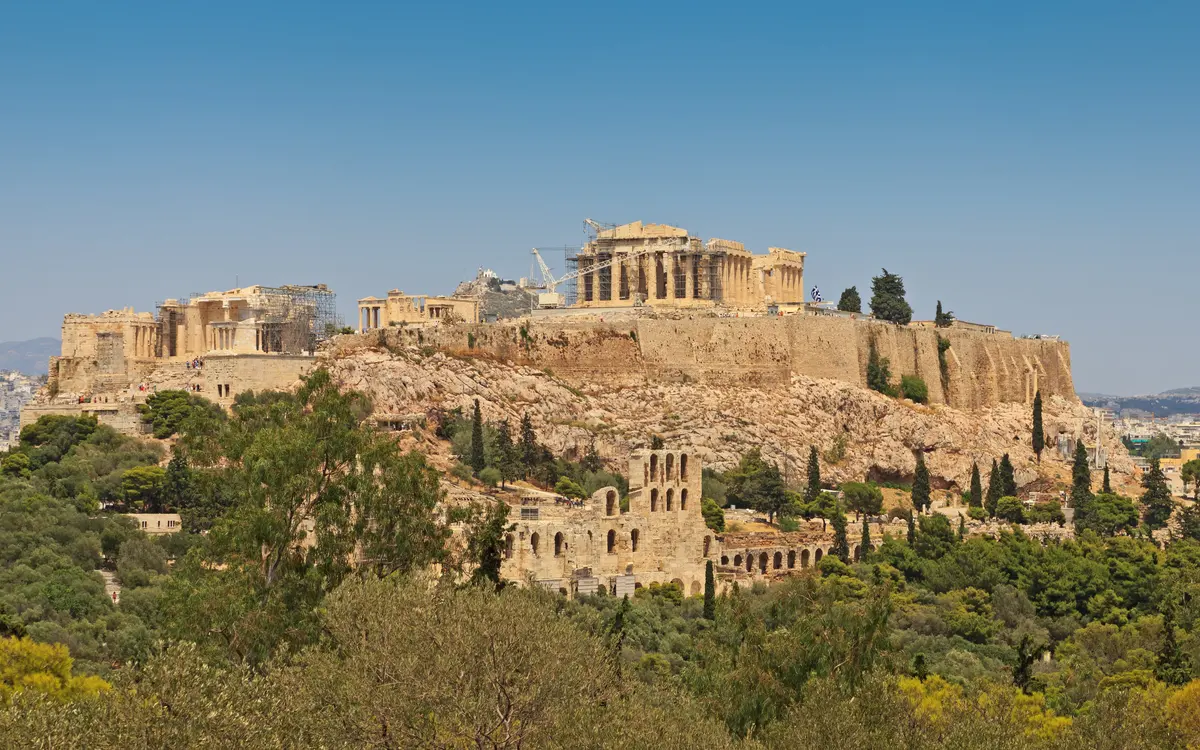
The Parthenon on the Acropolis catching the last light, seen from Philopappos Hill above Athens, Greece
Athens, Greece: An Independent City Guide
Two separate organisations sell the Athens, Greece that visitors actually queue for, and neither refunds a ticket. This guide prints what the official shops charge, the day each figure was read, and the hours and closures that quietly waste a morning.
The official platform is hh.gr, not the hhticket.gr address that most guides print — the difference, and what the €30 actually opens, is on the Acropolis ticket page.
Hellenic Heritage tickets are non-refundable; you get two changes, up to two hours before entry. Book the Acropolis entry with the audio option once your dates are firm.
Not sure how long to stay? The day-count table works on one big site per half-day, because the rock in August is not a place you linger.
Landing at ATH: the metro runs €9 one way and the taxi flat fare is set by the time you arrive, not the time you leave — the airport transfer rules show where that catches people at midnight.
Watching the budget? Entry is free on the first and third Sunday of every month from November to March, and on five fixed dates — the free-entry days lists them, and says when they are worth the crowd.
Athens in six decisions: what to see, what to book, where to sleep, what to eat
The hubs of this Athens guide, each with the three facts that settle it.
Six areas measured by walk minutes to the Acropolis entrance and by what happens after dark: where to stay in Athens. Start with Koukaki if mornings at the rock matter most.
Plaka is the postcard and the most expensive dinner in the city
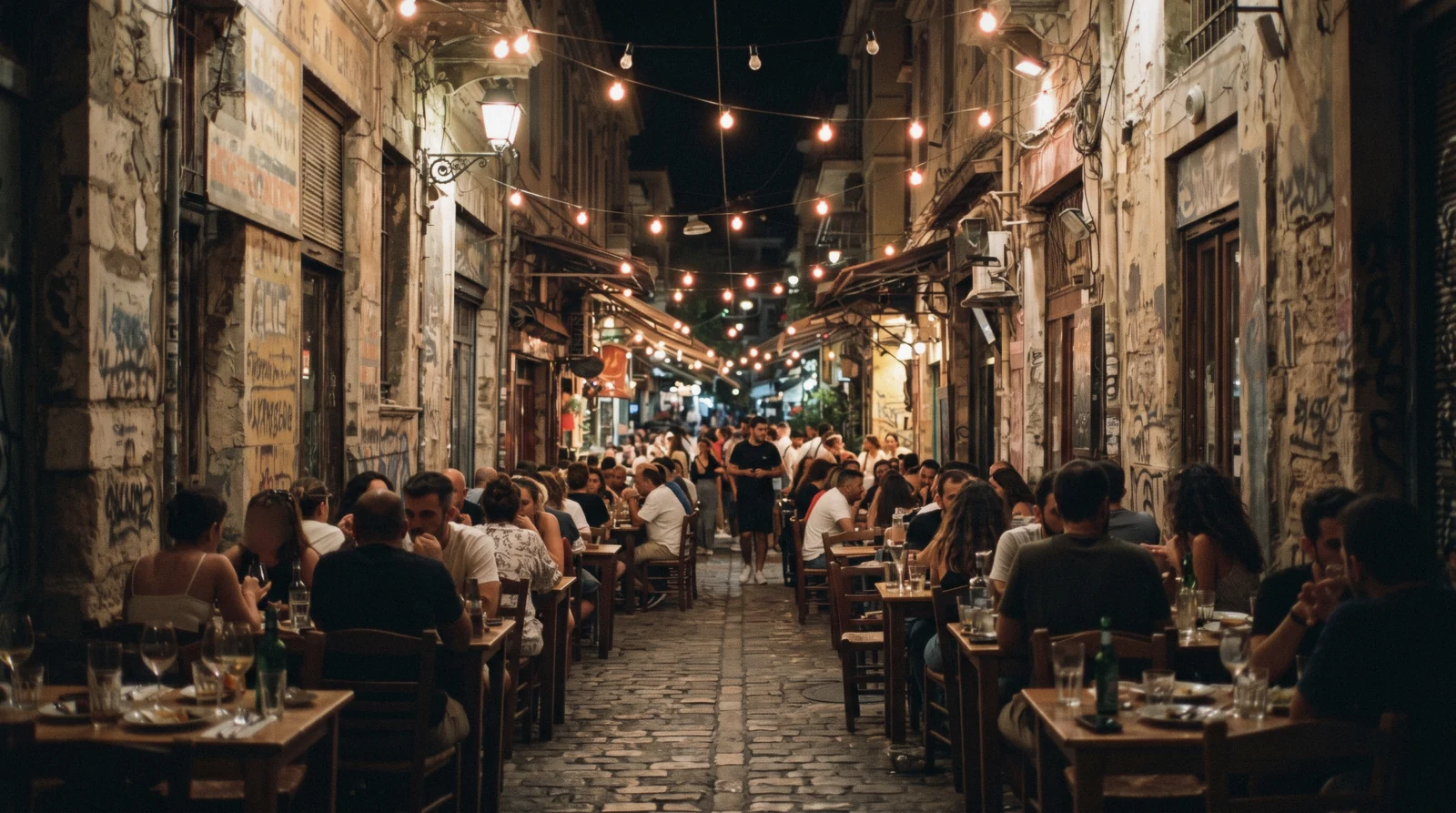
Psyri is where Athens eats late, ten minutes from Monastiraki metro
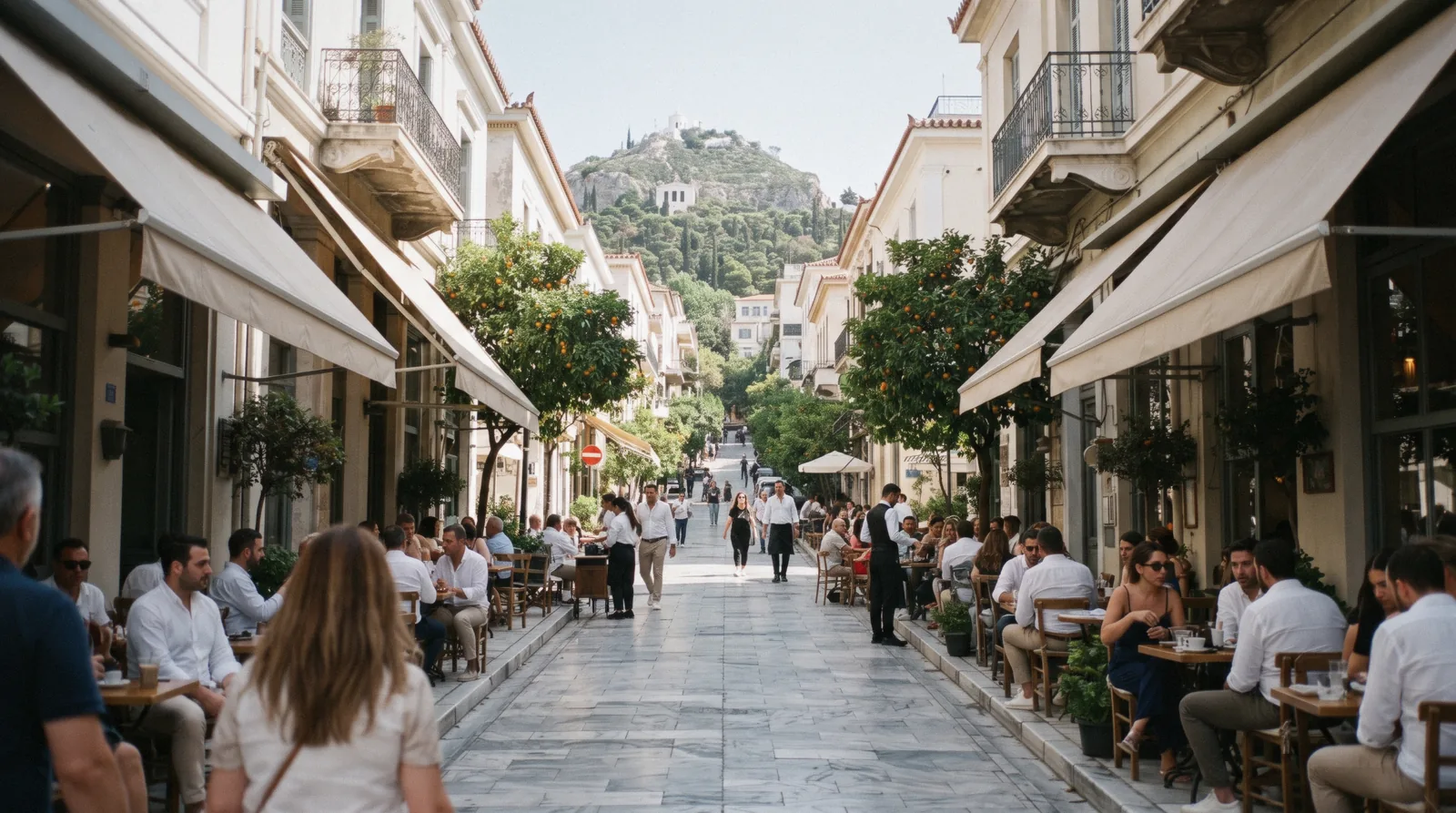
Koukaki puts you eight minutes from the Acropolis south entrance
Decides which evening you get
Day trips
What actually fits in a day out of Athens, by road, rail and boat: the day trips compared.
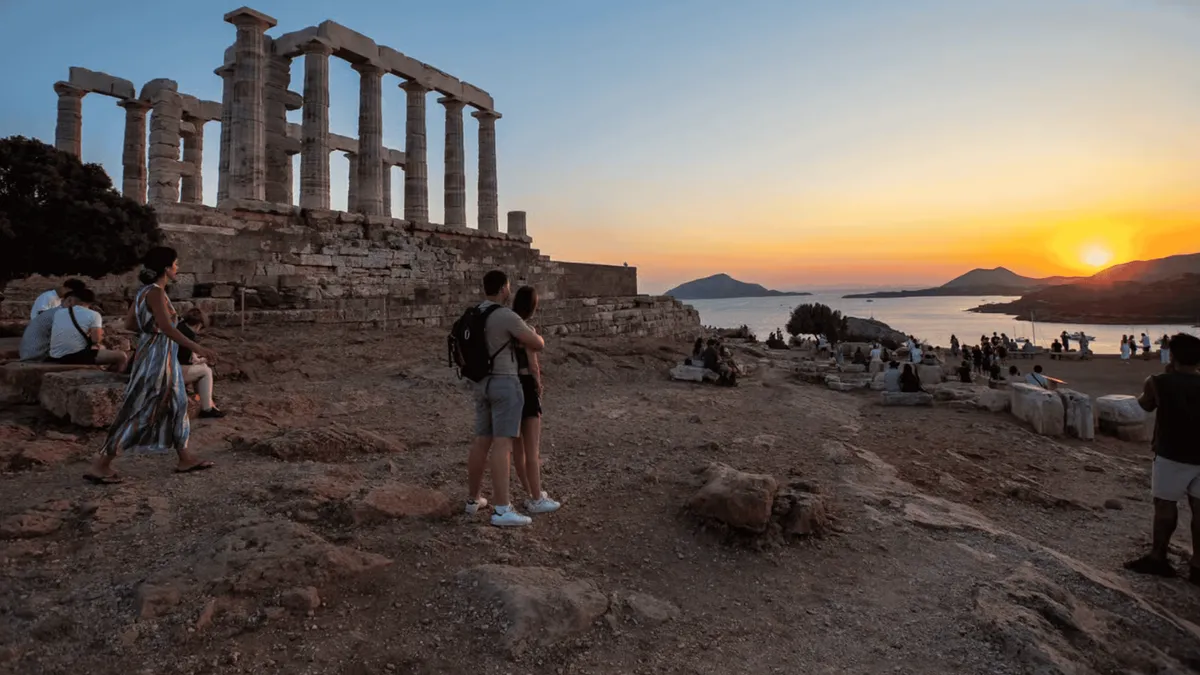
Cape Sounion is a half-day; the site opens at 09:30 and closes at sunset
Delphi runs ten to eleven hours door to door, and one ticket covers site and museum
Where To Go In Athens: Six Districts Inside One Walk
Central Athens is small enough that all six of these sit inside a two-kilometre circle around the rock, so the plan is not a district a day but a district an occasion — one to sleep in, one to eat in late, one to spend a museum afternoon in. Room prices are the middle half of what Google Hotels returned for one midweek night, Wednesday 14 to Thursday 15 October 2026, two adults, converted at €1 = $1.1622 (ECB reference rate, 4 September 2026). The places worth a whole day are out of town and sit on the day-trips hub.
Plaka
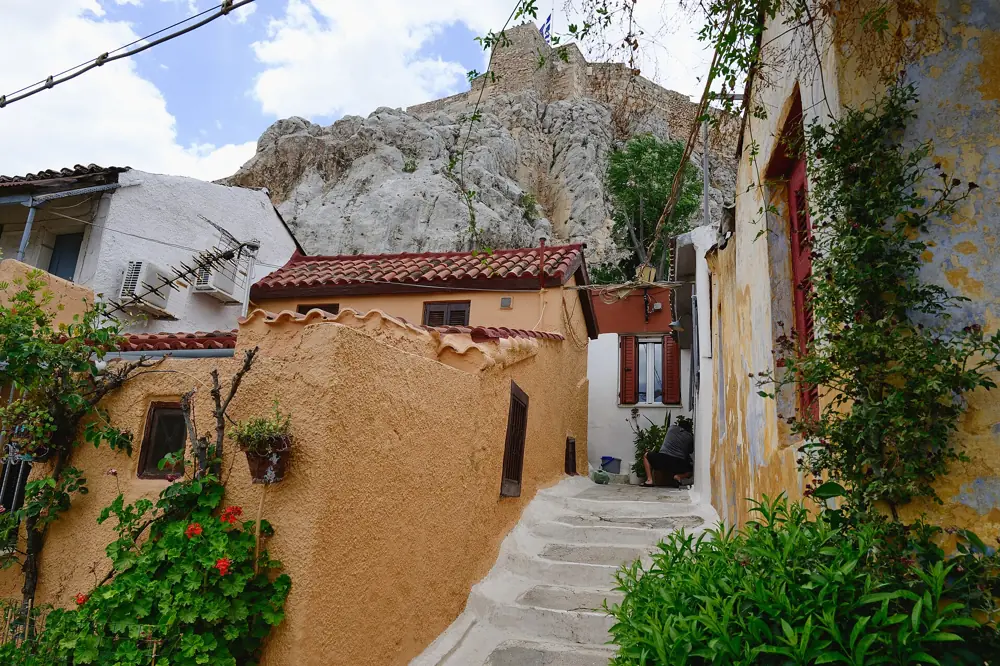
The old quarter under the north slope: forty minutes of lanes, the Anafiotika cottages above them and the Roman Agora inside the boundary. Walking it is free; the only bill is dinner, and on the terrace lanes that is roughly double the same meal two streets uphill.
The Roman Agora and its Tower of the Winds is the quarter's one gate, at $11.62 (€10)
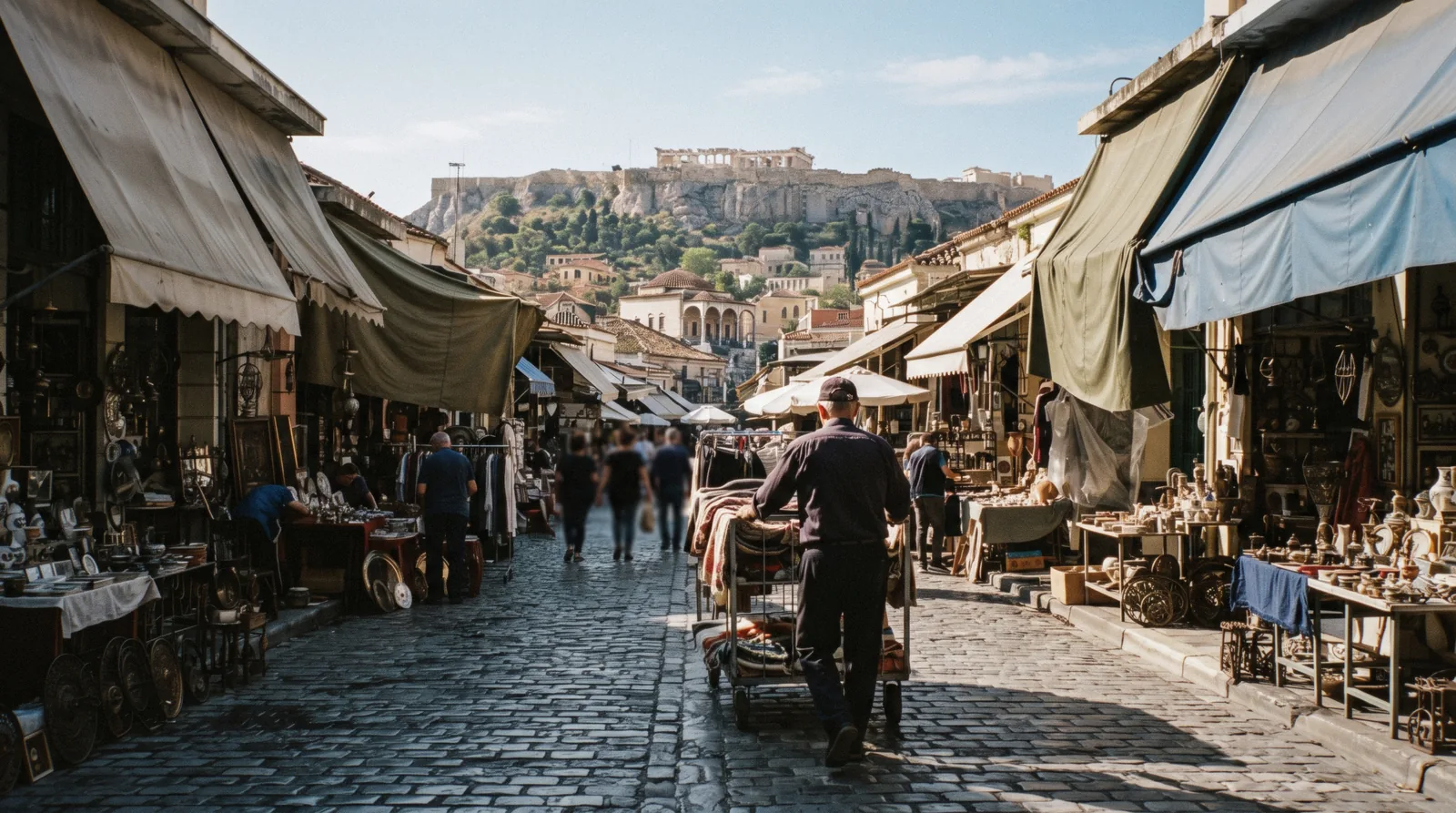
A metro interchange with three archaeological sites, a permanent flea market and the cheapest good lunch in the city attached. Lines 1 and 3 cross here, so most itineraries pass through whether they mean to or not. Worth an hour and a meal rather than a day.
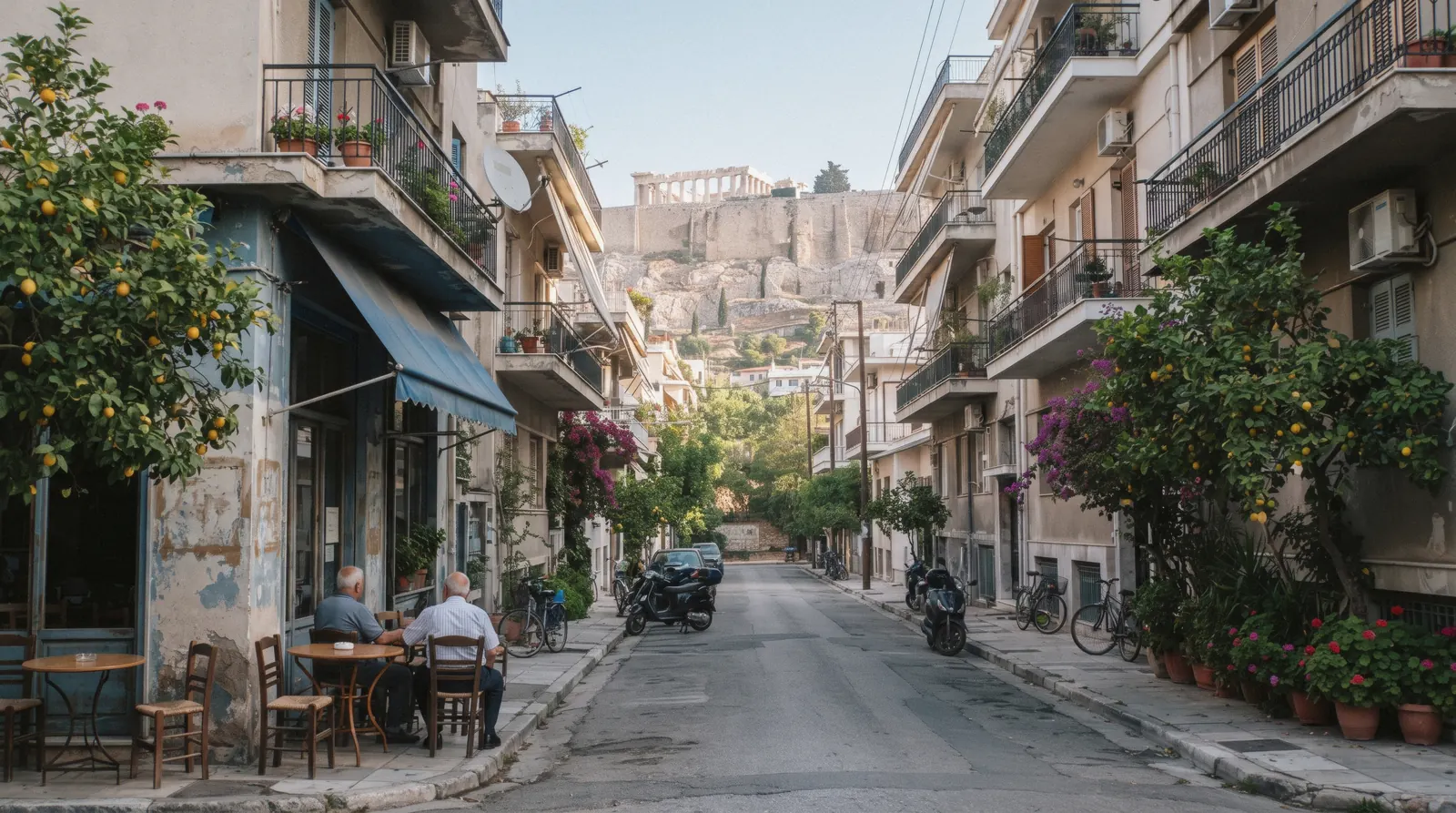
Residential streets on the pedestrianised side of the rock, eight to twelve minutes from the Acropolis south gate and with the Acropolis Museum at the top of the neighbourhood. It is the shortest walk in the guide to an 08:00 slot, and it is quiet after midnight — which is also its drawback.
Both big tickets are on the doorstep: the rock at $34.90 (€30) and the museum at $23.20 (€20)
Rooms ran $111.60–191.80 (€96–165), the middle of the six districts — the bands
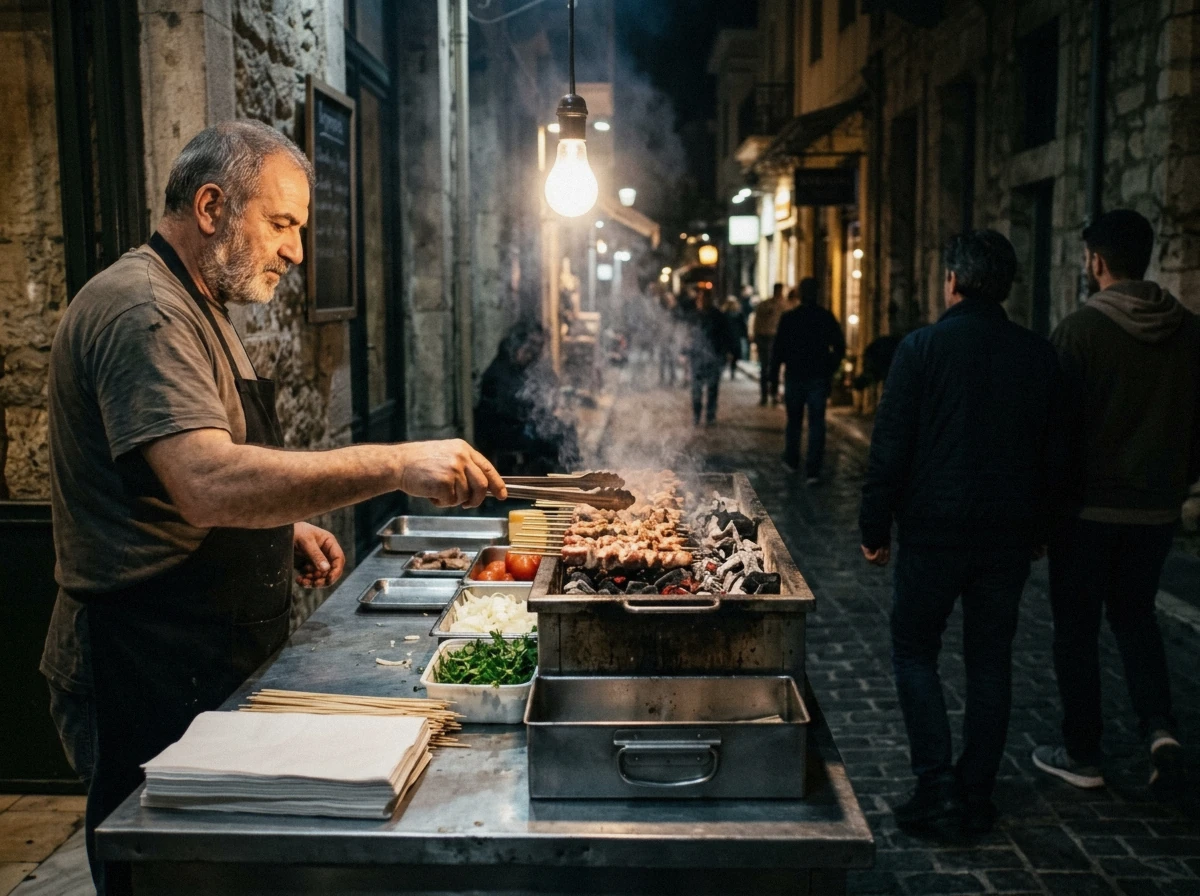
Five minutes north of Monastiraki and the reason to keep an evening free. Kitchens fill after nine, the habit is small plates shared rather than a main course each, and a shared dinner with wine lands near $20.90 to $23.20 (€18 to €20) a head.
A street-food walk covers the same counters in three hours if you would rather be shown them
Sleep in Koukaki and eat here: it is ten minutes on foot, and Psyri is loud until two
The smart quarter along Vasilissis Sofias, where three museums sit within eight minutes of each other under Lycabettus Hill. It is the museum afternoon of the trip and the one that a Tuesday ruins: both the Cycladic and the Byzantine collections shut that day.
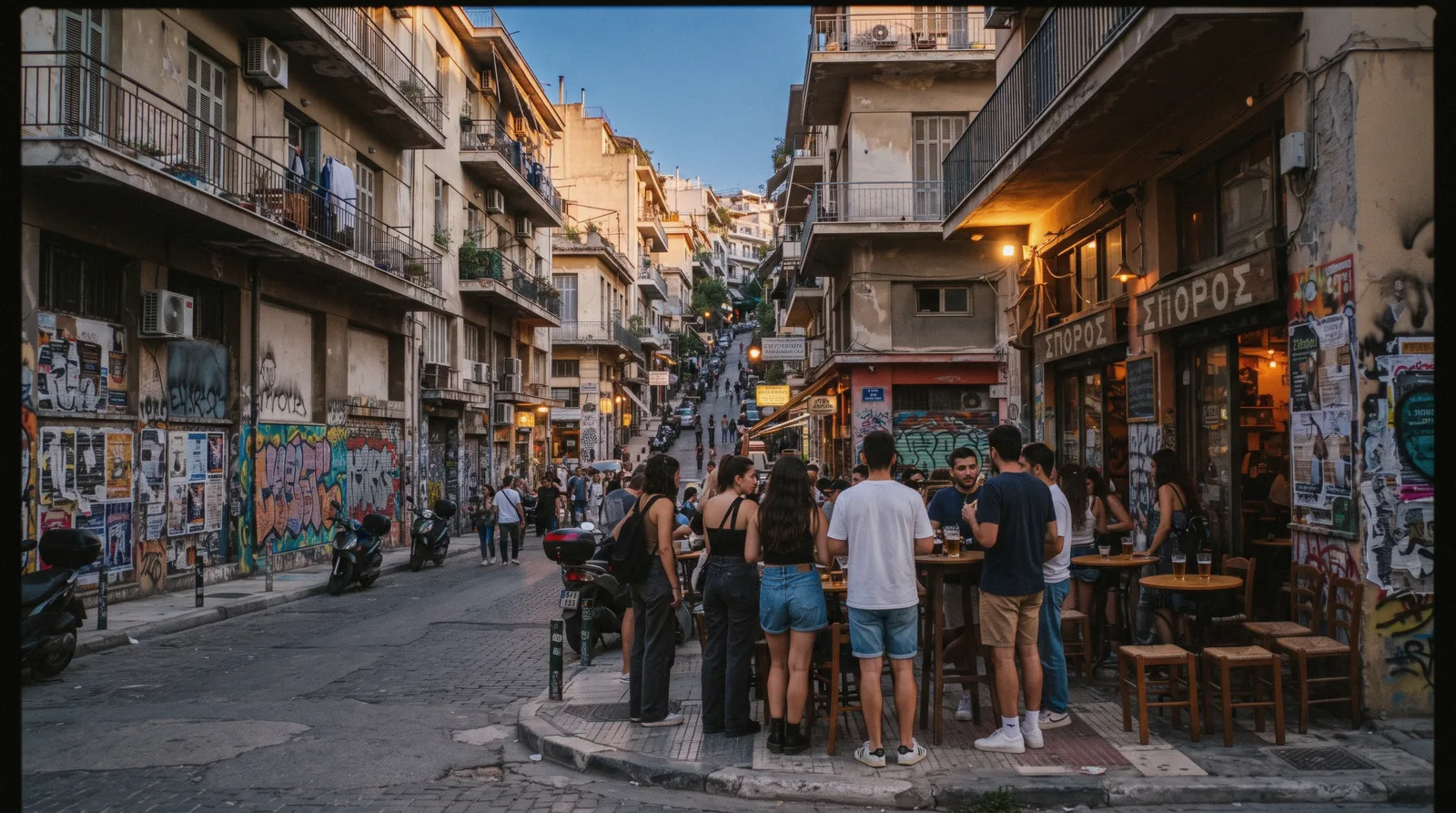
The student and political quarter beside the Polytechnic, five minutes from the National Archaeological Museum and the best value eating in the centre. It has a reputation that its own page takes apart; what it also has is the cheapest rooms of the six.
The Athens must-see list, in the order the walk actually works
Almost everything on a first trip sits inside a loop of about three kilometres, from the Acropolis south entrance round to Monastiraki and back along Dionysiou Areopagitou. Walk it in this order and the timed slot falls where the heat is lowest: the rock at opening, the museum in the afternoon when it is air-conditioned, the hill at sunset.
Photo: Carole Raddato, CC BY-SA 2.0, via Wikimedia Commons (creativecommons.org/licenses/by-sa/2.0)
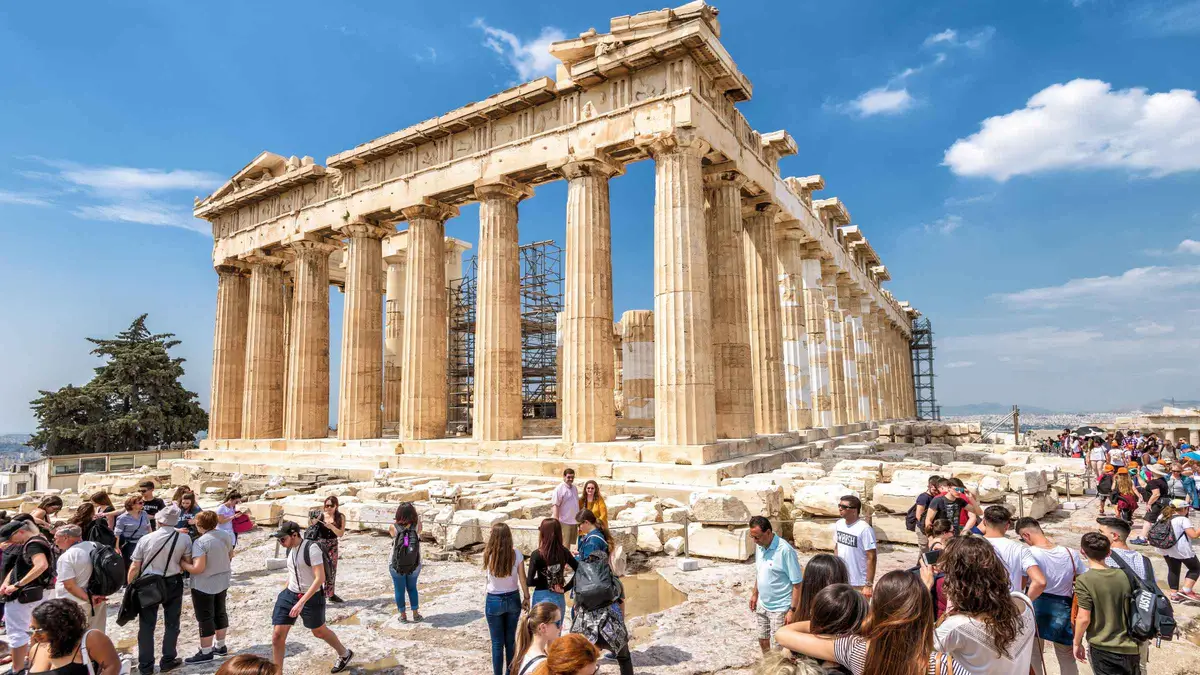
1. The Acropolis
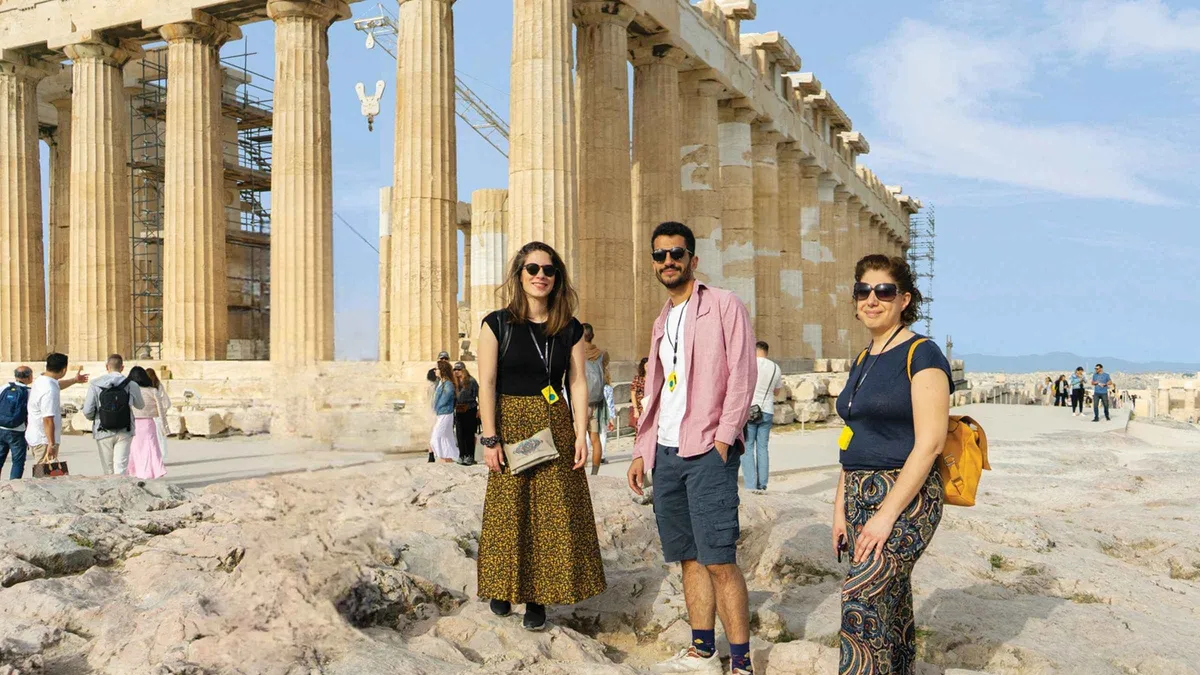
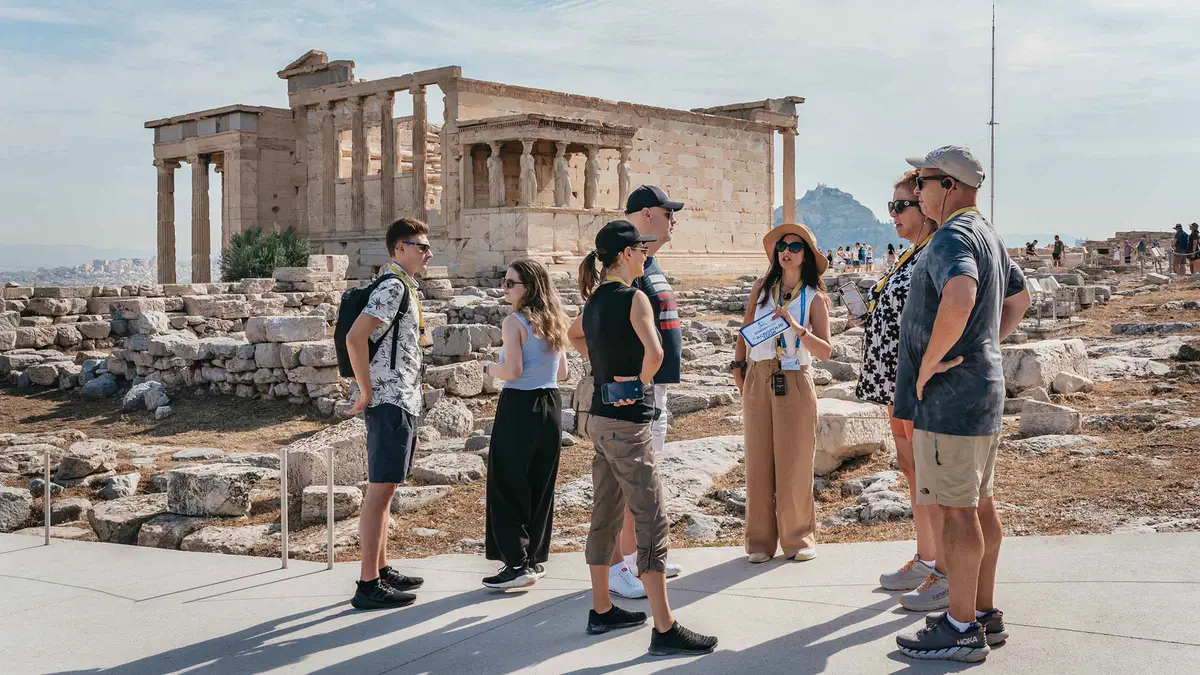
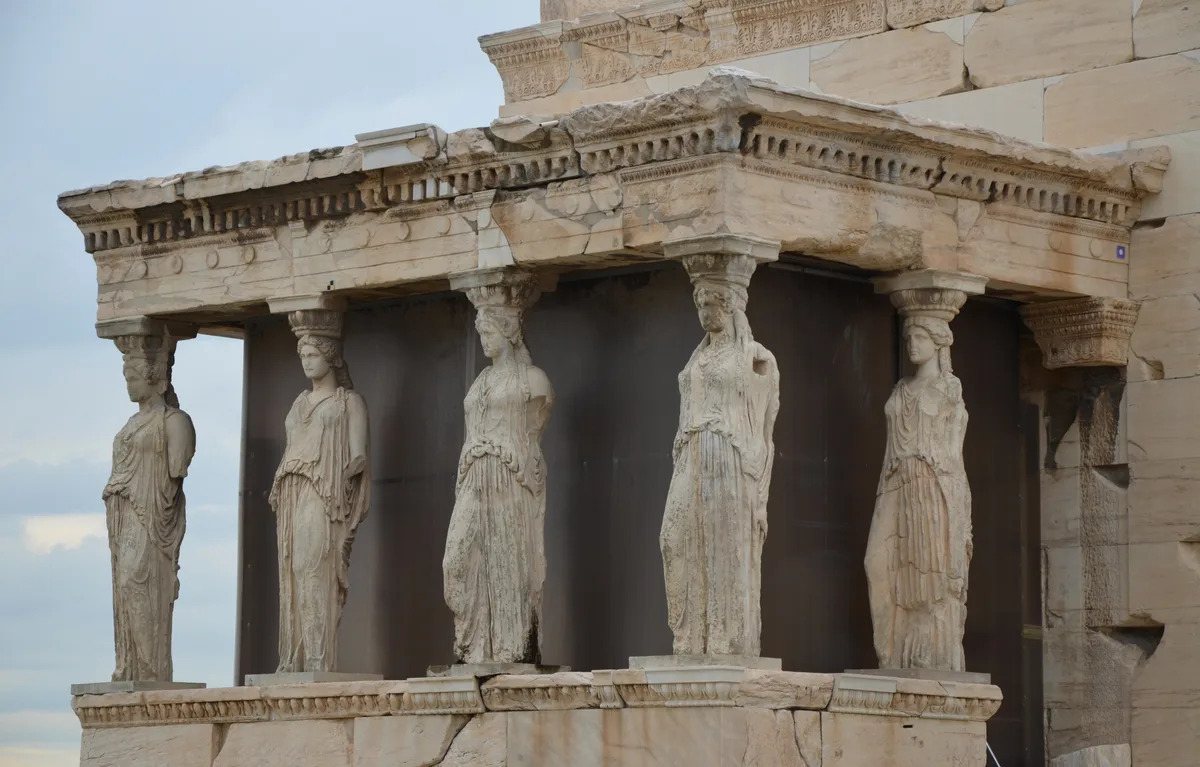
Everything above the Propylaea gate is one ticket: the Parthenon, the Erechtheion with its porch of Caryatids, the small Temple of Athena Nike, and the Theatre of Dionysus and Odeon of Herodes Atticus on the south slope. Full €30, reduced €15, read on hh.gr on 1 September 2026. Entry is by declared time slot, last admission is twenty minutes before closing, and the ticket is non-refundable — you may change it twice, up to two hours before your slot.
From 1 April to 31 August it runs 08:00 to 20:00; from 1 November to 31 March, 08:00 to 17:00. Closed 1 January, 25 March, 1 May, Orthodox Easter Sunday, 25 and 26 December. The rock has no shade and marble underfoot polished by a century of feet: flat soles, water, and a hat.
Photo: Tilemahos Efthimiadis, CC BY-SA 2.0, via Wikimedia Commons (creativecommons.org/licenses/by-sa/2.0)
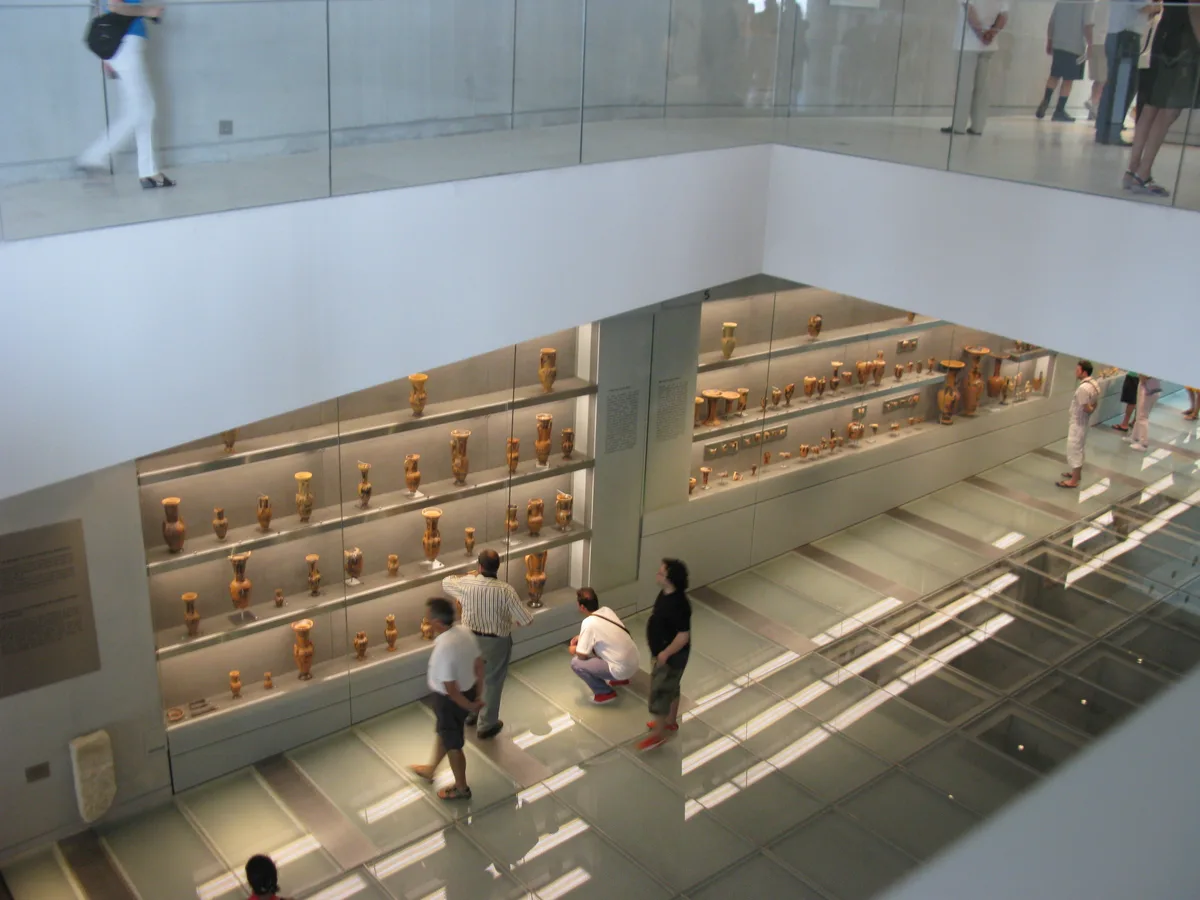
2. Acropolis Museum
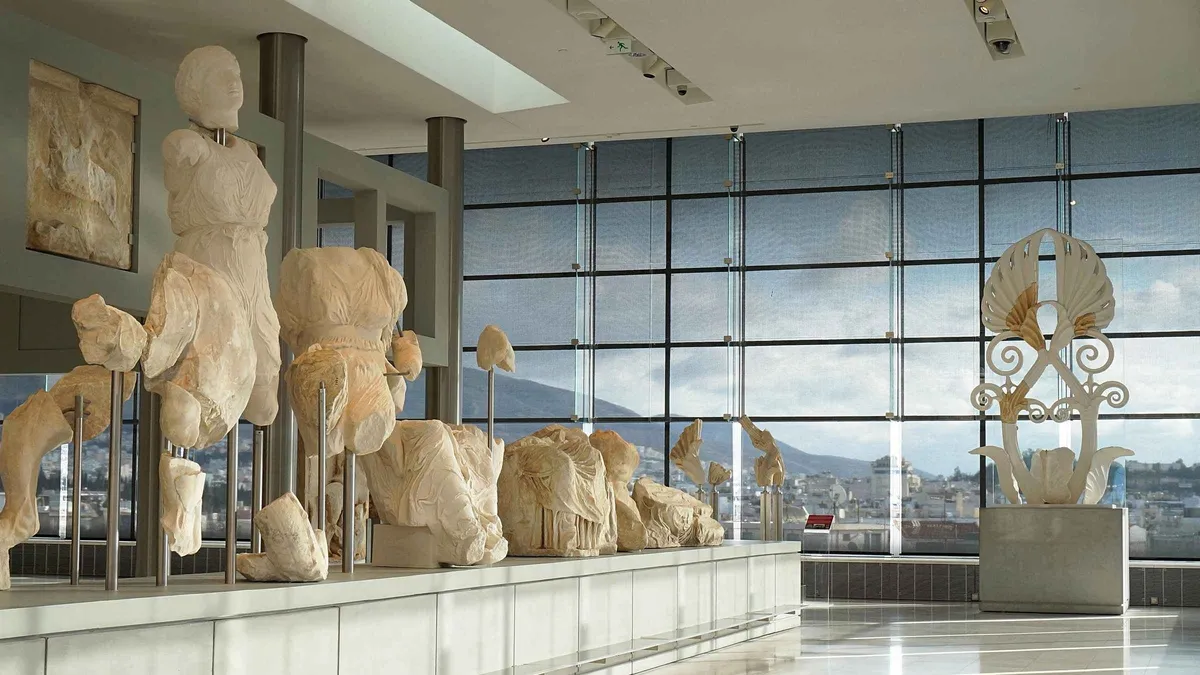
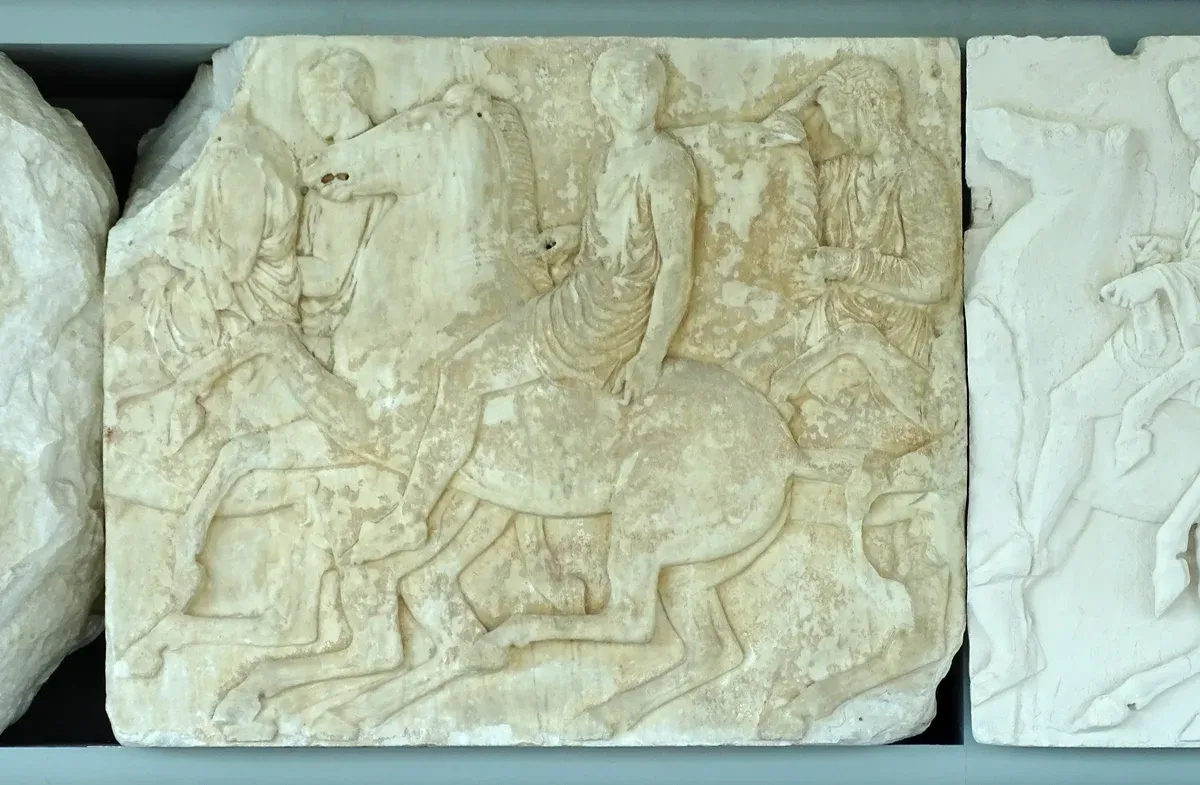
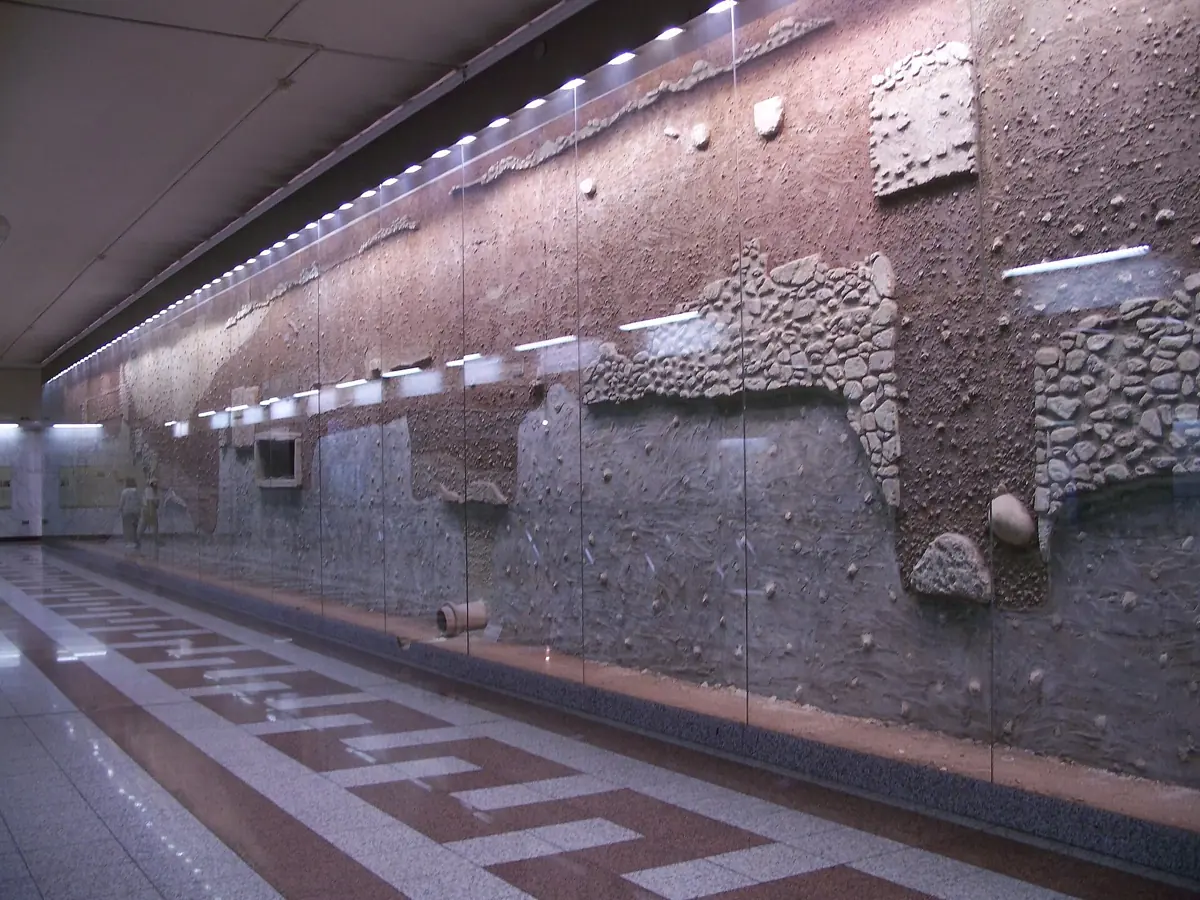
Ten minutes downhill at Dionysiou Areopagitou 15, and a different organisation with a different ticket: €20 full, €10 reduced. The reduced and free tickets are sold at the desk only, never online, so bring the document. The top floor holds the Parthenon frieze at eye level, aligned with the real building through the glass; the ground floor opens onto the excavated Athenian street under the museum, included in the same ticket.
It closes at 20:00 most of the summer and stays open to 22:00 on Fridays year-round, which is the quietest good hour in the city. Read on theacropolismuseum.gr on 1 September 2026. The museum page has the full weekly timetable.
Photo: Jebulon, CC0, via Wikimedia Commons (creativecommons.org/publicdomain/zero/1.0)
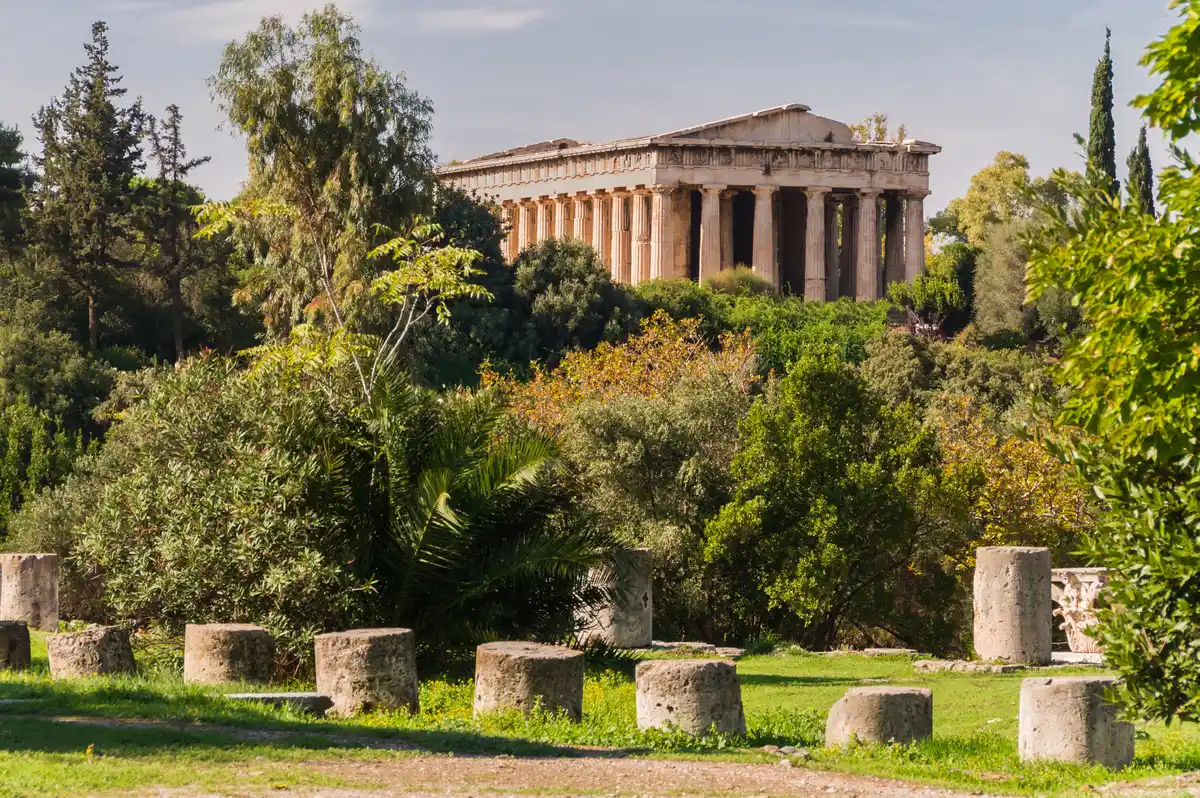
3. Ancient Agora and the Temple of Hephaestus
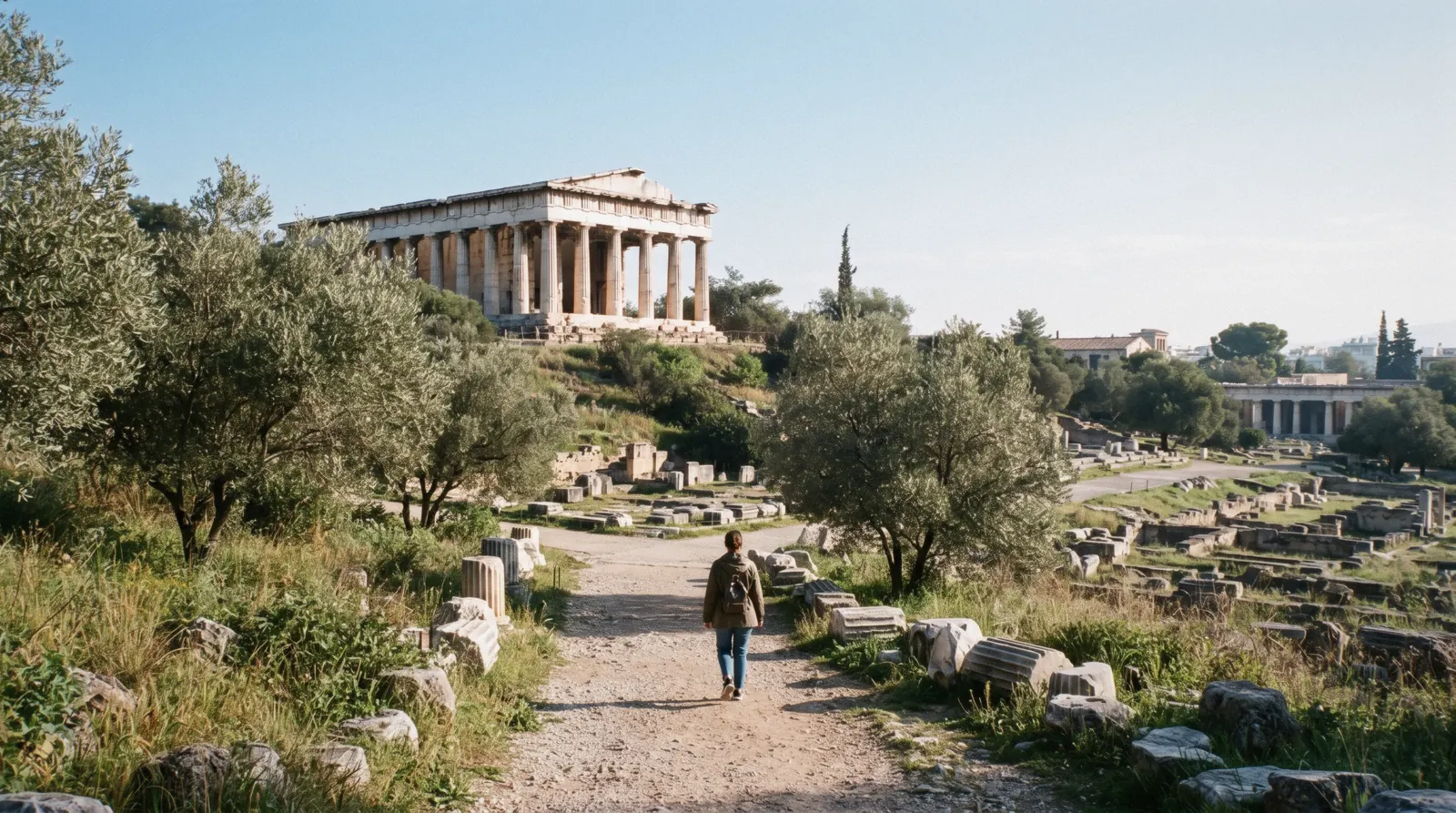
The square where the democracy actually met, and above it the Hephaisteion — the most completely preserved Doric temple anywhere, roof included. €20 full, €10 reduced. It matters that the Agora closes earlier than the rock: 19:30 in high summer against the Acropolis's 20:00, and it winds down through September to 17:30 by late October. The reconstructed Stoa of Attalos along the east side houses the site museum on the same ticket. The Ancient Agora page carries the seasonal table.
Photo: Jebulon, CC0, via Wikimedia Commons (creativecommons.org/publicdomain/zero/1.0)
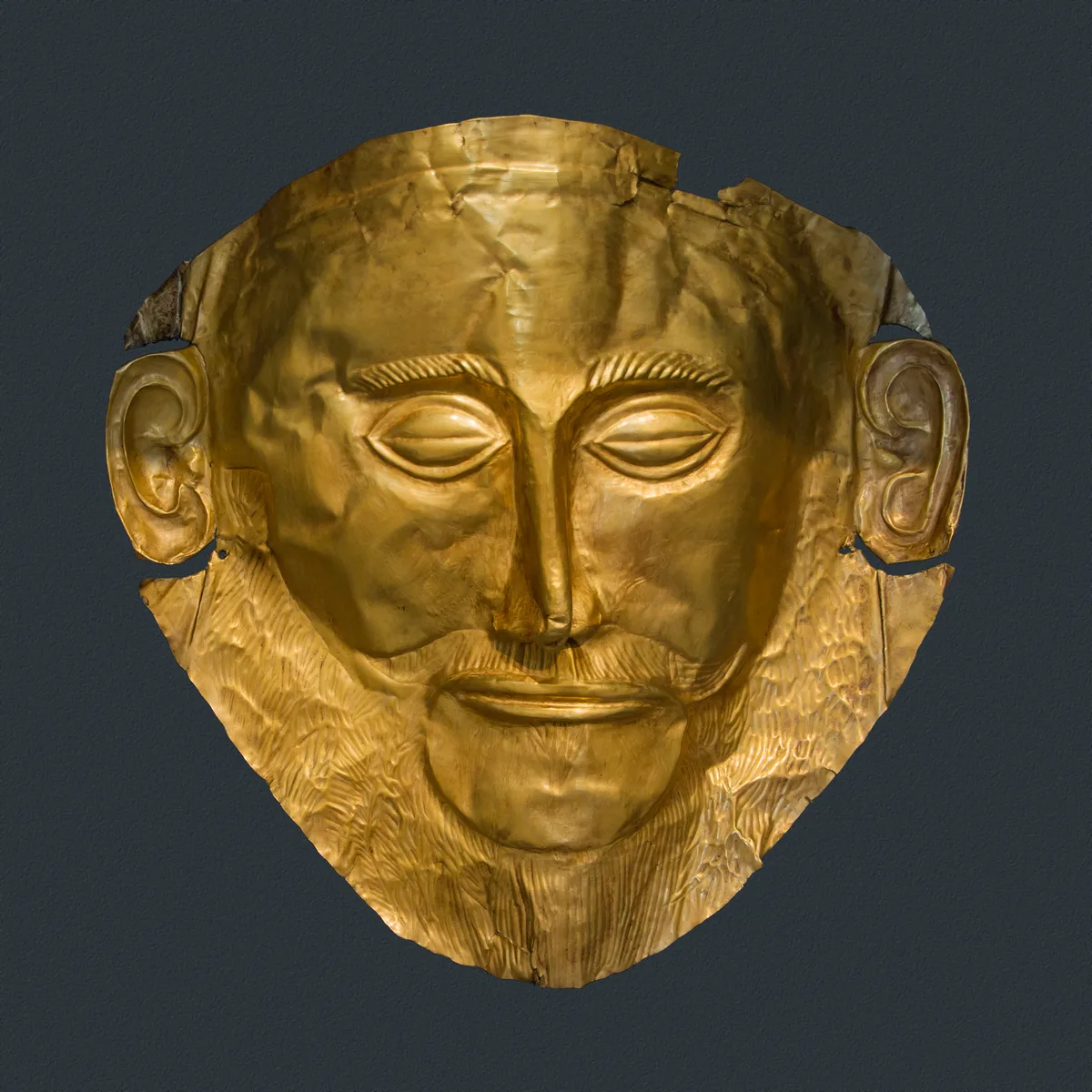
4. National Archaeological Museum
Twenty minutes north of Monastiraki and worth the walk out of the ancient centre: the Mask of Agamemnon, the Antikythera mechanism, the Thera wall paintings lifted from under the ash, and eleven thousand objects behind them. €20 full, €10 reduced. The trap is Tuesday: the museum opens at 13:00 that day, all year, while every other day starts at 08:00 or 08:30. Last admission is thirty minutes before closing. The museum page prints the weekday timetable in full.
Photo: A.Savin, CC BY-SA 3.0, via Wikimedia Commons (creativecommons.org/licenses/by-sa/3.0)
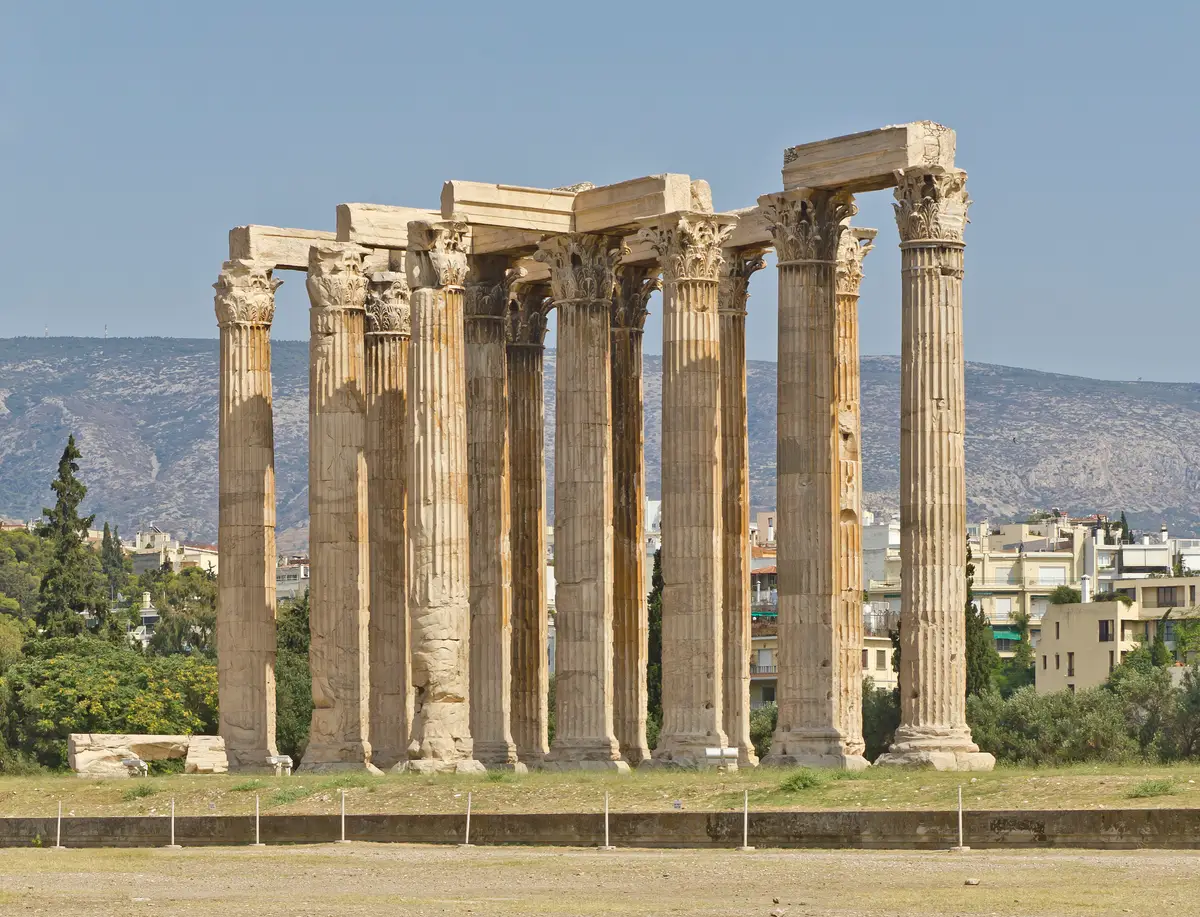
5. Temple of Olympian Zeus and Hadrian's Arch
Peisistratos laid the foundations around 550 BC and the temple then stood unfinished for six centuries. The tyranny fell and the money stopped, the Seleucid king Antiochus IV restarted the work in 174 BC and died ten years later, and Hadrian finally dedicated the building around AD 131, setting his arch on the pavement beside it where the old Greek city ended and his new quarter began. Of 104 columns, 16 are left, 15 of them standing.
The sixteenth was brought down by a storm in 1852 and has been lying where it fell ever since, split into drums like a stack of coins, which is the clearest look anyone gets at how a Corinthian column was assembled. The arch is free and always visible. The enclosure is €20 full, €10 reduced, and in winter it shuts at 15:00, three hours before the Acropolis, which is how people arrive to a locked gate in January. The Olympieion page has the times.
Photo: A.Savin, CC BY-SA 3.0, via Wikimedia Commons (creativecommons.org/licenses/by-sa/3.0)
6. Philopappos Hill, and the view
The monument on the summit is a tomb. Gaius Julius Antiochus Philopappos was an exiled prince of Commagene who became an Athenian citizen and a Roman consul, and after his death the city built him a two-storey marble facade in AD 114-116, turned to face the Acropolis so he would keep the best view in Athens. Half the pleasure is underfoot.
Dimitris Pikionis laid these paths between 1954 and 1957 from broken marble and stone salvaged from demolished Athenian houses, each piece set by hand, and the route he drew is still the way up. Free, open, no gate and no ticket. Go in the last hour of light for the Parthenon in profile, in shoes with grip, because the stone is uneven and polished.
Lycabettus gives the wider panorama and has a funicular. Philopappos gives the better picture of the rock. Both are on the free things worth a slot.
What each ancient site costs, and when it shuts
Adult and reduced prices as published on the official Hellenic Heritage pages for each site, read on 1 September 2026. Winter runs 1 November to 31 March at every one of them; the summer column is the closing time from 1 April to 31 August. Last admission is twenty minutes earlier in every case.
Site
Full (reduced)
Closes, summer
Winter hours
The catch
Book
Acropolis
€30 (€15)
20:00
08:00–17:00
Timed slot required; non-refundable, two changes allowed
Opens at 13:00 on Tuesdays, every week of the year
Temple of Olympian Zeus
€20 (€10)
20:00
08:00–15:00
Winter closing is three hours before the Acropolis
Roman Agora
€10 (€5)
20:00
08:00–15:00
The Tower of the Winds is inside the fence
Kerameikos
€10 (€5)
closed
08:00–15:00
The official page prints “temporarily closed” for the summer season
Aristotle's Lyceum
€5 (€3)
20:00
08:00–15:00
The cheapest state site in the centre, and nearly empty
Every site above is closed on 1 January, 25 March, 1 May, Orthodox Easter Sunday, 25 and 26 December. Entry to all of them is free on 6 March, 18 April, 18 May, the last weekend of September, 28 October, and the first and third Sunday of each month from 1 November to 31 March — the free-entry days page explains why the Acropolis Museum's own free list is shorter and different.
Tickets people book before they fly
Resellers on this page are compared against the official price printed above. The official Acropolis ticket is €30 with no booking fee; where a card below costs more, the difference buys an audio guide, a licensed guide, or the bundle of sites the official shop does not sell as a package.
from €36
Athens: Acropolis Ticket with Optional Audio or Live Guide
★★★★★★★★★★4.2(12,976 reviews)· 2 hours
Pre-booked Acropolis entry sent to your phone, with two audio-guide options and no fixed guide to keep up with. The official price is €30; this is the reseller version of the same timed slot.
The bundle the official shop does not sell: the Acropolis slot plus entry to up to five more archaeological sites, including both Agoras and the Temple of Olympian Zeus.
Athens: First Access Acropolis and Parthenon Guided Tour
★★★★★★★★★★4.8(2,568 reviews)· 2 - 4 hours
An early-morning guided walk that goes to the Parthenon before the coach groups, then the Theatre of Dionysus on the south slope. Two to four hours depending on the option.
Prices, ratings and details are the platform's own. Euro figures are the listed prices. The platform bills in your account's currency.
Who actually sells Athens: two organisations, one confusing address
Almost every ticket problem in Athens comes from assuming one seller covers the whole ancient city. It does not, and the address most guides print for the main one no longer answers.
Hellenic Heritage (hh.gr) sells the state sites
The Acropolis, the Ancient Agora, the Olympieion, the Roman Agora, Kerameikos, the National Archaeological Museum, Delphi, Sounion and Eleusis are all run by ODAP, the culture ministry's resources organisation, and sold through Hellenic Heritage at hh.gr, with the checkout at tickets.hh.gr. The rules are the same across all of them: a declared entry time on the Acropolis, no refunds, two changes up to two hours before, no large luggage, no food, no professional cameras. The ticket includes the Digital Guide app.
Checked 1 September 2026.
hhticket.gr on its own is a dead end
Guide after guide sends readers to hhticket.gr. Typed on its own, that address returns an HTTP 403 error page. The live front door is hh.gr, and its checkout then hands you to a page at hhticket.gr/tap_b2c_new/english/tap.exe, which is why the name circulates.
That path is a fossil. TAP was the Archaeological Receipts Fund, renamed ODAP when the ministry reorganised it in 2020, and the ticketing engine still carries the old acronym and an executable on the end of the URL. None of that breaks a purchase that starts in the right place.
It does mean a half-remembered or shortened link lands on an error rather than a shop, and that a page which will not load is almost never the ticket office being down. Go back to hh.gr, open the site's own page, and start the purchase again from there.
Photo: Ad Meskens, CC BY-SA 4.0, via Wikimedia Commons
The Acropolis Museum sells its own tickets, and always has
The museum is a separate legal entity with its own shop, its own opening hours and its own list of free days — 6 March, 25 March, 18 May and 28 October, which is not the state-site list. Reduced and free tickets are issued at the desk against documents, never online. Nothing sold by either organisation covers both the rock and the museum, and the combined-ticket question has a longer answer than it deserves.
What the resellers add
The official platform sells the Acropolis on its own, and that is recent. Until the ministry revised its ticket policy in 2025 there was a five-day combination ticket at €30 covering the Acropolis, Hadrian's Library, both Agoras, Aristotle's Lyceum, Kerameikos and the Olympieion. It was withdrawn, the half-price winter rate went with it, and nothing official replaced either.
So every multi-site bundle on the market now is a reseller product assembled out of single tickets, and the heritage-sites combo pass is the widely booked one. That is a legitimate convenience rather than a scam, and it is still worth pricing against the sites you will genuinely enter: the Acropolis at €30, the Ancient Agora at €20 and the Olympieion at €20 come to €70 bought directly, and the fourth entry in a bundle is often Aristotle's Lyceum, a €5 foundation-level ruin almost nobody walks to.
How many days Athens needs
The counting rule behind this table is one major site per half-day in summer and one and a half in spring, because the Acropolis in July is a fifty-minute visit, not a morning. Athens is a shorter city than Rome and a longer one than most people book.
Days
What fits
Book ahead
Skip
Itinerary
1 day
Acropolis at the 08:00 slot, Acropolis Museum after lunch, Plaka and Monastiraki in the evening
The Acropolis slot
The Agora, any day trip, the National Archaeological Museum
Athens in one day
2 days
Day one as above; day two the Ancient Agora, the Olympieion, and the National Archaeological Museum
The Acropolis slot; nothing else needs it
Day trips, Lycabettus if the light is bad
Athens in two days
3 days
The two-day plan at a slower pace, plus Philopappos at sunset, Psyri for dinner and a food walk
The Acropolis slot and any guided walk
Nothing on the must-see list
Athens in three days
4+ days
The three-day plan plus one day trip — Cape Sounion for a half-day, Delphi for a full one
The Acropolis slot and the day-trip seat
A second long coach day; Meteora eats fourteen hours
Three days plus a day trip
Athens rewards a fourth night more than most European capitals because the good day trips are genuinely good and genuinely long. Which one is worth the day is worked through on the day-trips page.
Athens Itineraries: One, Two or Three Days With the Slot Already Placed
Each plan is built round a single fixed point — the Acropolis entry time — and fills the rest of the day around the heat and the closing times.
Athens in one day
The 08:00 Acropolis slot, the museum in the air-conditioned afternoon, Plaka after the light goes: the one-day plan.
Photo: avlxyz (Flickr), CC BY-SA 2.0, via Wikimedia Commons (https://creativecommons.org/licenses/by-sa/2.0)
Eating in Athens: souvlaki by the stick, and dinner at nine
Athens eats late and cheaply if you let it. The distance between a tourist menu in Plaka and a full meal two streets away is roughly half the price and most of the quality.
What the words on the board mean
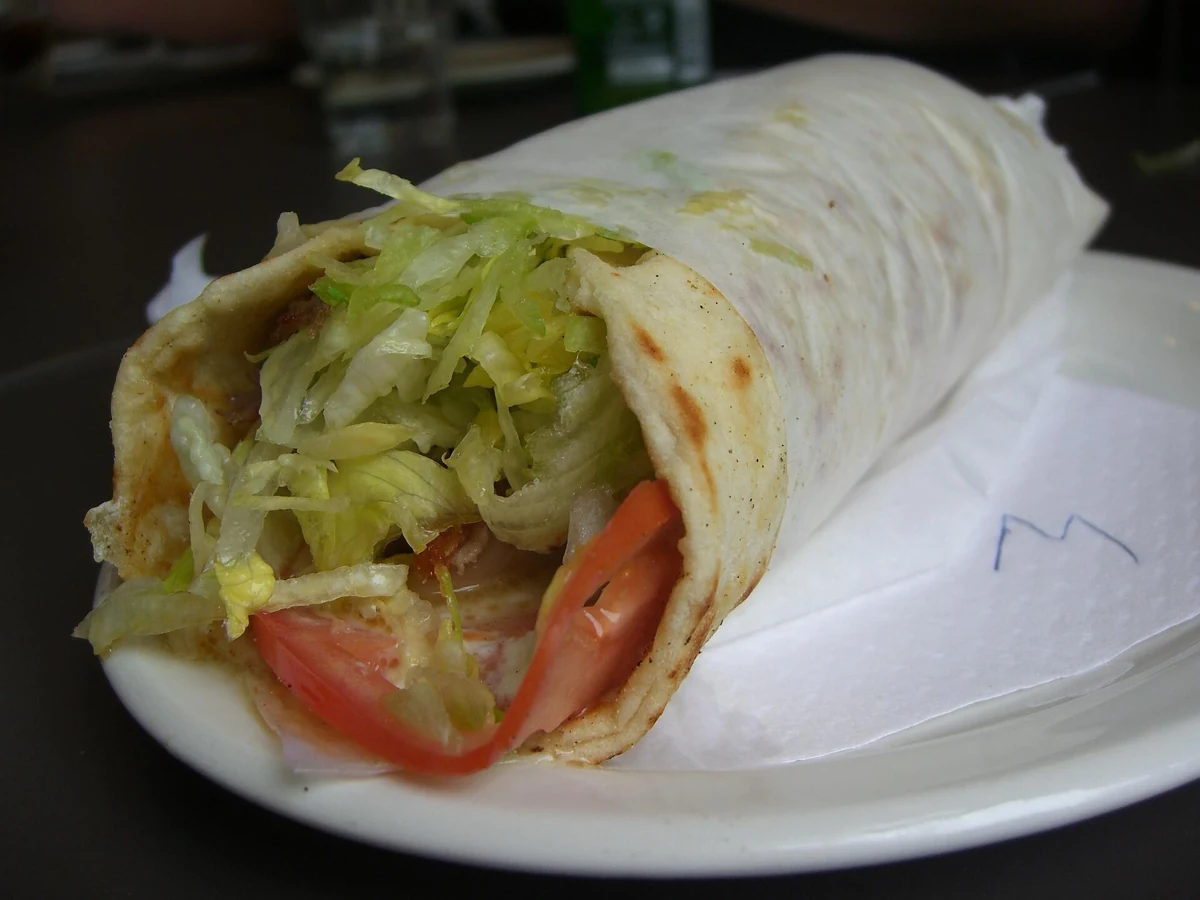
Souvlaki is meat on a skewer; gyros is the shaved cone; a pita wrap of either, with tomato, onion and chips inside, is the cheap standing lunch of the city. Order it apo ola and you get everything on it. A mezedopoleio serves small plates to share, a taverna serves cooked dishes from a tray, and a psarotaverna sells fish by the kilo — always ask the price per kilo before it goes on the grill.
Greek coffee is the small one served with a glass of water; freddo espresso is what Athens actually drinks all summer.
Where the locals eat, roughly
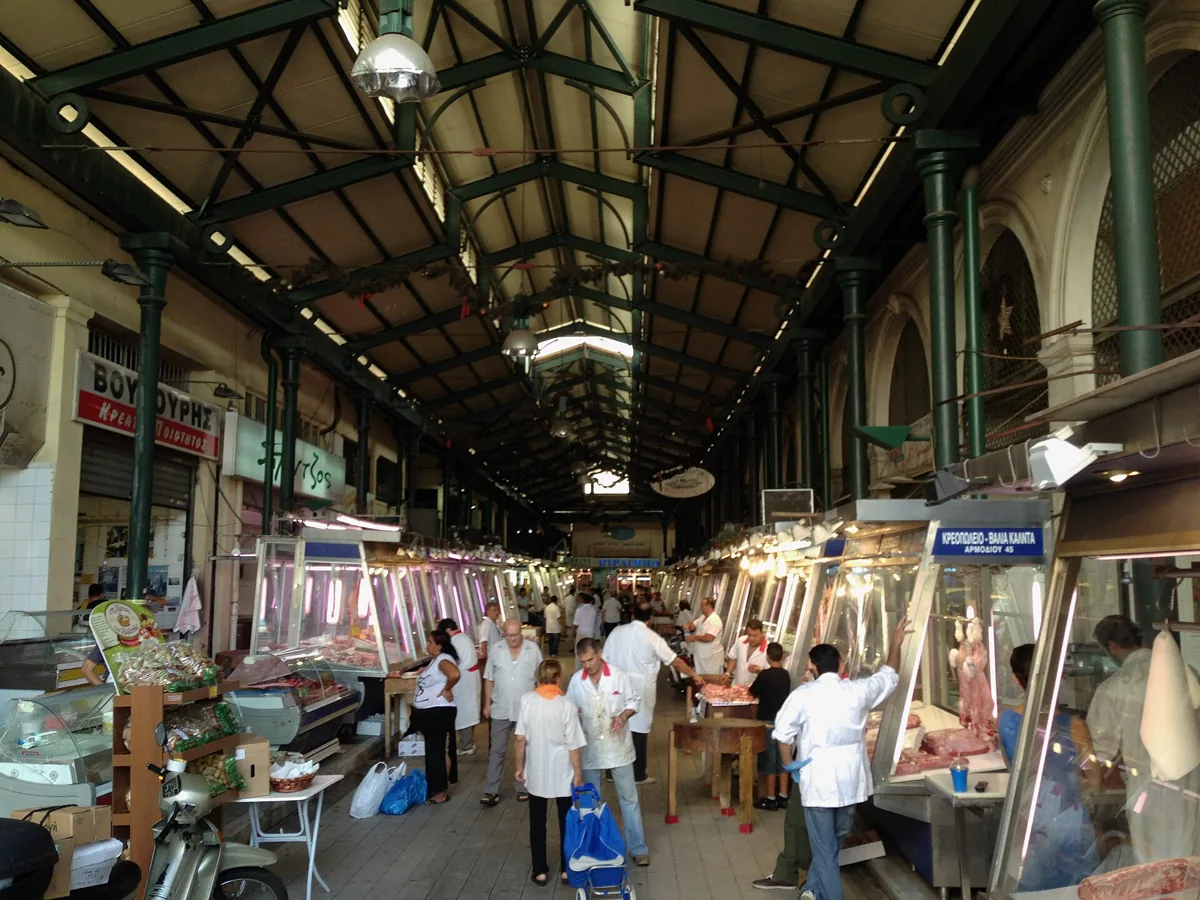
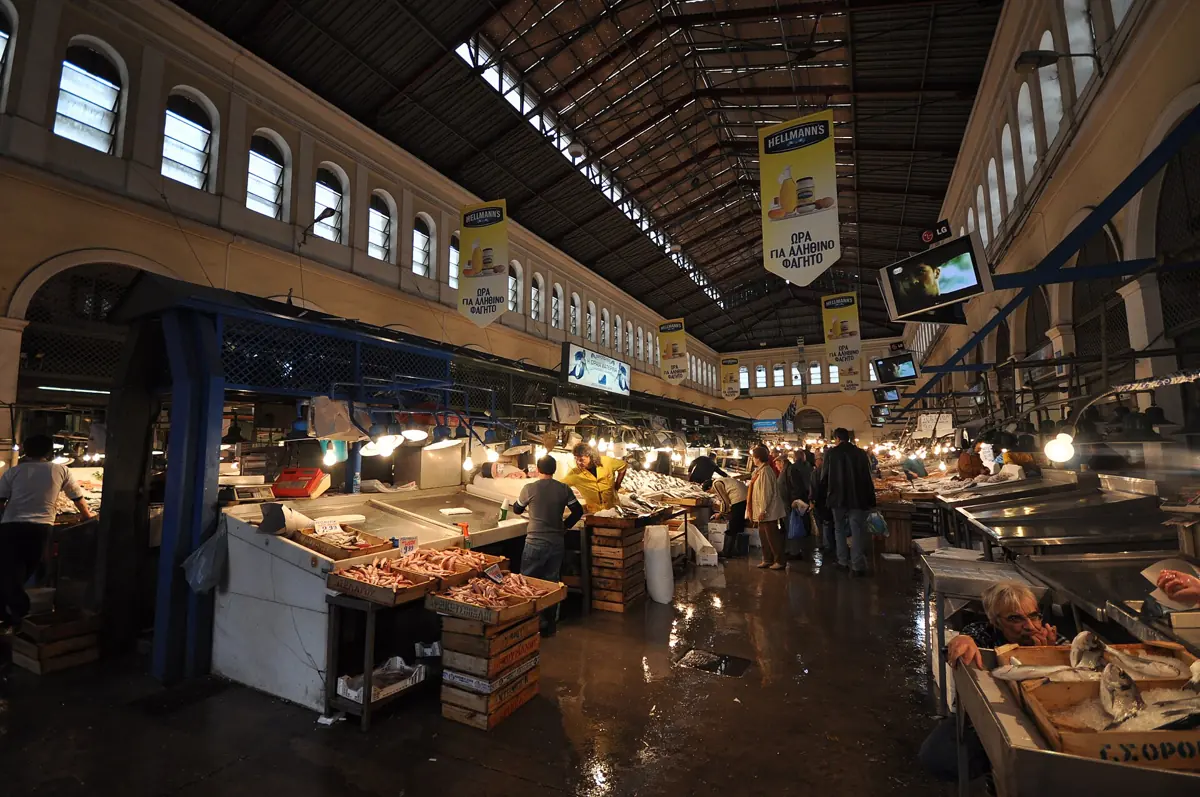
The grill streets around Monastiraki and Mitropoleos are cheap, busy and genuinely good, and they are not a secret. Psyri fills after 21:00 with mezedopoleia and bars. Exarchia is where the student money eats. Varvakios, the central market on Athinas, is open from early morning to mid-afternoon Monday to Saturday and closed on Sundays; the cook-shops inside it serve patsas at hours no restaurant keeps. The neighbourhood pages and where to eat in Athens name specific places against a citable list, not a personal favourite.
The two habits that change a trip
First, eat late. Kitchens in a Greek neighbourhood get going around nine, and a restaurant full at seven is a restaurant full of visitors. Second, share.
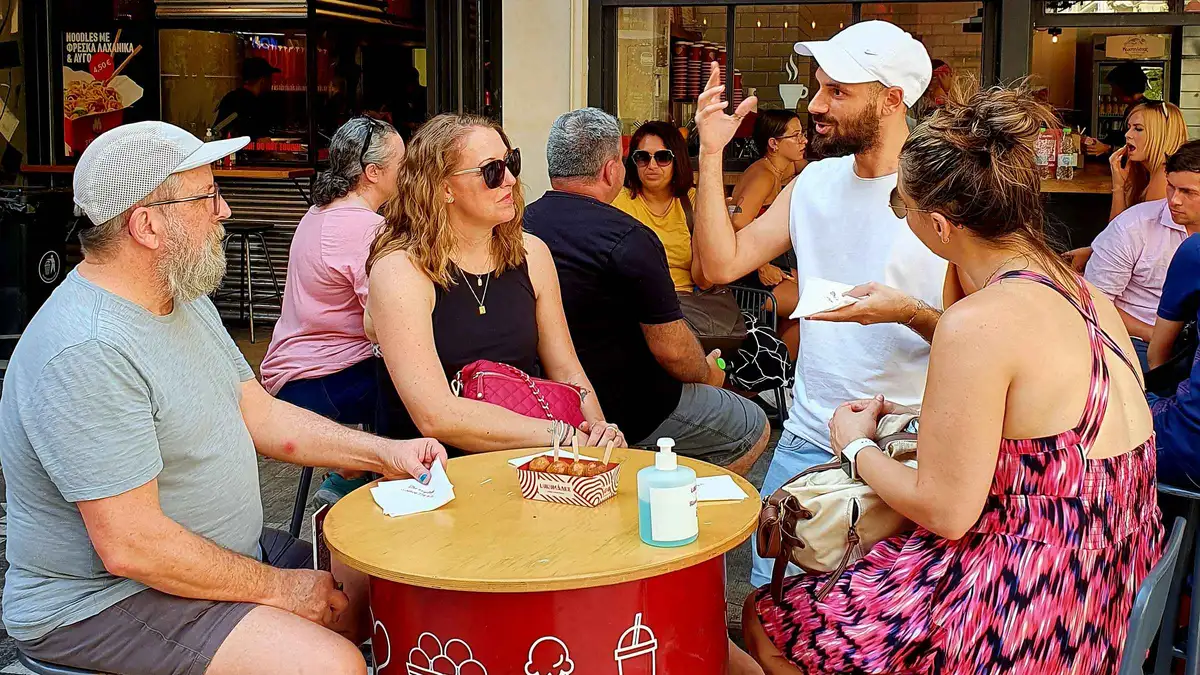
Greek menus are built for a table ordering six plates between four people, and ordering one main each is both more expensive and less interesting. A guided walk is worth it mostly for the first day, when you do not yet know which counter is which — the street-food route covers ten stops in three hours.
Food walks, and the tours that stay in the city
Three that stay inside the centre, so the hours go on eating rather than on a coach.
from €59
Athens: Street Food Tasting Tour
★★★★★★★★★★4.9(3,946 reviews)· 3 hours
Three hours of Athenian street food with beer or wine, moving between the counters locals use rather than the ones on the tourist lanes.
Prices, ratings and details are the platform's own. Euro figures are the listed prices. The platform bills in your account's currency.
Photo: Marshallhenrie, CC BY-SA 4.0, via Wikimedia Commons (https://creativecommons.org/licenses/by-sa/4.0)Photo: George E. Koronaios, CC BY-SA 4.0, via Wikimedia Commons (https://creativecommons.org/licenses/by-sa/4.0)
The dates that change the trip
Five fixed dates open every state site for nothing, six close them entirely, and between November and March two Sundays a month are free. None of it is advertised at the gate.
Free entry, and when it is worth it
Admission to the state sites — the Acropolis included — costs nothing on 6 March, 18 April, 18 May, the last weekend of September and 28 October, and on the first and third Sunday of each month from 1 November to 31 March. The widely repeated “first Sunday only” is wrong; the official pages list both Sundays. In November and February a free Sunday is a pleasant morning.
On 18 May, International Museum Day, in warm weather, the queue is the day. The free-entry page weighs each date against the crowd.
Closed days that catch people out
Every state site and the Acropolis Museum shut on 1 January, 1 May, Orthodox Easter Sunday, 25 and 26 December; the state sites also close on 25 March, which is the day the Acropolis Museum gives free entry instead. Orthodox Easter moves every year and is usually not the same weekend as the Western one — a trip booked for a Western Easter can land squarely on a Greek one. The opening-hours table puts the year's closures on one page.
The Tuesday and winter traps
Both traps come from the same place: these are ministry sites with ministry rosters, and the rosters turn over on 1 November rather than with the weather. The National Archaeological Museum opens at 13:00 on Tuesdays all year, the other half of the late shift that keeps it open until 20:00 that evening, and it is the most commonly wasted morning in Athens. From 1 November the Olympieion, the Roman Agora, Kerameikos and Aristotle's Lyceum all close at 15:00 while the Acropolis runs to 17:00, so the afternoon plan that works in June walks you into three locked gates in December.
Kerameikos carries a second warning: the official page has been printing "temporarily closed" under its summer hours, so check that one before routing a morning around it. The opening-hours table holds all six seasonal bands.
Athens month by month
Mean daily temperature by month, averaged from the Open-Meteo ERA5 archive for 2016 to 2025 at the city centre, in Celsius with Fahrenheit underneath. The bands come from the site calendar and the heat, not from opinion.
8.9°C48°F
JanuaryJan
10°C50°F
FebruaryFeb
12°C54°F
MarchMar
15.8°C60°F
AprilApr
20.3°C69°F
MayMay
25.6°C78°F
JuneJun
28.7°C84°F
JulyJul
27.9°C82°F
AugustAug
23.9°C75°F
SeptemberSep
18.9°C66°F
OctoberOct
14.9°C59°F
NovemberNov
10.9°C52°F
DecemberDec
Comfortable on the rock, long light
Peak heat and peak crowds; book the first slot
Wettest months, shortest site hours
Cheap, quiet, two free Sundays a month
December is the wettest month in the average, near 96 mm, and July the driest, near 10 mm. Rain is rarely what spoils an Athens day; the heat in the middle of July is.
Photo: Badseed, CC BY-SA 3.0, via Wikimedia Commons (http://creativecommons.org/licenses/by-sa/3.0/)Photo: Tilemahos Efthimiadis, CC BY-SA 2.0, via Wikimedia Commons (https://creativecommons.org/licenses/by-sa/2.0)
Getting around Athens: three metro lines and one fare trap
The centre is walkable end to end and the metro covers everything else. The only place the arithmetic gets interesting is the airport.
What a ticket costs
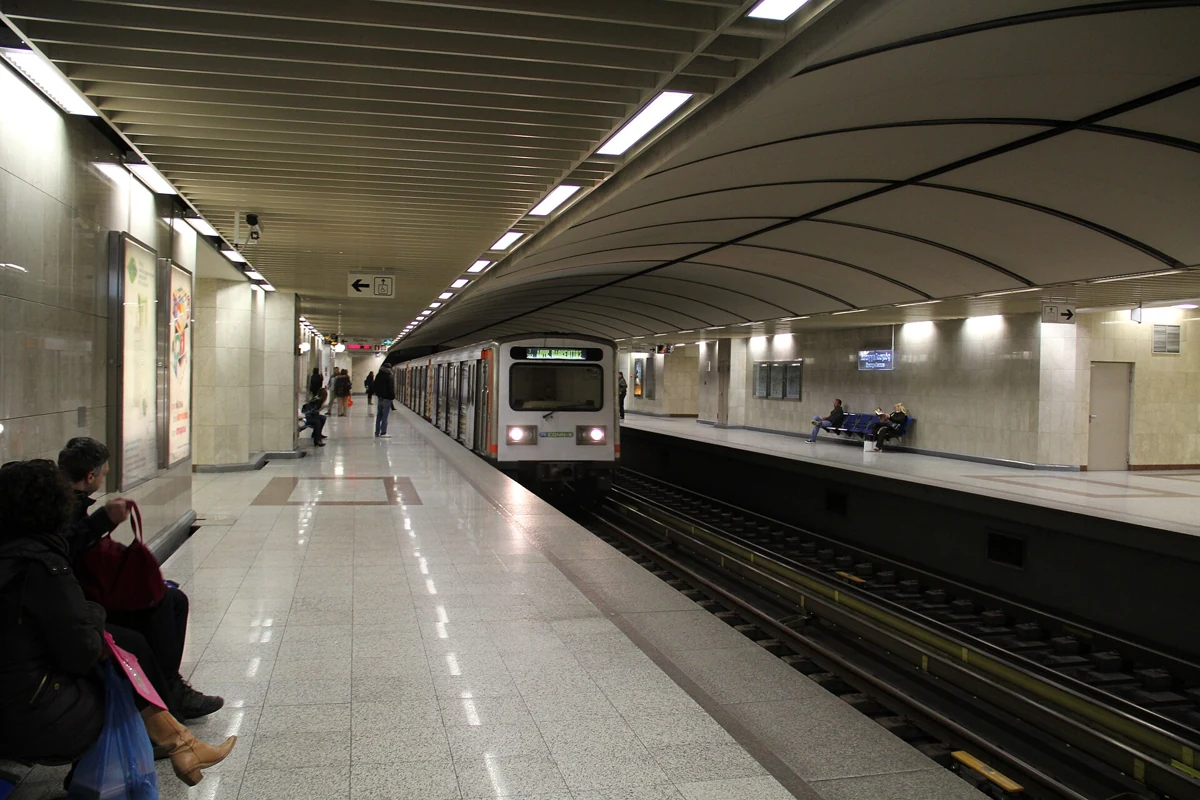
A single ticket is €1.20 and runs for ninety minutes across metro, bus, trolley and tram, transfers included. A day ticket is €4.10, five days €8.20. The three-day tourist ticket is €20 and includes two airport metro journeys, which is the one that pays for itself: bought separately, an airport return alone is €16.
Prices from the OASA product list, read on 1 September 2026. Tickets load onto the paper Ath.ena ticket or the Ath.ena card, and contactless bank cards work at the gates. Getting around Athens has the full table.
The airport, and the midnight €15
Metro Line 3 runs from the terminal into the centre for €9 one way, €16 return valid thirty days, reduced €4.50. The X95 express bus to Syntagma is €5.50 and runs around the clock. A taxi is a regulated flat fare: €40 to the city centre between 05:00 and midnight, €55 between midnight and 05:00.
The charge is set by the time you arrive, not the time you leave — a 23:45 pickup that reaches the hotel at 00:10 is a €55 ride. Greek law requires the driver to issue a receipt. The airport page does the arithmetic for one, two and four travellers.
Walking, and what not to walk
Dionysiou Areopagitou is the reason Athens walks better than the map suggests. It was pedestrianised under the Unification of the Archaeological Sites programme, the scheme Melina Mercouri pushed as culture minister and the city finished ahead of the 2004 Games, and it now links the Acropolis Museum, the south slope, the Odeon of Herodes Atticus and Thiseio in one flat twenty minutes without a traffic light. The paving on the slope paths above it is Pikionis' work from the 1950s, which is beautiful and slippery in rain.
What does not walk: Lycabettus, a real climb unless you take the funicular from Aristippou, and Piraeus, which is Line 1 or Line 3 and about half an hour. Plaka's lanes are marble too, so a wet morning there runs slower than the distances promise.
Photo: athenswalk, CC0, via Wikimedia Commons (http://creativecommons.org/publicdomain/zero/1.0/deed.en)Photo: Jorge Láscar from Australia, CC BY 2.0, via Wikimedia Commons (https://creativecommons.org/licenses/by/2.0)
What Athens costs per day
Athens is the cheapest of the major classical capitals to eat in and no longer the cheapest to enter. The gap between a careful day and a comfortable one is smaller than in Rome.
A sightseeing day, costed
On a day with one major site, a day transport ticket at €4.10, a pita lunch for about €4 and a taverna dinner shared between two, a careful traveller spends roughly €45 to €55 a head before the hotel. Swap the pita for a sit-down lunch and the figure moves to about €75. The single biggest line is the Acropolis at €30, and it is a once-per-trip cost, not a daily one. The costs page breaks it down by traveller type.
Where the money leaks
Three places, and all three are priced for people who did not look anything up. The tourist menus on the Plaka lanes with a view of the rock run roughly double a grill counter two streets away in Monastiraki, for a worse plate, because what you are paying for there is the rent under the Acropolis. Airport taxis are the second: the regulated flat fare is €40 to the centre and €55 between midnight and 05:00, and it is the time you arrive that decides which, so a 23:45 pickup reaching the hotel at 00:10 is a €55 ride.
The third is a reseller bundle bought for sites you were never going to enter, which is how a €30 Acropolis ticket becomes €70 of entries you use half of. None of them is a scam, and all three are avoidable.
Strikes: the Athens variable nobody puts in a planner
A Greek general strike can stop the metro, the buses and the ferries, and close state museums, with a few days' notice and no English-language announcement.
How you find out
The notice period is set by law rather than by courtesy. Greek unions must give the employer 24 hours' notice of a strike and four days where a public utility or public service is involved, which is why a walkout that stops the metro becomes public two to four days ahead and rarely earlier. There is no official English-language calendar.
The live Greek listing is apergia.gr, which collects the announcements as they are filed, and OASA posts its own service notices under Announcements on oasa.gr, including which lines keep a skeleton service through the day. Ferry strikes are called separately by the seamen's federation and can strand a Saronic day out with a morning's notice, which matters if Aegina or Hydra is the one fixed thing in the week.
What it does to a booked ticket
State sites are staffed by ministry employees, so a public-sector strike can shut the Acropolis at short notice — and Hellenic Heritage tickets are non-refundable by their own terms. What you have is the change rule: two changes per ticket, up to two hours before the slot. Watching apergia.gr the evening before, and moving the slot early if something is called, is the whole defence. The strikes page explains how the notices read.
Out of the city for a day: the four routes that work
Delphi and the Argolid are full days by road; Cape Sounion is a half-day for sunset; Meteora is fourteen hours by coach and rather less punishing by train.
from €39.10
From Athens: Small-Group Delphi, Museum & Arachova Day Trip
★★★★★★★★★★4.8(2,666 reviews)
The same route in a small group, with the Delphi museum and Arachova, under the Parnassus cliffs.
Prices, ratings and details are the platform's own. Euro figures are the listed prices. The platform bills in your account's currency.
Photo: Zde, CC BY-SA 4.0, via Wikimedia Commons (https://creativecommons.org/licenses/by-sa/4.0)Photo: Tilemahos Efthimiadis from Athens, Greece, CC BY-SA 2.0, via Wikimedia Commons (https://creativecommons.org/licenses/by-sa/2.0)
Pick a neighbourhood before you pick a hotel
Athens is compact enough that every central area is walkable to the rock; what changes between them is the evening and the price.
Koukaki and Makrygianni: closest to the gate
This is a factory district that grew a museum. Koukaki takes its name from Georgios Koukakis, who moved his iron bed works here at the turn of the twentieth century and pulled a working-class neighbourhood in around it, and it stayed residential long enough to keep ordinary bakeries and ordinary prices. Then the Acropolis Museum landed on the Makrygianni plot next door and the walk to the south entrance became the shortest in the city, eight to twelve minutes on the flat with most of it on the pedestrian avenue.
Stay here if the 08:00 slot is the point of the trip, or if you want dinner at a table where the conversation beside you is Greek. It is quiet after midnight, which cuts both ways: the late bars are fifteen minutes away in Psyri rather than under the window. Koukaki has the walk times.
Plaka and Monastiraki: the postcard, at the postcard price
Plaka is old Athens partly by accident. The stepped lanes at the top of it, Anafiotika, were put up in the 1840s by masons brought from the island of Anafi to build King Otto's palace, who raised Cycladic houses overnight on ground that was not theirs. About 45 of those houses survive, and that is the postcard everyone photographs.
It now also holds the highest concentration of tourist restaurants in Greece, priced to match. Monastiraki downhill is the trade side: the flea market, two metro lines, and the Tzistarakis mosque of 1759 on the square, built by an Ottoman governor who was said to have pulled down a column of the Olympieion to burn for its lime. Sleep in Monastiraki for the transport and accept the noise, in Plaka for the setting and accept the price. Plaka and Monastiraki compare the two.
Psyri, Kolonaki, Exarchia: three different evenings
Three different evenings, and each name explains the place. Psyri was the rough quarter of nineteenth-century Athens, the ground of the knife-carrying koutsavakides, and it kept the low workshops and narrow lanes that now hold the late dinner tables. Kolonaki is named after a two-metre column that stands in its square, and it was built for families who wanted to live within walking distance of the palace once the palace went up, which is why it is the expensive one and why it goes quiet early. Exarchia took its name from a nineteenth-century shopkeeper and its politics from 17 November 1973, when the army broke into the Polytechnic and ended the student occupation, an event the country still marks with a public holiday for schools. It is cheap, loud, student-run at night and described badly by most guidebooks. The full comparison, with walk minutes and what each costs, is on where to stay in Athens.
Six Questions Before You Book Anything
The things people ask a week before the trip, each answered from the page of this guide that owns the subject.
What actually gets stolen in Athens?
Wallets and phones, at the moment people board a crowded train on Lines 1, 2 and 3 and around Monastiraki. The costlier risk is not theft at all: an inspector who finds you with an unvalidated ticket is legally obliged to impose a €100 fine, €50 on a reduced fare, and it quadruples if it goes unpaid for sixty days. The scams, and the fine, in detail.
Can a strike close the Acropolis?
Yes. The state sites are staffed by ministry employees, so a public-sector walkout can shut the rock with a few days' notice, and the notice is published in Greek only. Your ticket is non-refundable, but the entry slot can be moved twice, free, up to 120 minutes before it. How to read the strike calendar.
Is a bundled city pass cheaper than the two tickets?
No official Athens pass exists, and the two tickets that matter come to $58.10 (€50) bought straight from their own shops. The reseller bundles list from $91.70 (€78.90) and the difference is a 48-hour hop-on hop-off bus, so the pass pays only if you would have bought that bus anyway. The arithmetic against its parts.
Will my phone work in Greece?
With an EU or EEA SIM, yes, at your normal domestic price — Regulation (EU) 2022/612 forbids any roaming surcharge anywhere in the Union. With a non-EU SIM, buy an eSIM before you fly rather than paying an operator roaming rate, and note that 112 works free from any handset regardless. SIMs, eSIMs and where the wifi is good.
When do the Evzones change guard?
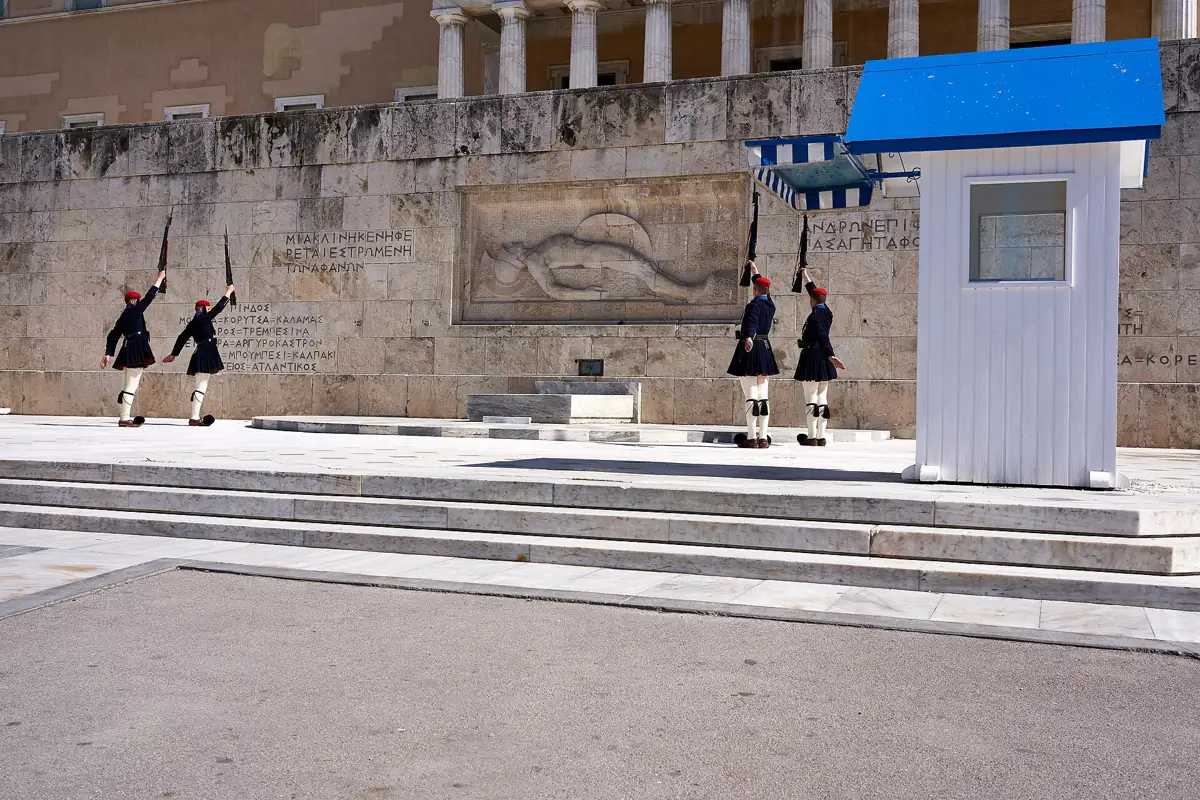
Every hour on the hour at the Tomb of the Unknown Soldier on Syntagma, day and night, in any weather, and it costs nothing. The big version — a full contingent with a military band marching from the Guard's camp — is Sunday at 11:00, and a place is worth taking by 10:40. Both ceremonies, and where to stand.
Can a wheelchair get to the top of the rock?
Yes. A lift on the north face carries visitors with mobility impairments to the plateau just north of the Erechtheion, and both the North and South Slopes are accessible with an attendant. The complication is the approach: the lift sits about 300 metres from the archaeological site's exit, so it is planned separately from the ticket. Every accessible route, sourced.
Athens questions people ask before they land
What is Athens, Greece known for?
The Acropolis and the Parthenon above the city, the Ancient Agora where Athenian democracy met, the National Archaeological Museum's Mycenaean gold and the Antikythera mechanism, and a food culture that eats late and shares plates. The places those things are in sit on the must-see list in walking order.
How many days do you need in Athens?
Three nights covers the Acropolis, the Acropolis Museum, the Ancient Agora and the National Archaeological Museum at a pace that leaves evenings free; two is enough if you skip the national collection. A fourth night is worth it only if you take a day trip. The day-count table sets it out, with what to drop at each length.
Is Athens walkable?
The ancient centre is: Syntagma to the Acropolis south entrance is about twenty minutes on foot, and Dionysiou Areopagitou links the museum, the slopes and Thiseio on one flat pedestrian avenue. What is not a walk is Lycabettus, which is a climb or the funicular, and Piraeus, which is the metro. Routes and fares are on getting around Athens.
Do you have to book the Acropolis in advance?
Yes — entry is by declared time slot, so the ticket carries a date and an hour. In summer the early slots go first because the rock is unshaded by ten in the morning. The official ticket is €30, non-refundable, and changeable twice up to two hours before entry; the Acropolis entry ticket is the reseller version with an audio option. The rules are on the Acropolis ticket page.
Is there one ticket for the Acropolis and the Acropolis Museum?
No. They are separate organisations with separate shops, hours and free days, and nothing sold by either covers both. Resellers bundle them — the Acropolis and museum combo is one — but that is a commercial package, not an official pass. The combined-ticket page shows what is and is not sold.
What is the best month to visit Athens?
April, May, late September and October: the mean daily temperature sits between roughly 16 and 24°C, the sites keep long hours and the rock is bearable at midday. July and August average close to 28°C with almost no shade on the Acropolis. The month-by-month chart is above, and the best time to visit adds the crowd and price picture.
Is Athens expensive?
Less than Rome or Barcelona to eat in, and about the same to enter. Reckon roughly €45 to €55 a head on a sightseeing day before the hotel, with the Acropolis's €30 as a once-per-trip line rather than a daily one. What Athens costs breaks it down.
Athens on Video: Three Guides Worth the Time
Three filmed guides — one practical, one classic, one about what has changed this year. Between them they show the distances and the pace that a written page cannot.
52 Tips I Wish I Knew Before Visiting Athens, Greece
Practical ground covered in one visit: tickets, timing, transport and the small rules.
Video: Camden David
Athens and Side-Trips
The classical city and the trips out of it, from a long-running travel series.
Video: Rick Steves' Europe
Athens Is Changing in 2026 (Here's What Tourists Need to Know)
What has moved this year — rules, prices and the way the sites are being managed.
Video: Greece Explained
Videos load from YouTube only when you press play.
The one ticket to book before anything else
Timed entry to the Acropolis, rated 4.2 from more than 12,000 reviews on the platform, with the audio guide as an option and free cancellation on the flexible rate.
Official price €30 with no booking fee; the card above shows the reseller price on the check date.
The office, phone and email above belong to the city's own visitor service, published on the official tourism site and checked on 2026-09-01 — they are not this site's contact details. To reach us, use the contact page.
 Visit Athens Guide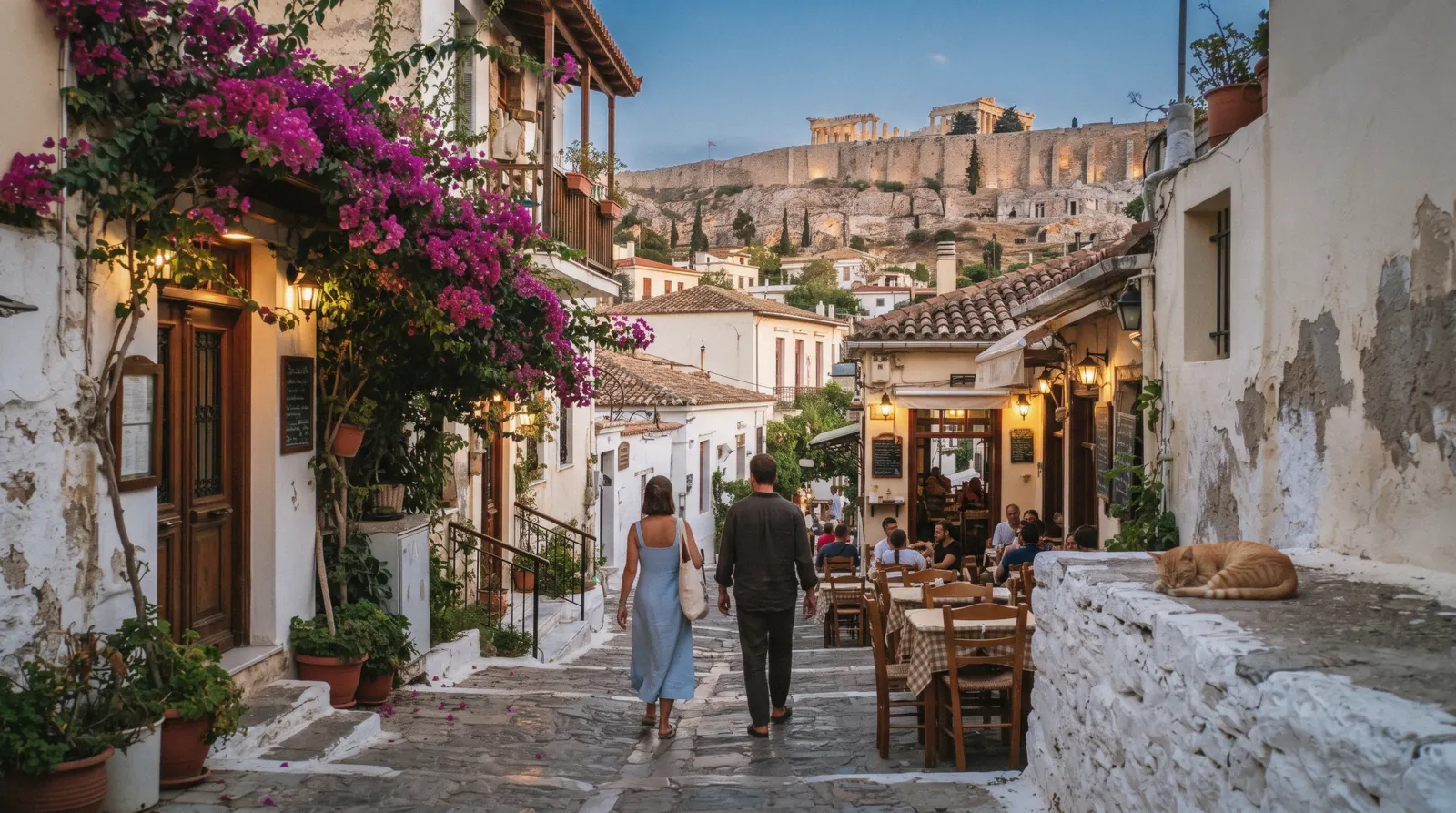
 from €36