 Visit Athens Guide
What Is Actually Closed in Athens, and On Which Day
What is closed in Athens is not one calendar but four, because four organisations run the things visitors want to see and none of them uses the others' dates. Two museums close on Tuesdays while a third opens at one in the afternoon; six fixed dates close everything state-run; Orthodox Easter moves and is usually not the Western date; and one central archaeological site is currently listed as closed with no reason and no end date. This post puts all of it in one place, read on the official pages in Q3 2026. The seasonal hours are on the opening-hours table, and for the rest of the city see what to see in Athens greece.
Quick answer The weekly closures, the fixed dates, and the one that moves
Weekly: the Museum of Cycladic Art and the Byzantine and Christian Museum close on Tuesdays, and the National Archaeological Museum opens at 13:00 that day. Annually: 1 January, 25 March, 1 May, Orthodox Easter Sunday, and 25 and 26 December close everything state-run.
Key takeaways
- The weekly closures are the ones that ruin a specific morning, and Tuesday is the day to plan around.
- The fixed dates close the Acropolis — and on one of them the Acropolis Museum is free and open.
- Orthodox Easter moves and is usually not the Western date, which catches spring trips.
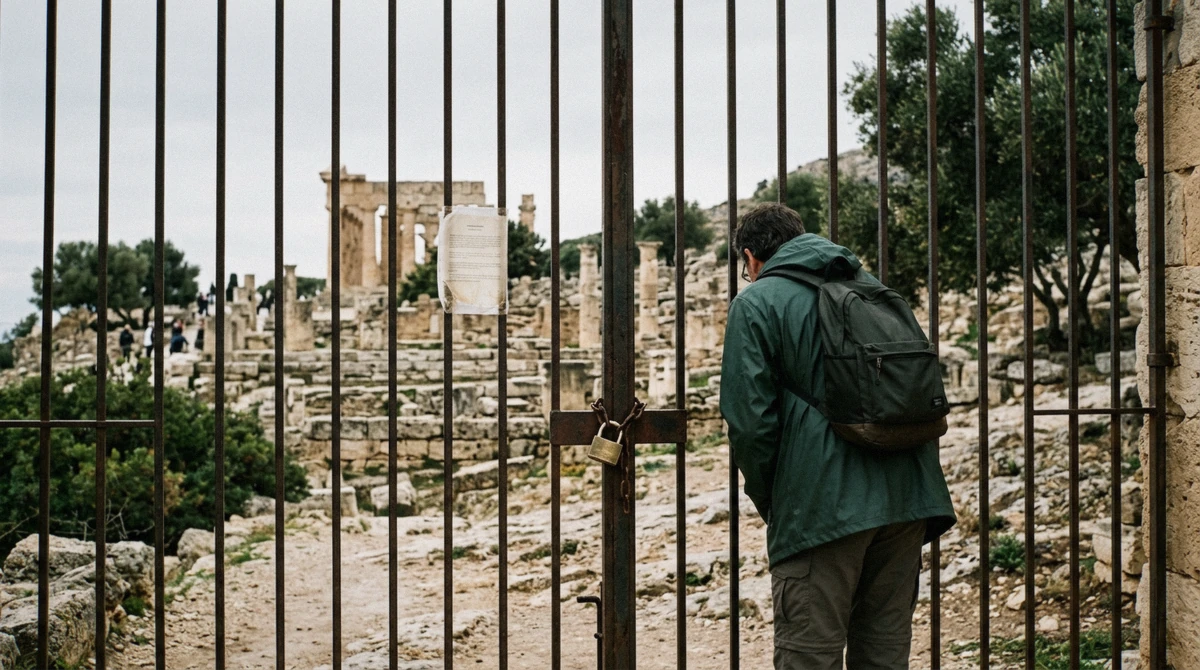
- Kerameikos is listed as temporarily closed on its own official page, with no reason and no end date.
- And the unscheduled kind: strikes and heatwaves can shut sites at a few days' notice or less.
The weekly closures
Read on each organisation's own pages on 1 September 2026. The archaeological sites do not close weekly at all — this is a museum problem.
| Place | Closed weekly | Also worth knowing |
|---|---|---|
| Museum of Cycladic Art | Tuesday | Thursday runs to 20:00; Sunday opens at 11:00 |
| Byzantine and Christian Museum | Tuesday | Shuts at 15:30 every day it opens |
| National Archaeological Museum | Never — but opens at 13:00 on Tuesdays | Then runs to 20:00 in summer |
| Eleusis | Tuesday, all year | One of the few state sites with a weekly closure |
| Ancient Corinth | Tuesday, in winter only | On the Argolid day-trip route |
| The Acropolis and the central sites | Never | Only the fixed dates below |
| Acropolis Museum | Never | Fridays to 22:00 all year |
A Tuesday in Kolonaki is the single most wasted morning available in Athens: both museums on Vasilissis Sofias are shut, and the national collection twenty minutes away does not open until one. Put an archaeological site in that morning instead — none of them closes weekly.
The fixed dates
The state sites and museums share one list; the Acropolis Museum keeps a shorter one. Both read on their own pages on 1 September 2026.
| Date | State sites and museums | Acropolis Museum |
|---|---|---|
| 1 January | Closed | Closed |
| 25 March | Closed — national holiday | Open, and free |
| 1 May | Closed | Closed |
| Orthodox Easter Sunday | Closed | Closed |
| Orthodox Good Friday | Open | 12:00–18:00 |
| Orthodox Holy Saturday | Open | 09:00–15:00 |
| 24 and 31 December | Open | 09:00–15:00 |
| 25 and 26 December | Closed | Closed |
The 25 March row is the one to write down. Greek Independence Day closes the Acropolis and every other state site, and the Acropolis Museum is not only open but free — so a day that looks like a write-off is actually a good museum day. The free-entry page has the rest of that calendar.
Orthodox Easter, which moves
The single most common way a spring trip runs into a closed gate.
It is usually not the Western date
The Greek Orthodox church calculates Easter by a different method, using the Julian calendar, and in most years the result lands on a different Sunday from the Western one. Sometimes the gap is a single week. Sometimes it is five weeks, which puts Greek Easter deep into May while Western Europe has long finished.
The practical consequence for a traveller is simple. A trip booked around a Western Easter school holiday can fall squarely on the Greek one, with closures and crowds, or miss it entirely and leave you wondering what everyone in the taverna is talking about. Work out the Greek date for your own travel year before you fix flights or hotels, because the two calendars only occasionally agree and you cannot assume they will.
What closes, and when
The state sites and museums close on Orthodox Easter Sunday itself, so do not plan Acropolis time for that day. The Acropolis Museum runs short hours around the feast. On Good Friday it opens 12:00 to 18:00, and on Holy Saturday 09:00 to 15:00, which is a much shorter window than the usual day.
The city itself thins out around the holiday. Athenians travel to family villages in large numbers, restaurants in central neighbourhoods close for the weekend, and buses, trains and ferries are heavily booked in both directions. Book any intercity transport well ahead, and expect quieter streets on the day itself.
If your visit depends on site access, keep the Saturday morning for the major sights and leave Easter Sunday for a walk.
What it is like if you are there
Good Friday evening brings funeral processions through Plaka and every other neighbourhood, with epitaphios biers carried through the streets behind choirs. On Saturday night the resurrection service runs past midnight, and people carry lit candles home through the streets, lighting each other's as they go. Sunday is lamb, roasted for hours, and red eggs cracked one against another.
It is the most interesting week of the Greek year to be in the country and the worst one to try to see museums in, because the sites close and the museums run reduced hours. Athenians who have gone to their villages come back relaxed and the city fills again. Check the exact date for your travel year before you book anything, since it moves every year.
The one that is closed with no end date
A fact with a short shelf life, and no English-language source tracks it.
What the official page says
On the Hellenic Heritage page for Kerameikos, under the heading "Summer hours", the line reads: "The site is temporarily closed." That is the whole notice. Below it the winter hours are still printed, along with the €10 ticket price and the usual free-entry dates, which makes the page look half open and half shut. Kerameikos is the old potters' quarter, the place that gave the word ceramic to the world, and the city's main cemetery.
The Dipylon, the largest gate of the ancient world, stood here. So a printed summer-hours line matters to anyone planning a morning there. The honest reading is that the official page itself does not currently promise the site is open, whatever the winter table says underneath.
What it does not say
No reason is given, no expected reopening date, and no announcement anywhere else on the platform. The Ancient Agora carried a dated two-Sunday closure notice for restoration work in the same spare style, so this kind of bare sentence is not unusual for the ministry. But it means nobody, including us, can tell you whether Kerameikos will be open on the day you arrive.
There is nothing to plan around, no published date to work backwards from. Treat the site as uncertain rather than closed or open. If it features in your itinerary, build a second plan for the same morning and check close to your travel date, because a closure with no end date can end at any time without anyone flagging it.
How to check, and what to do instead
Open hh.gr/en/destinations/kerameikos and look at the summer-hours block. If the sentence about temporary closure has gone, the site is open. If it is still there, you can try the guardhouse number, +30 210 3416117, and ask directly.
If it is shut, the Ancient Agora is the closest thing in feel and is open all year. It is the ground where the assembly's business, the courts and the market of classical Athens actually sat, so you get the civic life of the city rather than a cemetery, and plenty of standing ruins for your ticket. Kerameikos sits north of the centre, the Sacred Way to Eleusis began at its Sacred Gate, and the surrounding streets are quiet, so a replacement morning there is no great loss.
The closures nobody schedules
Two kinds, and both are announced with days rather than weeks of notice.
Strikes
State sites are staffed by ministry employees, so a public-sector strike can shut the Acropolis for the whole day with very little warning. By law the unions must give at least 24 hours' notice, and four days where a public utility or public service is involved, so a little attention buys you real warning time. There is no official English-language calendar.
The live Greek listing is apergia.gr, and OASA posts transport service notices. Your Hellenic Heritage ticket is non-refundable if a strike ruins your slot, but it is not helpless. You can change it twice, up to two hours before the booked time, which lets you move to another day in the same trip. The strikes page explains the mechanism step by step.
Heatwaves
During official heatwaves the culture ministry has repeatedly closed the Acropolis and other open-air sites through the hottest hours, typically midday to 17:00, and the announcement comes a day or less in advance. That makes it easy to arrive at the gate at the wrong time with a paid ticket in hand. Work outdoor sites into the early morning during a heatwave, because the closure window eats the middle of the day exactly when you would most want shade.
Municipalities open air-conditioned rooms during these periods, which is a decent place to spend the afternoon. Outdoor work is restricted by ministerial decision during the alert. Athens in the heat covers timings, water and what to see indoors when the hill is shut. If a closure window eats the middle of your day, comparing athens tours and athens walking tours helps you pick a format that still works around the shutdown hours.
Performance set-up
The Odeon of Herodes Atticus closes to daytime visitors whenever a performance is being rigged, which through the summer festival is a good share of days. The theatre was built in AD 161 by Herodes Atticus in memory of his wife Aspasia Annia Regilla, seats 5,000, and hosts the Athens Epidaurus Festival every summer. Staging a festival of that size means lighting, seating and sound gear going in and out on a rolling basis, and the fence goes up while it happens.
There is no general admission to the odeon at any time, so this is not a separate loss on top of your ticket. Your Acropolis ticket still works for the rest of the site, and the odeon's seating tiers are visible from the path above it.
The habit that covers all three
Check the evening before any day you have already paid for. Strikes carry at least 24 hours' legal notice, heatwave closures are announced a day or less ahead, and festival rigging follows a published events calendar, so the evening before is when all three become visible. Five minutes with apergia.gr, the events listings and the ministry announcements is the difference between moving a slot in time and losing it.
The ticket rules help you if you catch it early. Hellenic Heritage tickets are non-refundable, but each one allows two changes up to two hours before the booked slot, so an evening check that flags a problem still leaves you a free move. Make it part of the routine along with checking the next day's weather.
If you find something shut
If it is Tuesday and you are in Kolonaki
walk down to an archaeological site — none of them closes weekly. The ancient sites hub prices the eight in the centre.
If it is 25 March
the Acropolis Museum is open and free, and the state sites are shut. The museum page has the hours.
If Kerameikos is closed
the Ancient Agora is ten minutes away, open all year, and has the best-preserved Doric temple in Greece on the hill above it.
If a strike has closed the state sites
the Acropolis Museum, the Cycladic and the Benaki are independent and stay open, and so do the hills and the National Garden.
If the Acropolis is shut for heat
move your slot immediately — two changes are allowed up to two hours before — and take a museum instead.
If it is Orthodox Easter Sunday
nothing state-run is open. Walk Plaka and Philopappos, which have no gates, and eat late.
What still runs when the gates do not
Walks and private museums are independent of the state calendar.
 from €18
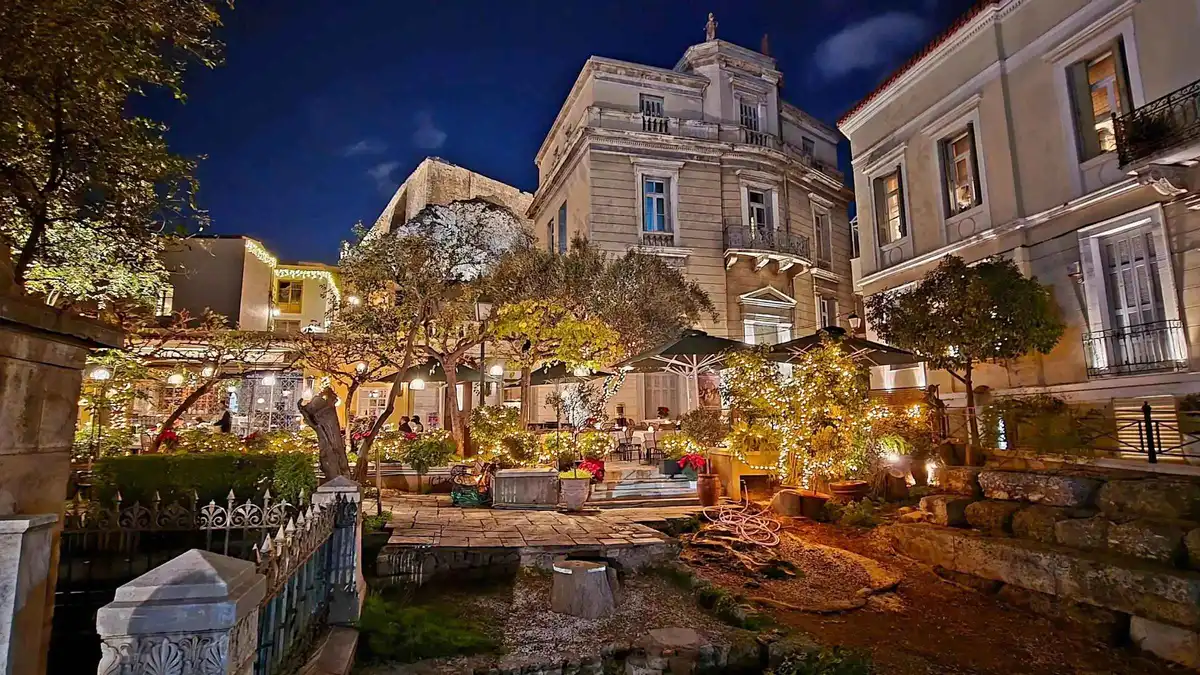
Athens: Night Walking Tour with Local Guide
Two hours after dark through the historic centre, the Cathedral, Anafiotika, Monastiraki and Plaka, with a local guide and no museum entries.
Check Availability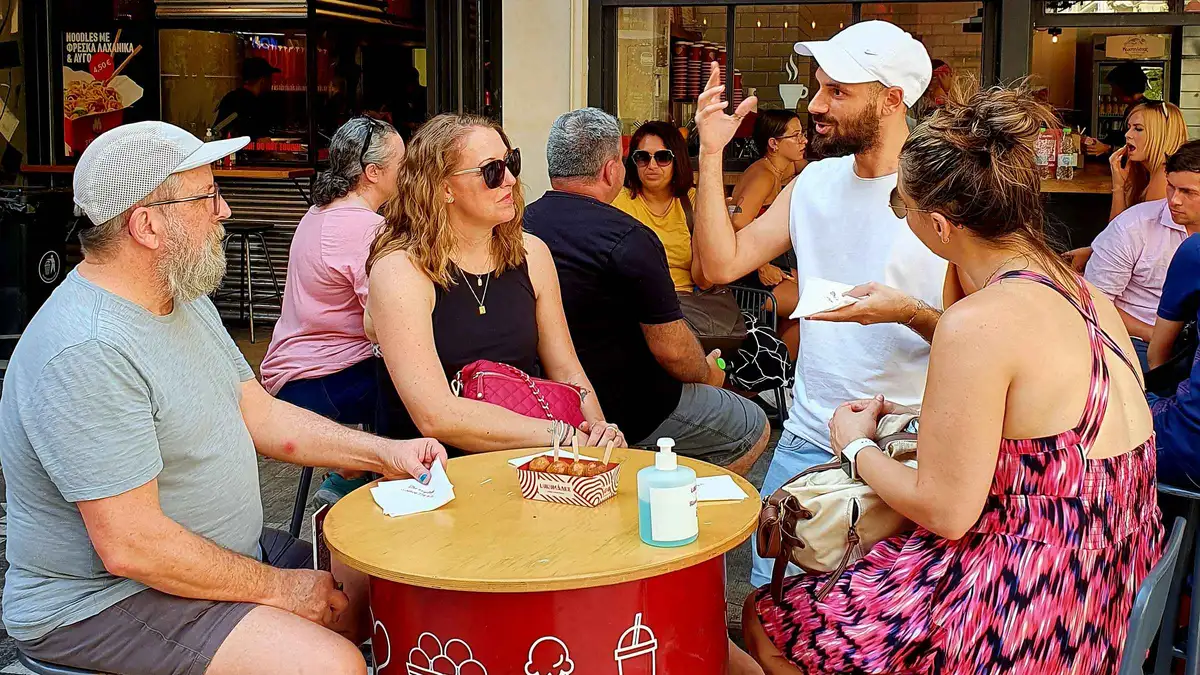 from €59
Athens: Street Food Tasting Tour
Three hours of Athenian street food with beer or wine, moving between the counters locals use rather than the ones on the tourist lanes.
Check Availability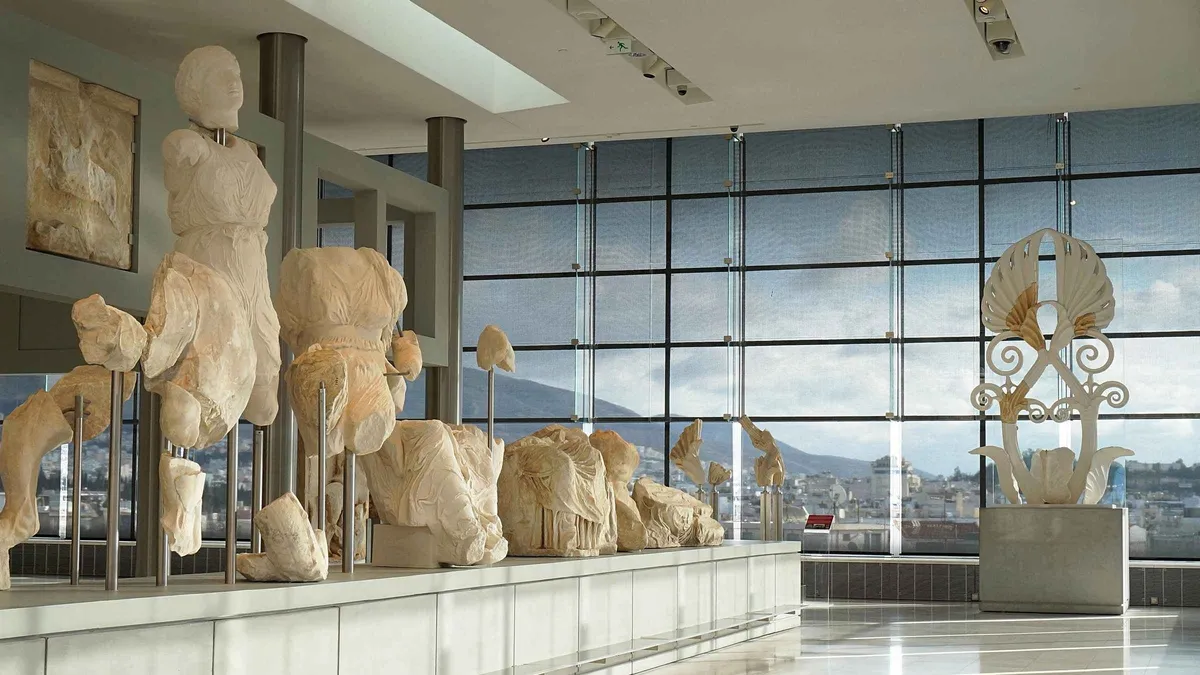 from €26
Athens: Acropolis Museum Ticket with optional Audio Guide
Entry to the Acropolis Museum with optional audio guide. The official price is €20; reduced tickets are only issued at the museum desk, never online.
Check Availability from €42
Athens: Philosophy and Democracy Walking Tour
Three and a half hours on foot through the places where philosophy and democracy actually happened, rather than the places they are commemorated.
Check AvailabilityPrices, ratings and details are the platform's own. Euro figures are the listed prices. The platform bills in your account's currency.
Closure questions
What is closed in Athens on Tuesdays?
The Museum of Cycladic Art, the Byzantine and Christian Museum and the archaeological site at Eleusis. The National Archaeological Museum does not close but opens at 13:00. The weekly closures has the table.
Is the Acropolis ever closed?
On six fixed dates — 1 January, 25 March, 1 May, Orthodox Easter Sunday, 25 and 26 December — and at short notice for strikes or extreme heat. It has no weekly closing day.
When is Orthodox Easter?
It moves each year and is usually not the same Sunday as the Western date. Check it for your year before booking a spring trip — Orthodox Easter explains what closes around it.
Why is Kerameikos closed?
Its official page prints "the site is temporarily closed" under summer hours without giving a reason or an end date. The one that is closed explains how to check whether that line is still there.
Do shops close on Sundays in Athens?
Most do, and the Varvakios central market is shut. The archaeological sites and museums are open, and in winter the first and third Sunday of each month are free at the state sites.
What is open on a public holiday?
The Acropolis Museum on 25 March, free. Otherwise on state holidays expect the archaeological sites to be shut and the streets, hills and neighbourhoods to be open and busy. The fixed dates has both calendars.