 Visit Athens Guide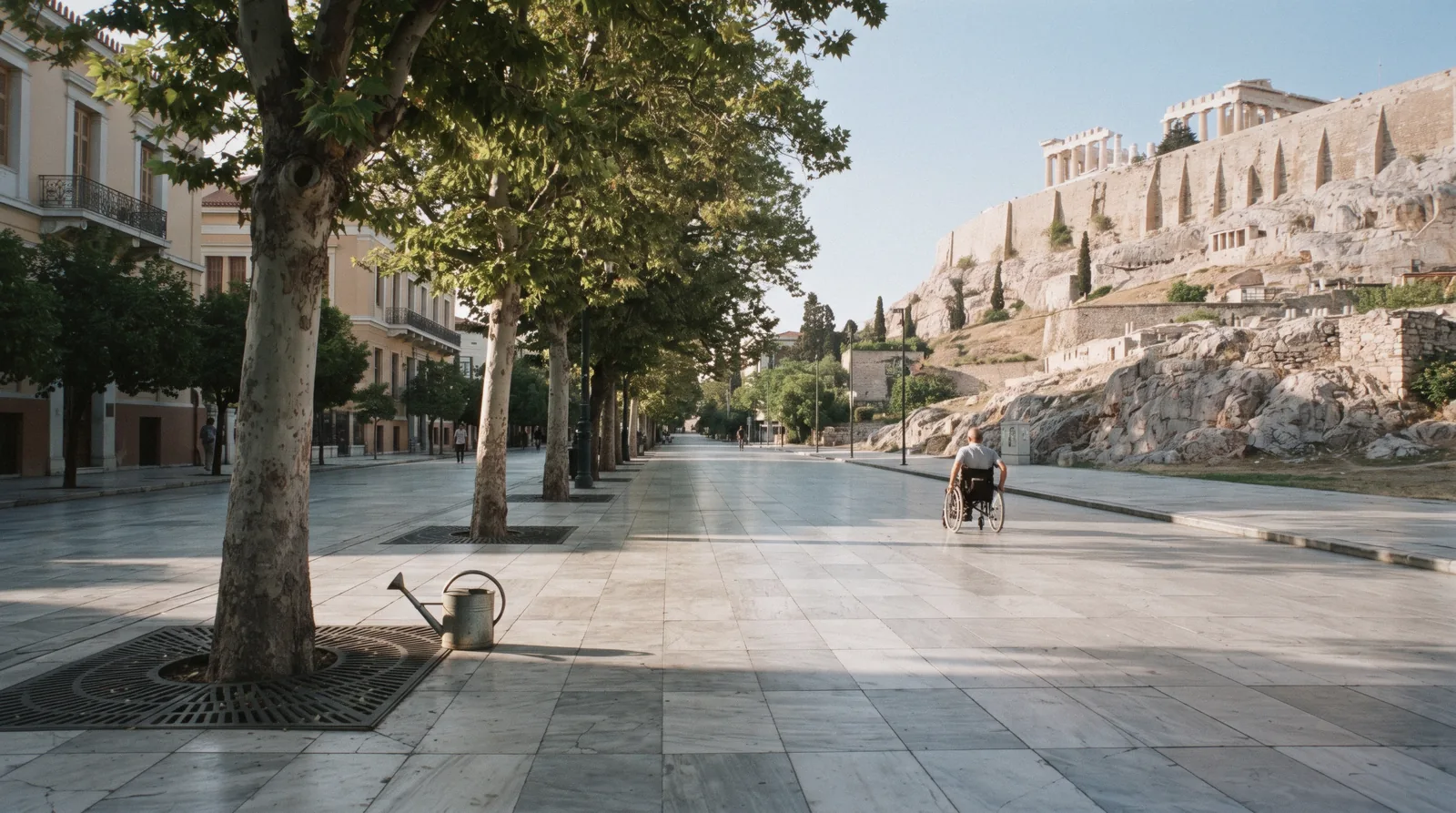
Accessible Athens: What Actually Works
Athens accessibility is better than its reputation and worse than its own signage suggests. There is a lift to the top of the Acropolis; there are two wheelchair-accessible slope routes; the Acropolis Museum is fully accessible and lends wheelchairs. Against that: the surfaces are ancient marble polished by millions of feet, the pavements in Plaka were not designed for anything with wheels, and several ticketed sites publish nothing at all about access. This page prints only what each place says on its own official page, read in Q3 2026, and says plainly where a source is silent. Everything else about planning is on the plan hub, and for the city itself see what to do in Athens.
Quick answer Yes to the Acropolis, with one caveat about where the lift is
Yes, a wheelchair user can reach the top of the Acropolis. A lift for people with mobility impairments runs from the north side of the rock to the plateau north of the Erechtheion, and both the North and South Slopes are wheelchair accessible with an attendant. The catch is geography: the lift is about 300 metres from the archaeological site's exit, so the approach has to be planned separately from the ticket.
Key takeaways
- The Acropolis lift reaches the plateau north of the Erechtheion, and an accessible restroom is on one of the two routes from it.
- The Acropolis Museum lends wheelchairs, has lifts and accessible WCs on every floor, allows guide dogs and keeps a Braille guide at the desk.
- Reduced and free tickets cannot be bought online — they are issued at the desk, on documents.
- The lift is also open to a parent attending two or more infants alone, which almost nobody knows.
- Where the sources are silent is its own section, because several sites publish nothing.
The Acropolis: The Lift and the Two Slopes
All of this is quoted from the site's own accessibility notice. It is more detailed than most European monuments manage, and it repays reading before you arrive rather than at the gate.
The lift, and where it actually is
The official wording: “An elevator for people with mobility impairments is available on the north side of the Acropolis, at a distance of about 300 m from the exit of the archaeological site.” That distance is the thing to plan around — it is not beside the main West Slope entrance where everyone else queues. The lift arrives on the plateau “to the area north of the Erechtheion”, and from there you can take either the route towards the Propylaea or the route between the Parthenon and the Erechtheion. An adequate restroom sits at the end of that second route.
Who may use it
The official rule covers people with diminished abilities, and it adds a clause that almost no other site publishes: any parent attending two or more infants on her or his own may also use it. If you are alone on the rock with twins or with two small children, the lift is formally yours to call. That matters because there is no other way up with small children in tow.
The climb on foot is steep, the marble underfoot is worn, and once you are on the summit there is no shade and no water of any reliability. The lift itself saves the worst of the ascent but does not deliver you to the Parthenon, so read the slope notes below before you commit. Ask at the main entrance and the staff will summon the operator.
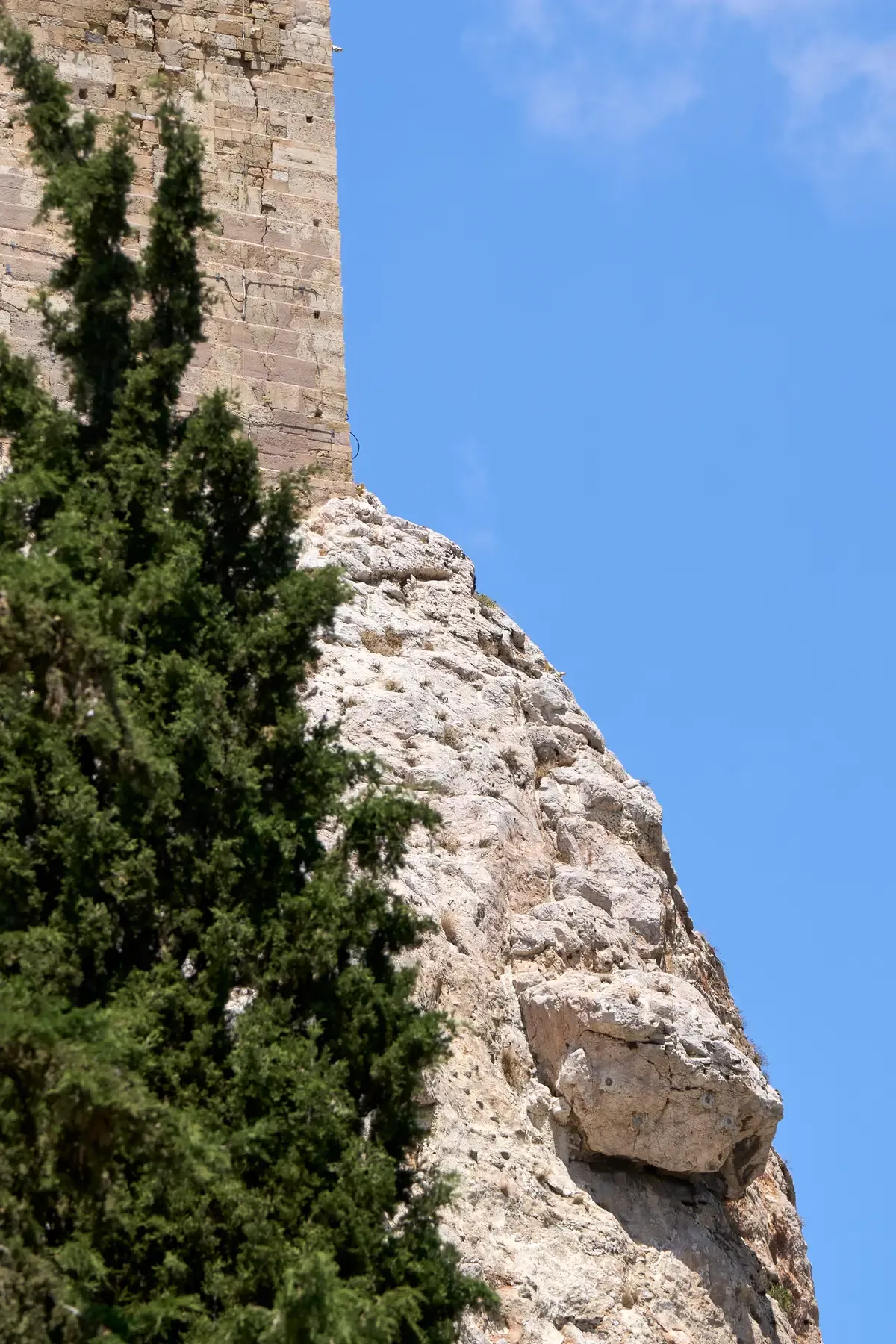
Photo: George E. Koronaios, CC BY-SA 4.0, via Wikimedia Commons
The North Slope
This side is wheelchair accessible with the site's own caveat that the help of an attendant is advisable. There is a specially designed entrance-exit for people with disabilities north of the main entrance on the West Slope. From there the Peripatos path can be followed east as far as the guardhouse in the area of Anafiotika.
The north face is the cool side of the rock for most of the day, and it was here that Athenian households kept their cave shrines and springs, so the climb has human company in the archaeology. What to watch: the path is a genuine mountain path, surfaced and graded but narrow in places, and it does not bring you level with the temples. The attendant question is not box-ticking, the gradient is real.
The South Slope
Also wheelchair accessible with an attendant, entering via the main entrance at the junction of Dionysiou Areopagitou and Thrasyllou. The route leads to the west parodos of the Theatre of Dionysos, where the tragedies of the fifth century BC were first staged for the city. From there you are on the theatre terrace below the Acropolis walls rather than on the summit, which is a different visit but a serious one.
Dionysiou Areopagitou itself is flat, car-free marble and is the easiest long walk in central Athens for anything on wheels. It was pedestrianised in 2003 under the programme that linked the ancient sites before the 2004 Games. In a heatwave the ministry has closed open-air sites through the hottest hours, roughly midday to 17:00, often announced a day or less ahead, so go early.
Who to ring before you go
The guardhouse of the Acropolis archaeological site answers on +30 210 9238747 and +30 210 3214172, and the Ephorate of Antiquities of the City of Athens is on the first of those numbers and at [email protected]. Ring rather than email if the visit is inside a week, because email sits unread at Greek offices far more often than a phone is unanswered. Ring on the day itself if there has been rain.
Marble that is merely polished when dry is a different proposition wet, and the staff will tell you honestly whether the lift route is usable. Bear in mind that state sites are staffed by ministry employees, so a public-sector strike can shut the whole rock. Unions must give at least 24 hours notice, and four days where a public service is involved, so a strike is usually foreseeable.
The Acropolis Museum Is the Easy One
A 2009 building, designed to current standards, and the most straightforwardly accessible major sight in the city.
What the museum publishes
Special ramps for wheelchairs and strollers at all museum entrances. Lift access and WCs for people with disabilities on all floors, with the lifts reserved for priority use by visitors with mobility difficulties. Wheelchairs can be borrowed at the Visitor Services Desk and strollers at the ground-floor cloakroom.
A short guide to the museum in Braille, in Greek and in English, is kept at the Information Desk, along with museum maps. Guide dogs are allowed.
Two practical notes on the ticket
Reduced and free admission tickets are issued exclusively at the ticket desk, on production of the eligibility documents. The e-ticket system sells full-price only, so if you qualify for the reduced rate do not buy online and then argue at the door. Everyone, individually or in a group, has to pass through the validation machines on the ground floor, so plan that as part of the route and allow for a queue at peak times.
The museum is a separate legal entity from the state sites, with its own shop, hours and free days, which is why its rules differ from the Acropolis ticket next door. The museum's ticket page has the rest. One more thing worth knowing: the building stands over an excavated ancient neighbourhood, seen through the glass floor at the entrance and included in the ticket.
The part of the museum that needs no ticket at all
The ground-floor shop and café are outside the paid area, so you can use them without buying anything. The second-floor restaurant, with the Parthenon in the window, needs only a free admission ticket from the desk, and it stays open to midnight on Friday and Saturday. For a visitor who cannot manage the rock itself, that terrace is the best accessible view of the Parthenon in Athens, and it costs the price of a coffee.
It also works as a late-evening plan: the temple is lit after dark and the gallery windows frame it directly. The museum itself opened on 20 June 2009, designed by Bernard Tschumi with Michalis Photiadis, and stands on the Makriyianni plot over the excavated neighbourhood under the glass floor. In the Parthenon gallery, white plaster casts stand where the original blocks sit in London.
Getting Around, and the Surfaces
The transport is more accessible than the streets, which is the opposite of what most visitors expect.
The metro is the strong point
Lines 2 and 3 opened on 28 January 2000, and digging them turned up so much antiquity that Syntagma station keeps a free archaeological display in the concourse: a classical sculpture foundry, a sub-Mycenaean and Byzantine cemetery, looms and amphorae, set into the station wall. Their central stations have lifts, which makes the metro the one part of Athens that behaves itself for wheels. Akropoli on Line 2 is the station for the rock and the museum and is a short, flat roll from both.
Syntagma on Lines 2 and 3 is where the airport line arrives, and Line 3 has run out to the airport since 30 July 2004, days before the Games. Fares and the ticketing are on getting around, and the airport run on from the airport.
The pedestrian spine
Dionysiou Areopagitou, continuing as Apostolou Pavlou past Thiseio, is flat, car-free and paved, the one long route in the ancient centre that works without negotiation. It passes the museum, the South Slope entrance, the Odeon and the Agora's south side. The street was pedestrianised in 2003 under the Unification of the Archaeological Sites of Athens programme, the scheme Melina Mercouri pushed as culture minister and which was finished before the 2004 Games, so the whole corridor was laid out deliberately as a walk between monuments.
The surface is marble, which is grippy when dry and slick when wet, so take the same care after rain as you would on the Acropolis itself. If you plan one day on wheels in Athens, plan it along this street and let everything else be an appendix to it.
Where it gets hard
Plaka and Anafiotika are stepped, cobbled and steep in places, and Anafiotika is stairs essentially throughout. The little Cycladic quarter was built from the 1840s by masons brought from the island of Anafi to work on King Otto's palace, and they raised their houses on ground that was not theirs. Nobody laid it out for wheels and nobody has since.
Central pavements are frequently blocked by parked scooters, and kerb cuts are inconsistent from one corner to the next, so a map that looks flat can take twice the time. The ancient sites are gravel and worn stone by nature: the Ancient Agora and Kerameikos are uneven ground, not paths, and the Agora's stamping ground of the classical assembly and courts was never level to begin with. The pedestrian spine above is the reliable alternative.
The pedestrian spine is easier to plan with company, and comparing tours in Athens can help you pick one that keeps to the flatter routes.
Where the Official Sources Say Nothing
This is the honest part of the page, and the reason not to trust a blog's tick-list.
Several sites publish no accessibility information at all
The Acropolis and the Acropolis Museum both publish detailed notices. A number of the other ticketed sites and museums in this guide publish hours and prices and nothing about access. Where that is true we say so on the page rather than guess: absence of a notice is not a statement that a place is accessible, and it is not a statement that it is not.
Ring the venue. Numbers are on each page and on the opening-hours table.
And a warning about the aggregators
Third-party accessibility ratings for Athens sights are frequently copied between sites and rarely dated. A rating that says “wheelchair accessible” for an archaeological site with a gravel surface and no published route is describing an opinion. Everything on this page is quoted from the venue's own page, with the date it was read in the box at the top.
Three Tours With a Guide Who Handles the Gate
A guided entry removes the queue and the ticket-desk step, which is the part of an Acropolis visit that is hardest to plan around. Ratings and prices are the operators' own, checked on 1 September 2026; none of them substitutes for the lift, which is the site's own facility and free.
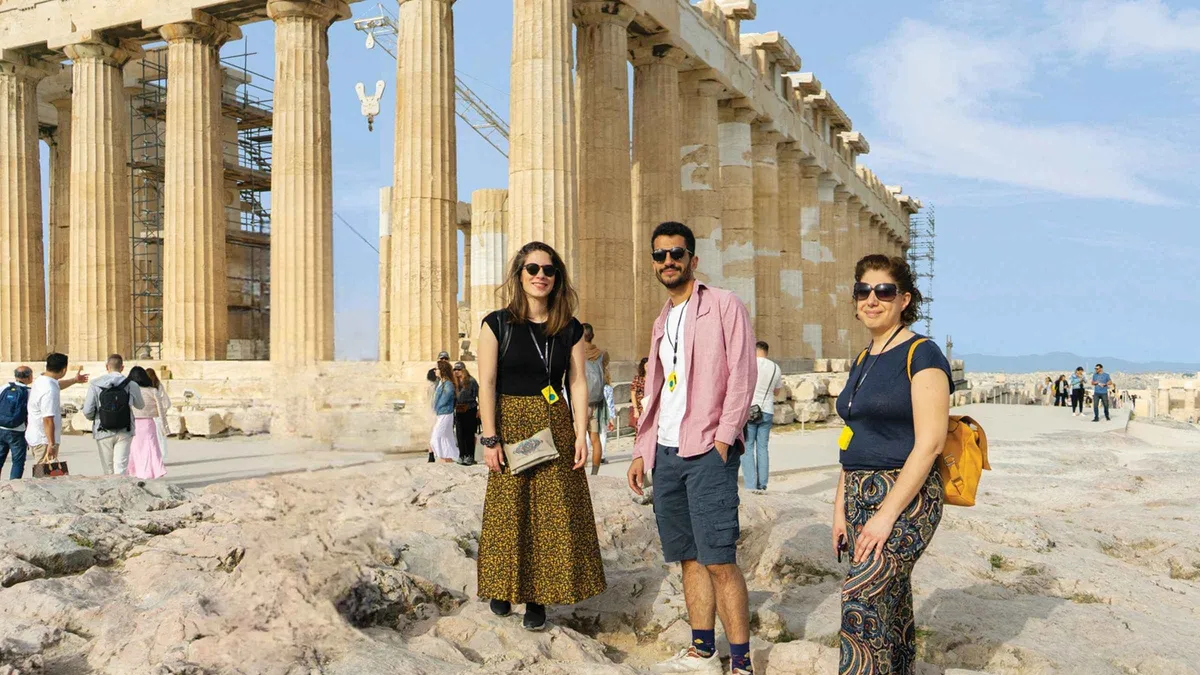 from €27
Athens: First Access Acropolis and Parthenon Guided Tour
An early-morning guided walk that goes to the Parthenon before the coach groups, then the Theatre of Dionysus on the south slope. Two to four hours depending on the option.
Check Availability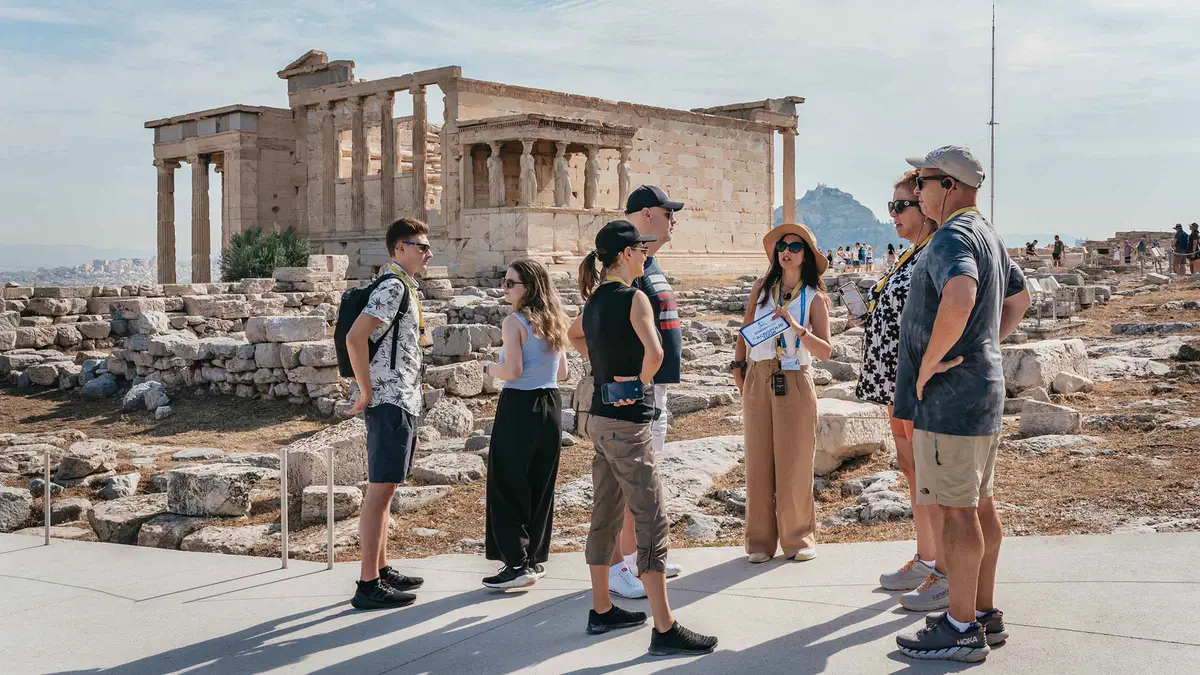 from €34
Athens: Acropolis, Parthenon & Acropolis Museum Guided Tour
An archaeologist takes the monuments on the rock and then the Parthenon gallery in the Acropolis Museum, where the frieze sits at eye level.
Check Availability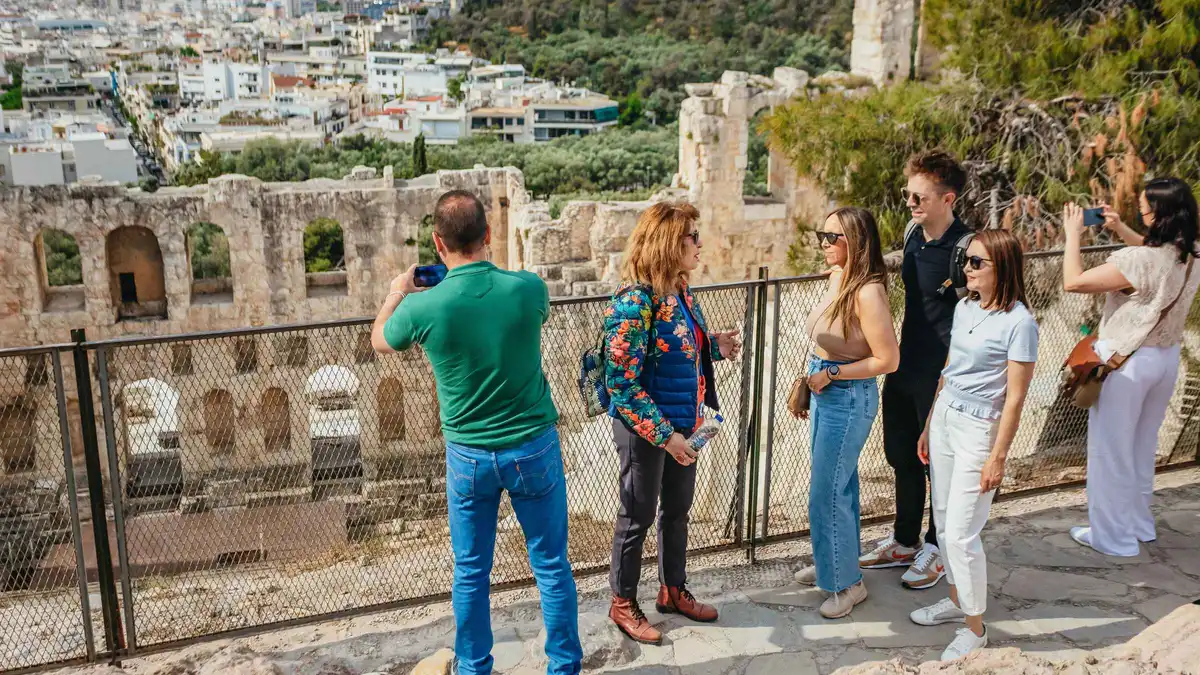 from €49
Athens: Parthenon, Acropolis and Museum Small Group Tour
Three hours in a small group with pre-reserved tickets, covering the Acropolis, the Parthenon and the museum below it in one run.
Check AvailabilityPrices, ratings and details are the platform's own. Euro figures are the listed prices. The platform bills in your account's currency.
Accessibility Questions
Is the Acropolis wheelchair accessible?
Yes. A lift on the north side of the rock reaches the plateau north of the Erechtheion, and both the North and South Slopes are described by the site as wheelchair accessible with the help of an attendant. Note that the lift is about 300 metres from the archaeological site's exit, so the approach needs planning.
Where is the Acropolis lift?
On the north side of the rock, roughly 300 metres from the site exit — not at the main West Slope entrance. It arrives on the plateau in the area north of the Erechtheion, with an accessible restroom on the route between the Parthenon and the Erechtheion.
Can I get a reduced or free ticket online?
No. Both the state sites and the Acropolis Museum issue reduced and free tickets at the ticket desk only, on production of the eligibility documents. Only full-price tickets are sold online. The tickets hub explains the rest.
Are guide dogs allowed in the museums here?
The Acropolis Museum states that guide dogs are allowed. Other venues in this guide do not publish a policy, so ring ahead rather than assume either way.
Is there a step-free view of the temple without climbing the rock?
Yes, and it is the best one: the Acropolis Museum's second-floor restaurant, which needs only a free admission ticket from the desk and is open until midnight on Friday and Saturday. The free things page has other ground-level views.
Where to go from here
We may earn a commission if you book through one of our links, at no extra cost to you. Full affiliate disclosure