 Visit Athens Guide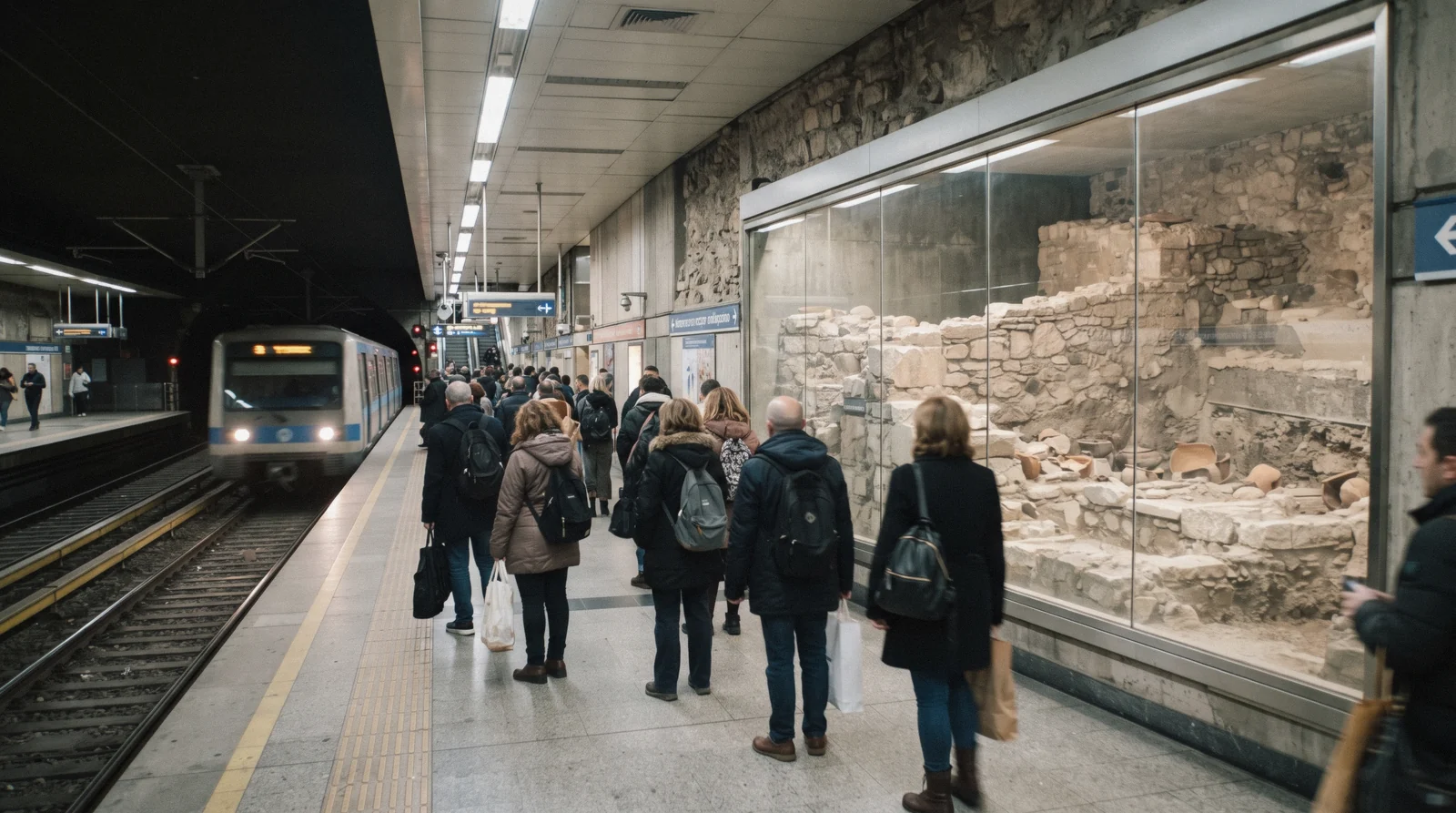
Athens Travel Tips: The Nine Things That Decide a Trip
Most Athens travel tips are about what to see. These are about what will otherwise go wrong: the one ticket that carries a fixed hour, the two seasonal timetables that shut half the city at three in the afternoon, an airport taxi fare set by the time you arrive rather than the time you leave, and a strike calendar published only in Greek. Everything below was read on official pages in Q3 2026. The sights are on the things-to-do hub; the wider plan is on what to see in Athens greece.
Quick answer The nine things, in the order they bite
Book one ticket, learn two closing times, watch one strike calendar and know one taxi rule. Athens punishes very few mistakes, but it punishes those four consistently.
Key takeaways
- Book the Acropolis and nothing else — it is the only sight in the city with a declared entry hour.
- From November, half the ancient sites shut at 15:00 while the rock runs to 17:00. The opening-hours table has each one.
- The airport taxi flat fare is set by the time you arrive: the nine things explains the midnight €15.
- There is no English-language strike calendar. The strikes page says where the Greek one is and what a non-refundable ticket leaves you.
- Three nights is the right length for the city; a fourth buys a day trip rather than more Athens.
- Travelling with a wheelchair or a pushchair? There is a lift to the top of the rock — what actually works.
The nine things worth sorting before you fly
Each of these has a page behind it. The column that matters is the last one: what happens if you do not.
| Thing | What to do | Where | If you do not |
|---|---|---|---|
| The Acropolis hour | Book a morning slot | Acropolis tickets | You get an afternoon on unshaded marble |
| Winter closing times | Check each site | Opening hours | You arrive at a locked gate at four |
| The Tuesday museum | Avoid a Tuesday morning at the national museum | Opening hours | A wasted morning; it opens at 13:00 |
| The airport fare | Know the €40 / €55 boundary | From the airport | €15 more for arriving at 00:10 |
| The transport ticket | Consider the €20 three-day | Getting around | You pay €16 for the airport return alone |
| Strikes | Check the Greek calendar the night before | Strikes | A closed site and a non-refundable ticket |
| Free-entry dates | Check whether yours fall on one | Free entry days | You pay €30 on a day it was free |
| The heat | Plan the ends of the day in July and August | Best time to visit | A short visit to the rock, badly spent |
| The district | Pick the area before the hotel | Where to stay | Dinner at tourist prices every night |
Four of those nine are timetable problems rather than money problems, which is the shape of Athens: the tickets are simple and the hours are not. If you read only one other page on this site, make it the opening-hours table.
The bookings worth making before you land
The Acropolis hour, and the first-evening food walk. Everything else can wait.
 from €36
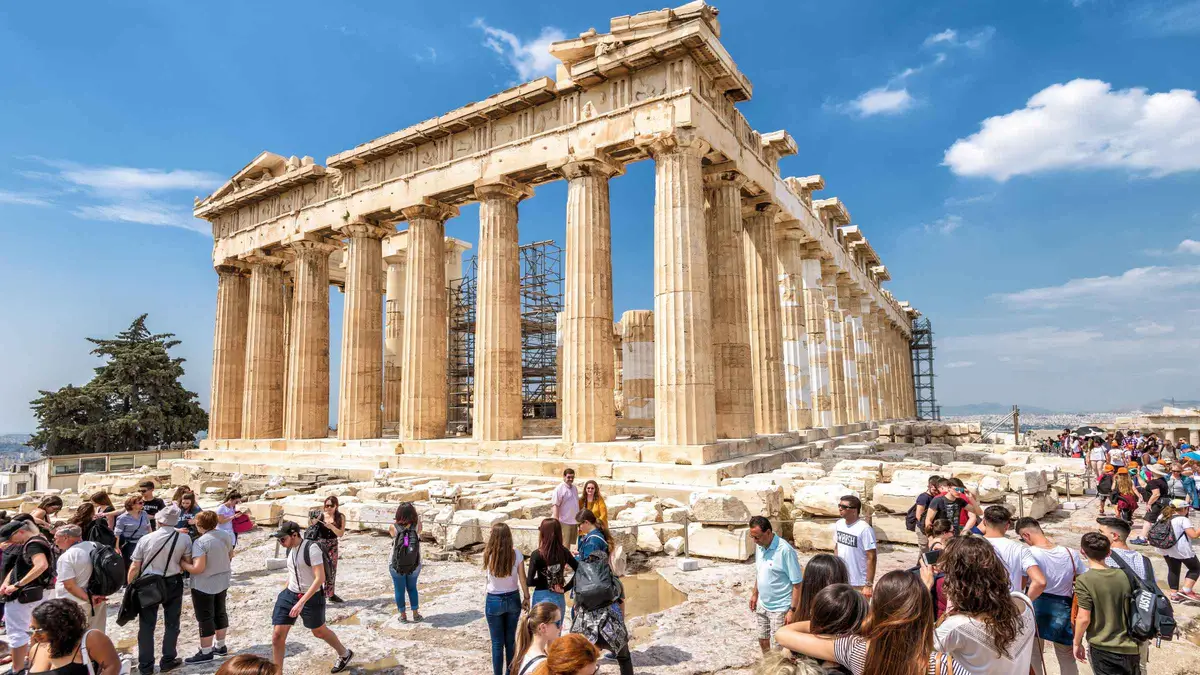
Athens: Acropolis Ticket with Optional Audio or Live Guide
Pre-booked Acropolis entry sent to your phone, with two audio-guide options and no fixed guide to keep up with. The official price is €30; this is the reseller version of the same timed slot.
Check Availability from €59
Athens: Street Food Tasting Tour
Three hours of Athenian street food with beer or wine, moving between the counters locals use rather than the ones on the tourist lanes.
Check Availability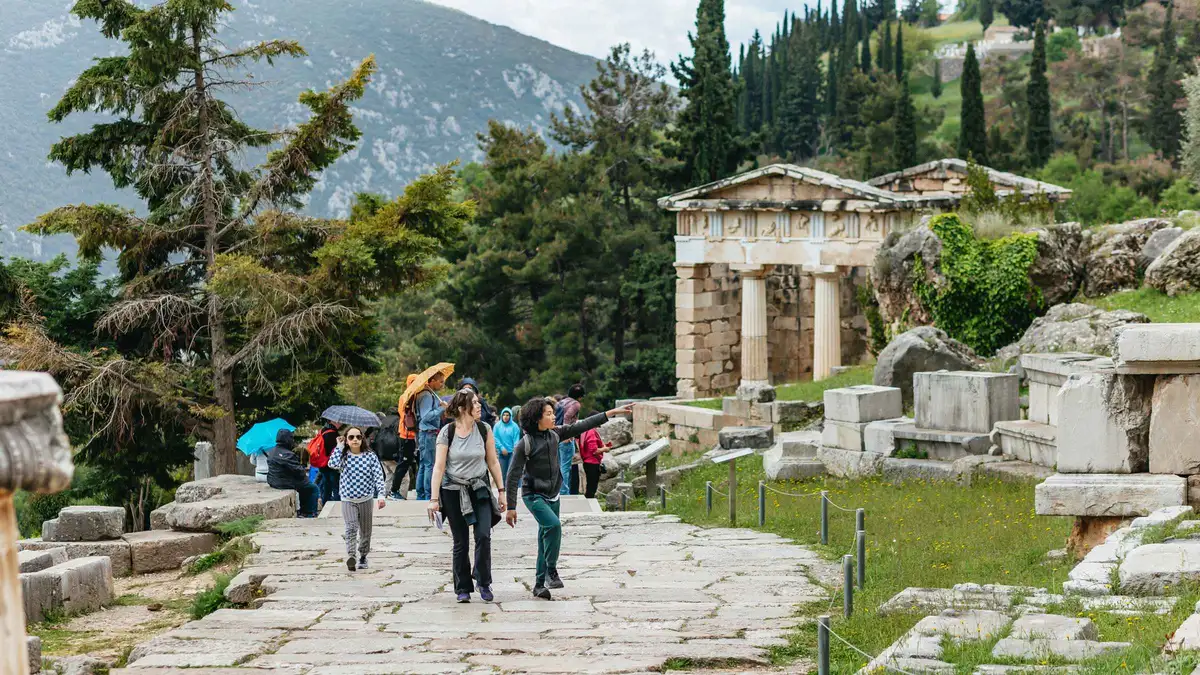 from €39.10
From Athens: Small-Group Delphi, Museum & Arachova Day Trip
The same route in a small group, with the Delphi museum and Arachova, under the Parnassus cliffs.
Check Availability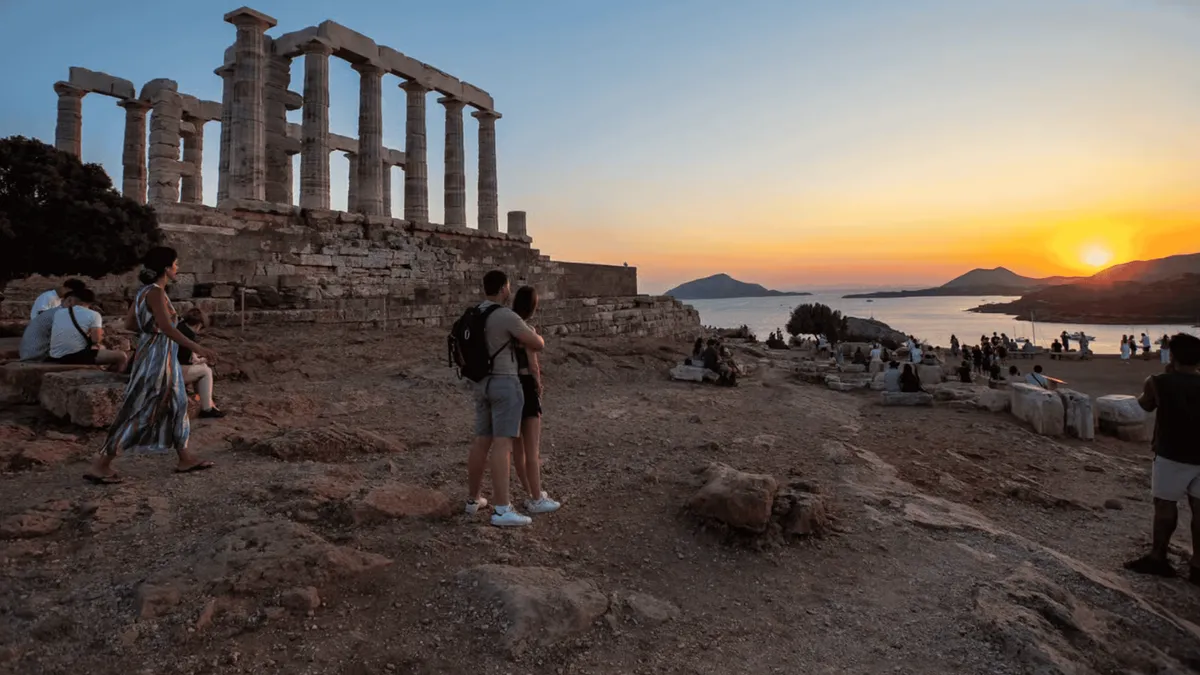 from €28
Athens: Cape Sounion & Temple of Poseidon Sunset Experience
A four-hour evening run down the coast to the Temple of Poseidon for sunset. The site itself opens at 09:30 and closes at sunset year-round.
Check AvailabilityPrices, ratings and details are the platform's own. Euro figures are the listed prices. The platform bills in your account's currency.
The shape of a trip
How long, in what order, and what to leave out.
Three nights, and what they hold
Day one goes to the Acropolis and the Acropolis Museum. The Parthenon was finished in 432 BC, blown open by a Venetian shell in 1687, and the museum below holds the sculpted originals with white casts marking what Elgin carried off. Day two covers the Ancient Agora, where the assembly, the courts and the market of classical Athens sat, then the National Archaeological Museum.
Day three slows down, with the hills at sunset and a food walk. That is the city done properly. Plan the museum mornings first, because the Acropolis is bare rock with no shade and the state sites run to 17:00 in winter while smaller ones close at 15:00. The three-day plan routes it around the heat and the closing times.
A fourth night buys a day out, not more Athens
Athens rewards a fourth night more than most European capitals because the day trips are genuinely good. Delphi takes about ten hours out of the day, and it deserves them, since the sanctuary of Apollo stayed the oracle of the Greek world until Theodosius closed the pagan sanctuaries in AD 393. Cape Sounion needs around four hours, with the Temple of Poseidon standing 15 columns high on the cliff.
The page below sorts them by how long they take, so you can match one to the daylight you have. Check the strikes page before you commit, because a transport strike can strand the plan. And keep a full evening in the city itself, since the hills around the Acropolis are at their best after the day trippers come back. The day trips page sorts them by how long they take.
What to leave out
On a short trip, leave out the Olympieion at €20 for half an hour, the Roman Agora, and any Saronic cruise. None of them is bad. The Olympieion took six centuries to build, from Peisistratos in about 550 BC to Hadrian in about AD 131, and 15 of the original 104 columns still stand, but it is a field of columns rather than a whole building.
The Roman Agora is a quick look. The cruises eat a full day and Hydra, with no cars at all, works better on its own trip. All three are second-visit material, or things you pick up inside a multi-site pass once the big names are done. The ancient sites hub is blunt about which ones.
When to come
April, May, late September and October bring mean daily temperatures between about 16 and 24°C, long site hours and bearable marble. July and August average close to 28°C with no shade on the Acropolis rock, and during official heatwaves the ministry has closed the open-air sites through the hottest hours, sometimes announced a day ahead. November to March is cheap and quiet, and it has two free state-site Sundays a month.
The cost is an earlier closing time, since from 1 November the Olympieion, Roman Agora, Kerameikos and Aristotle's Lyceum shut at 15:00 while the Acropolis runs to 17:00. Aim for the shoulder months if the choice is yours. The best time to visit has the chart.
The practical layer
Money, transport, water, and what a strike actually does.
Money and cost
The currency is the euro, cards are taken almost everywhere, and a sightseeing day reckons €45 to €55 a head before the hotel. The Acropolis at €30 is a once-per-trip line rather than a daily one, and the National Archaeological Museum adds another €20. Cheaper fills exist, since the Panathenaic Stadium is €12 with an audio guide included and Aristotle's Lyceum is €5.
Take some coins: the Panathenaic Stadium charges €1.50 for its lavatory and wants the exact amount in coins, which has caught out plenty of visitors. Hellenic Heritage tickets are non-refundable, so do not buy the Acropolis slot until you are sure of the day. Remember the free state-site days, including the last weekend of September and 28 October. What Athens costs breaks the day down.
Transport
A single ticket is €1.20 for ninety minutes with transfers, a day ticket is €4.10, and the 5-day ticket is €8.20. The three-day tourist ticket at €20 including two airport metro journeys is the one that quietly pays for itself, since the airport line alone is €9 each way. Contactless cards work at the gates, so you can arrive without queuing for paper tickets.
The system itself is young by European standards, with Lines 2 and 3 opened on 28 January 2000, and the digging turned up enough antiquities that Syntagma station keeps a free archaeological display in its concourse. Watch strike notices before you build a day around the metro, because a public transport strike can stop it outright. Getting around Athens has the full table.
The airport
Metro Line 3 runs from the airport for €9 one way or €16 return, and the extension out to it opened on 30 July 2004, days before the Games. The X95 bus to Syntagma costs €5.50 and runs around the clock, which matters on a late arrival. A taxi is a regulated flat fare of €40 to the centre, rising to €55 between midnight and 05:00, and the charge follows the time you reach the hotel, not the time you leave the terminal.
For four people the taxi beats four metro tickets, and it removes the walk from the station with luggage. Ask for a receipt, because the driver is required by law to give one. From the airport does the arithmetic for one, two and four people.
Strikes
A Greek general or sector strike can stop the metro, the buses and the ferries and close the state museums. The law, 1264/1982, requires at least 24 hours notice to the employer, and four days where a public utility or public service is involved, so you usually get warning. There is no official English calendar. apergia.gr lists strikes in Greek and OASA posts service notices, and the strikes page explains where to look.
State sites are staffed by ministry employees, so a public-sector strike can shut the Acropolis without any warning beyond the union announcement. Hellenic Heritage tickets are non-refundable, so the defence is the change rule rather than a refund: you can move each ticket twice, up to two hours before the slot.
Water, heat and shoes
Tap water is safe in the city. There is no shade on the Acropolis, and during official heatwaves the ministry has repeatedly closed it through the hottest hours, roughly midday to 17:00, so start early in summer. The marble underfoot is polished by centuries of visitors and turns slippery, so flat soles matter more than fitness.
Carry water, because there is a fountain at the Acropolis entrance and nothing on top. The same logic applies at Sounion and the other open-air sites, where the shade is thin and the stone is hot by late morning. Municipalities open air-conditioned rooms during heatwave days, which is worth remembering if you are caught out with children.
Do the climb first thing, then take the museum indoors at midday.
Planning an Athens trip: questions
How many days do you need in Athens?
Three nights covers the city properly; two is enough if you skip the National Archaeological Museum. A fourth night is worth it only for a day trip. The shape of a trip sets out what each length holds.
What do I actually need to book in advance?
The Acropolis, because its ticket carries a declared entry hour, and a specific tour if you want one. Nothing else in the city has timed entry. The tickets hub has every price and which need booking.
What is the best month to visit Athens?
April, May, late September and October. July and August average close to 28°C and the rock has no shade; November to March is quiet and cheap but half the sites shut at three. The best time to visit has the month-by-month chart.
Is the city expensive?
Less than Rome or Barcelona to eat in and about the same to enter. Reckon €45 to €55 a head on a sightseeing day before the hotel. What Athens costs breaks it down.
Do I need to worry about strikes?
Enough to check the night before. They stop transport and can close state sites at a few days' notice, and the tickets are non-refundable. The strikes page explains the mechanics.
Should I worry about crime on a first trip?
It is an ordinary large European capital: pickpocketing on the metro and around Monastiraki and Omonia is the realistic risk, and the usual sense applies. Nothing on this site is a place we would tell you to avoid.
Where to go from here
The three pages that do the most work.
Opening hours
Six seasonal bands, the Tuesday that opens at one, the winter afternoons that end at three: opening hours.
The page to read twiceFrom the airport
Metro, bus and the taxi fare set by arrival time: from the airport.
Before you landAthens in three days
The city at the right pace, with the slot already placed: the three-day plan.
The itineraryPlan on Video
Three films covering the same ground as this page, from channels that work in Athens rather than passing through. Ids checked on 2 September 2026.
ATHENS TRAVEL GUIDE: Everything You Need to Know
A full city guide covering the ground a first visit needs.
Video: Yellow ProductionsAthens: Top Things To Do in 72 Hours (Best Travel Guide) 🇬🇷
Seventy-two hours compressed, with the sights in a workable sequence.
Video: Kristina's TravelsHow to Visit ATHENS in 2026 | The Ultimate Travel Guide
A recent orientation to the city, filmed for people arriving for the first time.
Video: Backpack GringoPrices, hours and terms are set by the venue or operator and confirmed at checkout.
We may earn a commission if you book through one of our links, at no extra cost to you. Full affiliate disclosure