 Visit Athens Guide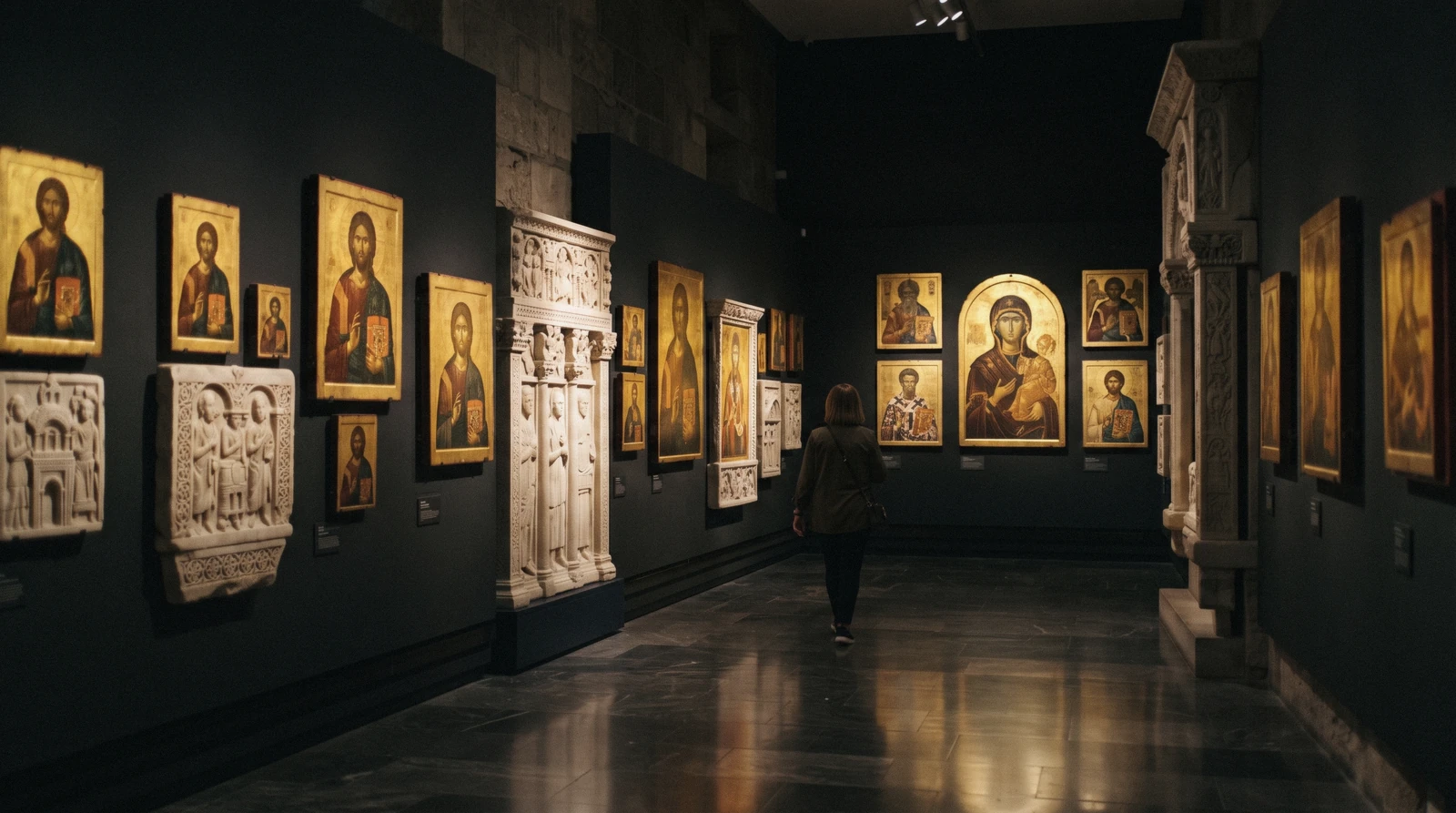
The Byzantine and Christian Museum
The Byzantine and Christian Museum covers the thousand years between late antiquity and the fall of Constantinople, and the centuries of Greek Orthodox art after it — icons, carved marble screens, church silver, wall paintings lifted whole. It occupies Villa Ilissia, a nineteenth-century mansion and its gardens set back from Vasilissis Sofias, with the galleries built downwards into the courtyard. This page has what the museum publishes as checked in Q3 2026, and is explicit about what it does not. The others are on the museums hub, and the wider plan for what to see in Athens Greece.
Quick answer The hours it publishes, the price it does not, and one trap
The Byzantine and Christian Museum opens 08:30 to 15:30 from Wednesday to Monday and closes every Tuesday. Its own opening-hours-and-tickets page publishes those hours and no admission price at all.
Key takeaways
- We are not printing a price we could not read on an official page. What the museum publishes explains exactly what is and is not on its site.
- ⚠ A trap on the state ticket platform: the wrong-city page looks like this museum and is the one in Thessaloniki.
- It closes at 15:30, which in summer is five hours before the Acropolis — this is a morning museum in every season.
- Tuesday is shut here and at the Museum of Cycladic Art five minutes away, so a Tuesday in Kolonaki needs a different plan.
- The villa, the garden and the courtyard are worth the walk in themselves, and the café sits in the garden.
Key facts
Opening hours
| Monday | 08:30–15:30 |
|---|---|
| Tuesday | —–closed |
| Wednesday to Sunday | 08:30–15:30 |
Closed Every Tuesday; public holidays are not listed on the museum's own page
Admission
- Adult
- Not stated on the museum's own site
- Reduced
- Not stated
- Free
- Not stated
Planning it
- Time needed
- Not stated by the museum; our routing: 90 minutes
- Book ahead
- Optional — walk-up usually fine
- Address
- 22 Vasilissis Sofias Avenue, 106 75 Athens · +30 213 213 9517 · [email protected]
What the museum publishes, and what it does not
Read on byzantinemuseum.gr on 1 September 2026, on both the information page and the page headed "Opening hours and tickets". The second of those carries a timetable and no prices.
The question this table answers is not what to buy but what can be confirmed: the museum publishes its hours and its address and nothing else, so a price has to be asked for at the desk.
| Item | What the official site says | Where | Book |
|---|---|---|---|
| Opening hoursAnyone planning the day — and note the Tuesday closure, which is not the state pattern | Monday 08:30–15:30, Tuesday closed, Wednesday to Sunday 08:30–15:30 | Opening hours and tickets page | Official site |
| Address and contactAnyone needing to ring ahead or write, which is what an unpublished price makes necessary | 22 Vasilissis Sofias Ave., Athens 10675 · +30 213 213 9517 · [email protected] | Information page | Official site |
| Admission priceAnyone budgeting: ask at the desk rather than trusting a third-party figure | Not published | — | Official site |
| Reduced and free categoriesStudents, over-65s and other categories, who will have to ask on the day | Not published | — | Official site |
| Public-holiday closuresAnyone travelling on a Greek public holiday, when the risk of a closed door is real | Not published | — | Official site |
A museum that publishes its hours and not its price is unusual, and it is the reason this page has no number in it. The honest instruction is to ask at the desk, or telephone +30 213 213 9517 before you go if the price decides whether you go. Any figure you find on a third-party page — including a figure we might have copied — is unsourced.
Tours that reach this stretch of Vasilissis Sofias
The cards behind the table, with the operator's own rating and review count.
 from €78.90
Athens: City Pass with Acropolis, Museums, HoHo & Transport
The Acropolis, the Acropolis Museum and a 48-hour hop-on hop-off bus in one pass, with public transport and an island cruise as options.
Check Availability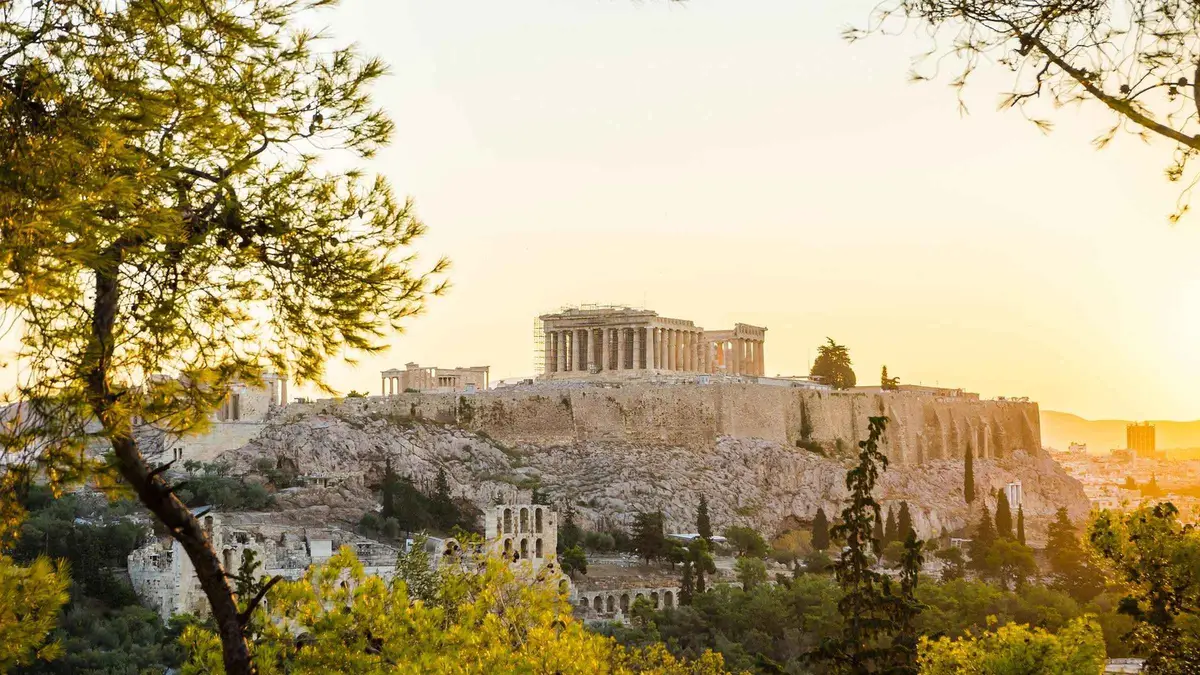 from €42
Athens: Philosophy and Democracy Walking Tour
Three and a half hours on foot through the places where philosophy and democracy actually happened, rather than the places they are commemorated.
Check Availability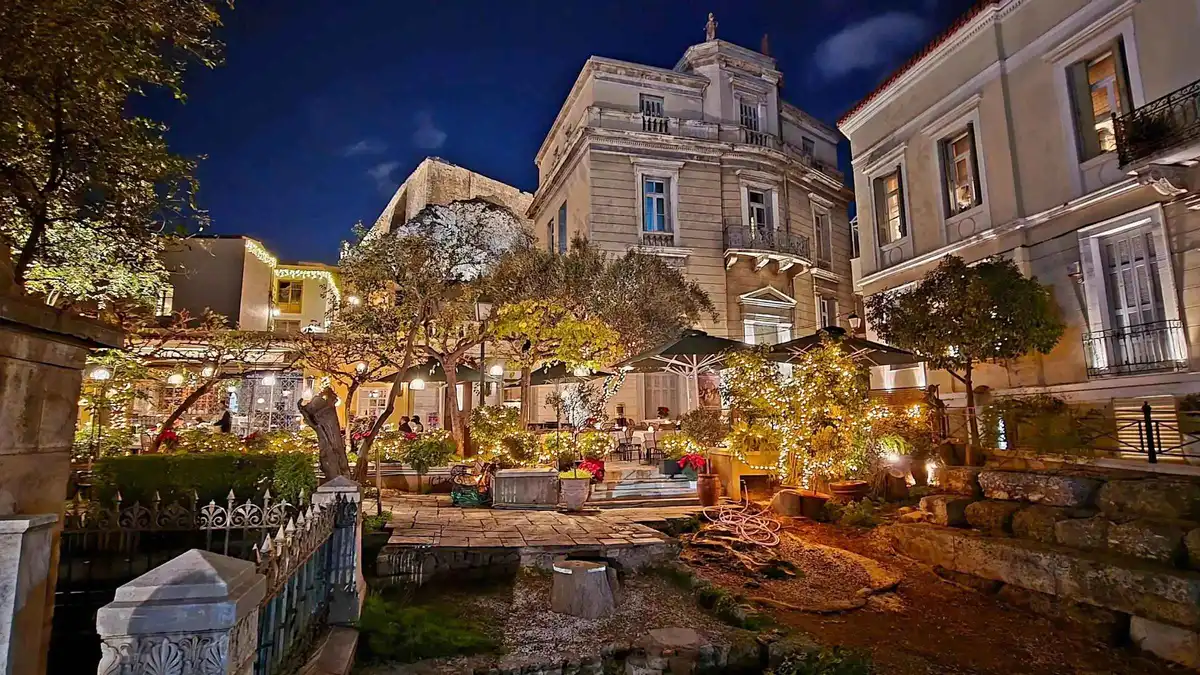 from €18
Athens: Night Walking Tour with Local Guide
Two hours after dark through the historic centre, the Cathedral, Anafiotika, Monastiraki and Plaka, with a local guide and no museum entries.
Check AvailabilityPrices, ratings and details are the platform's own. Euro figures are the listed prices. The platform bills in your account's currency.
The wrong-city trap on the official platform
Worth a section of its own, because the URL looks exactly right.
What happens
The state ticket platform runs a destination page at hh.gr/en/destinations/byzantine-museum/. It looks like the page for this museum. It carries opening hours, a full price of €10 and a reduced price of €5, so it reads convincingly.
It is not the Athens museum at all. Its contact block names the Museum of Byzantine Culture in Thessaloniki, four hundred kilometres away, and every hour and price on the page belongs to that Thessaloniki institution. The practical consequence is straightforward.
Book from that page and you are working from the wrong city's timetable and the wrong city's tariffs, and any ticket logic you build around those figures collapses at the desk in Athens. Treat the URL as a coincidence of naming, not a source.
Why it matters
A €10 figure attached to a plausible-looking official URL is exactly the kind of thing that gets copied into guides and repeated for years. We checked the page ourselves and we are not carrying that price across to this museum. If you see €10 quoted for the Byzantine and Christian Museum in Athens, that is very likely where it came from, passed along from a Thessaloniki tariff by someone who never noticed the contact block.
The damage is not only money. Hours copied the same way can have you standing at Villa Ilissia on a Tuesday afternoon when the doors match a different institution's week. The fix costs nothing.
Ignore that page entirely and plan around the museum's own site.
What to trust instead
Trust the museum's own site, byzantinemuseum.gr, which publishes its hours, its address and a telephone number. For the price itself, use the desk or that telephone, because a confirmed figure for the Athens museum is not stated in our sources. That makes this the one entity in this guide where we have a hole and are saying so openly rather than papering over it with somebody else's number.
Build your day the practical way. Fix the museum visit around the hours on byzantinemuseum.gr, keep the ticket purchase for the desk on arrival, and if a precise figure matters to your budget, ring ahead. Everything else on this page, from the villa to the galleries, stands on its own.
What is inside
A thousand years, arranged as an argument about continuity.
From antiquity to Byzantium
The permanent exhibition opens with the transition from the ancient world to the Byzantine one. Pagan sculpture and Christian sculpture stand in the same rooms, a reconstructed early Christian basilica gives the change a building you can walk into, and you can watch the moment when the same craftsmen started carving different subjects. The practical point is that this is an opening sequence, so it rewards arriving near the start of your visit rather than the end of a long museum day.
Give it the first half hour while you are fresh. It is the clearest presentation of that change anywhere in Greece, and everything after it in the collection, the icons especially, makes more sense once you have seen the shift set out.
The icons
The museum holds several hundred icons, from the sixth century onwards, including works from Constantinople and from the great Cretan school painters of the fifteenth and sixteenth centuries. They hang on dark walls, individually lit, gold ground catching the light. The practical difference from a working church is distance.
In a live church an icon sits behind glass, a candle rack or a queue of pilgrims, and you see it at arm's length or worse. Here you can stand close enough to read the modelling of a face and the brushwork in the highlights. Work through the rooms slowly, because several hundred panels in one run cause fatigue fast.
Pick a century or a school and follow it properly instead.
Wall paintings and marble
This part of the collection is frescoes detached whole from ruined churches and re-mounted here, alongside a large holding of carved marble, templon screens, capitals and ambos gathered from churches across Greece. The scale is what surprises people. A templon screen was a wall across the whole east end of a church, and the pieces here make the point that these were not small buildings but tall stone interiors with carving running metre after metre.
Practically, this is the section where you look up, so watch your step and your time. It also pairs well with the basilica reconstruction earlier in the exhibition, which shows how the frescoes and the marble once fitted together under one roof.
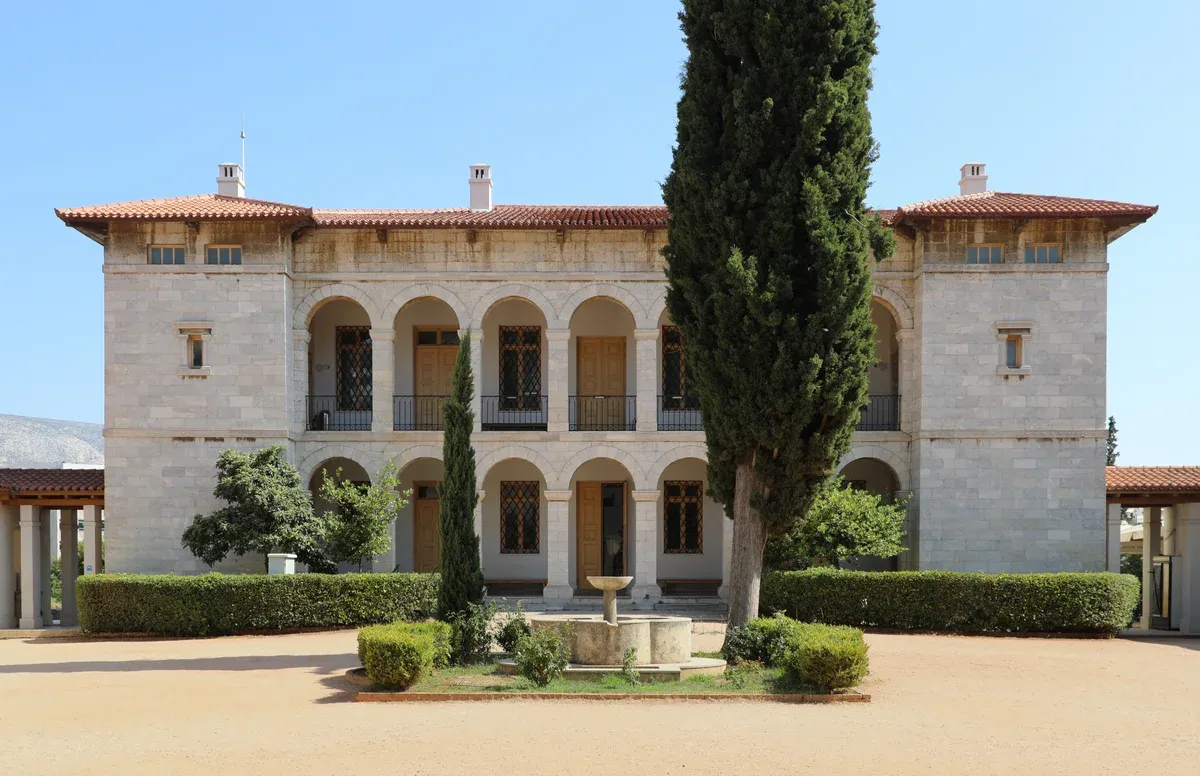
Photo: Francesco Bini, CC BY-SA 4.0, via Wikimedia Commons
Villa Ilissia and the garden
The museum's home is an 1840s villa built as the winter residence of Sophie de Marbois-Lebrun, the Duchess of Plaisance. It sits around a courtyard, with the Ilissos river once running past it. The modern galleries were built downwards, so from the garden the villa still reads as the house it was, which was the point of the design.
Practically, allow more time than the collection strictly needs, because the garden and the café are where the visit slows down and pays off. They are the natural place to sit after the darkened icon rooms, and the contrast between the 1848 house, the courtyard and the sunlit trees is half the reason this museum is worth a morning.
Byzantine and Christian Museum map
The entrance and the museums within ten minutes along the same avenue.
Next stop from the Byzantine Museum
Walk minutes are our estimates from the GPS distances.
Museum of Cycladic Art
West along the avenue. €12, Thursday to 20:00 — the Cycladic also shuts on Tuesdays.
5 min walkBenaki Museum
Further west towards Syntagma. The Benaki is the third of the Kolonaki three.
8 min walkNational Garden
Free, shaded and the way back to the centre on foot. The National Garden comes out at Syntagma.
10 min walkByzantine Museum questions
How much does the Byzantine and Christian Museum cost?
Its own site does not say. The page headed "Opening hours and tickets" publishes the timetable and no price, and we are not printing a figure we could not source. Ask at the desk or telephone +30 213 213 9517. What the museum publishes sets out exactly what is on its site.
Is it the same as the Byzantine museum in Thessaloniki?
No, and this is a real trap: the state platform's page at hh.gr/en/destinations/byzantine-museum/ is the Thessaloniki museum, with Thessaloniki's hours and prices on it. The wrong-city trap explains what to trust instead.
What day is it closed?
Tuesday. So is the Museum of Cycladic Art five minutes away, which makes a Tuesday morning in Kolonaki an unproductive one.
How long do you need there?
About ninety minutes for the permanent exhibition, more if you sit in the garden. It closes at 15:30 every day it opens, so this is a morning visit.
Is it worth it if I am not religious?
Yes — it is the clearest place in Greece to see how classical craft became Christian craft, and the detached wall paintings and marble screens are objects rather than devotions. The garden and the villa carry the rest.
Is there a café?
Yes, in the garden of the villa, which is one of the more pleasant places to sit on Vasilissis Sofias.
Byzantine Museum on Video
One filmed visit, kept because it shows the ground and the pace better than a photograph can.
Byzantine and Christian Museum, Athens, Greece/Βυζαντινό και Χριστιανικό Μουσείο
A walkthrough of the Byzantine and Christian Museum's galleries — the only substantial film of it we could verify.
Video: Enjoyable JourneyPrices, hours and terms are set by the venue or operator and confirmed at checkout.
We may earn a commission if you book through one of our links, at no extra cost to you. Full affiliate disclosure